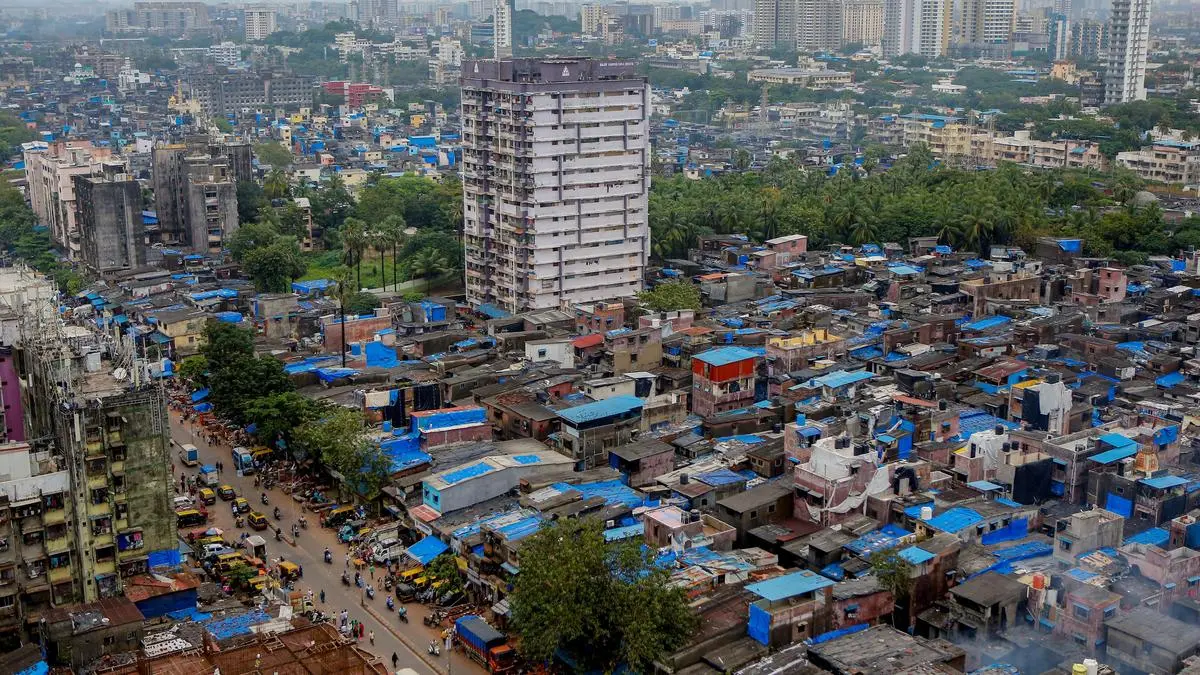
The challenge at the urban last mile is an amalgam of weak institutional design, fragmented accountability, and the absence of meaningful community engagement
| Photo Credit:
Teaching a course on ‘Devolution, Development and Democracy’ at two institutions recently offered an opportunity to engage with young minds on governance and human development challenges at the last mile. After classroom discussions, students were sent to the field to observe the realities of urban governance first-hand. Their visits — to schools, Aanganwadi centres, health centres, municipal offices, collectorates, waste-to-wealth initiatives, and urban bastis — revealed an important paradox of contemporary urban India: infrastructure has expanded, but quality outcomes remain uneven.The students visited a large urban slum and a fast-urbanising district marked by large industrial activity. The challenge at the urban last mile is an amalgam of weak institutional design, fragmented accountability, and the absence of meaningful community engagement.Water tankers do reach uncovered bastis. Yet, the absence of fixed timings or prior information means women still spend hours with large cans, leading to drudgery and serious health concerns.Schools have better physical infrastructure; sustainability of its maintenance remains a major concern. Dirty toilets, ill-maintained drinking water systems, uneven sports grounds without coaches, unclean classrooms, all convey issues beyond resource gaps. It is more a call for collaborative community action and institutional accountability through untied grants. Given challenges of unsatisfactory and overcrowded housing, there is a strong case for a secondary school to become a community learning centre, available to the children beyond schooling hours.Many teachers are working hard, but excessive non-teaching responsibilities disrupt the momentum of teaching and learning. At the same time, there are instances where teacher accountability is very weak and Principals are helpless. Aanganwadis are providing an important service, but limited hour functioning makes them inadequate as a full-day childcare space.Public-private partnerships in waste-to-wealth have also reached smaller municipalities, often supported by technology-enabled monitoring systems. Here too, sustainability is a challenge as private partners are unsure of profits.In bastis grappling with poor housing, inadequate sanitation and uncertain water availability, the presence of a local public clinic with a doctor, medicines, and diagnostic services is a strong felt need. Otherwise, even minor illnesses require residents to trudge miles to tertiary hospitals.Urban localities with migrant populations have occupational health risks, poor housing conditions, and heightened susceptibility to communicable diseases. Fear of losing a day’s wages often delays treatment and diagnosis, aggravating the health conditions. A new approach to primary care is indeed needed. There is a need to embed public health thrust into mainstream municipal governance with collaborative citizen-centric governance.Filling institutional gapsThe field visits revealed the extraordinary resilience and enthusiasm of the local communities. It became clear that if they are trusted with responsibilities and made an integral part of the planning and decision-making process with untied funds, many of the last mile challenges can be tackled effectively. This process can further be enhanced with the support of professionals and dedicated civil society organisations working with communities at the last mile.Women’s collectives in a rural-urban settings presented some of the most positive examples encountered during the visits. Self-help groups (SHGs) have enabled savings, access to loans, and support during moments of crisis, while also creating spaces of trust, solidarity, and collective support for women. Further, participation in SHGs has increased women’s confidence, mobility, and leadership.However, the limitations imposed by the patriarchy are starkly evident — continuing to shape and limit the emancipatory potential of SHGs because women’s participation, mobility, and financial autonomy often continue to be dependent on male approval within households. Many women described needing permission from husbands to attend meetings, travel to banks, or engage in economic activities, suggesting that agency remains conditional rather than fully autonomous.The students also observed many examples of increasing technology use in service delivery. While this is a positive development, the field visits highlighted that in the absence of hand-holding at the community level and by treating technology as an end rather than a means to an end, exclusion becomes a challenge even when inclusion is the intent. Once again, a deeper community connect through collaborative governance will be essential in identifying solutions to the challenge.The accountability deficitThese patterns point towards a larger institutional problem: urban governance structures remain administratively present but distant from the communities most dependent on public services.The larger challenge, however, lies in the structure of urban governance itself. Ward-level elected leaders are too distant from bastis or slums where communities on the fringe reside. Also, the wards are too large for meaningful collaborative action. The distance between the state and the basti weakens both effective oversight and trust. Effective governance requires elected leaders at the basti level. It is essential to revisit the institutional structure of governance to create community managed urban public services.What emerged from the field visits was not an absence of citizen willingness, but a failure to build governance structures capable of working with communities as equal participants.Viewed collectively, the field visits reconfirmed the precarity of living on the margins in urban slums. There is a need for an alternate paradigm of basti-centric collaborative governance. Devolved untied resources, professional support at the community level, and stronger voice and agency for women are essential.The citizens are more than ready; is the state willing to recast its role? That is the question.Sinha and Suryam work at the Centre for Social and Economic Progress. While the views are personal, they acknowledge the insights of the studentsPublished on July 18, 2026