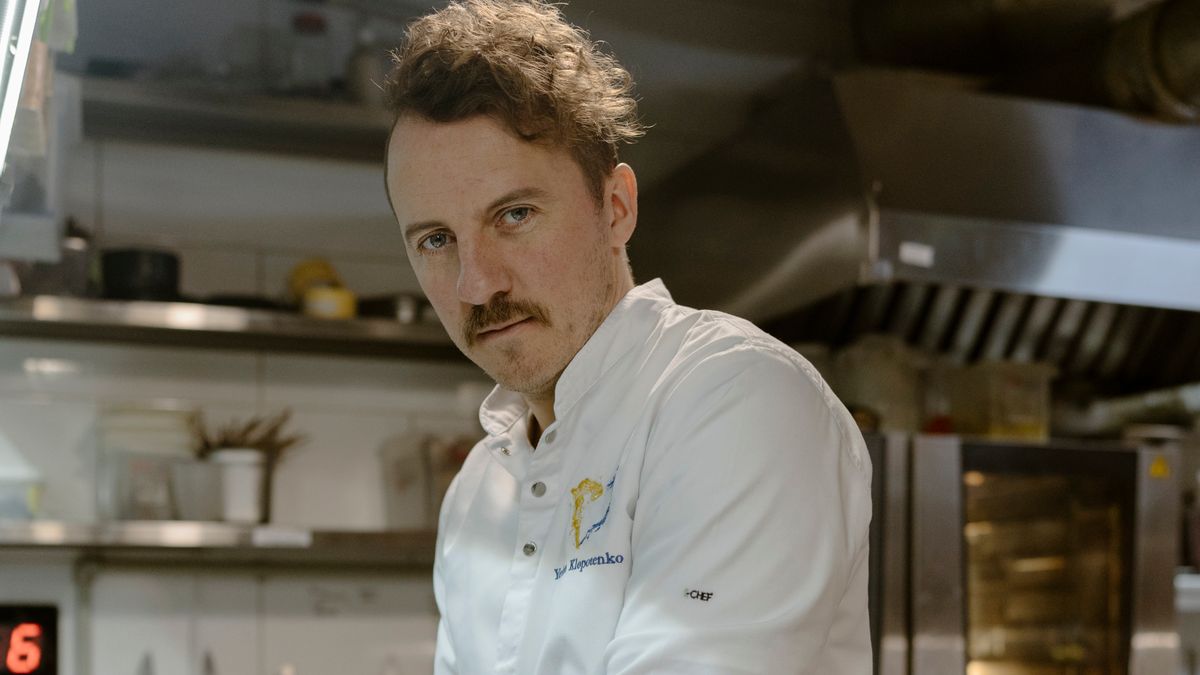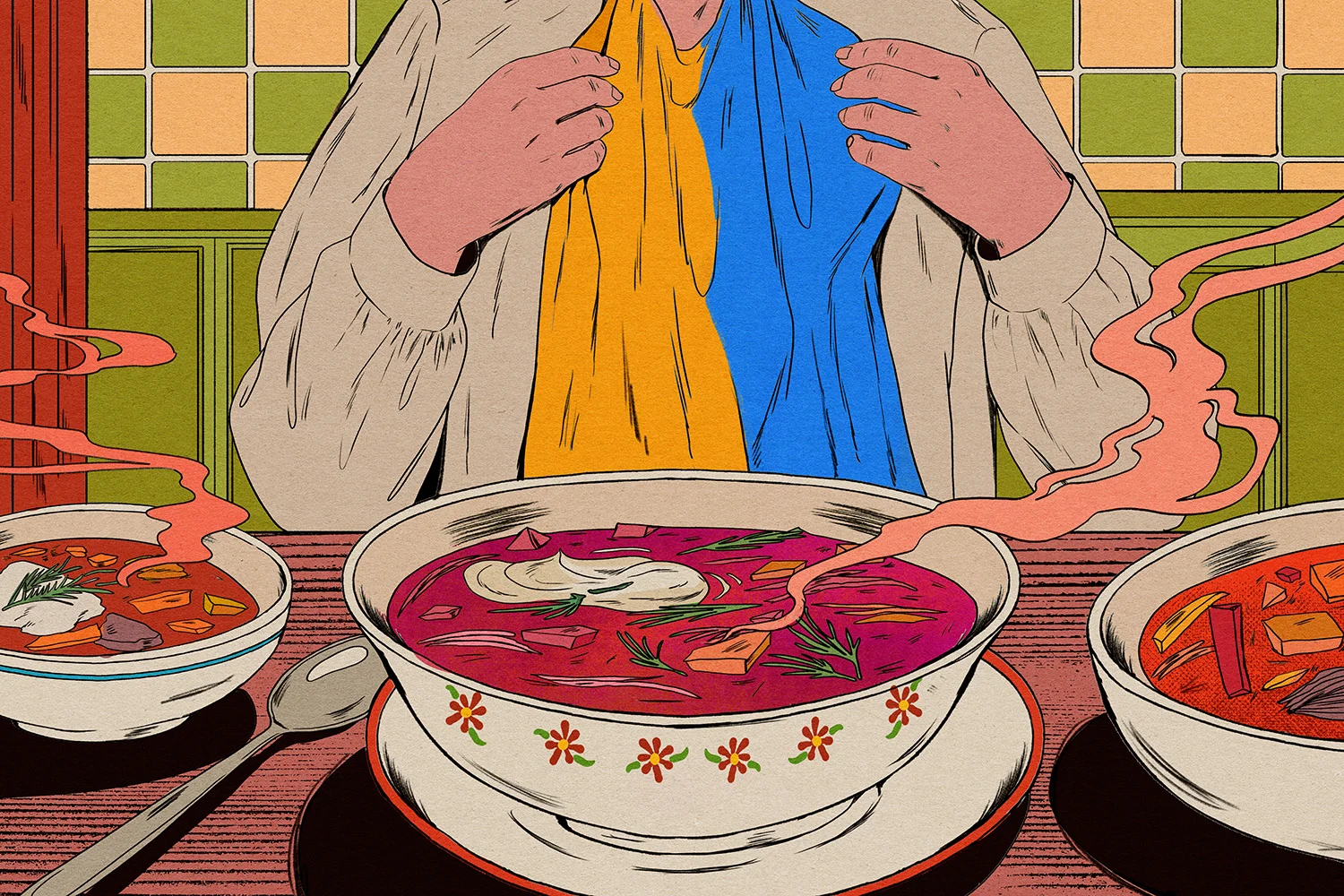
At the entrance of Inshi Cafe in downtown Lviv, Ukraine, stood a full-size cardboard likeness of the country’s best-known chef, Yevhen Klopotenko. In immaculate kitchen whites, the 39-year-old was immediately recognizable by his handlebar mustache and eccentric coif: the right side of his head shaved close, with an unruly mop of curls thrown over his left ear. This is an updated take on the hair art of the ancient Ukrainian Cossacks, a nomadic warrior people central to Ukrainian identity. Likewise, Klopotenko seeks to modernize traditional Ukrainian cuisine, especially borsch, a beet-based soup that, he claims, is as Ukrainian as the Cassocks themselves.
“Sure, there’s borsch in other countries in Eastern Europe,” Klopotenko, who co-owns Inshi—which he closed a month ago—and another restaurant in Kyiv, explained in a phone interview. But, he went on to say, nowhere is borsch (the preferred Ukrainian spelling) so variegated and central to a country’s diet and culture as in Ukraine.
At the entrance of Inshi Cafe in downtown Lviv, Ukraine, stood a full-size cardboard likeness of the country’s best-known chef, Yevhen Klopotenko. In immaculate kitchen whites, the 39-year-old was immediately recognizable by his handlebar mustache and eccentric coif: the right side of his head shaved close, with an unruly mop of curls thrown over his left ear. This is an updated take on the hair art of the ancient Ukrainian Cossacks, a nomadic warrior people central to Ukrainian identity. Likewise, Klopotenko seeks to modernize traditional Ukrainian cuisine, especially borsch, a beet-based soup that, he claims, is as Ukrainian as the Cassocks themselves.