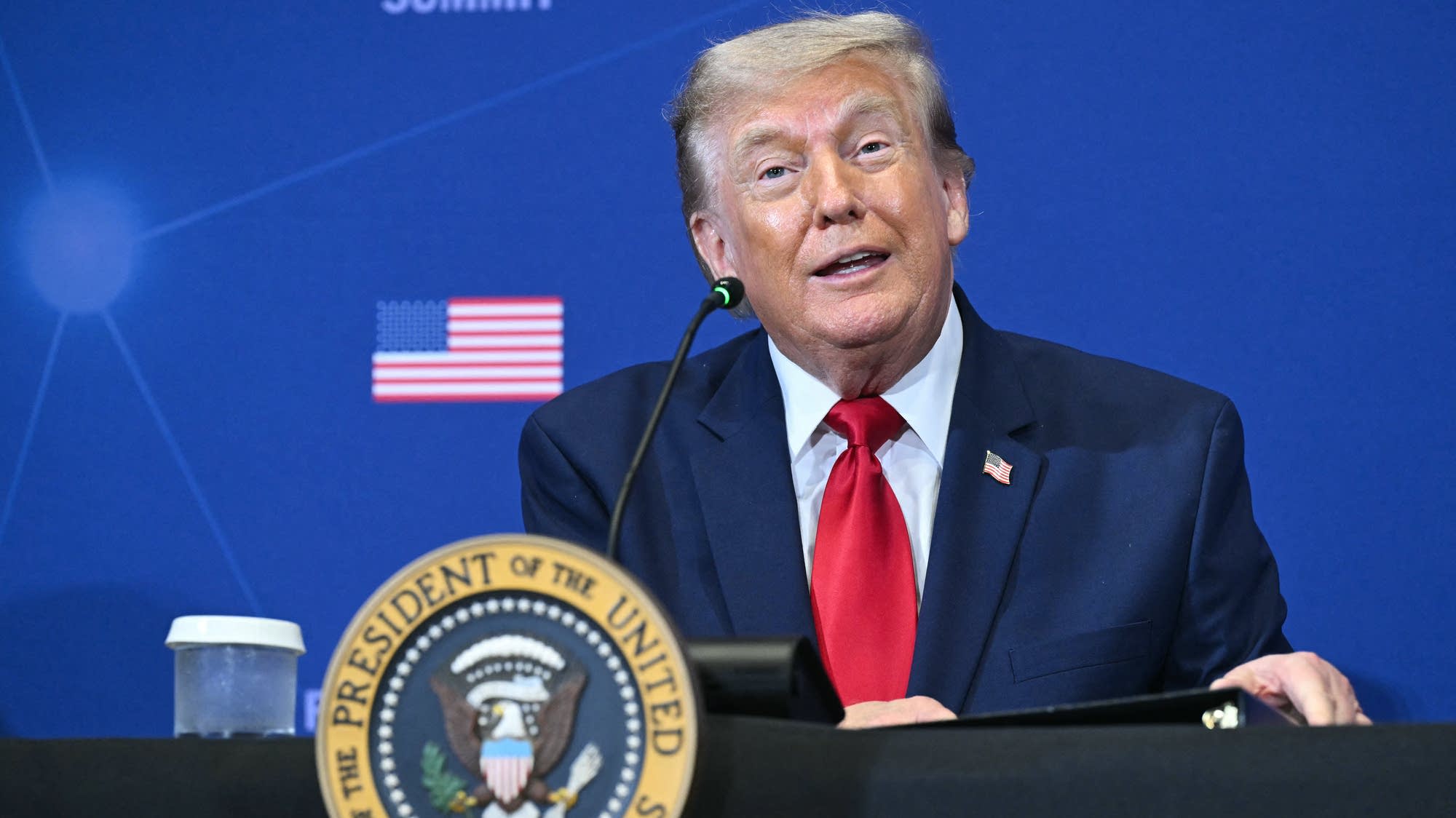
President Donald Trump has made it a point on at least two occasions to talk about his admiration for Australia’s retirement system. Just the other day, he said two of his top economic advisers are looking at ways to bring to the U.S. what they call “superannuation” in Australia.How does it work?Marketplace’s senior correspondent for future effects, David Brancaccio, looked into it, and he joined “Marketplace Morning Report” host Kimberly Adams for a conversation to share more. The following is an edited transcript of the interview.Kimberly Adams: What is so “super” in Australia?David Brancaccio: The Aussies' superannuation system — that's the term they use — where employers must withhold 12% of the salaries they pay and put the money into private investment accounts, where it's supposed to grow over the years. Then, at retirement age, the former employee gets access to their money, which is taxed, but at a way lower rate than is normal.Adams: That sounds somewhat similar to the IRAs and the 401(k)s and the 403(b)s that we already have here. But what makes this different?Brancaccio: Here's the thing: This super arrangement in Australia is compulsory. Twelve percent of pay has to go into forced savings, up to some limit. The problem this might solve here is that many people, right, don't have access to retirement plans at work, or they can't — or choose not to — kick money into those or into personal IRAs. We have voices on the political right and on the left looking for ways to attract more people into private accounts, so we might live better in retirement.Adams: So is the idea from the Trump administration that this would replace Social Security?Brancaccio: Well, I asked experts, and they do not see that happening. They say the current White House seems inclined to stick the Social Security accounting problem onto the next presidential administration. “Here's this hot potato.” But another key question about importing this from Australia: Would it stack on top of Social Security, so then that would be even more money deducted for retirement out of the paychecks? Or is the idea maybe instead to take a slice out of what had been going into the already underfunded Social Security system and funnel it into these new private accounts? I spoke to Romina Boccia, who studies this at the libertarian-leaning Cato Institute.Romina Boccia: Any portion of the 12.4% payroll tax that would be diverted toward a private retirement account would need to be replaced, unless Congress was willing to significantly and suddenly cut benefits for seniors, which seems politically very unlikely.Adams: Very unlikely, to put it mildly. I imagine the retirement planning companies are just salivating at this idea of implementing an Australia-style system here. I'm just thinking about all the fees to manage the accounts at that scale.Brancaccio: So you have Wall Street's self-interest joining forces with other people who want to improve society by creating accounts to fix the economic security of elders. Boccia, my Cato source — who's skeptical of mandatory savings — put it this way:Boccia: In economics, we refer to this as “Bootleggers and Baptists.” When you have industry, that stands to gain, get together with so-called “do-gooders” who think they can make Americans better off by forcing or nudging them into a system that they might not otherwise choose, you get this perfect combination of political support building between different factions, all moving in one direction.Brancaccio: And, Kimberly, the word is that Trump has Commerce and Treasury Secretaries Lutnick and Bessent working on ways to “Australia-ify” our retirement system. An outline on this is due first of next month, actually.
Why is Trump interested in Australia's retirement system?
President Donald Trump is looking at adopting a retirement system based on Australia’s “superannuation” model.
605 words~3 min read