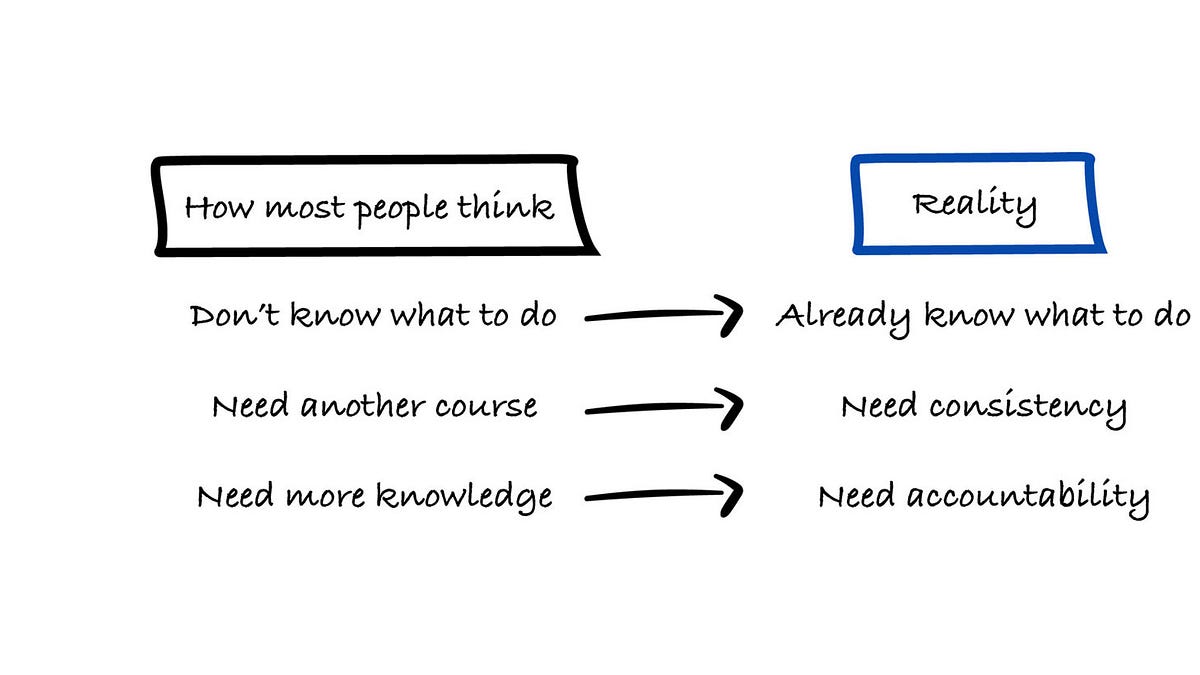
Over the course of my 13+ year career, both as an engineer and engineering leader, I had the pleasure of being a mentor/coach for many different people. It started already when I was a Software Engineer, onboarding new engineers, and then it became a standard for me when I became a manager.I always viewed a part of my role as a manager to be a coach for everyone who was directly reporting to me, and I always enjoyed seeing my people grow.Interestingly, this was also one of the reasons why I started writing online, a bit less than 4 years ago. In today’s article, I’ll be going through some of the most important lessons I learned from coaching over 300 engineers and engineering leaders both in my full-time roles, group coaching, or individual coaching.This is an article for paid subscribers, and here is the full index:- My experience with coaching- What’s interesting about coaching is the following- Those are the reasons why I highly recommend that everyone become a mentor/coach- Lesson #1: A lot of people already know what they need to do🔒 Lesson #2: Believing they are not ready or that they don’t deserve it🔒 Lesson #3: Accountability is crucial🔒 Putting it all together🔒 Last wordsLet’s start!As mentioned at the beginning of the article, I consider being a coach for everyone who has ever directly reported to me. I’m not counting indirect reports, where I was a skip-level manager, I am counting everyone with whom I had 1:1s with.The reason for this is that I always looked at 1:1s very similarly to doing a 30-minute coaching session.Additionally, I did 8 cohorts of the live course called Senior Engineer to Lead: Grow and thrive in the role, where I taught close to 250 engineers and engineering leaders.And I also had the pleasure of having a lot of individual coaching sessions with many different great individuals throughout my career.You learn a lot as a coach, not only does the person who is receiving coaching.The biggest benefits of being a coach are:If you can teach it, you understand itIt forces you to clarify your thoughts on certain topics, as if you don’t understand a certain topic clearly, you won’t be able to teach it to someone else. It also shows where you might have blindspots and which particular parts you don’t understand that well.You get exposure to a number of different problems people are dealing withWhich helps you to do future coaching a lot better, especially if you see repeating patterns from 1 person to another. Or maybe you come across a similar issue, just disguised a bit differently, and you spot that pattern and re-use a similar solution.Additionally, you are able to solve various different problems better, as the more problems you are exposed to and solve them, the easier future problems can be solved.Communication skills, active listening, asking good questions, and not just handing the “solution”.This is crucial, and if you want to grow in your career, it’s more important than ever to improve in these skills, as there is a limited amount of impact you can have just with your own contribution.Being a multiplier for others is how you can have so much bigger impact, especially in the AI era, where pure building has become much more accessible.That’s also the reason why I am putting a LOT of effort into writing the book The Multiplier Mindset, which will be published later this year. So, everyone develops the right mindset that’s crucial to be successful in current times, both as an engineer and an engineering leader.As mentioned, you don’t only help the other person, but YOU learn and grow this way as well. It has tremendously helped me throughout my career, and I couldn’t recommend it more.Try to find opportunities where you can help others grow, even if you are not a manager. Being a mentor is very valuable, and you’ll quickly find out what specific things you know and where you need to improve.Now that we better understand how important coaching is, let me share my top 3 lessons from coaching many different people throughout my career.I see this all the time, and I’ve seen it in many individuals in tech. Very similar to eating healthy food and exercising to get in shape. Many people know exactly what they need to do, but the problem is starting to do it, being consistent, and sticking with it.The same is for growing in their careers as engineers/engineering leaders. A lot of people know they need to be more visible, share their work better, be more vocal in meetings, share their opinions, ask their manager for the next step, follow up on the ask, etc.But the problem comes when you need to actively put this into practice and stick with it. Being more visible means you need to actively find opportunities internally and/or externally to share your knowledge, either via learning sessions, blog posts, speaking at meetups/events/conferences, etc.Having an opinion in a meeting starts with doing research on the topic before the meeting starts, asking the manager for the next step starts with preparing the full script on what you’re going to say + rehearse it, and before that, doing a good amount of research on what next step you actually want to take.The problem is mostly the need to put in the work every day consistently, and that’s where a lot of the things stop. Especially if they don’t have a person holding them accountable. I’ll talk a lot more about accountability in the 3rd lesson!Now, let’s go to the second one, which is closely connected with the first one.
Lessons From Coaching 300+ Engineers and Engineering Leaders
What coaching hundreds of engineers and engineering leaders taught me about why people get stuck, and how they move forward.
939 words~4 min read