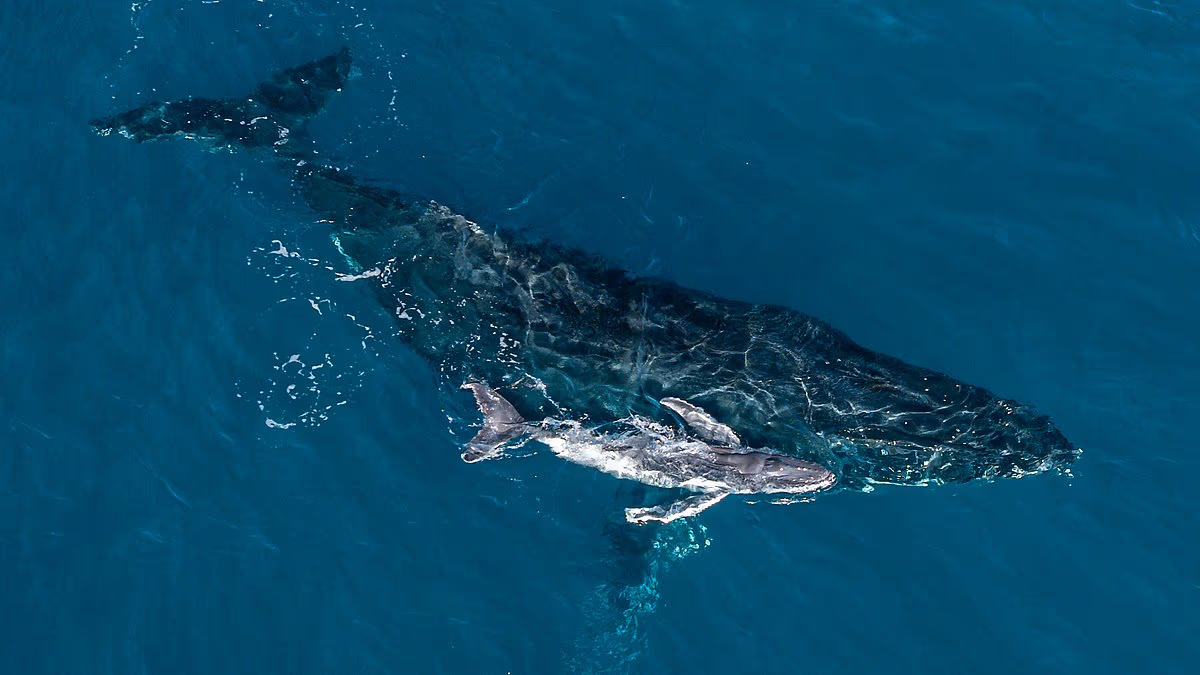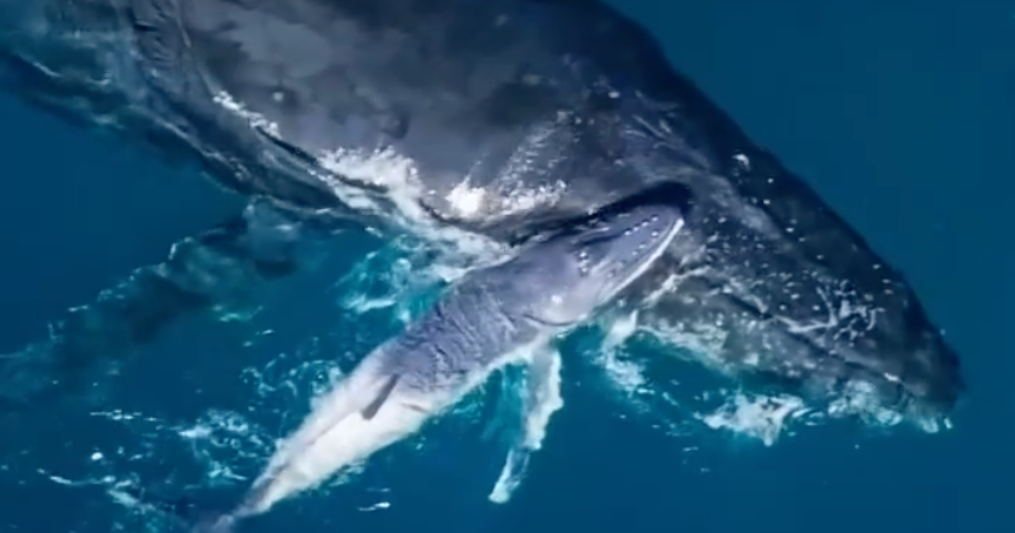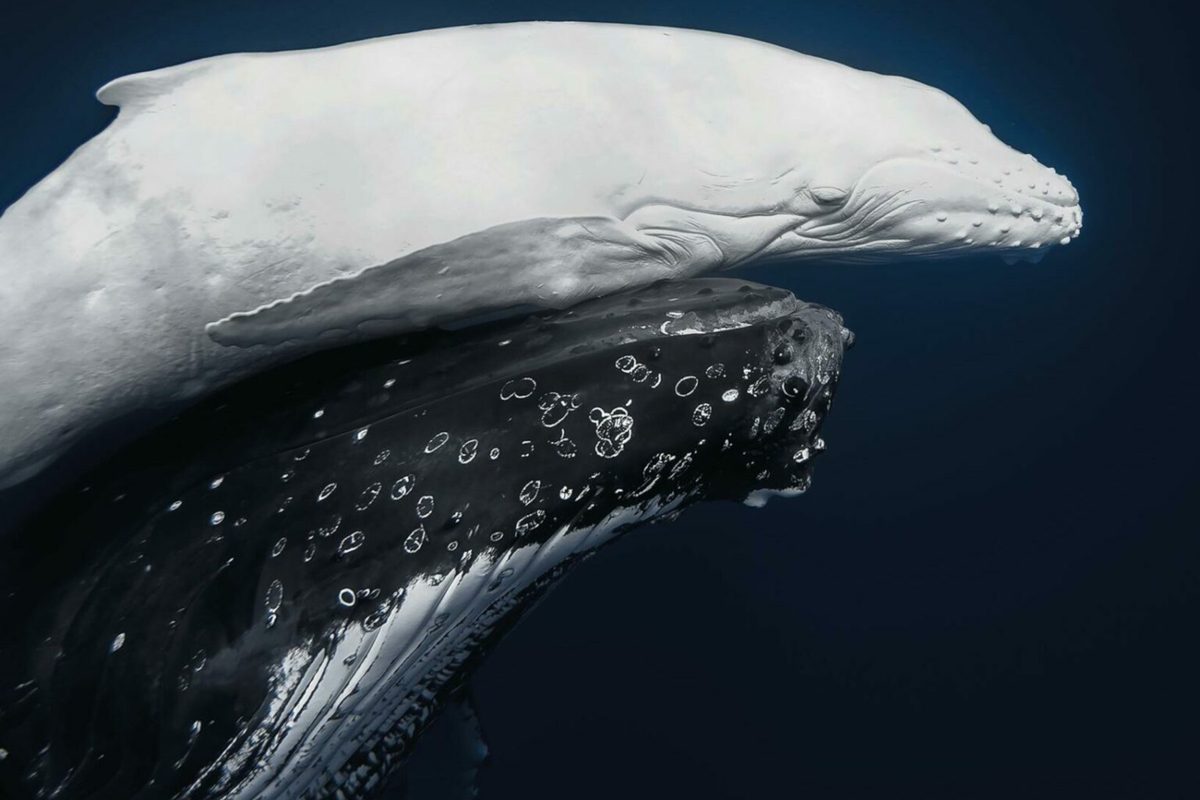
This picture of Mãhina, an all-white humpback whale, won the 2026 World Nature Photographer of the Year competition.
Seen here swimming with her protective mother, two-year-old Mãhina, which means ‘moon’ in Tongan, is a true rarity – only 1 in 40,000 humpback whales is born with this lack of colouration.
The cause of her ghostly complexion is a topic of debate among scientists: it could be either albinism or leucism.
Albinism is a genetic mutation that prevents the production of melanin, the pigment that colours the skin, hair and eyes in mammals. But Mãhina’s eyes are black, not the red typically seen in albino animals, prompting many scientists to argue in favour of leucism – a partial lack of pigment.
But it’s not as clear-cut as that, as Migaloo, another famous white humpback whale (below), demonstrated. First spotted in 1991 in Australia’s Byron Bay, it was long thought that Migaloo had leucism, thanks to his black eyes.