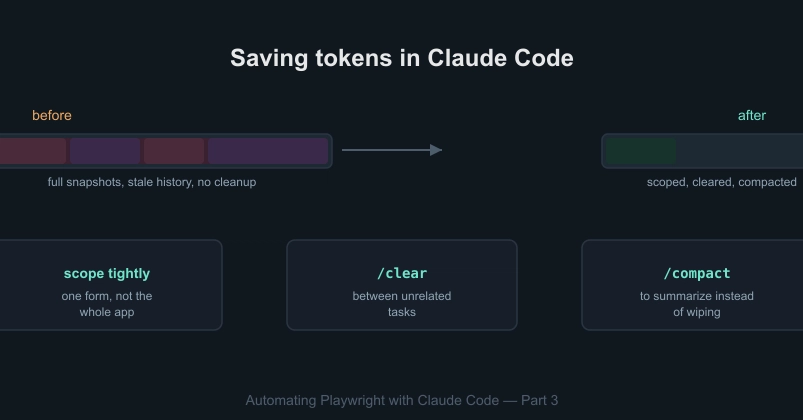
Part 4 (final) of the "Automating Playwright with Claude Code" series. If you're just joining, start with Part 1: Getting Started with Claude Code and Playwright CLI, then Part 2: CLI vs MCP and Part 3: Token-Saving Habits.
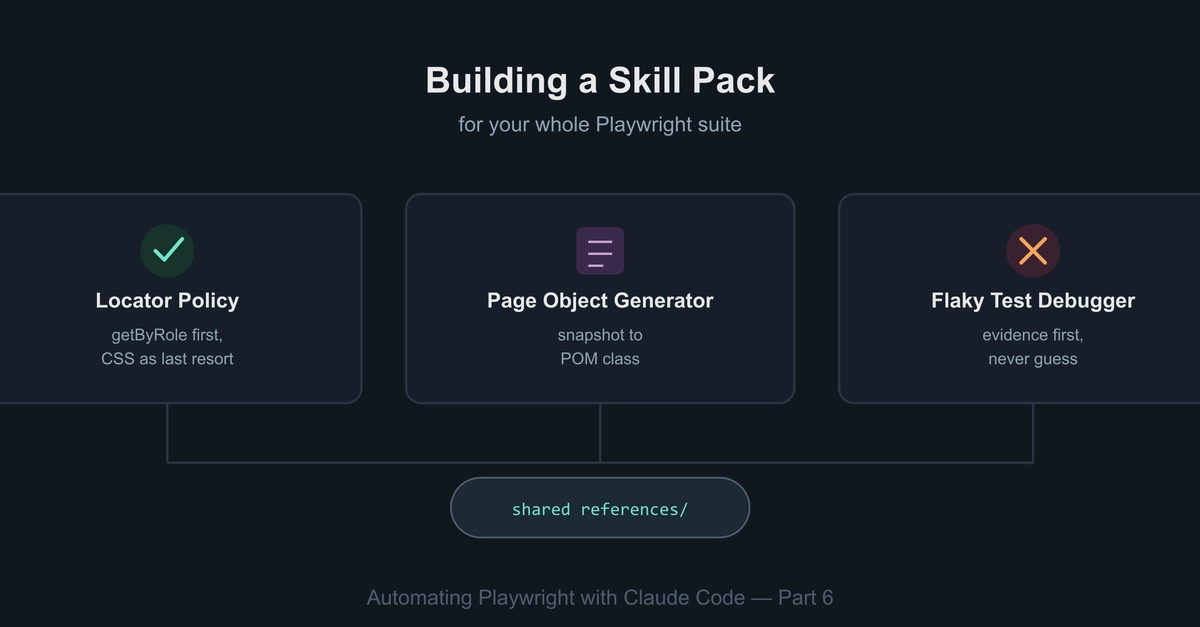
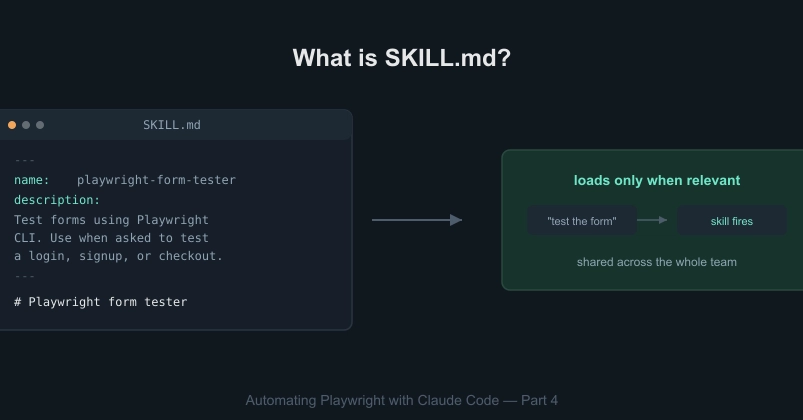
Across this series, we've set up Playwright CLI, compared it against MCP, and covered habits for keeping Claude Code sessions token-efficient. One idea kept coming up: pushing repeatable steps into a Skill instead of re-explaining them every session. This final post shows exactly what that means — what SKILL.md is, how to write one, and a full working example you can drop straight into your own project.
Why Skills Matter for Test Automation
Consistency across the team. Once a Skill is committed to your repo, every teammate gets the same testing conventions automatically — no more "well, I usually test forms by..." tribal knowledge.
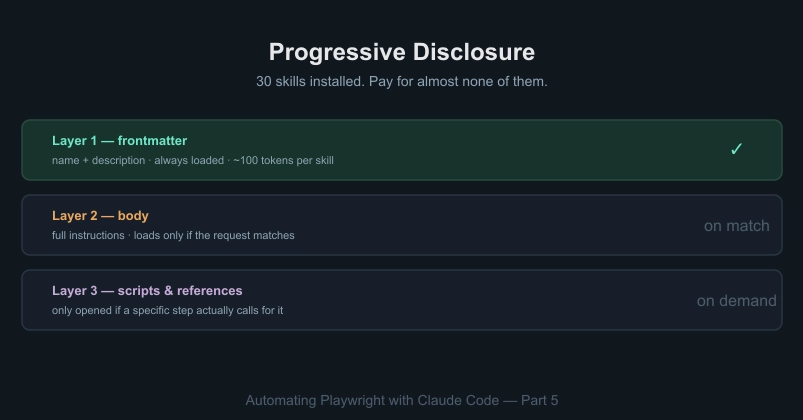
Context stays lean. A Skill's instructions only load when Claude actually decides they're relevant — unlike a CLAUDE.md file, which is always present in every session.