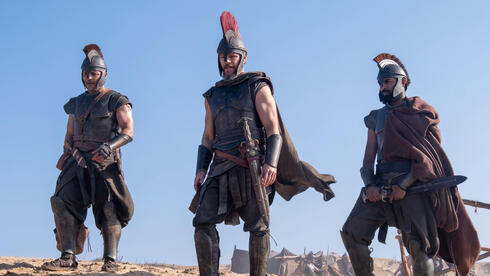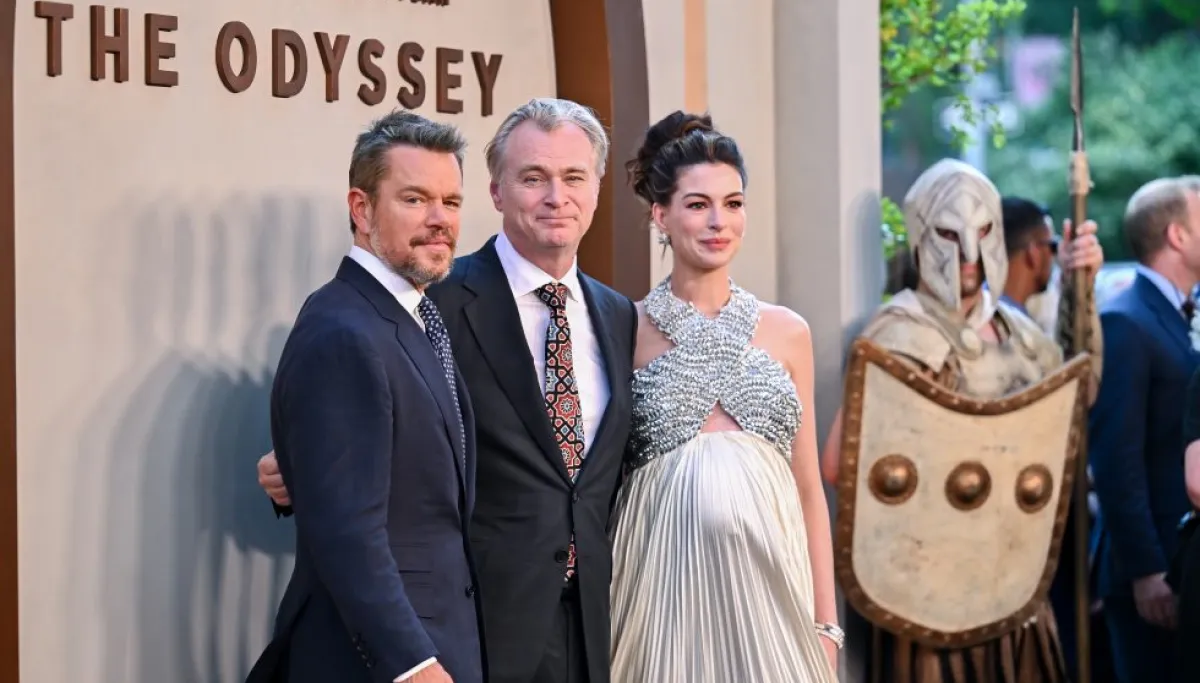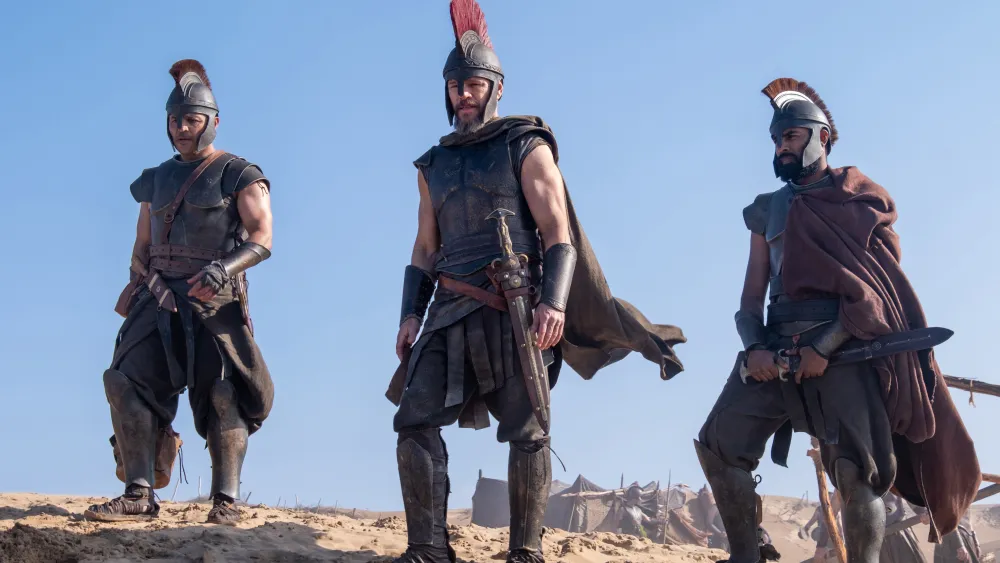
The last time the sword-and-sandal epic truly conquered the Oscars, Russell Crowe stood in the Colosseum and asked, “Are you not entertained?”
Ridley Scott’s 2001 blockbuster “Gladiator” won best picture that season, briefly reminding Hollywood that ancient-world spectacle could still capture the Academy’s imagination. Since then, the genre has largely retreated to the multiplex, where toga-clad warriors and mythological heroes have been treated as summer entertainment rather than awards-season contenders.
But Hollywood has a long history of embracing the sword-and-sandal epic when the scale is matched by prestige.
Before “Gladiator,” William Wyler’s “Ben-Hur” dominated the 1959 Oscars, winning 11 awards — a record at the time — including best picture, director and actor for Charlton Heston. Earlier biblical and historical epics such as “The Ten Commandments” (1956) and “Spartacus” (1960) demonstrated that spectacle could become a path to Oscar glory when paired with strong storytelling and cultural impact. Even Peter Jackson’s “The Lord of the Rings: The Return of the King” (2003), though rooted in fantasy rather than ancient history, proved that a massive mythological adventure could become an awards-season phenomenon, sweeping the ceremony.