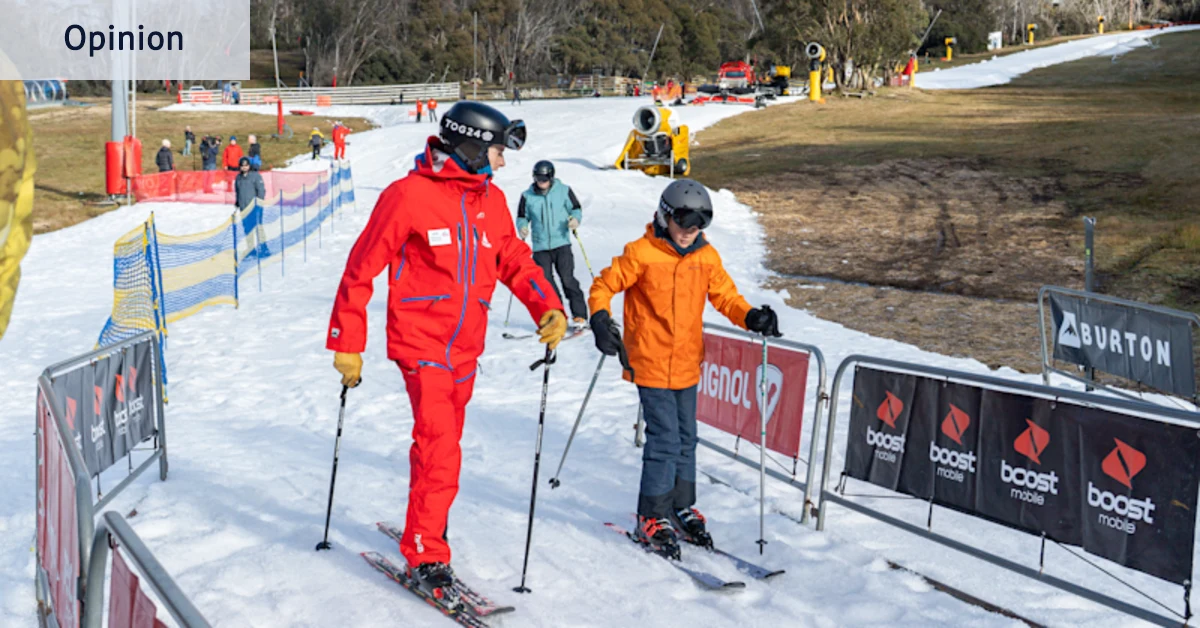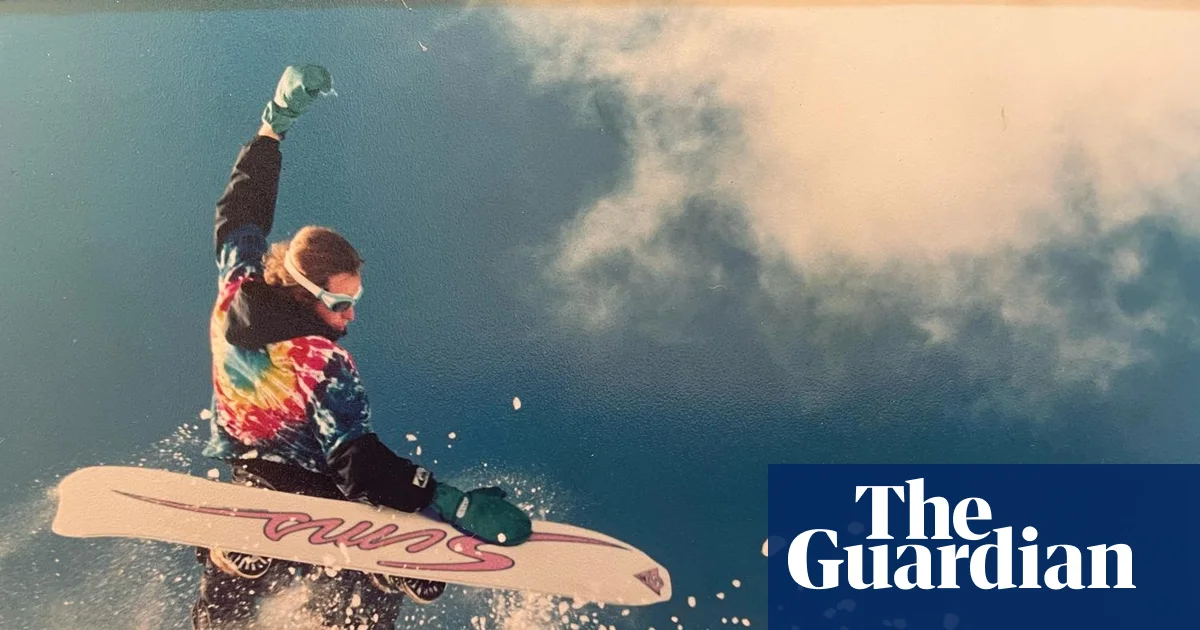
Mount Hotham was like a second home to Dan Burke. In the 1980s, his family stayed in the communal lodges, back when the lifts were run by the Schumann family, who lived in Harrietville at the mountain’s base and knew regulars by name. He’d sneak into nightclubs with the teenagers who worked at the resort, doing the Nutbush, spilling out into hotel corridors at 3am. As the 80s ticked over into the 90s, it seemed like a particularly egalitarian time for what has traditionally been an elite pursuit.First came snowboarding, for which Burke was all-in. “Skiing was pretty daggy in my eyes – tight pants, headbands – but the snowboarders would be rocking around the village in their fat pants, wearing sneakers in their boots,” he says. “Skiers called us knuckle-draggers. My whole crew from the coast started coming up. A lot were from a lower socioeconomic background, but they’d get up there and get a job.”Second came the availability of parabolic skis, wider in the tip and tail, easier for beginners. “Previously you had to be a very proficient skier to actually ski in powder snow,” Burke says.The original Hotham Heights hotel in the 1960s. There are now more than 100 properties on the mountain. Photograph: supplied by Marcus LovettBurke still heads to Hotham most years and rages to DJ sets at the General, the mountain’s year-round pub/restaurant/store. He’s lucky that, back in the day, his parents bought a small flat on the mountain. Many of his mates have given up on the slopes and gone back to the surf, because the snow fields are once again out of reach of all but the most financially comfortable or most determined.Ever-rising lift ticket prices, the tightening of rules around sleeping in vehicles or camping, and rising accommodation costs have locked most families out. Even the few lodges and flats not swallowed up by the large commercial operators are affected by high body corporate fees – driven by extreme weather, building wear and shared infrastructure costs – and the rising cost of insurance.People who work on the ski fields have been priced off the mountains, resettling in towns further afield, meaning locals and even staff are now rarely part of the mountain nightlife.‘World’s flattest lift’Marcus Lovett was the first Australian to compete in the Olympics in freestyle skiing, at the Calgary games in 1988. He was inspired by his father, who’d made his own skis as an enthusiast growing up in New Zealand, and who introduced four-year-old Marcus to the modest slopes of Dingo Dell on Mount Buffalo in the 1960s. These days Dingo Dell is a toboggan run only – the ski lifts gone, the snow patchy at best. Even Cresta valley, previously a popular downhill ski slope further up the mountain, is gone, destroyed in a bushfire in 2006. It’s now devoid of ski lifts and open for cross-country skiing, and snow play only.Sign up for the Breaking News Australia email“To me, Buffalo was a mega mountain, and my dad was a legend,” Lovett says. “Then, as I became a better skier and went back there, I just remember thinking, god, this is the world’s flattest lift.”Buffalo and Mt Buller – the mountain closest to Melbourne and at a 3.15-hour drive the best option for a day trip – with their easier slopes and lower-cost lift passes and accommodation – were popular with families and beginner skiers. Buller still operates as a large ski resort, thanks most years to its hundreds of snow-making machines supplementing inconsistent natural snow.Marcus Lovett at Dingo Dell, Mt Buffalo, as a child with his sister in 1969. Photograph: supplied by Marcus LovettAs a competitive skier, Lovett favoured Falls Creek and still has a soft spot for Feathertop Alpine Lodge, where he celebrated many a long day in the 90s. “What I loved about ski culture was the celebration. Gluhwein at lunchtime, shots at night.”But in the early noughties, when he was back in Australia hosting the Channel Nine skiing travel show Snowshow, Lovett became alarmed by the steep rise in price of lift tickets. “On TV I was trying to push this idea of skiing, but when they hit the over-$100 mark, I realised it was becoming prohibitive. It became obvious I wasn’t making our show for the western suburbs of Sydney or poorer parts of Melbourne.”These days, lift tickets sold by global ski resort operator Vail (which in Australia acquired Hotham, Perisher and Falls Creek) are around $180-$220 a day. In the US, a proposed class action was filed in March, alleging that Vail and another operator set high day-ticket prices to steer customers into multi-resort season passes.
The rising cost of Australian ski resorts: ‘It was like throwing $100 bills out the window as we drove up the mountain’
Australia experienced a boom in beginner-friendly skiing in the 1980s and 1990s. But have global heating and rising lift prices ended that run?
1,384 words~6 min read