Support CleanTechnica's work through a Substack subscription, on Patreon, or on Stripe. Help us produce all of the high-quality, original content we publish week after week despite the challenges of content-scraping AI, antisocial media, inflation, and other hurdles.
Extension of ETS to some international flights, private jets and to smaller ships are steps forward, but overall weakening of the ETS undermines European climate action and energy security.
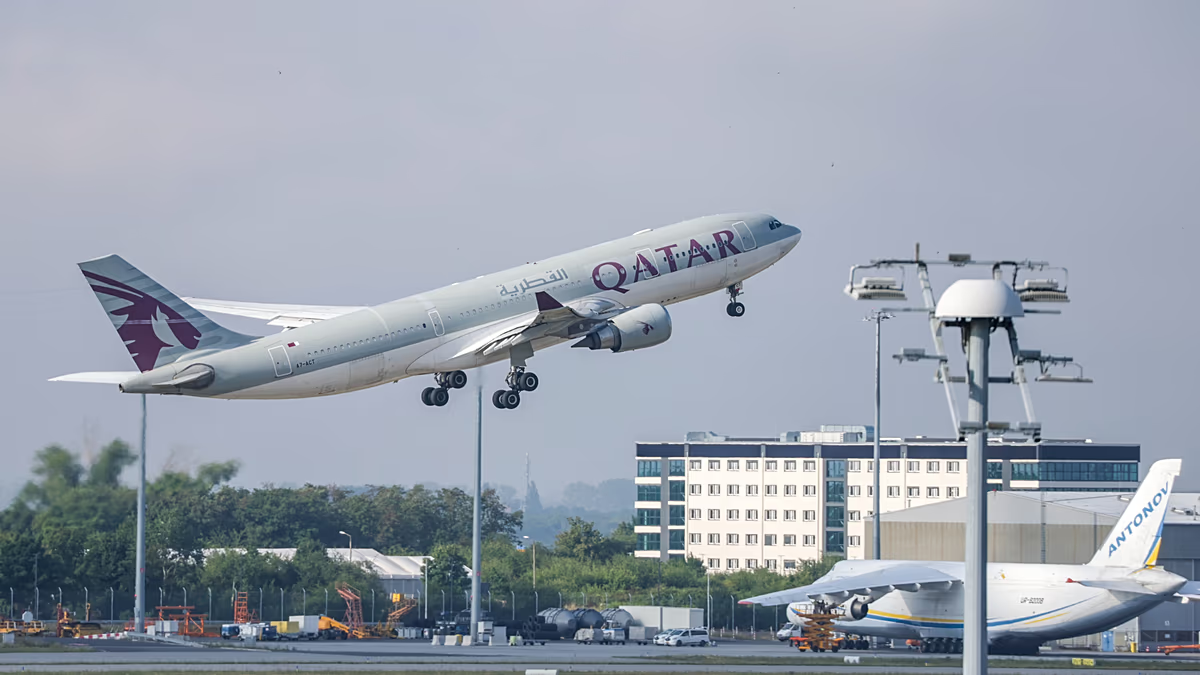
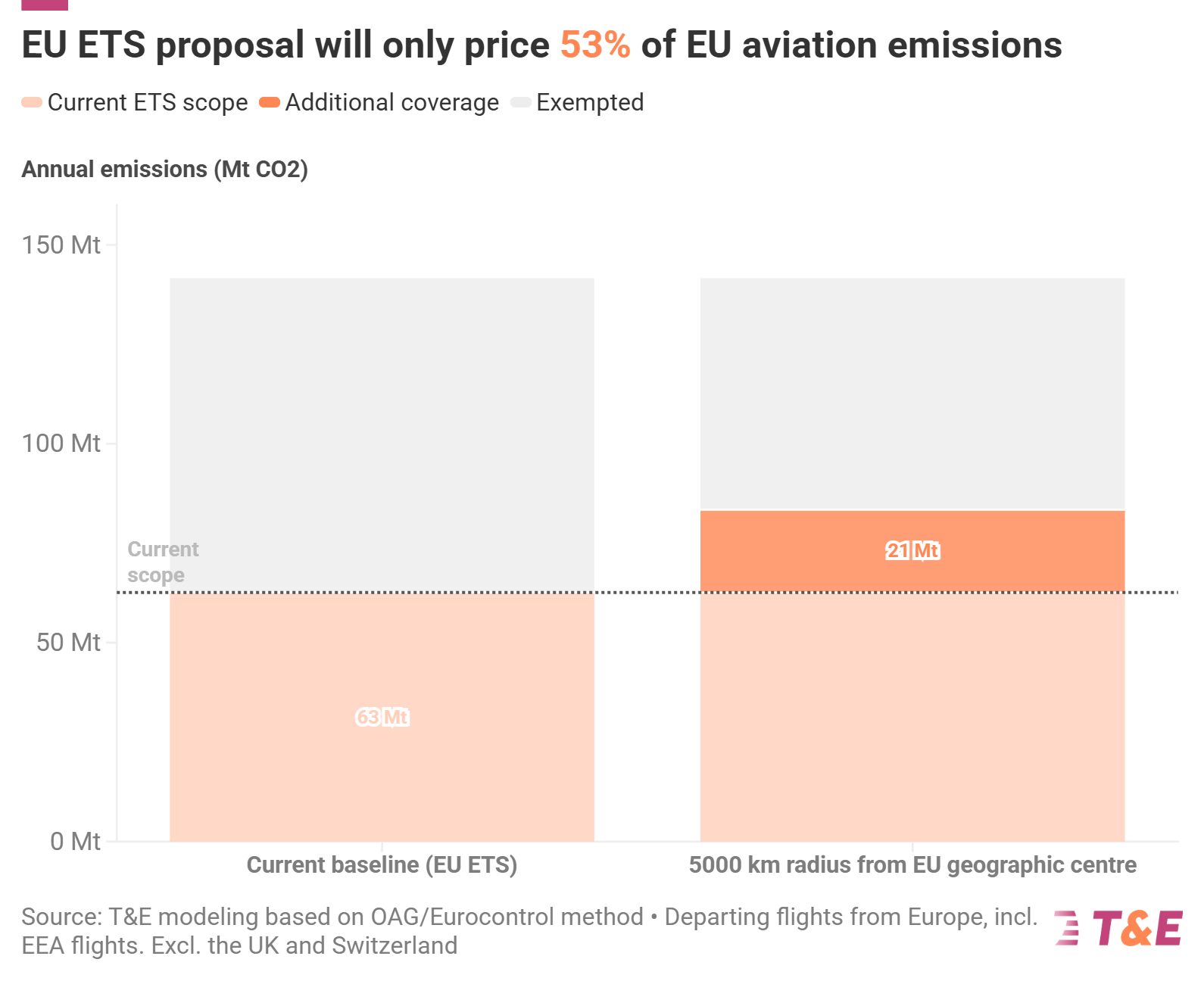
The revision of the EU’s Emissions Trading System (ETS) for aviation falls short of driving the robust climate action needed for the sector, says T&E. For the first time, the Commission has put a carbon price on flights departing the EU, but only within a radius of 5,000km and only from 2029 onwards. This means a flight from Paris to Dubai would be covered by the carbon market, while a flight from Paris to New York would not.
This still leaves 47% of European aviation exempt from carbon pricing and can only be considered a first step, says T&E. Furthermore, while providing industrial support for made-in-Europe SAF is a positive step, allocating over 100 million free allowances for SAF weakens the carbon price signal by shielding airlines from the true financial impact of their emissions. The EU will miss out on the potential for approximately €4.2 billion in additional revenues it would have raised had all departing flights been included in the scope of the carbon market.