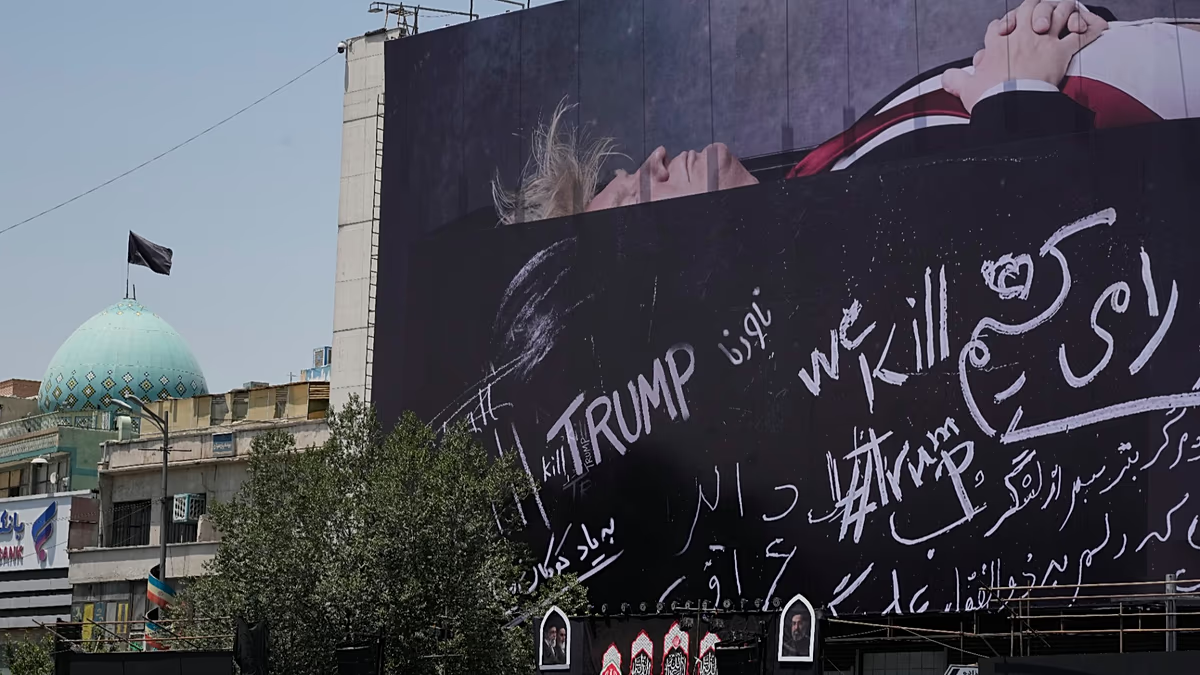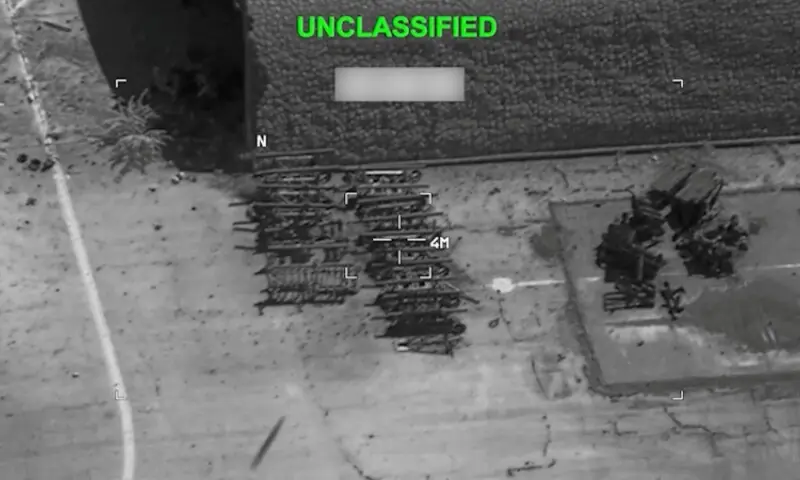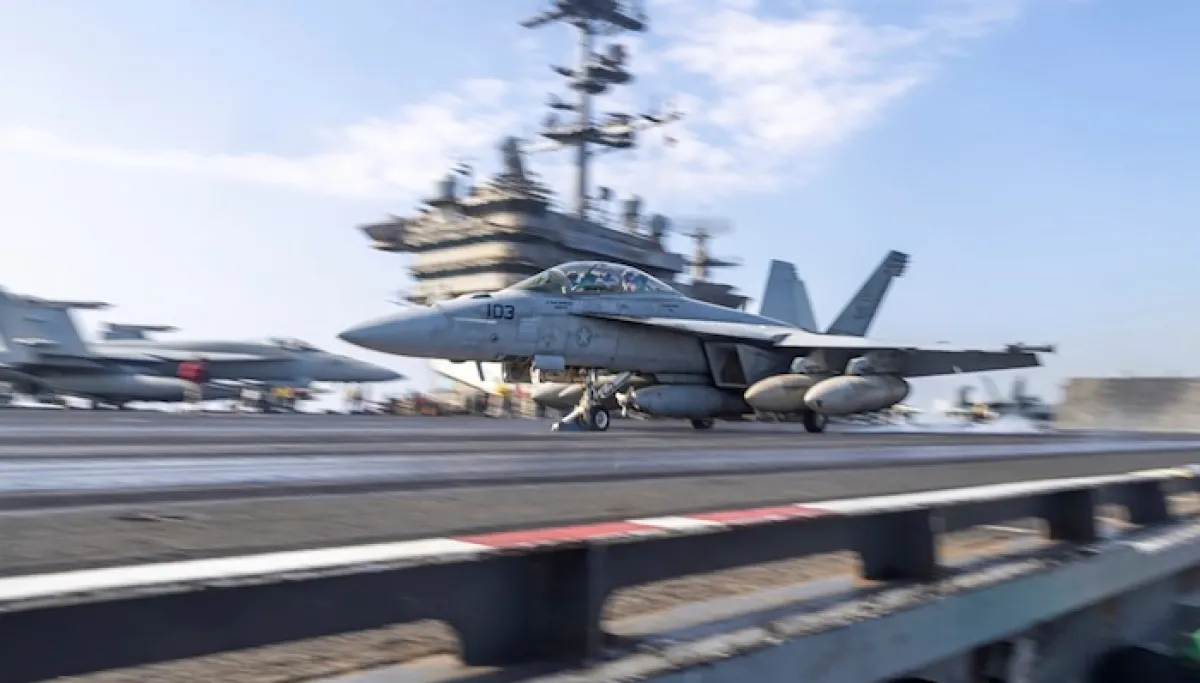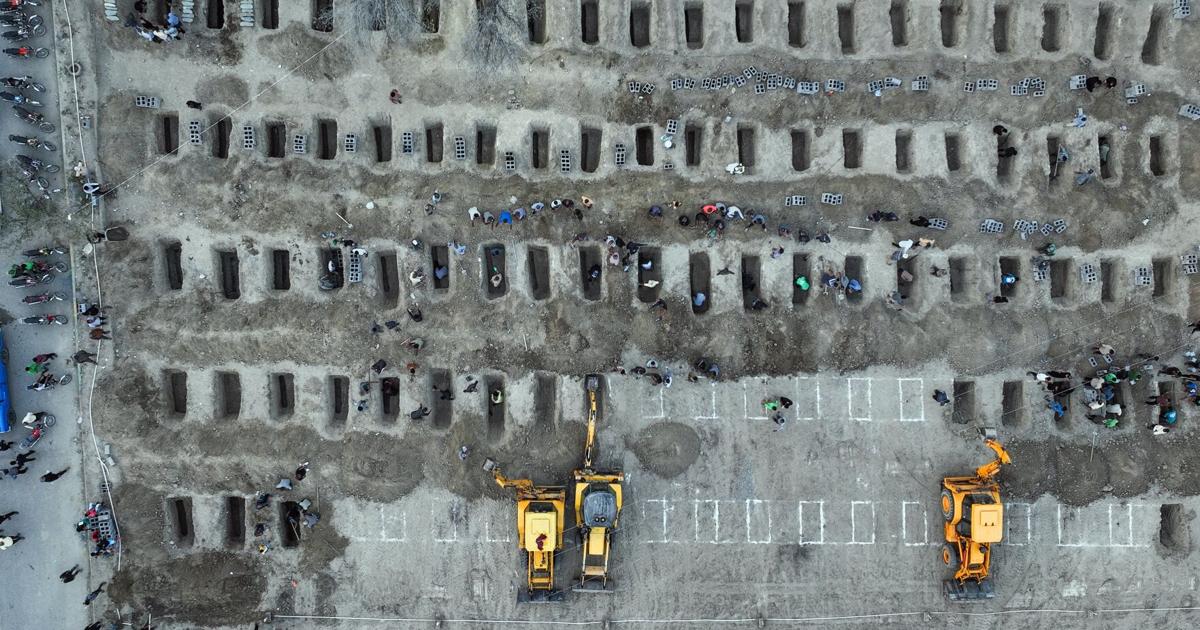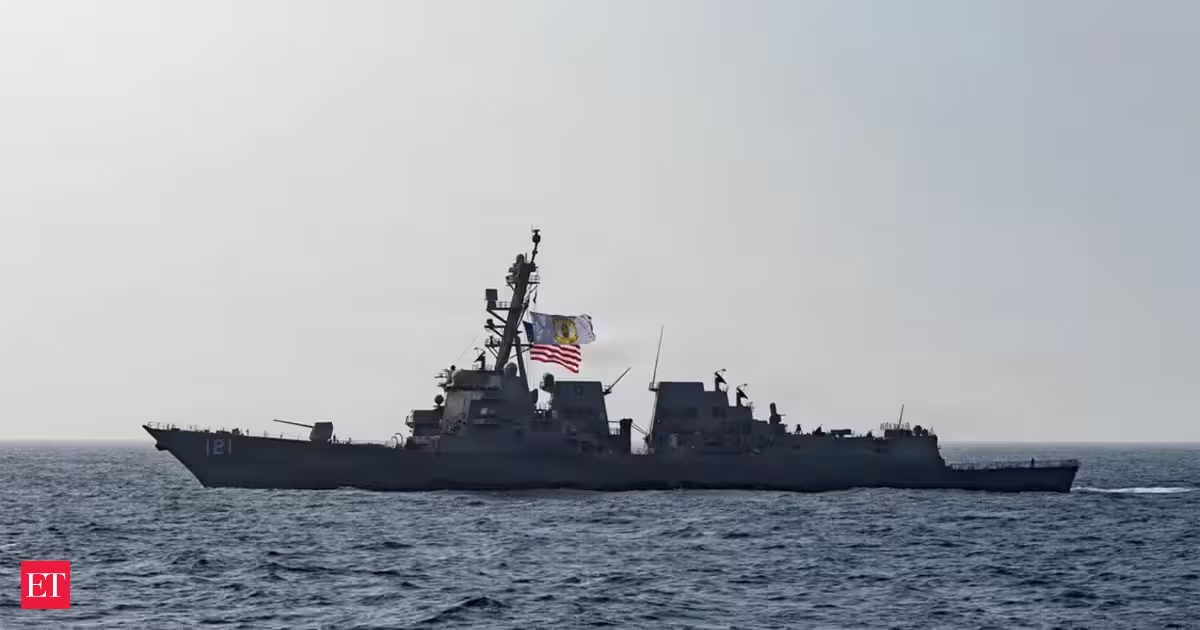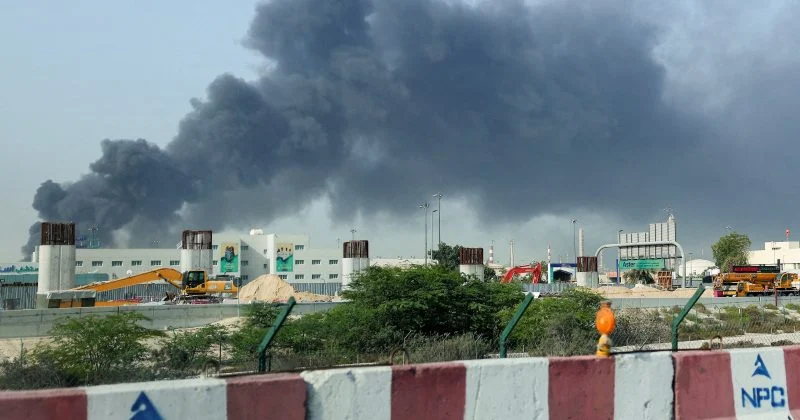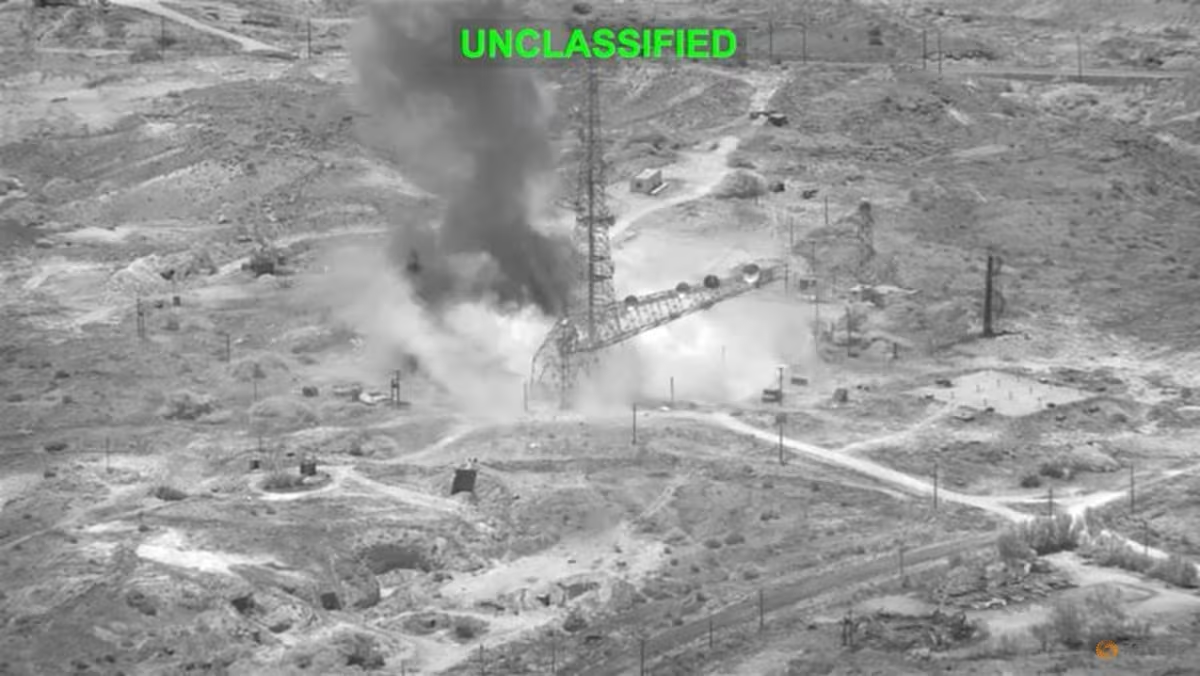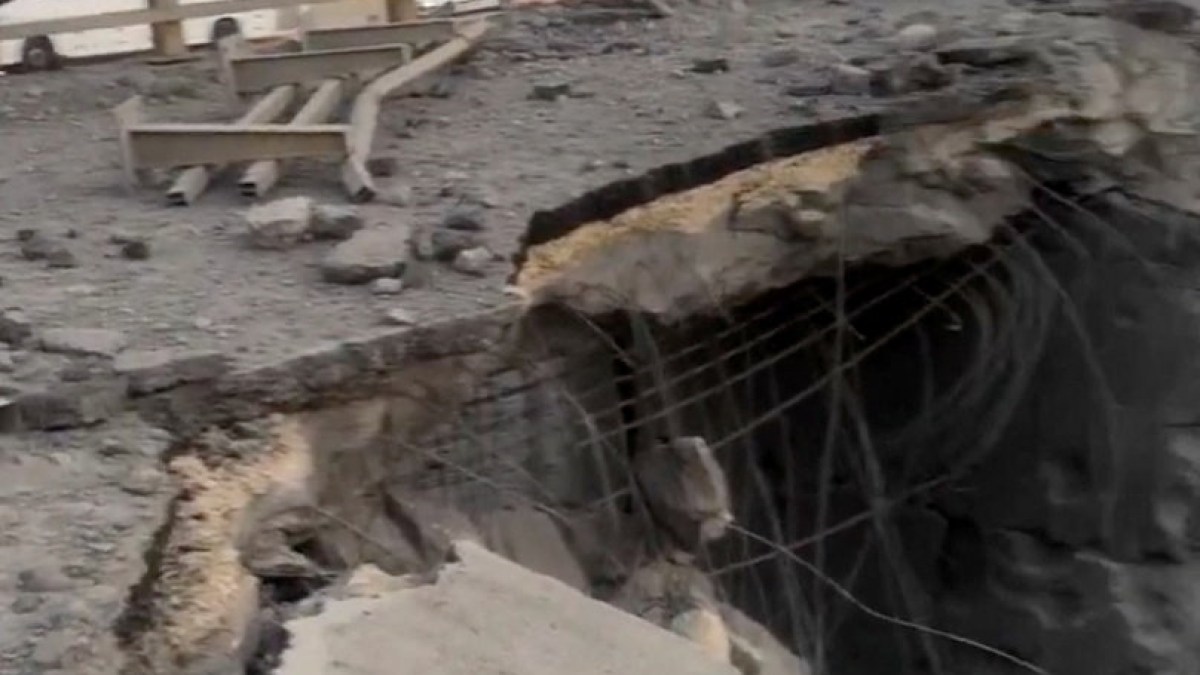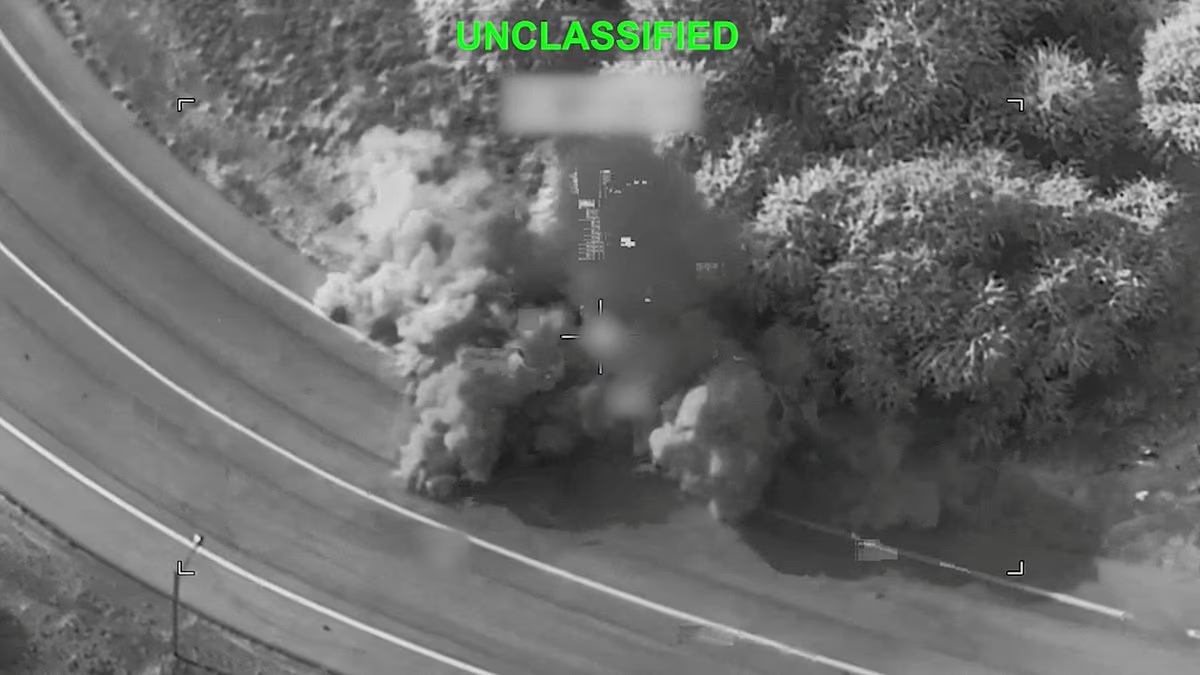
US airstrikes have hit dozens of Iranian targets in the sixth night of fresh attacks on the regime. Washington hopes the attacks will cripple the regime's civilian infrastructure, forcing Tehran to ease its chokehold on the Strait of Hormuz. It comes after US President Donald Trump had threatened to begin targeting Iranian infrastructure, including bridges and power stations, to pressure Iran over the vital waterway.In fresh comments, he claimed the US is 'winning big in Iran' and that 'you will see the fruits of that labour very, very shortly'. It has been reported that a number of bridges were destroyed in the airstrikes. At least seven people were killed. The attacks hit the city of Bandar Khamir, on the coast of the Strait of HormuzThe US military's Central Command (Centcom) said it hit dozens of targets in its latest bombardments. The strikes also appeared to have collapsed a tower at Iran's Chabahar port on the Gulf of Oman, a key trade route for landlocked, neighboring Afghanistan. The moment Iran's naval surveillance tower in Chabahar was destroyed amid the sixth night of fresh US bombardments on the regime A US warship launches a munition at an unknown location as US President Donald Trump bids to force Tehran into reopening the Strait of Hormuz with attacks on civilian infrastructureUS Defence Secretary Pete Hegseth shared the image of the surveillance tower appearing to collapse. That image had circulated social media via activists prior to Hegseth sharing it. Chabahar port, which Iran had been running with support from India, has been a repeated target of American airstrikes. Iranian state media acknowledged a third round of strikes on the facility without immediately acknowledging the tower's collapse.Iran described the tower as overseeing commercial traffic into the port. However, Iran's paramilitary Revolutionary Guard also operates at ports across the country.According to Iranian state media, US strikes on Thursday hit around Tehran and Semnan province, which is home to Iran's ballistic missile production and space programme. The regime has retaliated by launching missiles on US bases in neighbouring countries, including Qatar, a key mediator in the peace process. Qatar warned civilians twice on Friday to take shelter amid incoming Iranian missiles. People heard explosions overhead as Qatari air defences intercepted the attacks. The nation's interior ministry said falling debris had wounded a child. Mr Trump said in speech last night that 'winning big in Iran and you will see the fruits of that labour very, very shortly'Join the discussionIs the US right to target Iran’s civilian infrastructure in the fight for control over the Strait of Hormuz?What's your view?Iran also targeted Bahrain and Kuwait early Friday. Explosions also could be heard Friday morning in Irbil and Sulaymaniyah in northern Iraq's semiautonomous Kurdish region as air defenses targeted incoming fire. There was no immediate word on any damage.Trump has returned in recent days to his threats to target Iranian power stations and bridges to try to compel Iran to loosen its hold on the strait, through which about a fifth of all oil and natural gas traded once passed in peacetime. The US also reimposed a naval blockade on Iranian ports to halt its shipments of crude oil.Week-to-week cargo shipments through the strait dropped by almost a quarter at the beginning of the month, according to Maritime data firm Lloyd's List Intelligence. That was before the recent surge in tit-for-tat attacks.Given the risks, some oil shippers are transiting the strait with their location devices turned off, but many are just staying put, Lloyd's said Thursday. A growing amount of the region's energy is being shipped through pipelines, but not nearly enough to offset the decline in shipping through the strait.US forces have redirected three commercial vessels trying to run the blockade, disabled one that did not comply and boarded another 'to ensure full compliance,' the Central Command said.The fresh attacks come after the interim ceasefire agreed by Washington and Tehran last month collapsed. The Middle East has endured days of back-and-forth attacks by the warring nations, with the attacks on Iranian infrastructure last night marking the sixth day of new attacks. Earlier, Washington had claimed it could hit Iran 'anytime, anywhere, any place', with US forces saying the latest round of bombardments aimed to 'further degrade Iranian military capabilities' as raids intensified.The US also confirmed it was in talks with Tehran, but that Trump would not allow ships to be fired on in the Strait of Hormuz without the regime 'paying a consequence for that'.Ongoing clashes between the US and Iran over the contested Gulf waterway, which is vital to global energy supplies, have fuelled concerns of a return to a full-blown conflict.The escalating violent struggle over the channel, triggered by Iran attacking cargo ships, led the US president to declare a ceasefire over and reimpose a naval blockade of Iranian ports.This has already resulted in one ship being disabled by American missile fire for reportedly trying to break through.The strait had been open before the war was launched by the US and Israel on February 28.In response to the offensive, Tehran effectively closed the waterway to maritime traffic, which disrupted global oil and gas supplies and drove up fuel and food prices. An anti-US banner featuring photographs of US President Donald Trump over coffin draped in the American flag with the Persian inscription 'Blood for blood' is displayed at Palestine Square in Tehran, Iran, on July 16American forces boarded a vessel in the Gulf of Oman on Thursday as part of the renewed blockade of Iran's ports.US Marines boarded the M/T Wen Yao 'to ensure full compliance with the ongoing US naval blockade,' US Central Command (Centcom) said in a post on X. Centcom also said it had 'redirected' three commercial ships 'trying to run the blockade' since it took effect at 8pm GMT on Tuesday.A new billboard unveiled in central Tehran shows portraits of Trump and his family above coffins draped in the Stars and Stripes. The banner in Palestine Square, with the White House as a backdrop, is the most personal in a sequence of state-produced murals threatening Washington.The billboard carries the slogan 'Blood for Blood' and directly threatens Trump’s family with revenge for strikes that have killed senior members of the Islamic Republic.Another display that appeared recently, in Enghelab Square, showed the US president lying in an open black coffin with his eyes shut and hair dishevelled, beneath the words 'We kill Trump' in Persian and English.
US airstrikes hit dozens of Iranian targets in sixth night of attacks
Washington hopes the attacks will cripple the regime's civilian infrastructure, forcing Tehran to ease its chokehold on the Strait of Hormuz.
1,072 words~5 min read