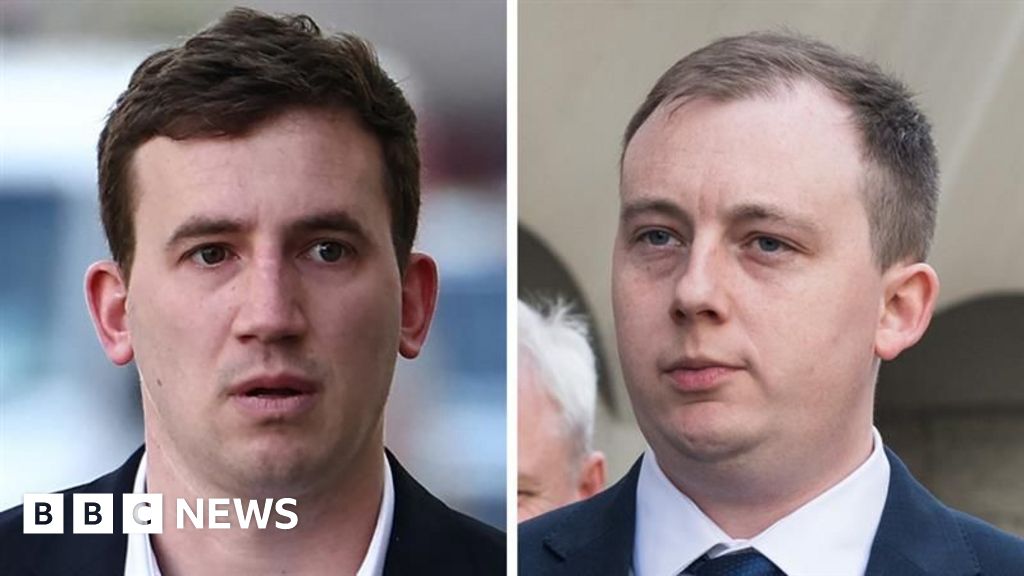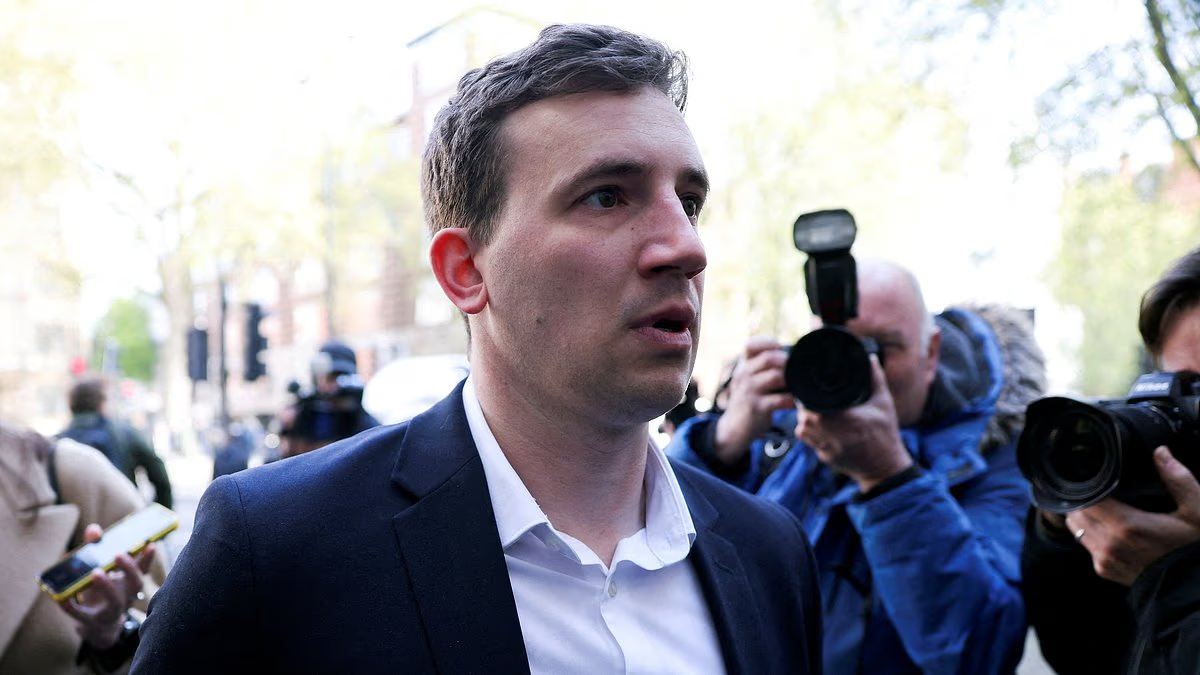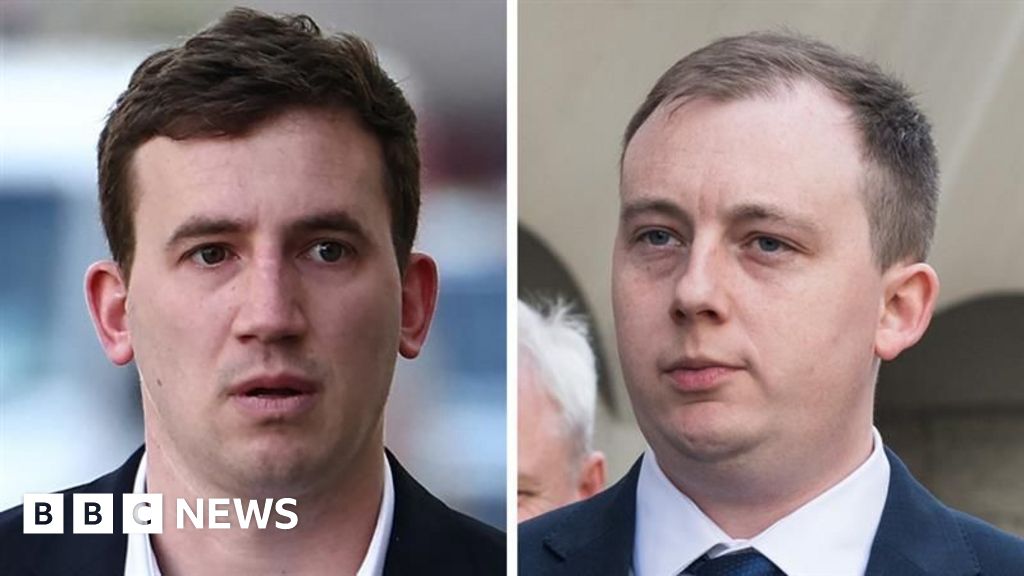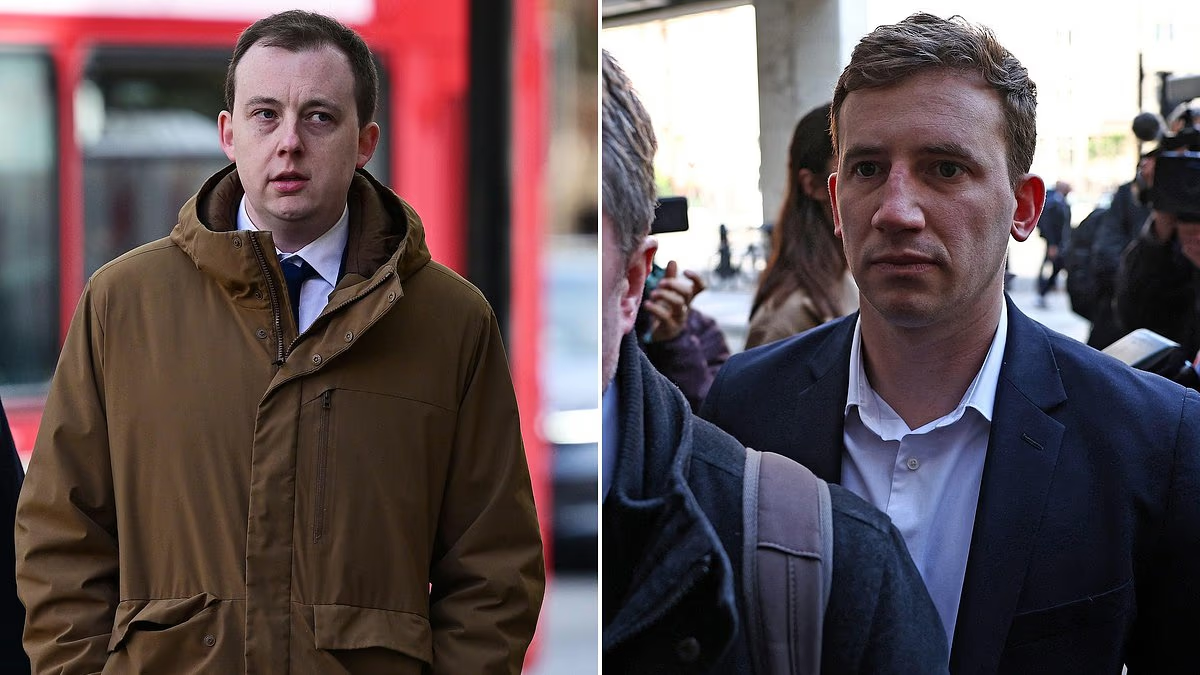
The trial of two men accused of spying for China collapsed after a series of failings by the Government and the UK's own spooks, a parliamentary probe into the furore has found.Parliament's Intelligence and Security Committee (ISC) today lashed out at MI5 and Whitehall over the case involving Christopher Cash and Christopher Berry, which was halted in September.Charges were dropped with the CPS saying it could not get evidence from the Government referring to China as a 'national security threat', prompting opposition accusations of a 'cover-up'. The committee chairman Lord Beamish said that it had been the 'wrong decision' to make Deputy National Security Adviser Matt Collins a witness in the case, after he made it clear he would not counter government policy at the time of their arrest.And he castigated MI5 for then failing to step in and help the prosecution, saying 'If DNSA was unable to say this, then MI5 should have', and 'pushed, through lawyers and seniors, for a witness that could have seen the case to trial'.It also attacked a lack of 'strategic coordination of the Government's approach to the case' which might have spotted 'obvious gaps' in the evidence.'This brings into question - not for the first time - what the role of the NSS (UK's National Security Strategy) is, if not to bring together policy and intelligence,' he added. Parliament's Intelligence and Security Committee (ISC) today lashed out at MI5 and Whitehall over the case involving Christopher Cash (top) and Christopher Berry (above), which was halted in SeptemberFormer parliamentary researcher Cash and Berry – who both deny wrongdoing – had been accused of passing secrets to Beijing between 2021 and 2023. In a separate damning report in December, the Joint Committee on the National Security Strategy (JCNSS) criticised both the Government and the Crown Prosecution Service (CPS) over a process beset by 'confusion and misaligned expectations'. But it found no evidence of deliberate or co-ordinated attempts to block the prosecution, amid claims it was shelved to help the Labour government woo China for economic reasons.Attention had focused on a statement by Mr Collins, with prosecutors saying his refusal to describe Beijing as a 'threat' to national security meant the case could not continue.Mr Collins told the JCNSS he had provided evidence of a 'range of threats' posed by China but had not described the country as a 'generic' threat because that was not the position of the then-Tory government.The ISC today added: 'Given that the statements provided by the DNSA were unable to express the balance - that China can represent both an economic opportunity for the UK, whilst also being a security risk - we questioned why a second witness could then not have been provided in addition to DNSA, so as to provide that second, critical, element. 'The Committee was not convinced by the Intelligence Community and CPS' argument that a second witness would have undermined the DNSA's original statement.'Mr Berry denies any wrongdoing, saying in a statement in September he was now 'unfairly subjected to a trial by media', arguing that his reports for a Chinese company could not be 'considered for a purpose prejudicial to the safety or interests of the stateFormer researcher Mr Cash, meanwhile, said he was 'completely innocent' and has been 'placed in an impossible position' because he has not been able to prove it in a public trial.The committee, which identified China as a strategic threat to the UK in 2013, also highlighted that the prosecution was brought under 'antiquated legislation'.The charges in the case were brought under the Official Secrets Act 1911, which the committee had called to be reformed as a 'matter of urgency'.Delays to the legislation being updated were described by the committee as a 'substantial reason' why the Government was unable to take the case to trial.While the legislation has now been reformed, the committee said the outdated Official Secrets Act 1989 remains in place and should be reformed.Lord Beamish added: 'The failure to include those changes in the National Security Act 2023 means that the requirement to prove damage for certain unauthorised disclosures – which acts as a significant barrier to prosecutions – and the insufficient two-year maximum sentence, remain in place.'Successive governments have shown no intention to reform this outdated legislation.'The committee will continue to exhort the Government to act, and to introduce these vital reforms as soon as possible.'The committee is encouraged to see a new National Security Bill for this parliamentary session.'This must be used as a vehicle to reform this outdated legislation.'If any lesson is to be learned from the frustration at the failure of this case, it is this – we must have the legislative tools to fight those who wish to cause this country harm.'The committee also expressed disappointment that the Foreign, Commonwealth and Development Office had refused its request for further evidence in the case relating to events leading up to the decision not to prosecute Mr Cash and Mr Berry.
China 'spies' trial collapsed 'after errors by Government, spooks'
Parliament's Intelligence and Security Committee (ISC) today lashed out at MI5 and Whitehall over the case involving Christopher Cash and Christopher Berry, which was halted in September.
827 words~4 min read