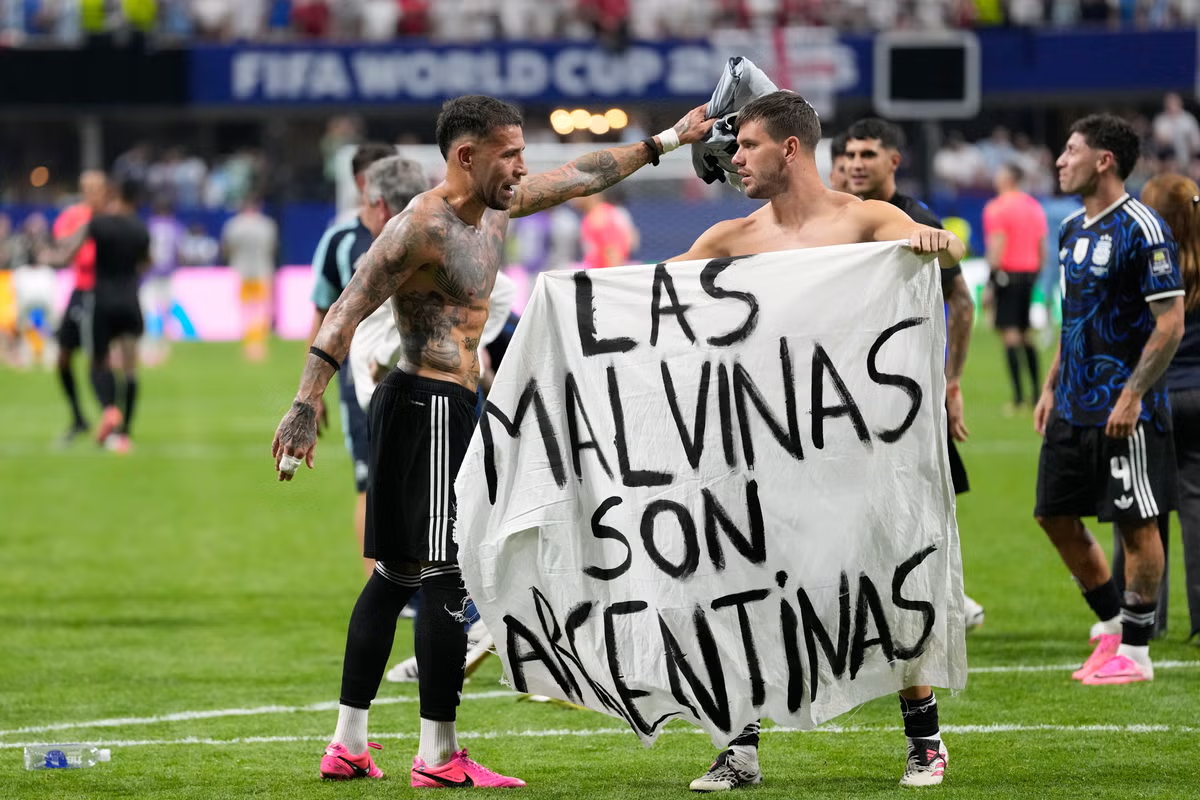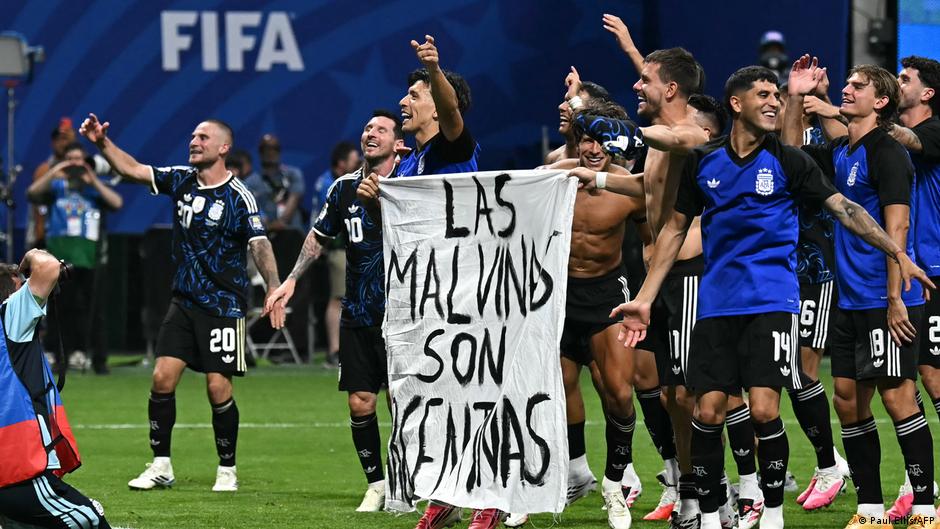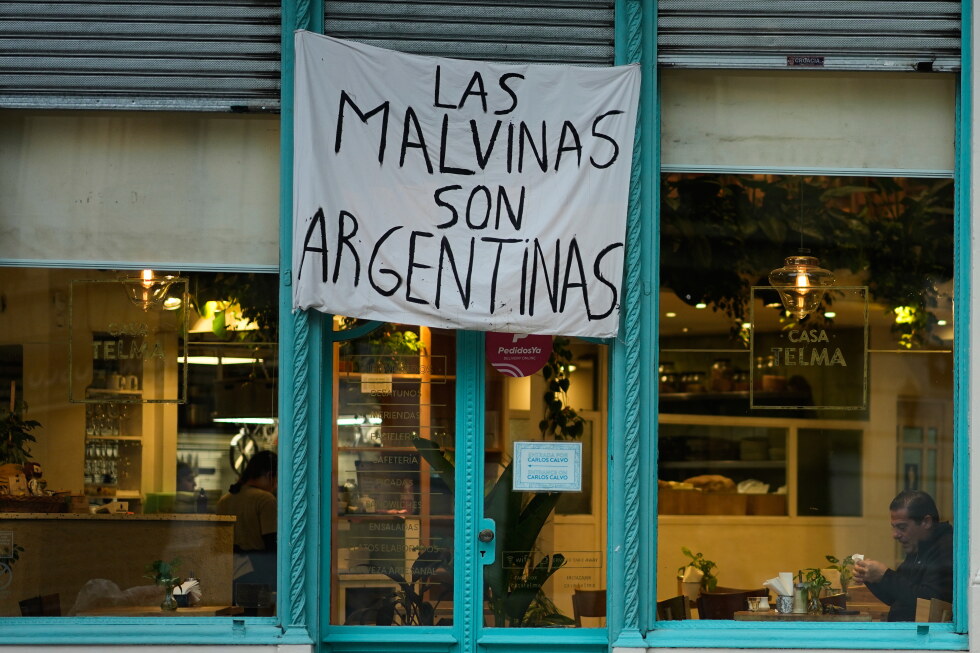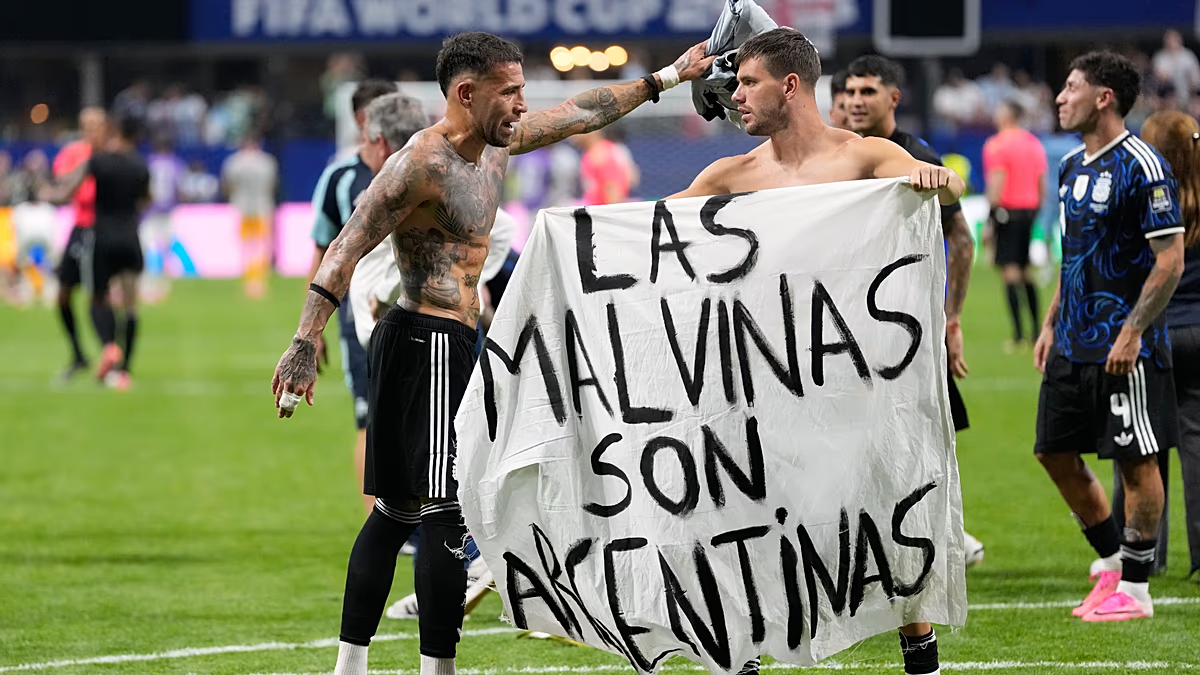
Why are the Falkland Islands in the news again? Members of the Argentina team that beat England in Wednesday’s World Cup semi-final displayed a banner that said: “Las Malvinas son Argentinas” – which translates as “The Falklands are Argentinian”.Where are the islands and who were the first settlers? The Falkland Islands are about 500km east of Argentina in the south Atlantic. They consist of two main islands – East Falkland and West Falkland – along with hundreds of smaller islands. They were uninhabited when an English captain, John Strong, landed in 1690. The first settlement occurred in 1763 when France set up a base on East Falkland and called the islands Îles Malouines. A year later, without French knowledge, the British set up a trading post on West Falkland and claimed the islands. Two years later the French sold their interest to Spain. The Spanish renamed the islands Islas Malvinas. The British and the Spanish claimed sovereignty over both islands and the Spanish expelled the British. The incident nearly led to a war in 1770, which was averted, but the issue of ultimate sovereignty was not resolved. The islands became uninhabited again.How did Argentina become involved? Argentina did not exist when the Falkland Islands were discovered. It declared independence from Spain in 1816 and assumed sovereignty over all previous Spanish territories in the region, including the Falkland Islands, which were once again uninhabited. The Falkland Islands, a sparsely populated territory in the south Atlantic. Photograph: Sebastian Modak/The New York Times
What’s the story behind Argentina players holding up a banner about the Falkland Islands?
Hundreds of years of dispute preceded the postmatch display at the World Cup of a banner saying ‘Las Malvinas son Argentinas’
668 words~3 min read