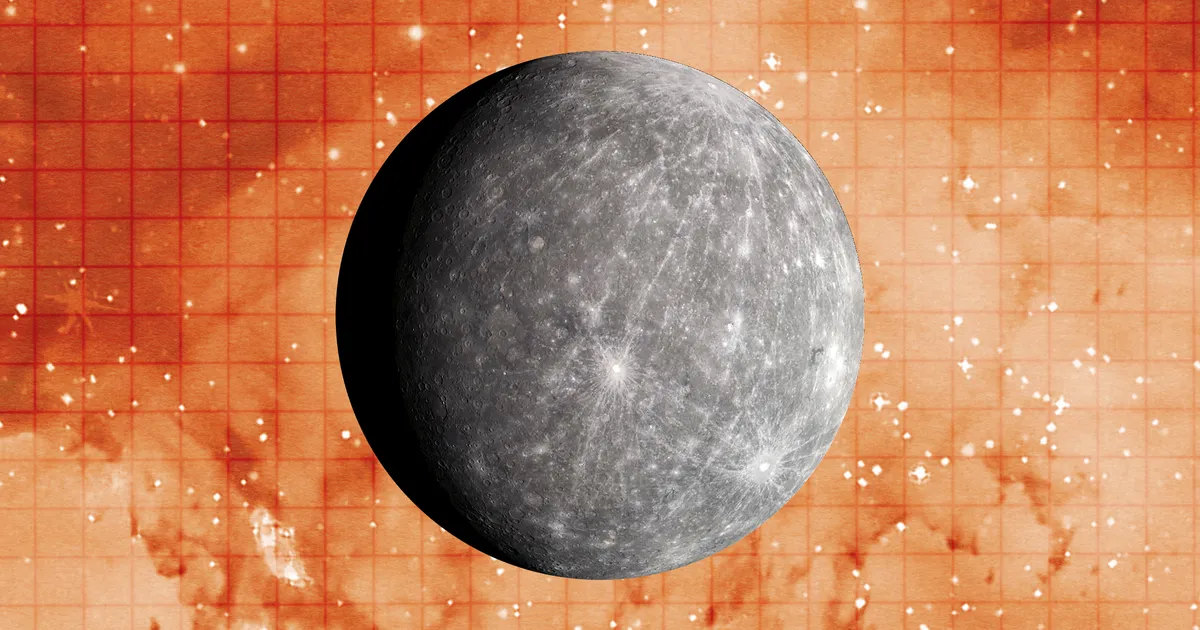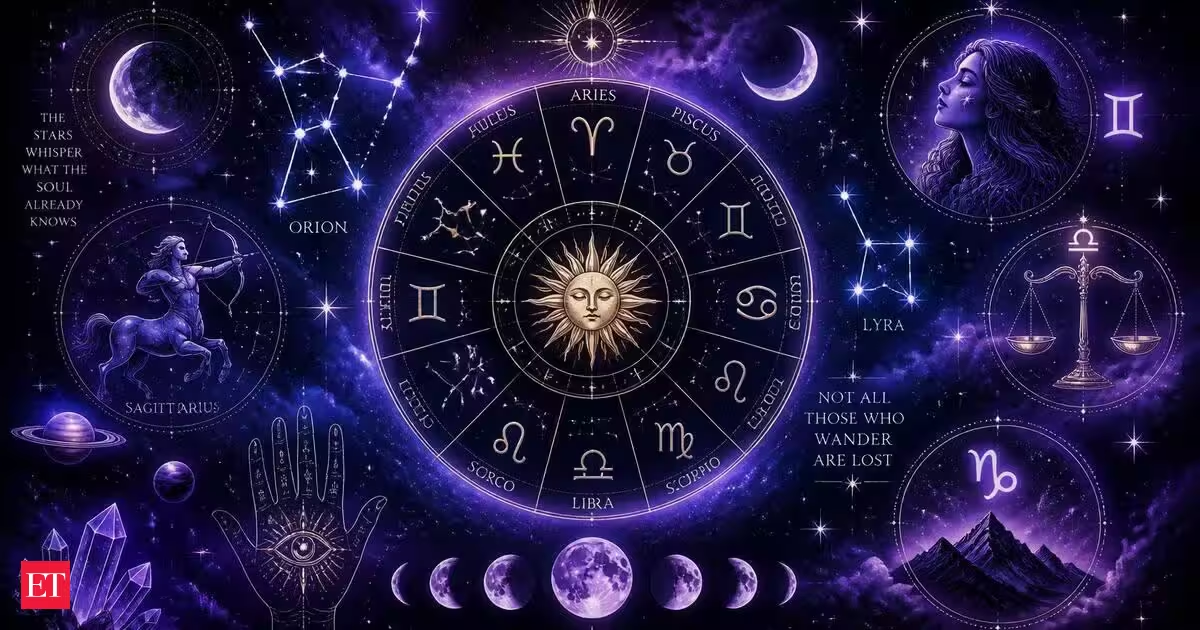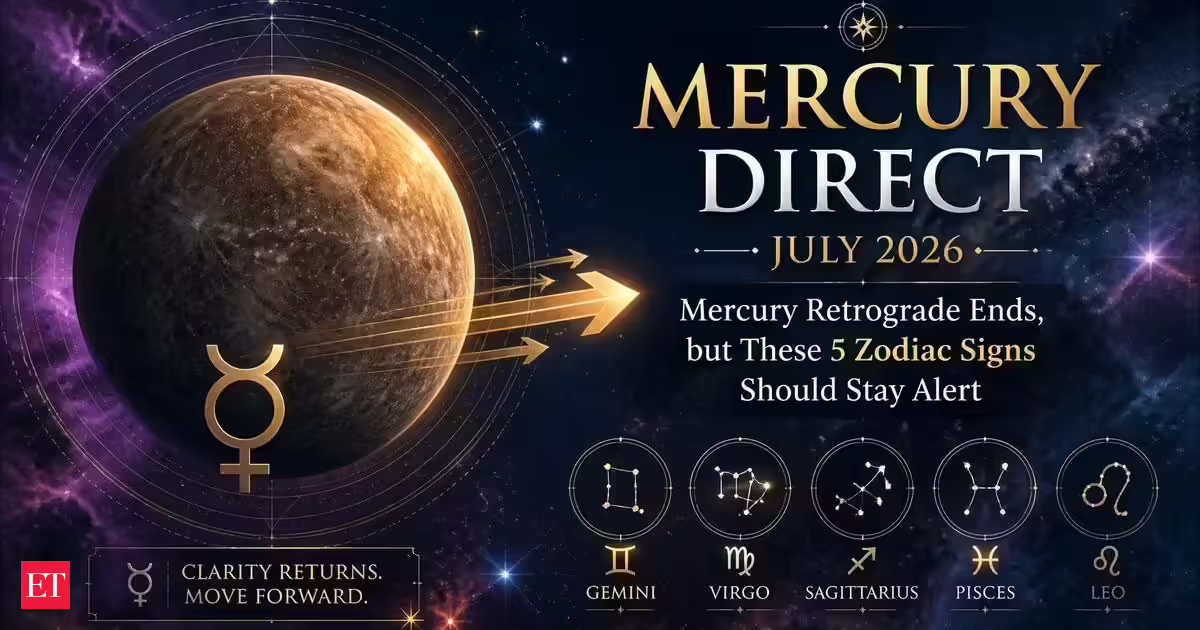
July 23 marks the end of Mercury retrograde, an astrological cycle that millions of Americans follow every year because of its reputation for bringing communication problems, travel disruptions, technology glitches, and unexpected delays. Whether you check your horoscope every morning or simply notice Mercury retrograde trending across social media, this date attracts attention because astrologers believe it signals a gradual return to clearer thinking and smoother progress.What is Mercury retrograde, and why do astrologers pay so much attention to it? Mercury is the smallest planet in our solar system and, in astrology, it symbolizes communication, thinking, learning, travel, technology and daily decision-making. Several times each year, Mercury appears to move backward across the sky from Earth's perspective. This is called Mercury retrograde. Mercury retrograde is an astronomical optical illusion that occurs three to four times a year. It happens when Mercury appears to slow down, stop, and move backward across the sky. In reality, no planet ever actually moves backward in its orbit. From an astronomical perspective, Mercury never physically reverses its orbit around the Sun. Instead, the planet only appears to move backward against the background of stars because Earth, traveling in a larger and faster orbit at certain points, temporarily passes Mercury. Astronomers call this an apparent retrograde motion, an optical effect rather than a real reversal.Gemini, Virgo, Sagittarius, Pisces, and Aries are the signs most likely to notice meaningful emotional or practical changes after July 23.Astrology interprets that same astronomical event differently. Because Mercury is traditionally associated with communication, learning, travel, technology, contracts, and everyday decision-making, astrologers believe periods when Mercury appears to move backward symbolically encourage people to slow down, revisit unfinished business, rethink plans, and resolve old misunderstandings instead of charging ahead. That distinction matters. There is no scientific evidence that Mercury retrograde directly causes delays, relationship conflicts, or technology failures. Those interpretations belong to astrology, a belief system practiced for thousands of years, not to astronomy, which studies planets through observation and physics. Still, millions of people find astrology meaningful as a framework for reflection, timing, and personal growth. As Mercury prepares to turn direct on July 23, many astrologers believe the emphasis shifts from reviewing the past to gradually moving forward again. Emails finally get answered. Difficult conversations become easier. Plans that felt stuck begin to regain momentum. Instead of constantly revising, people often feel more ready to act. Gemini and Virgo almost always appear at the top of that list because Mercury is their ruling planet.As astrologer Chani Nicholas has written, retrogrades invite reflection before action. That idea has become one of the defining themes of modern Western astrology—not because planets force human behavior, but because they provide a symbolic calendar for self-examination. This particular Mercury retrograde has drawn unusual attention because it occurred in Leo, a fire sign traditionally linked with confidence, creativity, leadership, self-expression, and visibility. In astrological practice, Mercury traveling through Leo often encourages people to speak boldly, share ideas publicly, and express themselves with greater confidence. During retrograde, however, those same qualities may feel blocked, misunderstood, or repeatedly questioned. When Mercury resumes direct motion, astrologers believe many of those themes begin shifting again. The change is rarely described as instant. Instead, most Western astrologers suggest allowing several days for Mercury to regain normal speed before expecting complete clarity. Even so, not every zodiac sign experiences Mercury retrograde in exactly the same way.Gemini, Virgo, Sagittarius, Pisces, and Aries the Zodiac Signs to Watch After Mercury Retrograde Ends One question appears every time Mercury retrograde comes to an end: Why do astrologers focus on certain zodiac signs instead of all twelve? The answer lies in how Western astrology interprets Mercury's relationship with each sign rather than assuming everyone experiences the same energy. Gemini and Virgo almost always appear at the top of that list because Mercury is their ruling planet. In astrology, a ruling planet is believed to influence a sign's natural strengths and how it processes everyday life. Gemini is associated with curiosity, conversation, learning, and exchanging ideas. Virgo is linked with organization, routines, analysis, work, and practical problem-solving. When Mercury appears to move backward, astrologers believe people born under these signs may feel the effects more personally because the planet symbolically governs areas they naturally rely on. As Mercury turns direct on July 23, astrologers suggest Gemini may notice conversations flowing more easily, delayed replies arriving, or projects that stalled finally gaining traction. For Virgo, the shift is often connected with restoring order after weeks of revising plans, fixing mistakes, or feeling mentally overloaded. Rather than promising dramatic overnight changes, astrologers describe this period as a gradual return to clarity. Sagittarius and Pisces are also frequently highlighted, but for a different reason. In traditional astrology, they sit opposite Gemini and Virgo on the zodiac wheel. Opposite signs are thought to create a balancing relationship, meaning Mercury retrograde can bring extra tension between logic and emotion, planning and intuition, or certainty and doubt. For Sagittarius, Mercury retrograde may have coincided with travel changes, educational goals, legal paperwork, or long-term plans needing unexpected revisions. As Mercury resumes direct motion, astrologers believe these broader life decisions often become easier to navigate because information begins falling into place. Pisces, meanwhile, is often described as one of the zodiac's most intuitive signs. During retrograde, astrologers say emotional misunderstandings or unclear boundaries can feel especially frustrating. After July 23, many believe Pisces may find it easier to express feelings, resolve lingering conflicts, and make decisions without constantly second-guessing every possibility. The fifth sign attracting attention is Aries. Although Mercury does not rule Aries, this retrograde unfolded in Leo, another fire sign. Fire signs are traditionally connected through shared qualities such as confidence, initiative, creativity, and personal expression. Because of that symbolic connection, many astrologers believe Aries may feel renewed motivation once Mercury turns direct, particularly in career conversations, creative projects, leadership opportunities, or personal goals that lost momentum during recent weeks. Astrologers also emphasize that your Sun sign tells only part of the story. A complete birth chart includes the exact positions of the Moon, rising sign, Mercury, Venus, Mars, and other planets at the moment of birth. Someone with Mercury in Gemini or Virgo, for example, may experience this transition differently from another person with the same Sun sign. That is why professional astrologers rarely make absolute predictions based solely on one zodiac sign. Another important point often gets overlooked online. Mercury turning direct does not mean everything instantly returns to normal on July 23. Many astrologers describe a short "post-retrograde shadow" period, when Mercury gradually regains its normal speed. During those days, they recommend double-checking important emails, reviewing contracts carefully, and giving conversations a little extra patience instead of assuming every obstacle has disappeared overnight.Disclaimer: This article is intended for general informational purposes only and does not constitute professional or expert advice. Readers are advised to consult a qualified professional or seek expert guidance before making any decisions based on the information provided.
Mercury retrograde is finally ending: If the past few weeks felt unusually difficult, these 5 zodiac signs are about to get massive relief
July 23 could feel like a turning point for astrology followers. Mercury retrograde, the period when Mercury appears to move backward in the sky, is coming to an end after weeks of delays and misunderstandings. Astrologers believe Gemini, Virgo, Aries, Sagittarius, and Pisces may be the first zodiac signs to experience clearer communication, fresh opportunities, and a welcome sense of emotional relief.
1,161 words~5 min read