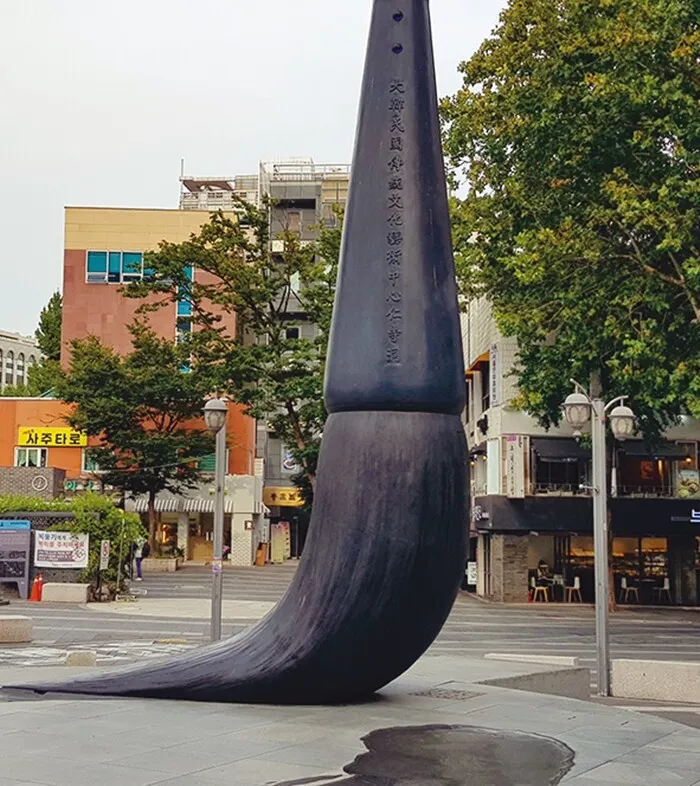
A sculpture of a giant calligraphy brush
The original version by Édith Piaf is fine, and the cover by Louis Armstrong is pretty good, but the performance by the 12 Cellists of the Berlin Philharmonic is the best way to listen to “La Vie en Rose” in the fall. The autumn is pretty much the only season when one can appreciate the subtle presentation of the rose’s red-hot passion, muted by the sobriety of the cellos and the distinctive restraint of the Berlin Philharmonic.While listening to the song, I take out a volume of poetry by Rainer Maria Rilke. While Rilke is renowned as the “poet of roses,” he was as likely to compare life’s ripeness to wine as to roses. That’s what we find in the poem “Autumn Day,” which begins with the lines, “It is time, Lord. Summer was grand.”“Let the late harvest linger. / Give it two more southern days. / Make it full and bring her / final sweetness into those heavy vines.”
A stone inscribed with a poem by Gim Yeong-rang
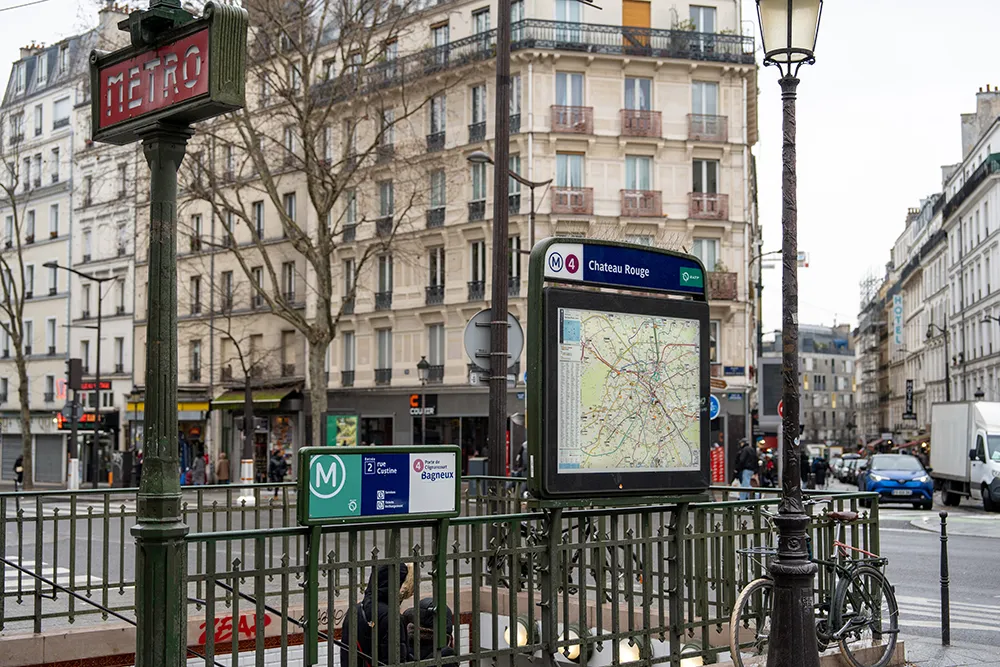
As the poet says, October is the final month when the sun shines down with kindness before we move toward winter. That precious sunshine warms my shoulders as I head to the Insadong neighborhood in downtown Seoul. This was one of the city’s first areas to block off its main street for pedestrian traffic on the weekends. I’m there to sample the tea for which the neighborhood is known.Emerging from Exit No. 6 of Anguk Station on the Seoul subway, I walk toward Anguk Neighborhood Intersection, where I find a little plaza called North Insadong Madang. The plaza used to host colorful events every day, but since the coronavirus pandemic began, the plaza’s big statue of a calligraphy brush and a sign that says, “Insadong: home of traditional art in Korea” look rather lonesome. A stone block nearby is inscribed with the poem “Sunbeams Whispering on the Stone Wall,” but I have to strain my eyes to make out the words.