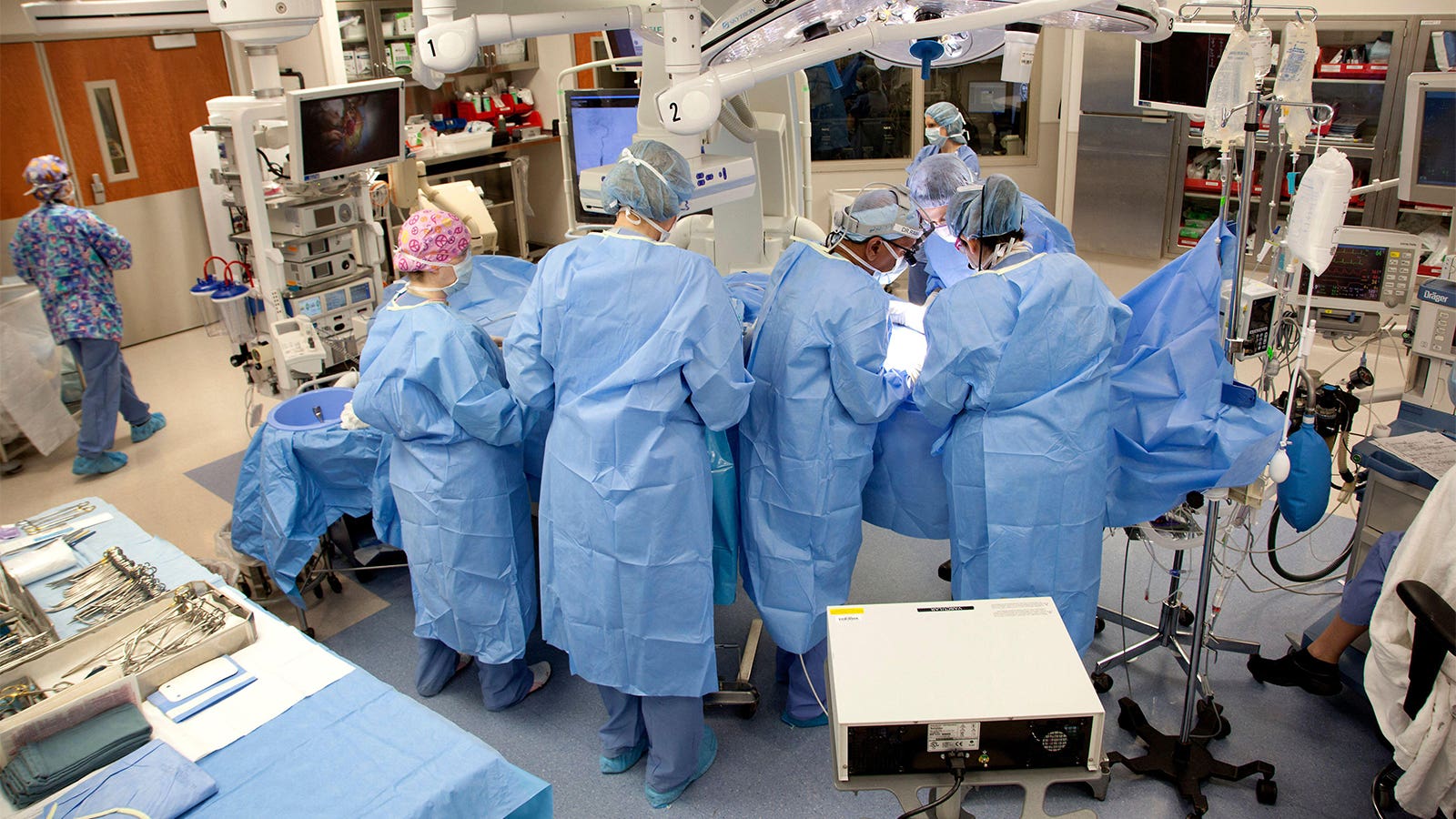
St. Luke's Magic Valley Medical Center earned an overall 5-star rating on Forbes Top Hospitals 2026 list.Courtesy of St. Luke's Health SystemHigh marks on healthcare ratings don’t come easily. A hospital that earns top scores when it comes to preventing harms like post-surgical complications, medication errors, delayed diagnoses, falls, and hospital readmissions, has clearly made a substantial commitment to healthcare quality improvement. And the 781 hospitals on Forbes’ new list of Top Hospitals By State 2026 exemplify this dedication to delivering high-caliber patient care.To identify these hospitals, Forbes drew from the 2026 national list of Forbes Top Hospitals, which is based on vetted healthcare measures from the Centers for Medicare and Medicaid Services (CMS) Provider Data Catalog (PDC). Then, building from this methodology, the top 30% (on average) of general acute care hospitals in each state were calculated.But the numbers can’t tell the full story. Each metric represents an aspect of patient care, whether that involves tried-and-tested processes, the use of new medical equipment, a change in workflow across departments, the addition of nursing staff to weekend shifts or a new app intended to streamline electronic medical records. And behind each intervention, are lessons to be learned.At St. Luke’s Magic Valley Medical Center, in Twin Falls, Idaho, and St. Luke’s Wood River Medical Center, in Ketchum, Idaho—both of which earned an overall rating of 5 stars on Forbes’ list—the staff is continually working on ways to improve, and, as a result, has learned many lessons over the years. “We really have made quality and safety a priority and part of our culture,” says Jenny Hopkins, who is a registered nurse and the director of St. Luke’s Magic Valley Medical Center and St. Luke’s Jerome Medical Center, a smaller critical access hospital within the St. Luke’s Health System.Hopkins says that staff members are encouraged to speak up if they see a gap in care or a way to make a protocol safer, more effective or more efficient. “If they have a concern, let us know because we really want to be more proactive in our approach to risk and improvement,” she says. “We want to make sure we’re preventing harm before it occurs. While we can learn a lot from a harm event, we don’t want that to be the way we’re learning.”In recent years, St. Luke’s Magic Valley leadership and staff have piloted many interventions that have led to lower infection rates and improved outcomes.Here are three such initiatives that have made the hospital safer and benefited patients:Nasal DecolonizationIssue: Hospital-acquired infections (HAI) are common at healthcare facilities. Patients undergoing surgery can be particularly vulnerable to these infections because when there is an opening in the skin or an incision hasn’t yet healed, bacteria or fungi can penetrate the area and cause a type of HAI known as a surgical site infection (SSI). While patients can be exposed to external bacteria or fungi in the operating room, often, the organisms come from the patient’s own skin, mucous membranes, or gastrointestinal tract.Intervention: “My infection prevention team worked very closely with my surgical services leadership to implement universal nasal decolonization,” says Hopkins, which is less complicated than it may sound. To decolonize the nose, patients’ nostrils are simply swabbed with a cotton tip that has been coated with antiseptic. Many people unknowingly carry antibiotic-resistant microorganisms, such as methicillin-resistant Staphylococcus aureus, so swabbing the nostrils prior to surgery can eliminate or inhibit the growth of those pathogens (and any others in the nose) and reduce the risk of an infectious organism penetrating the surgical site.Impact: “It’s one of those little steps we can take and is super easy, so when anybody is coming in for surgery, [staff] swabs their nose and it really does help decrease the bacteria,” says Hopkins. Indeed, this small act had a big impact at St. Luke’s Magic Valley, dropping the facility’s SSI rate to lower than it had ever been, notes Hopkins. Further, once the numbers demonstrated the impact of the protocol, it was implemented across the system’s facilities.Catheter Associated InfectionsIssue: Another way a hospital-acquired infection can develop is through a urinary catheter, a flexible tube used to drain the bladder when a patient is confined to a bed. While the device, technically called a Foley catheter, can be vital, it can also be a pathway for germs to enter the body and lead to a catheter-associated unitary tract infection (CAUTI). At the time Hopkins looked at the rates of CAUTIs at St. Luke’s Magic Valley, she found that a lot of patients were given Foley catheters who perhaps didn’t always need them.Intervention: Once again, Hopkins collaborated with the infection prevention team and evaluated which patients were getting catheters and whether using the device was the best option in various circumstances. “We worked to reinforce the nursing team’s knowledge of the protocol and worked with providers to understand why we would want to take out the Foley catheter,” says Hopkins. “We then worked with our materials management team to make sure we had alternative products that we could use to keep patients clean and dry.”Impact: The shift in the staff’s practices decreased the facility’s use of catheters and reduced the number of CAUTIs at the hospital. “It was a big team effort,” says Hopkins, “and I’m excited to say we haven’t had a catheter-associated UTI at St. Luke’s Magic Valley since September 1st of 2024.”Hospital ReadmissionsIssue: When patients are discharged from the hospital after receiving care, typically, the goal is for them to continue recovering at home (or at a rehabilitation center) until they are fully healed. A high rate of readmissions to the hospital soon after discharge can signal a need for improved practices.Intervention: To reduce readmissions, Hopkins and team focused on enhancing how St. Luke’s Magic Valley helped transition patients back into the community. “Discharge education is definitely a priority for us,” she says. For example, the hospital has a discharge information pack that is specific to patients who were treated with sepsis, “and we really work on educating those patients before they leave so that when they go home, they’re successful, and they don’t get sicker to the point where they’re needing to be readmitted.”To that end, the staff talks with patients about the importance of taking their full course of antibiotics, how to look out for symptoms of worsening sepsis (like a high fever or redness around the infection site) and what steps to take if the infection intensifies. Patients are also sent home with a laminated information sheet, a magnet (to stick the sheet on the refrigerator) and a dry erase marker. This is meant to ensure that crucial information is “front and center and not tucked away,” says Hopkins, and that patients have a place to mark their progress.Another initiative the hospital has implemented is a free program—staffed by the ambulance service that St. Luke’s Health System owns—in which paramedics check up on high-risk patients after they leave the hospital. “They go out there and they look and interact with the patients to see if they need anything. And then if they do, we’re able to signal that, and get some additional help before we maybe need to readmit them,” says Hopkins.Impact: These multipronged efforts to ensure that transitions from the hospital to home are as safe and smooth as possible have helped to keep readmission rates down. And the key to many of these interventions, says Hopkins, is involving the entire care team in the solutions. “We want to make the right thing to do the easy thing to do, and the only way we can do that is if we have frontline representation at the table,” she says. “They’re the ones who, at the end of the day, are going to have to carry all of this out and make sure that we’re keeping our patients safe.”To see the list of Forbes Top Hospitals By State 2026, click here.To view a summary of the national ratings and list methodology, click here.Forbes Top Hospitals ratings are not medical advice. They can assist people in learning about different providers, but the ultimate choice for care should be made by the patient or their loved ones in consultation with their medical provider. In any emergency, call 911.Forbes remains committed to transparency, to continually improving our methods, and to providing hospital ratings that consumers trust. For questions about these ratings, please email TopHospitals [@] Forbes.com.
3 Initiatives That Made This Top Hospital Safer
Behind the hospital ratings are metrics, each of which represent an aspect of healthcare and a team working to provide it. See what this staff did to improve patient safety and quality.
1,400 words~6 min read