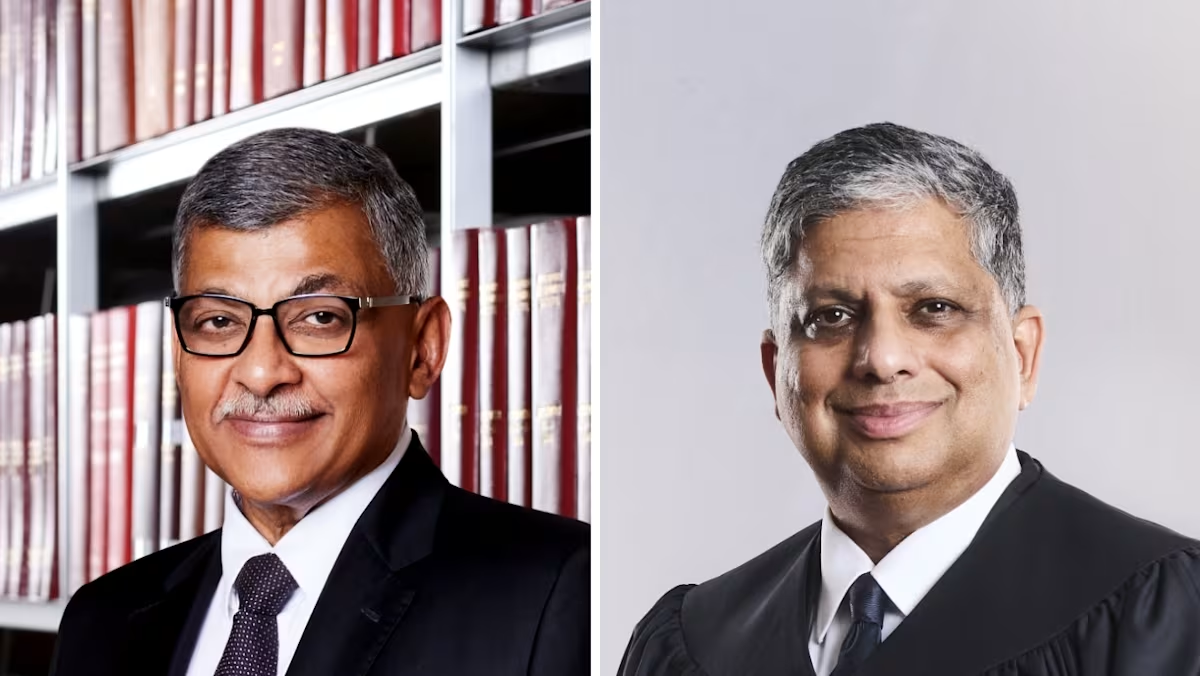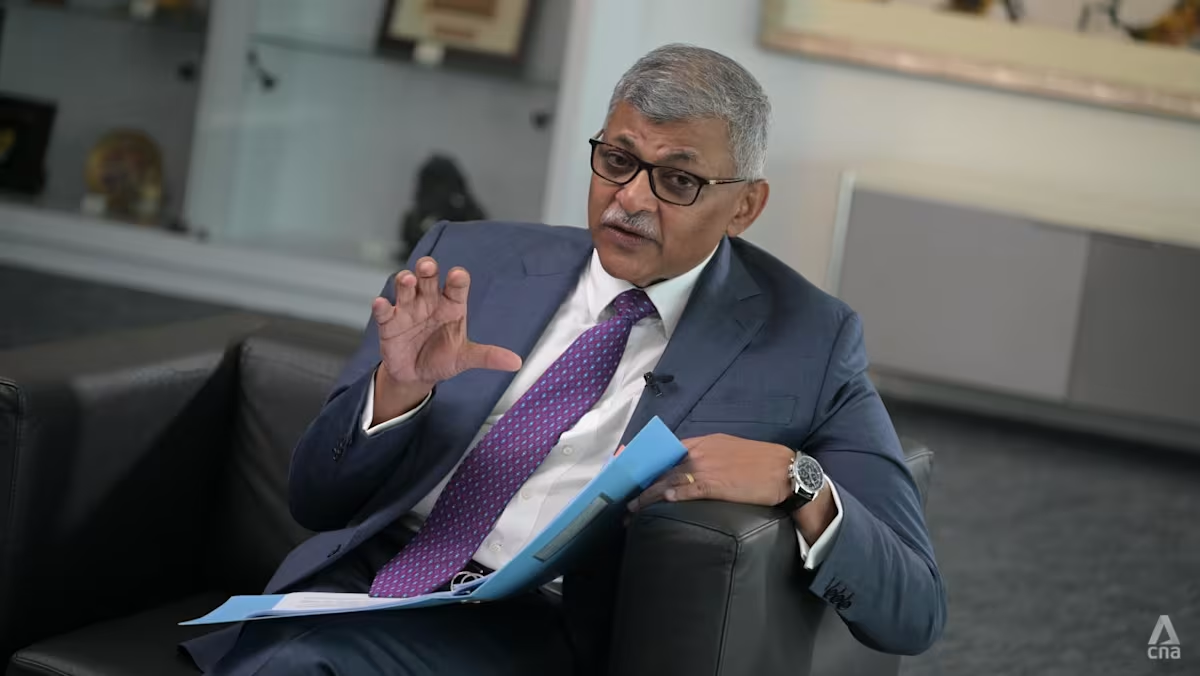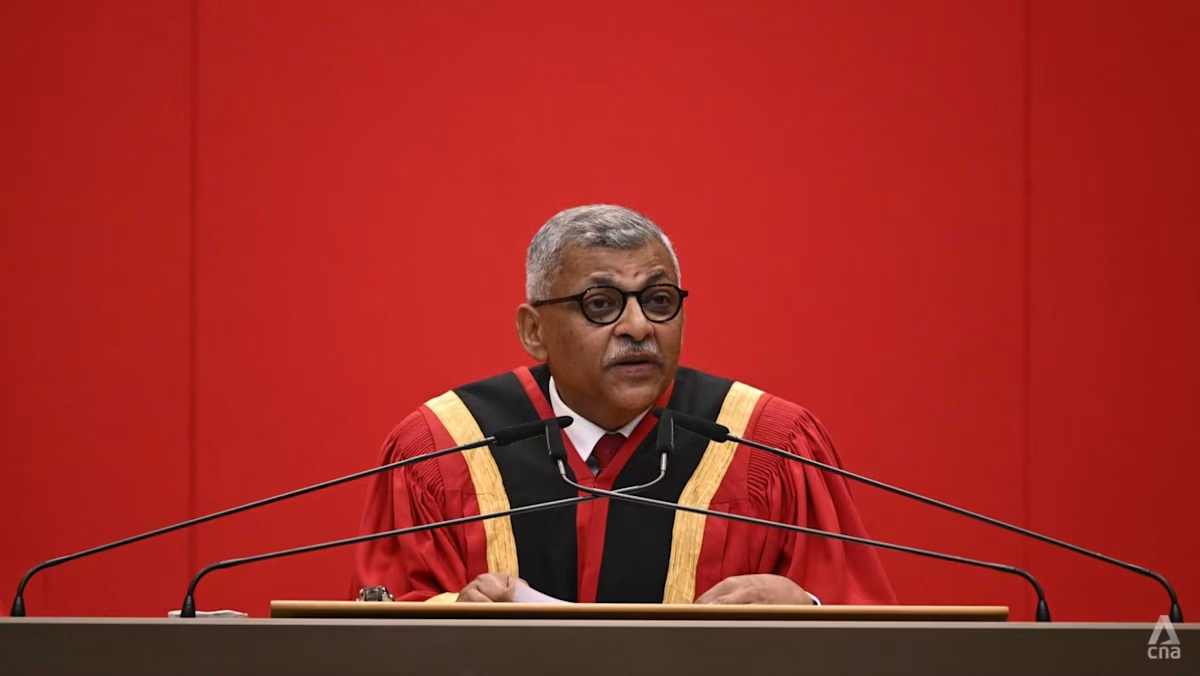
SINGAPORE: Before he became Singapore's fourth Chief Justice, Sundaresh Menon had already built one of the country's most distinguished legal careers. He became a law firm partner at just 27, helped found one of Singapore's largest firms and later served as Attorney-General.Over the next 14 years as head of the judiciary, he would oversee changes to modernise the courts while presiding over landmark cases on online falsehoods, Section 377A and the death penalty that shaped Singapore's legal landscape.Chief Justice Menon, 64, will retire on Feb 26, 2027, after more than 14 years at the helm of the Supreme Court. He will be succeeded by Justice of the Court of Appeal Sushil Nair, 62.A graduate of the National University of Singapore and Harvard Law School, Chief Justice Menon was just 27 when he became a partner in law firm Shook Lin & Bok in 1990.After helping to found WongPartnership in 1992, he later joined Rajah & Tann, where he became managing partner in 2009.His rise continued into public service in 2010, when he became Attorney-General. Not long after, in 2012, he was appointed Singapore’s fourth Chief Justice at the age of 50.Reforming the family justice system was among Chief Justice Menon’s avowed priorities when he took office. His tenure saw the adoption of the therapeutic justice model in the Family Justice Courts, including the Youth Courts.This moved the resolution of family disputes and treatment of young offenders from an adversarial paradigm to a problem-solving, rehabilitative approach.Explaining this philosophy, he likened the family judge to “a doctor with a focus on diagnosing the problem, having the appropriate bedside manner to engender trust and convey empathy, and the wisdom to choose the right course of treatment so as to bring a measure of healing”.A notable change in this spirit was a simplified track for divorce introduced in 2015, enabling faster, less costly and less acrimonious proceedings.Under Chief Justice Menon’s watch, the judiciary also took steps to improve access to justice, especially for those navigating the courts without legal representation.This extended to using simpler terms: an “order to attend court or produce documents” instead of “subpoena”, for instance.Another initiative was the Singapore Judicial College, launched in 2015 to centralise judicial training, which had until then been managed by individual courts.The founding of the Singapore International Commercial Court (SICC) can also be traced back to the chief justice, who first proposed the idea in 2013.The SICC was launched two years later, boosting Singapore’s status as a neutral venue for international commercial dispute resolution.He also steered the courts through technological changes such as remote hearings and online services during the COVID-19 pandemic, as well as the judiciary's adoption of artificial intelligence tools.In a May interview with local media, he warned of social media contributing to “truth decay” by allowing anyone with mass reach to propose their own version of the facts.This, he said, is partly why the judiciary makes sure to give reasons for its decisions and explain them in a way accessible to laypeople.“I always make the point that you write judgments for a range of audiences, and it’s not the case that you’re writing judgments only to make law and only to speak to lawyers,” he said.“You’re also writing judgments to speak to the parties, and more importantly, in a sense, you’re writing judgments to speak to your country.”Former Justice Choo Han Teck said it was a “privilege” to have known Chief Justice Menon in many capacities, from law school to the present.“Lawyers will remember him for his thoughtfulness and vision, and I will also remember him for his friendship,” the retired judge told CNA.
From Bar to bench: Chief Justice Sundaresh Menon's career and landmark rulings
Chief Justice Menon, who will retire in February 2027, oversaw landmark rulings that struck at the heart of how the law takes shape in the lives of ordinary people.
1,121 words~5 min read