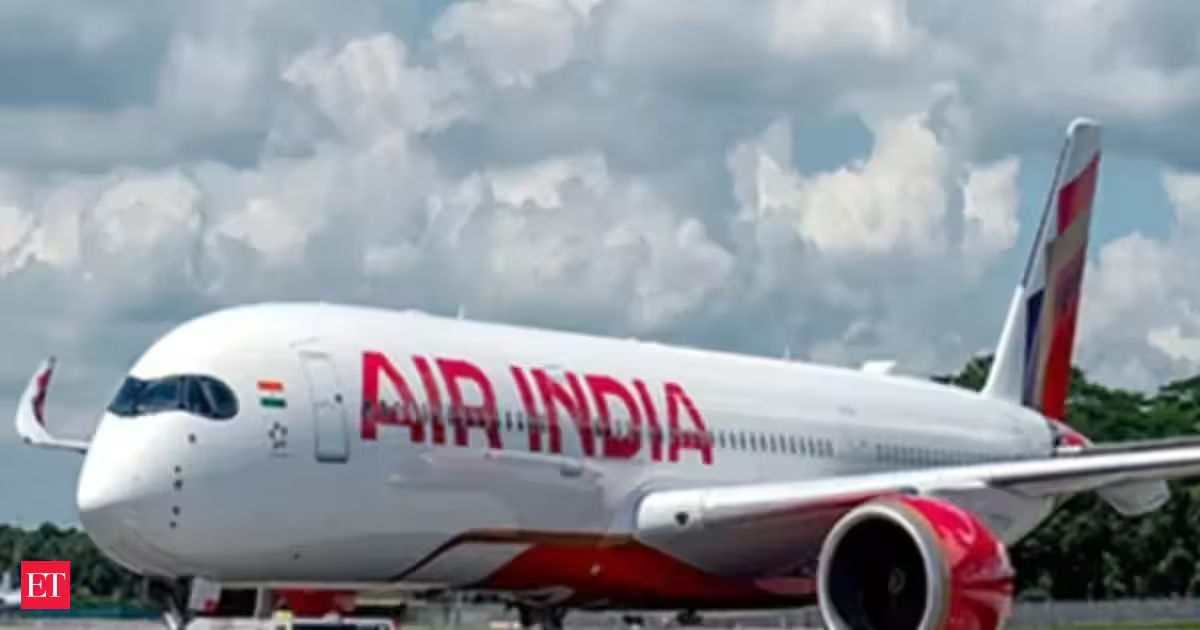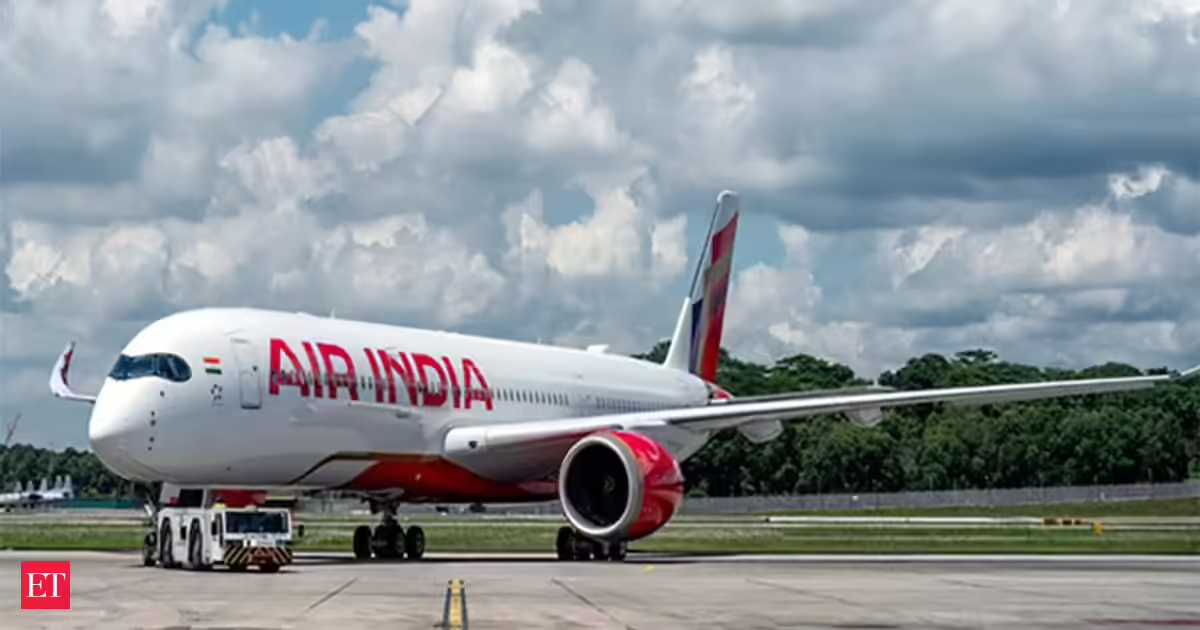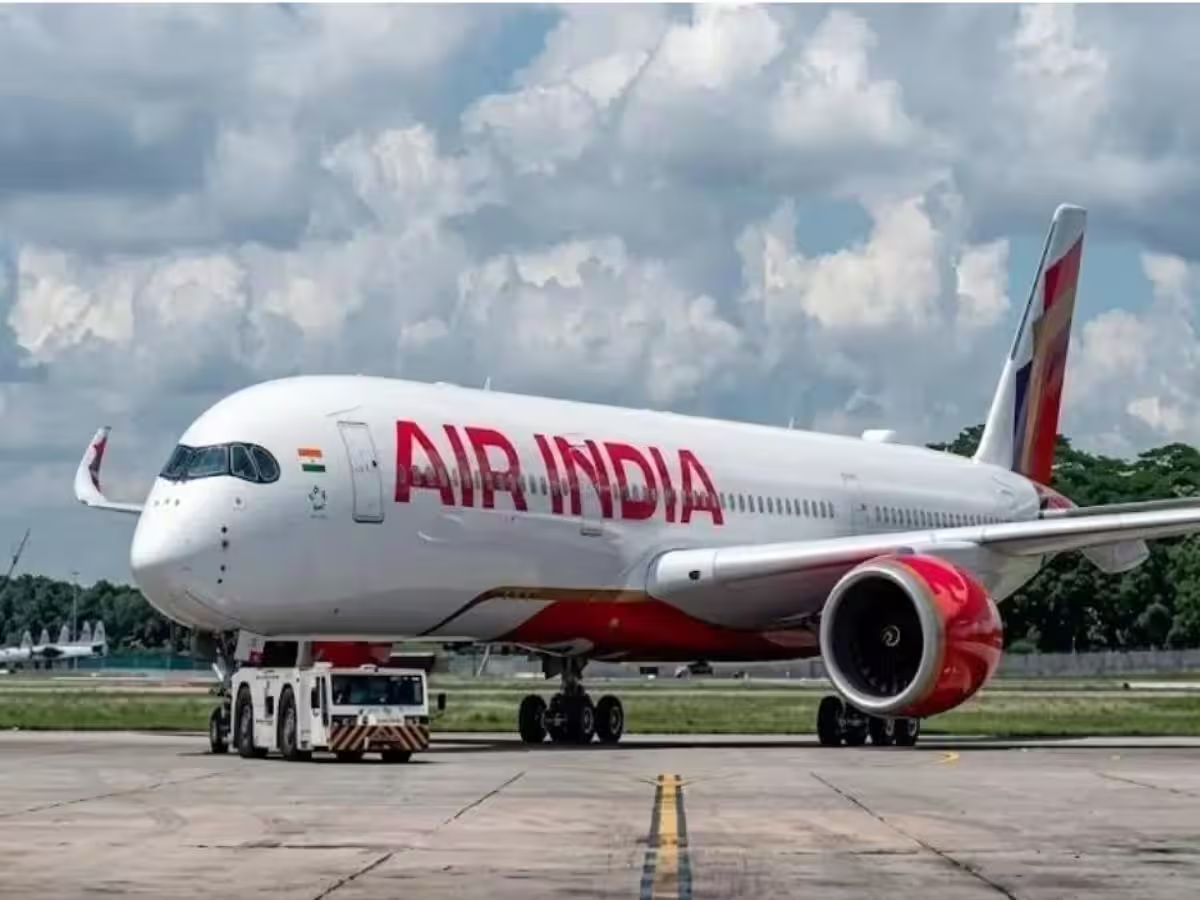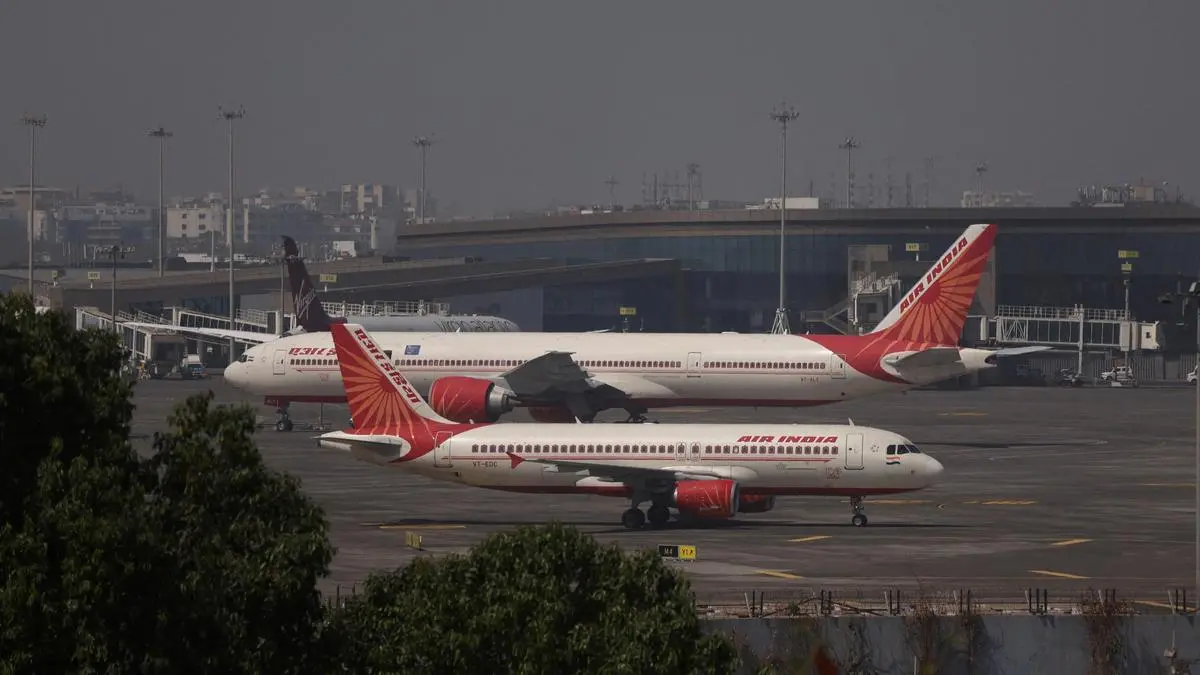
Aggarwal said the continuing closure of Pakistan’s airspace remains the biggest operational challenge for the airline
| Photo Credit:
Tata Group-backed Air India expects to restore most of its temporarily suspended domestic and international capacity from September as the network rationalisation undertaken during June, July and August comes to an end, said the airline’s Chief Commercial and Transformation Officer, Nipun Aggarwal.However, services to Chicago and Washington are expected to remain suspended because of aircraft availability constraints.Aggarwal, who also serves as Chairman of Air India Express, was speaking on the sidelines of a tourism conference organised by the Federation of Associations in Indian Tourism & Hospitality (FAITH) here on Friday.September BookingNotably, Aggarwal said the airline had planned capacity reductions only during June, July and August, while flights scheduled from September onwards were never withdrawn from the reservation system.“We have cut the capacity only for June, July and August. From September onwards, most of the flights are already on sale,” he said.Besides, Aggarwal said the continuing closure of Pakistan’s airspace remains the biggest operational challenge for the airline, although the reopening of Iranian and Iraqi airspace would provide significant relief.He said the airline continues to rebalance its network wherever possible, but there is little it can do beyond adapting schedules until the geopolitical situation improves.Aircraft OrderFurthermore, Aggarwal said the Pakistan airspace closure has no bearing on Air India’s aircraft acquisition plans as the airline’s orders have already been placed.“The order is already placed,” he said.On international operations, Aggarwal said Europe-bound operations are expected to return to normal from September, while most frequency reductions across the network will be progressively restored through August.Furthermore, he said that Newark will regain frequencies as capacity returns. However, Chicago will continue to remain suspended, while Washington services will also stay on hold because of aircraft shortages arising from the airline’s ongoing fleet retrofit programme.Retrofit and DelaysAccording to him, Air India currently has fewer aircraft available because several wide-body aircraft are undergoing retrofit, while older Boeing 777-200LR aircraft have been retired and deliveries of new aircraft have been delayed.“The aircraft that we were supposed to get have been delayed. The old aircraft were retired,” he said, adding that deliveries of new aircraft, including the Airbus A350-1000, are expected to commence towards the end of the year.Aggarwal said domestic capacity reductions were around 10-15 per cent at their peak and are already being reduced.He added that demand continues to remain strong, particularly in the domestic market, and has not been materially affected despite the temporary network rationalisation.Reduced CapacityThe restoration follows Air India’s decision in May to temporarily rationalise services across select domestic and international routes between June and August in response to continued airspace restrictions, elevated international jet fuel prices and operational challenges.In May, Air India had said the temporary adjustments were aimed at improving network stability and reducing last-minute inconvenience to passengers.The rationalisation affected several routes across North America, Europe, Australia and Southeast Asia, including temporary suspension of services to Chicago, Shanghai, Chennai-Singapore and Malé, besides frequency reductions on routes such as San Francisco, Toronto, Paris, Melbourne, Sydney and Singapore.Despite the cuts, the airline continued to operate more than 1,200 international flights every month across five continents.Ticket PricesOn airfares, Aggarwal said pricing remains market-driven and is expected to moderate as additional capacity returns and fuel prices soften.“As supply comes back, as oil prices cool down, airfares will cool down as well,” he said.Aggarwal added that Air India has not altered its pricing structure, noting that the airline only determines fare buckets while actual ticket prices are determined by market demand and supply.Published on July 17, 2026