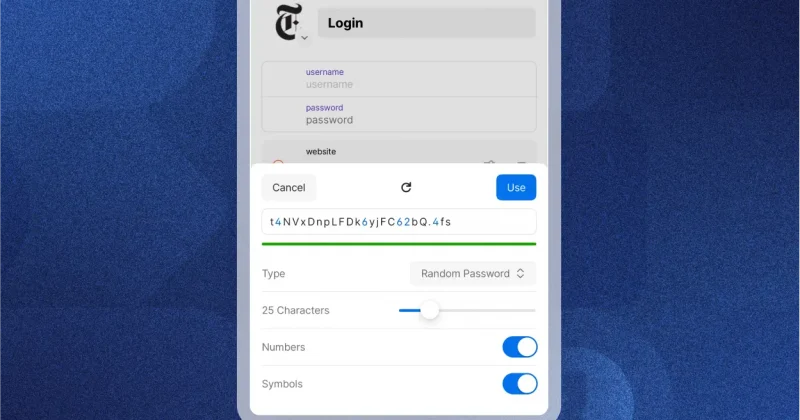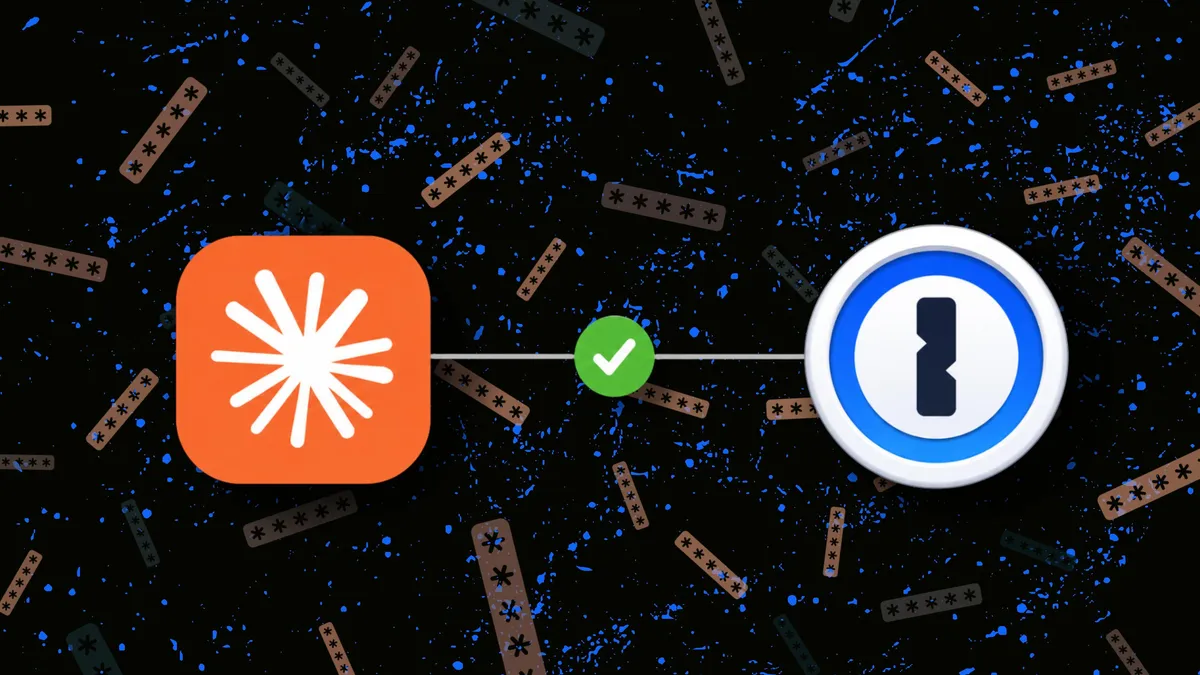
Anthropic’s hugely popular AI chatbot Claude can now use a person’s passwords in order to act on their behalf while online.A partnership between the artificial intelligence startup and identity security firm 1Password will allow Claude to retrieve a user’s credential information without actually gaining direct access to sensitive data.1Password said users can now authorise Anthropic’s Claude to complete real-world tasks like booking travel, managing accounts, and shopping online.“Claude can complete browser tasks that require logins and one-time passcodes, but the credentials never enter the model or its memory,” the company said. “Access is scoped to the current task and ends when the task is complete. After autofill, 1Password checks that secrets were not exposed on the page.”Anthropic and 1Password are bringing credential access to Claude (AP)The company’s chief technology officer, Nancy Wang, said a new security model purpose-built for agents would ensure that credentials remained secure.Users of the new 1Password for Claude will still be required to confirm requests with a fingerprint or other biometric input from their phone.A new paradigmThe latest update is part of a growing trend of so-called AI agents, whereby artificial intelligence tools are moving from answering people’s questions to acting on their behalf in browsers and apps to carry out digital chores.The rise of agentic AI has led to concerns from cyber security professionals about the risks posed by automated AI systems.They warn that AI acting without human intervention or supervision can lead to harmful consequences, as demonstrated by an incident in April in which a Claude agent deleted a company’s entire production database in just nine seconds.A recent survey of more than 800 businesses across nine countries found that 98 per cent of respondents had experienced disruptive AI incidents.The research from Economist Enterprise, which was published last month, also found that most organisations lacked full visibility into their AI agents.“For decades, cyber security has focused on keeping external threats out; agentic AI fundamentally changes that paradigm,” said Vaibhav Sahgal, principal of technology at Economist Enterprise, who led the research“As risk moves inside organisations, fortifying the walls is no substitute for fixing the foundations. Disruption must now be assumed. Leaders should move beyond asking how to prevent it, and instead ask how prepared their organisation is to contain the impact and recover quickly when disruption occurs.”Cyber criminals are also making use of advanced AI agents in order to target victims, with researchers observing the first ever fully automated campaign involving an AI executing a ransomware attack earlier this month.The use of such tools significantly lowers the barrier to entry for hackers, who could carry out attacks by just typing in prompts.
Claude can now use your passwords to do your shopping
Claude can now complete real-world tasks like booking travel, managing accounts, and shopping online
436 words~2 min read