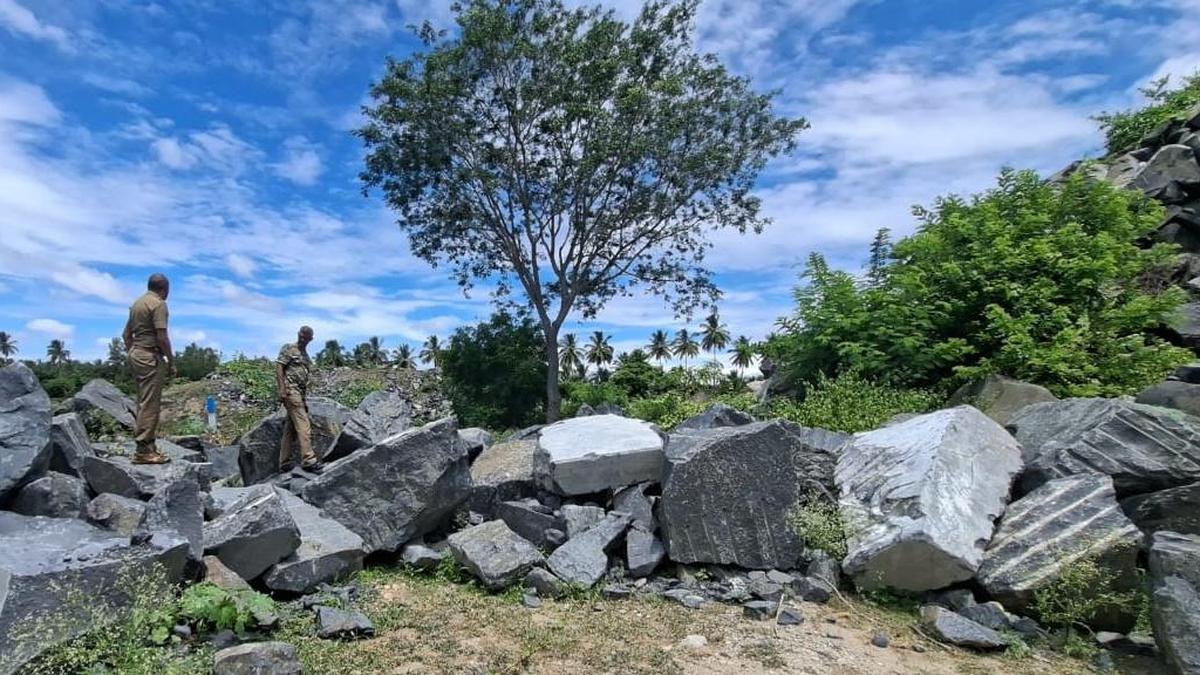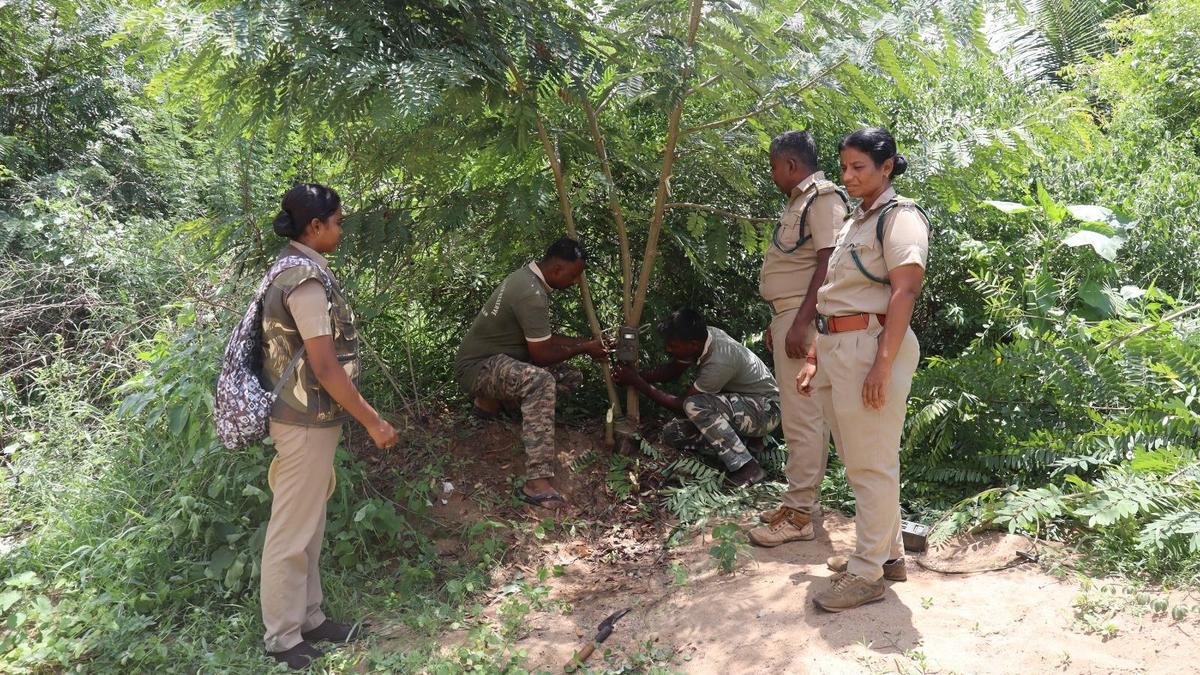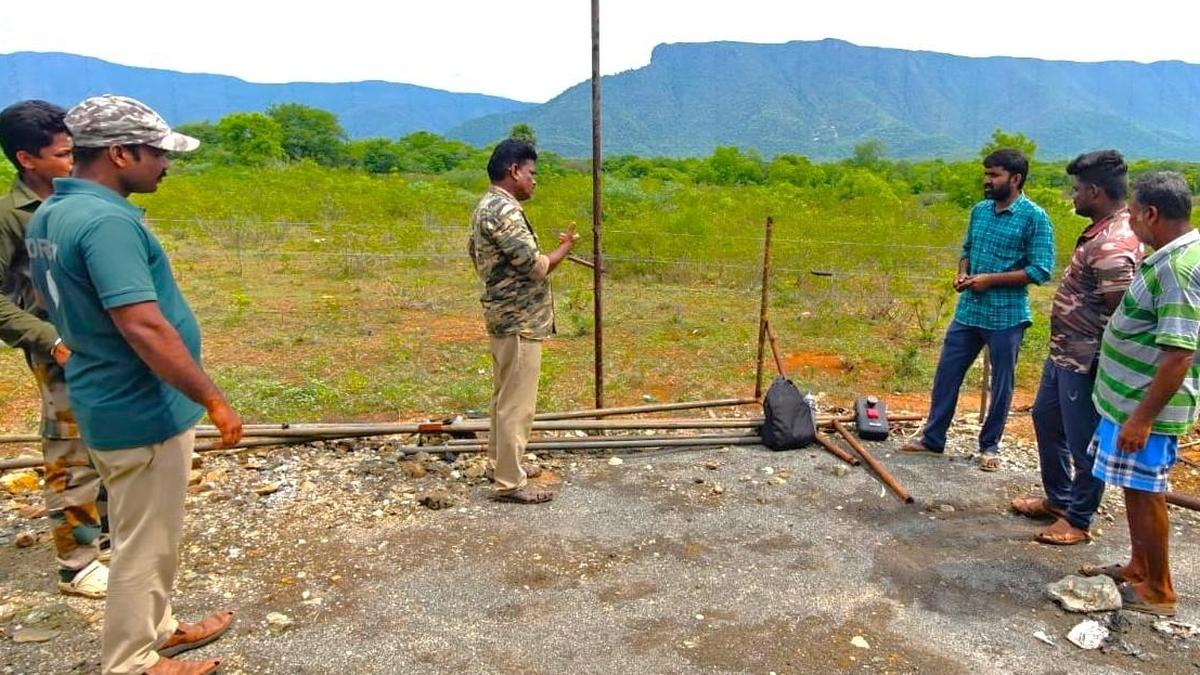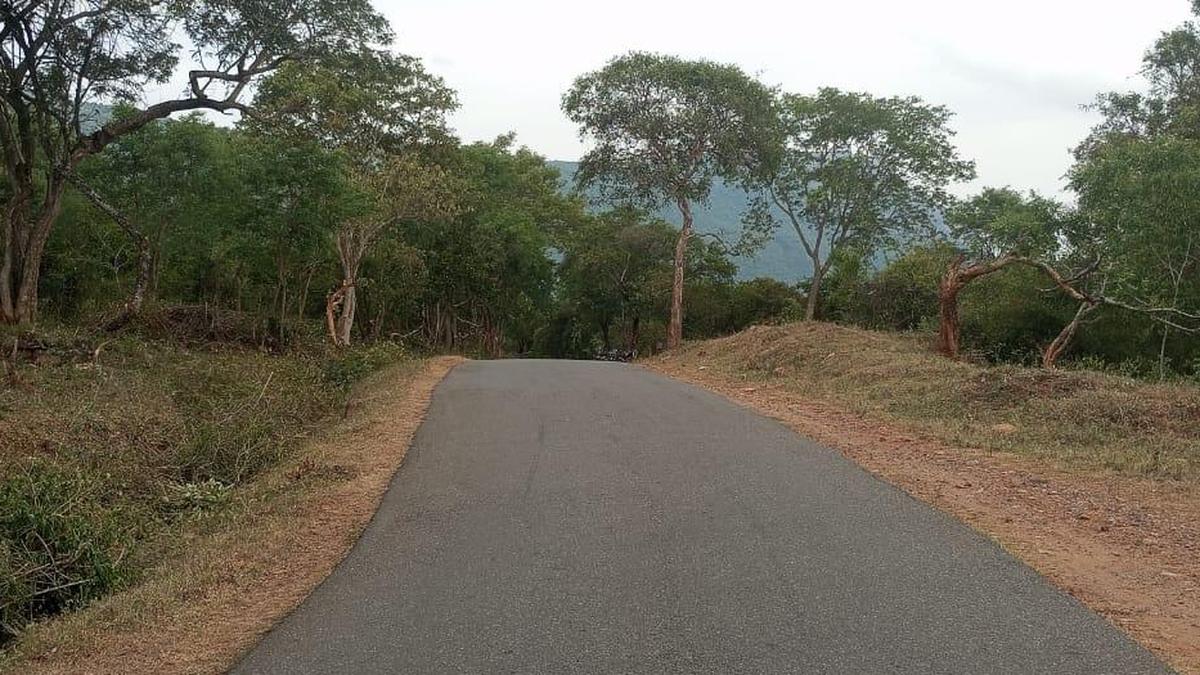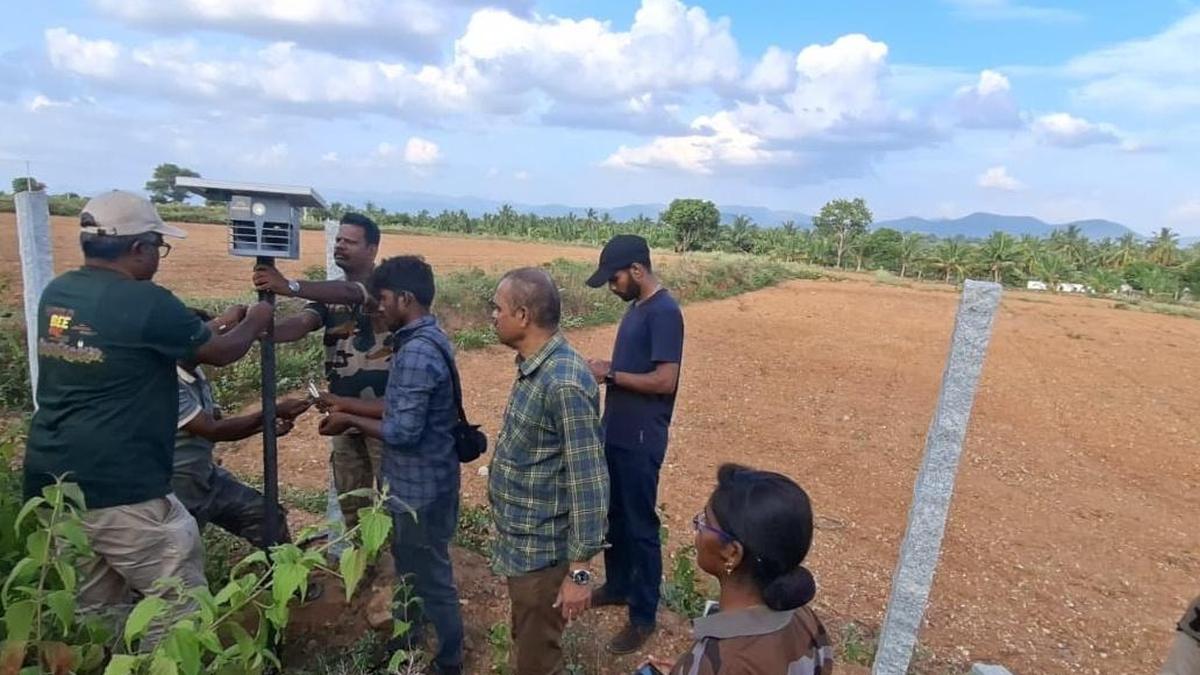
A wildlife movement sensor system being installed near Doddagajanur village in Thalavadi Hills in Erode district.
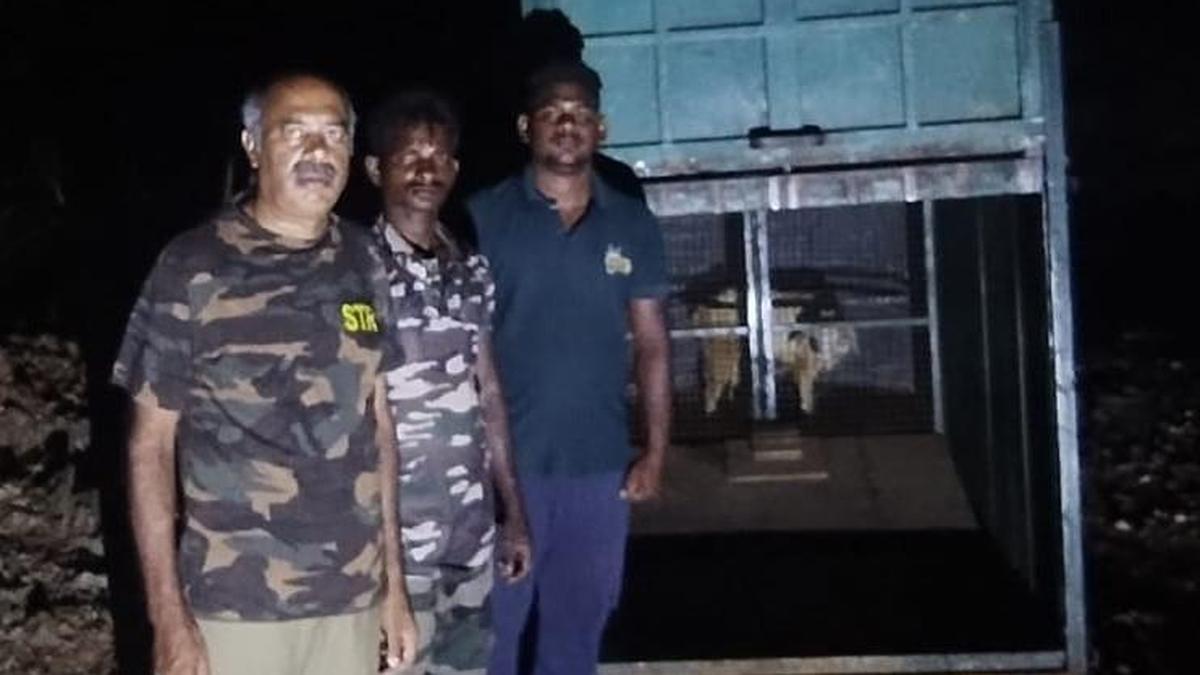
The Forest Department, in association with the Keystone Foundation, has installed a wildlife movement sensor system in the Thalavadi hills after a leopard killed four calves in Doddagajanur village, triggering concern among farmers over recurring attacks on livestock.The motion sensor, installed near an abandoned quarry believed to be used by the leopard as a movement corridor, emits a siren when it detects the movement of wild animals, including leopards. Forest officials said the system is intended to deter animals from entering nearby habitations and alert residents to their presence. The siren, which is audible up to 200 metres, is accompanied by flashing lights designed to drive leopards back towards the forest before they reach villages.The installation follows an incident on Wednesday night when a leopard entered the farm of Venkatachalam at Doddagajanur and attacked four calves tethered near a cowshed. Hearing the commotion, the farmer came out of his house but retreated to safety after spotting the animal. The leopard mauled all four calves, which died on the spot, before disappearing into the nearby quarry.Residents said leopards from the Sathyamangalam Tiger Reserve (STR) have been straying into villages in the Thalavadi hills at night in search of prey for several years. The animals have repeatedly attacked livestock, including goats, cattle and dogs, in villages along the forest boundary, causing financial losses to farmers and fear among residents.Forest officials inspected the site after the latest incident and confirmed leopard movement in the area. They said night patrols had been intensified and field staff were closely monitoring the animal’s movement. The farmers urged the department to strengthen preventive measures, including continuous surveillance and early warning systems, to prevent further attacks.A Forest Department official told The Hindu that there are 10 abandoned quarries in the area, overgrown with vegetation, which have become ideal hideouts for leopards. “As many as three leopards are believed to be using quarries as their habitat, venturing into nearby villages to prey on livestock.” The sensor system has been installed on a pilot basis, and if found effective, similar systems will be installed in other vulnerable locations along the STR boundary, the official added. Published - July 17, 2026 06:07 pm IST