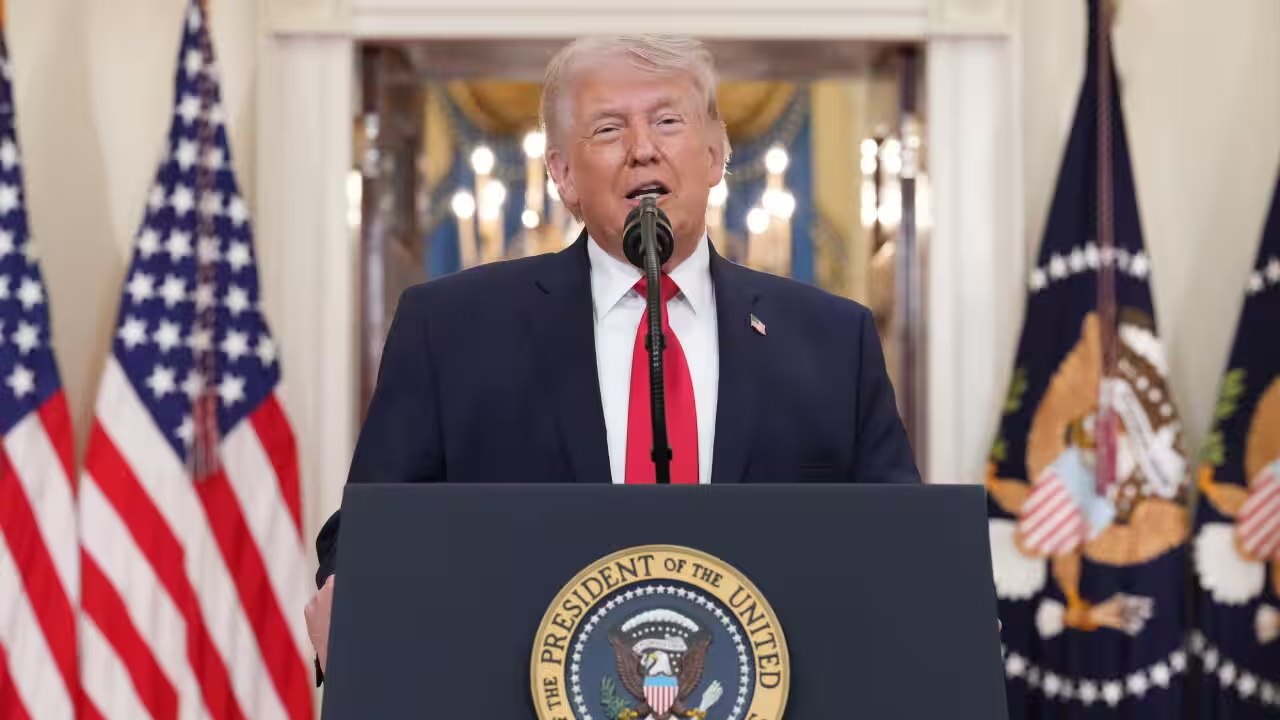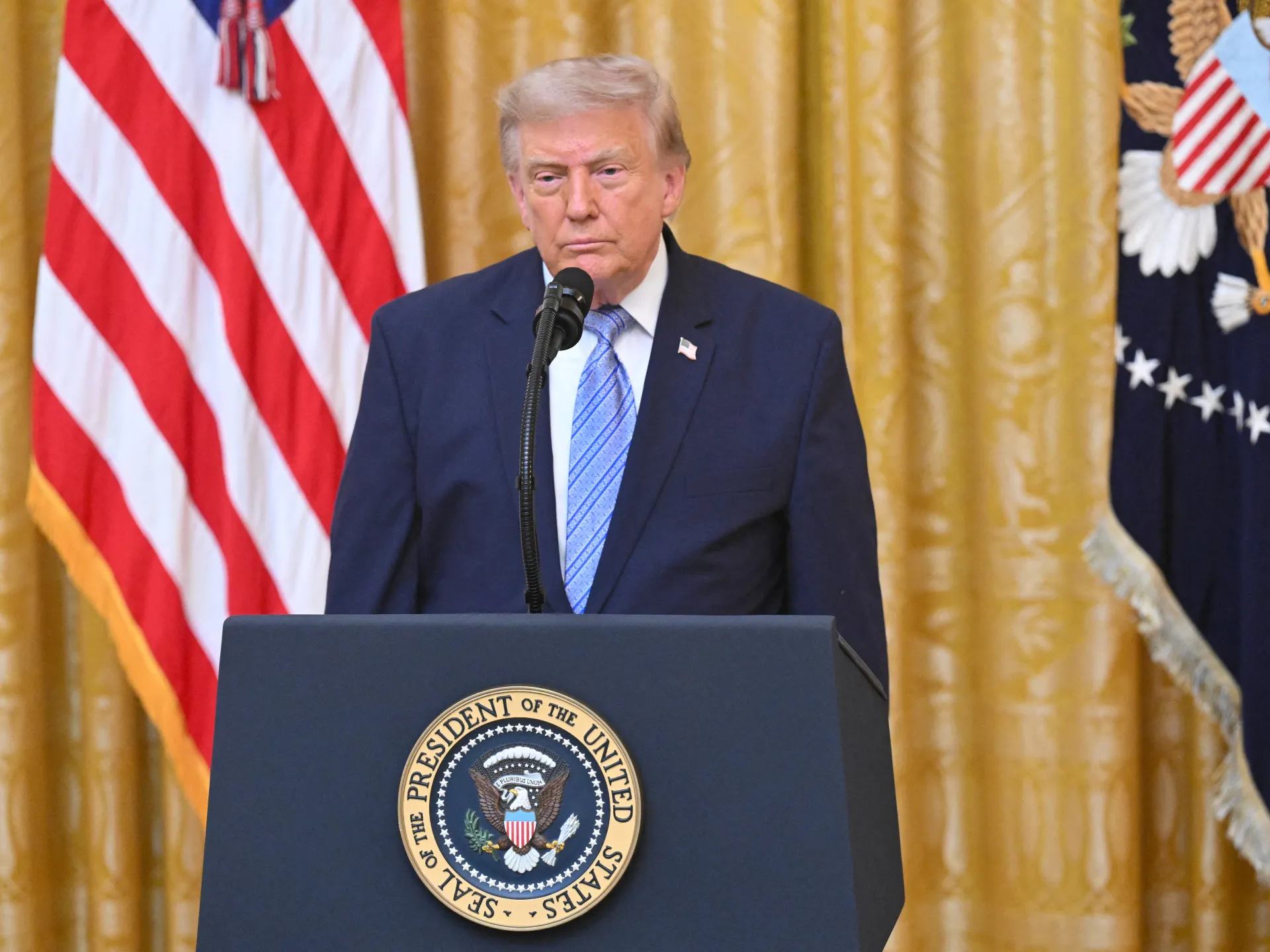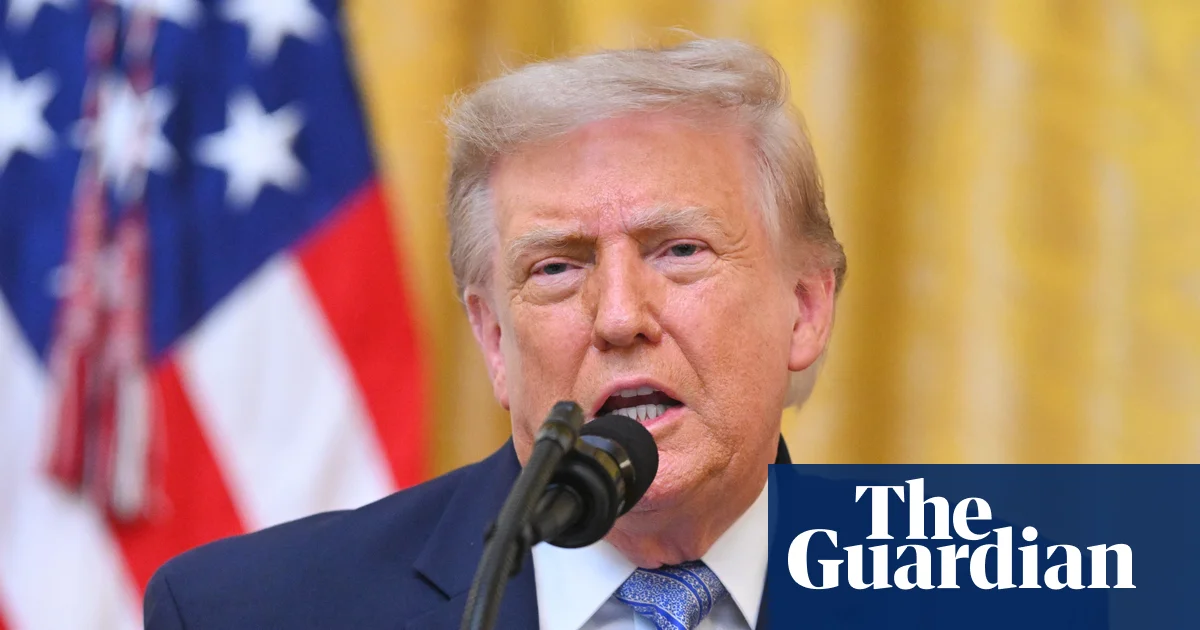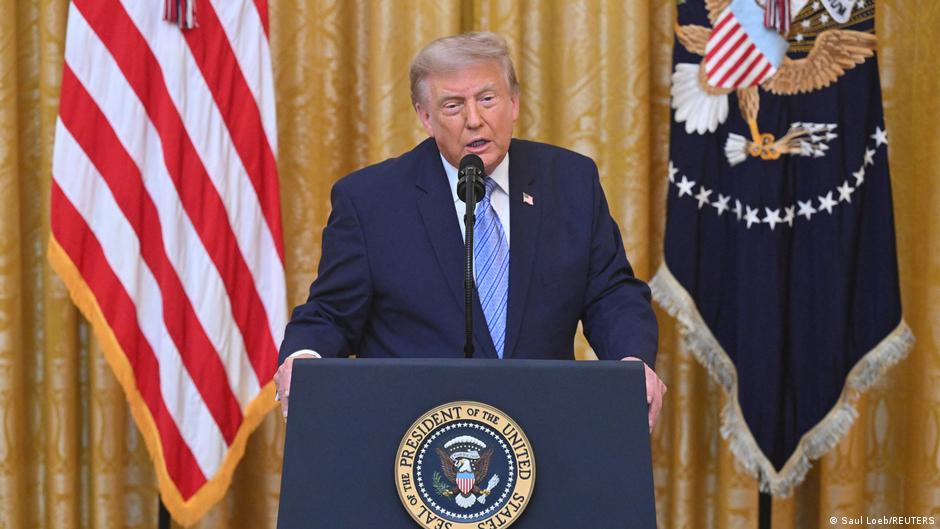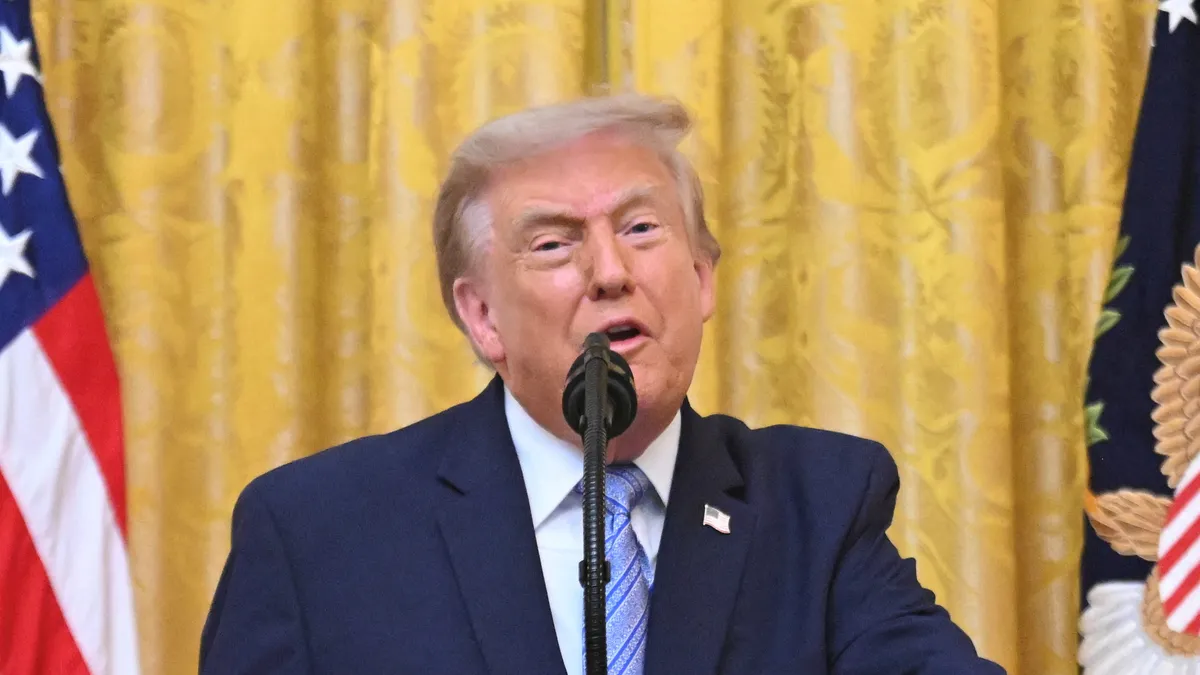
President Donald Trump made a lot of claims in his primetime address on election integrity. Experts, including former US intel officials, are skepticalShow Caption
WASHINGTON − President Donald Trump touched on a wide array of issues in his July 16 address to the nation, from accusing China of meddling in U.S. elections to defeat him to significant domestic election vulnerabilities.In his comments and in the previously top-secret documents he ordered declassified to bolster his case, Trump made sweeping claims about the vulnerability of U.S. elections to both foreign interference and cyber and technical vulnerabilities,Some experts who have reviewed Trump's claims and the newly released documents say the president is mischaracterizing them. That includes the top Democrat of the Senate Intelligence Committee, Sen. Mark Warner (D-VA).The documents describe genuine cyber threats and vulnerabilities. But they say there’s little to indicate that U.S. elections are as vulnerable as the president claims they are – or that China interfered in U.S. elections to undermine Trump in any meaningful way that would’ve changed the outcome of his 2020 loss to Democrat Joe Biden.Here’s a list of the highlights of Trump’s claims, based on formerly classified U.S. intelligence documents, and responses where possible:China's election meddling and cover-upTrump's claim: China tried to undermine the 2020 election in myriad ways, including compromising U.S. voter data, stealing 220 million voter files, and clandestinely influencing U.S. business leaders and journalists. Trump also said raw intelligence obtained by the FBI in 2020 showed China's attempt to manufacture illegal ballots for Biden.Response: Warner told USA TODAY in a recent interview that he’d already seen the classified documents cited by Trump and that U.S. intelligence assessments have long acknowledged meddling by China, Russia and other countries. Those reports, including a key March 2021 intelligence assessment about the 2020 election, concluded that none of those countries attempted to alter voter registration, ballot casting, tabulation or the reporting of results. But the assessment also explicitly said it did not evaluate what effect foreign influence activities had on voters or the election outcome.The majority view of the intelligence community, expressed with high confidence in 2021, was that China considered but did not conduct an influence operation intended to change the presidential election's outcome, according to declassified versions of it that were made public at the time. On July 16, a spokesman for the Chinese government, Liu Chang, told USA TODAY that the "U.S. election is an internal matter of the U.S. Its outcome is determined by the votes of the American people. China has never and will never interfere in the presidential elections of the U.S."Even White House adviser John Solomon, who helped review the documents, said after Trump’s speech on July 16 that the intelligence community had “zero evidence" that a foreign power "flipped a vote in the 2020, 2022 or 2024 elections."As for Trump’s description of 220 million files stolen or hacked by China, that appears to go beyond the White House’s own account, which said records could also have been "bought." Election experts like former Justice Department lawyer David Becker have told USA TODAY that some of the records in question are available for purchase by campaigns, researchers, and other qualified purchasers, and could easily have been acquired by hostile governments.US intelligence agencies cover-upsTrump's claim: U.S. intelligence agencies, including the CIA, the FBI and the National Security Agency, covered up information about China’s efforts and intentions to undermine Trump’s political fortunes, including suppressing and downplaying the extent of its actions. Internal documents show that intelligence about China's election targeting was "deliberately massaged" and kept out of presidential briefings.Response: There are always disputes within and between the 18 U.S. intelligence agencies about how much weight to give particular pieces of information, especially on something as opaque as China’s and Russia’s intentions to influence U.S. elections.In its 2021 assessment, the intelligence community disclosed some of those disagreements publicly, including a "minority view" by the National Intelligence Officer for Cyber that China took some steps to undermine Trump's reelection chances, primarily through social media and public statements. Its overall conclusion, though, was that China "did not deploy interference efforts and considered but did not deploy influence efforts intended to change the outcome of the US Presidential election."As for his claims of a cover-up, Sue Gordon, the former principal deputy of national intelligence under Trump from 2017 to 2019, told CNN on July 16 that the intelligence community repeatedly warned Trump of foreign governments’ efforts to interfere in U.S. elections, primarily to undermine voters’ trust in the system. But, she said, "Intent is not activity. Activity is not impact. And impact is not outcome."Vulnerabilities in election infrastructureTrump's claim: The U.S. election infrastructure, including electronic voting machines, is easily compromised – and has been compromised. Centralized election-related data repositories are most vulnerable to exploitation. Intelligence assessments show that adversaries, including Russia, China, Iran, and North Korea, can compromise U.S. election infrastructure.Response: U.S. intelligence and cybersecurity officials have acknowledged those vulnerabilities and raised alarms about them for more than a decade. The intelligence community even stood up a special Foreign Malign Influence Center in 2022 to fight those activities in real time. But Trump dismantled the FMIC and other key efforts within the U.S. government to detect and combat election infrastructure vulnerabilities and intrusions after retaking the White House in January 2025.Venezuela election meddlingTrump's claim: The CIA obtained reporting of a specific plot to digitally rig elections in favor of the Maduro regime in Venezuela.Response: That claim falls far short of some past assertions by Trump supporters that Venezuela somehow played a role in meddling in U.S. elections through access to voting machines. Asked about the Venezuela claims on July 16, Solomon told reporters that, "The intelligence is very clear. They did it on their own machines."Cover-up of fraud and non-citizen voters at the state levelTrump's claims: The Department of Homeland Security found approximately 278,000 non-citizens registered to vote in federal elections. Election officials covered up significant evidence of fraud, including a large-scale voter registration operation in Michigan. And the FBI found that canvassers signed voter registration forms in other people's names and submitted fraudulent registration forms, but the Biden Justice Department slow-walked and then killed the investigation.Response: As Trump acknowledged, more details about that are set to be revealed by Department of Homeland Security officials on July 17. Without details of what Trump is alleging, including the methodology, it’s hard to assess Trump’s claims. But DHS’s SAVE database is notorious for producing false positives, particularly involving people who became naturalized citizens after an older immigration record was created, according to FactCheck.org.The Muskegon, Michigan, case cited by Trump did involve documented irregularities, including fraudulent or suspicious registration applications. But officials detected and voided the questionable applications before Election Day, and no votes were cast as a result of them.Attack on TV networks for not broadcasting Trump's speech liveTrump's claim: In an extraordinary move, Trump called for the Federal Communications Commission to revoke broadcast licenses for ABC and NBC for choosing not to broadcast his primetime address. He accused the networks of not wanting to "reveal" the election fraud that he alleged in his speech, saying, "They and others in the media are part of a plot. ... They want to protect the radical left."Response: While they might not have preempted their main broadcast channels, ABC and NBC did cover Trump's address. Both streamed the speech live on their websites, and NBC aired a special report afterward. CNN provided ongoing discussion and analysis of the speech and also made the feed available digitally.