Every engineer knows that sudden, cold dread when a production build breaks. But what happens after the break tells you everything about your engineering culture. If the first instinct is to find someone to blame, your team has a critical bug in its foundation — and no amount of CI/CD tooling will patch it.
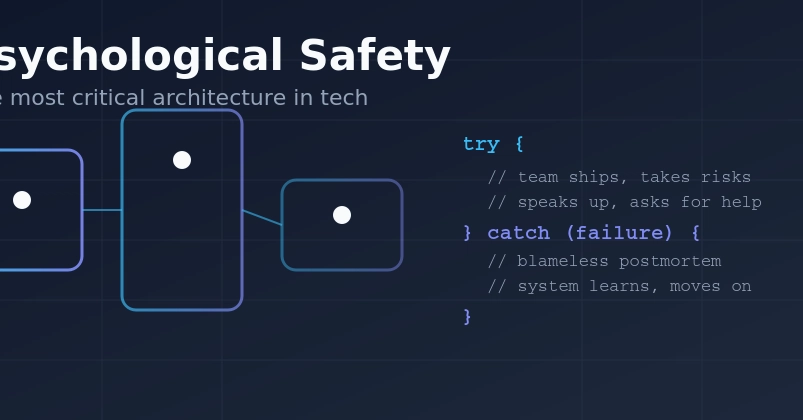
Psychological safety isn't an HR buzzword. It's a technical property of the system, as real as uptime or test coverage. It's the human try/catch block that keeps a team resilient under failure. Strip it out, and innovation stalls, code quality degrades, and tech debt quietly compounds until the whole thing collapses under its own weight.
Why Psychological Safety Is a Codebase Concern
When engineers are afraid of looking incompetent, they don't just feel bad — they ship worse software. That fear propagates directly into the codebase in a few predictable ways:
Silent outages, slow recovery. When people fear reprimand, they hide mistakes, delay escalating bugs, or slap a quick patch over the symptom instead of digging into the root cause. Teams with high safety run blameless postmortems that ask how the system failed, never who failed it — and they recover faster because of it.