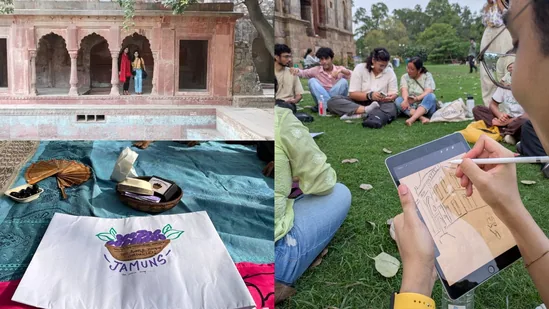
Taste, frame, trace, rethink monsoon as walk conductors reimagine the season and the city! Read to know where you can get an offbeat experience this weather. This monsoon, forget walking past rain-washed monuments to stop by at a roadside tea stall to relish the hot cuppa wondering what more does this season offers. For monsoon walks this year are a lot hatke and provide you a chance to stain your tongues purple, trace the rains through medieval Mehrauli, focus your lenses on a royal procession, and question how the Capital’s infrastructure could evolve better over the next few decades.From tasting jamun through stories to tracing Delhi’s past monsoon traditions as well as indulging in the city's future urban planning, here are some offbeat experiences to explore the city and its culture this monsoon.Blending cultural traditions, heritage, mindful photography and speculative design with the familiar format of a guided trail, four different groups are turning heritage walks into a more immersive exercise. It's here that a seasonal fruit will become a gateway to oral history, historic water systems will reveal how Delhi once celebrated the rains, a festival will turn into a lesson in observation, and an everyday neighbourhood becomes a laboratory for imagining the future of urban infrastructure. So, lace up and bring along your curiosity with a little quirk!TASTE THE MONSOONA jamuni twist: When fruit becomes a cultural storytellerPurple-stained tongues and a specially designed card game will come together to cherish jamun, a monsoon fave, in The Purple Tongue Chronicles, which aims to be a cultural experience centred entirely around this humble monsoon fruit.“It is not a heritage walk in the conventional sense,” says Gunjan Joshi, a Delhi-based independent heritage professional and UNESCO ICH facilitator who has curated this walk under her Living Traditions Project. The experience looks at how a seasonal fruit can carry intangible cultural heritage (ICH) from childhood memories and oral history to traditional medicinal and ecological knowledge.Explaining how the outdoor edition will begin with a brief walk around jamun trees before the participants settle down for a mini picnic, Joshi says, “The idea is to engage with the fruit through taste, stories and history. Jamun is also a marker of the monsoon, and there is an entire bundle of traditional knowledge attached to it. Participants will also get to play the only jamun card game you will ever see, which I’ve created especially for the sessions. And we will provide hand fans during this outdoor experience.”And if you're thinking, what if the rain interrupts the outdoor plans or you don’t feel like facing humidity? In that case, opt for an indoor segment of this walk that offers a similarly tactile and sensory exploration, allowing people to experience the fruit with equal joy. “You are not simply leaving with a bag of jamuns. You leave with memories, cultural knowledge and a completely different way of looking at a fruit you may otherwise eat without thinking twice,” Joshi adds.Catch It LiveWhat: The Purple Tongue ChroniclesWhere: NIV Art Centre, IGNOU Chowk (for indoor); Lodhi Garden (for outdoor)When: July 18 and 25 (indoor); July 19 and 26 (outdoor)Price: ₹900Registration: WhatsApp 9810395464 or DM @thelivingtraditionsprojectFOCUS ON THE MONSOONIn frame: Royal Teej processionCome monsoon and the Jaipur’s old city gets fills with elephants, performers, festive finery and thousands of spectators waiting for the royal Teej procession. This spectacle offers much more for Delhi Photography Club founder Virendra Shekhawat, as his club preps to organise its first Photobus Trip dedicated to the Royal Teej Festival.“We will be taking a small group of photographers to the Pink City for a three-day immersive experience,” shares Shekhawat, adding, “The festival comes from the story of Shiva and Parvati, but in Rajasthan, Teej has become a celebration embraced by practically every household. The royal procession in Jaipur is an entirely different experience. The markets around Chhoti Chaupar and Badi Chaupar close, vehicles are not allowed, and the entire city seems to come out to see the procession.”Instead of sending participants directly into the bustle with their cameras, the first day will be spent understanding the festival, exploring the city and conducting a recce of the procession route. The following day will centre on documenting it, while the itinerary will also include Jaipur’s local markets, heritage architecture and night photography.From smartphone photographers and beginners to experienced camera users, the group will be kept small to allow personalised mentoring. “Our focus is on mindful observation,” Shekhawat explains, adding, “We want photographers to connect with the traditions and stories behind what they are capturing, rather than simply collect attractive images.”The two-day, one-night all-inclusive trip will include travel from Delhi by tempo traveller, accommodation at Mahal Khandela and meals.Catch It LiveWhat: DPC Photobus Trip: Royal Teej FestivalWhere: Jaipur, RajasthanWhen: August 14 to 16Price: ₹16,000Registration: WhatsApp 8826712162TRACE THE MONSOONRaining glory: Trace monsoon through medieval MehrauliLong before monsoon walks became a seasonal city trend, Delhi’s rulers were building water reservoirs, planning rainy-season retreats and celebrating the showers through architecture, poetry and public festivities.“Our specially curated walk, Where the Rains Came Alive: Hauz-e-Shamsi to Jahaz Mahal, takes participants through Mehrauli to explore how the monsoon shaped one of medieval Delhi’s most remarkable cultural landscapes,” shares Anoushka Jain, founder, Enroute Indian History.Beginning at Hauz-e-Shamsi and moving towards Jahaz Mahal, the trail looks at the historic water systems that sustained the area and the engineering that allowed the city to capture and manage rainwater. “The experience will also draw upon the poetry of the last Mughal emperor, Bahadur Shah Zafar, whose verses offer glimpses of nostalgia for Delhi’s changing landscapes and disappearing cultural traditions,” Jain adds.Catch It LiveWhat: Where the Rains Came Alive: Hauz-e-Shamsi to Jahaz MahalWhere: Hauz-e-Shamsi to Jahaz Mahal, MehrauliWhen: August 1Price: ₹600Registration: WhatsApp 9667218424 or DM @enrouteindianhistoryRETHINK THE MONSOONBack to the future: Design Delhi in 2050Will tomorrow’s roads continue to prioritise cars over pedestrians? Could entry tickets make some public gardens inaccessible? What parts of an old market should be preserved, and what must change without disrupting the livelihoods built around it?These are the questions design researcher Vidit Jain and designer Mayank Jain want people to ask during the Delhi 2050 Futures Walk.Rooted in design futures, speculative design and art-based research, the walk encourages participants to look at a small, familiar section of the city and imagine how it could function decades from now. But rather than predicting one definitive version of Delhi, it brings together data, observation and the experiences of people from different backgrounds to explore multiple possible futures.Mayank shares, “Delhi is chaotic, complex and culturally rich. As designers, we wanted to use the tools we had learnt to examine the city and ask what could be improved. The idea is to encourage people to look beyond what they usually see.”Part of the tools provided to participants include a specially designed card game, maps, and design tools to conceptualise and re-imagine the city's planning.A kirana store, for instance, may appear ordinary, but the conversations and spontaneous connections it enables cannot necessarily be replicated by a digital platform. Similarly, the ticketing of a public garden may support its upkeep but could also exclude those for whom even a ₹50 entry fee is unaffordable.Participants are asked to consider who a space serves, who it leaves out and how it might be altered without erasing its existing social fabric.“We talk about participatory futures because there is no single future,” Vidit explains, adding, “Forecasting may use data to identify trends, but people’s narratives introduce multiple possibilities. Someone with an urban-planning background may notice one thing, while a resident, vendor or regular visitor may imagine something entirely different.”From markets vulnerable to fires to streets planned without adequate pedestrian infrastructure, the walk turns everyday urban frustrations into prompts for collective problem-solving.The duo ultimately hopes to develop an open-source toolkit that organisations and communities across the country can use to conduct similar walks in their own neighbourhoods.“You should be able to use it wherever you want to imagine the future of your city or community,” Mayank adds.Catch It LiveWhat: Delhi 2050 Futures WalkWhere & When: August (date to be announced)Price: ₹350Registration: Email somewhat.terrestrial@gmail.com or Insta DM @somewhat.terrestrial or @minky.businessFor more, follow @htcity.delhijunctionBooks, fashion, cinema, culture, art, campus and Delhi - Kriti Kambiri writes about it all for the daily Entertainment & Lifestyle supplement, HT City. Her stories sit at the sweet spot between sharp insight and the personality of a city that never.Read MoreHeritageMonsoonMorning WalkMonsoon WeddingDelhi MonsoonDelhiDelhiiteNew DelhiDelhi NcrDelhi RainMonsoon TroughJaipurJaipur FootCapitalMehrauliDilli HaatUnescoSee Less
Delhi’s monsoon walks: Reroute and rejoice rains while indulging in jamun tasting, capturing Teej traditions, and more
Taste, frame, trace, rethink monsoon as walk conductors reimagine the season and the city! Read to know where you can get an offbeat experience this weather.
1,407 words~6 min read