In brief
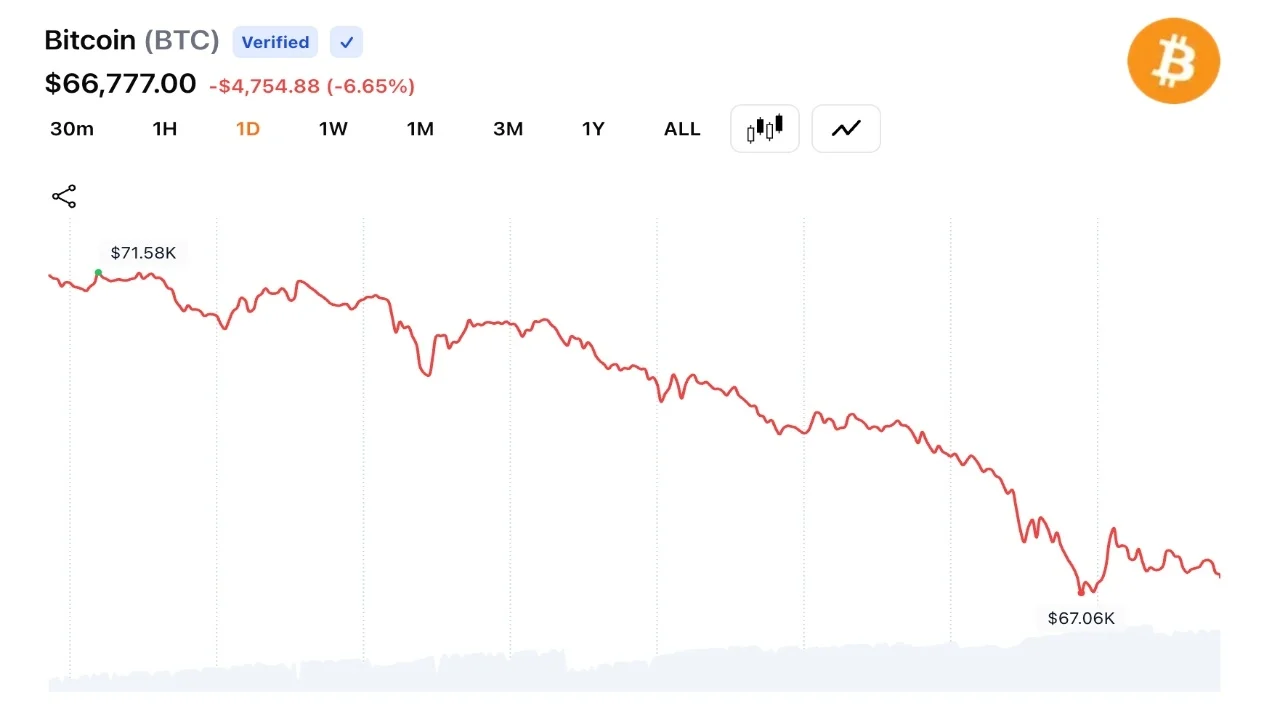
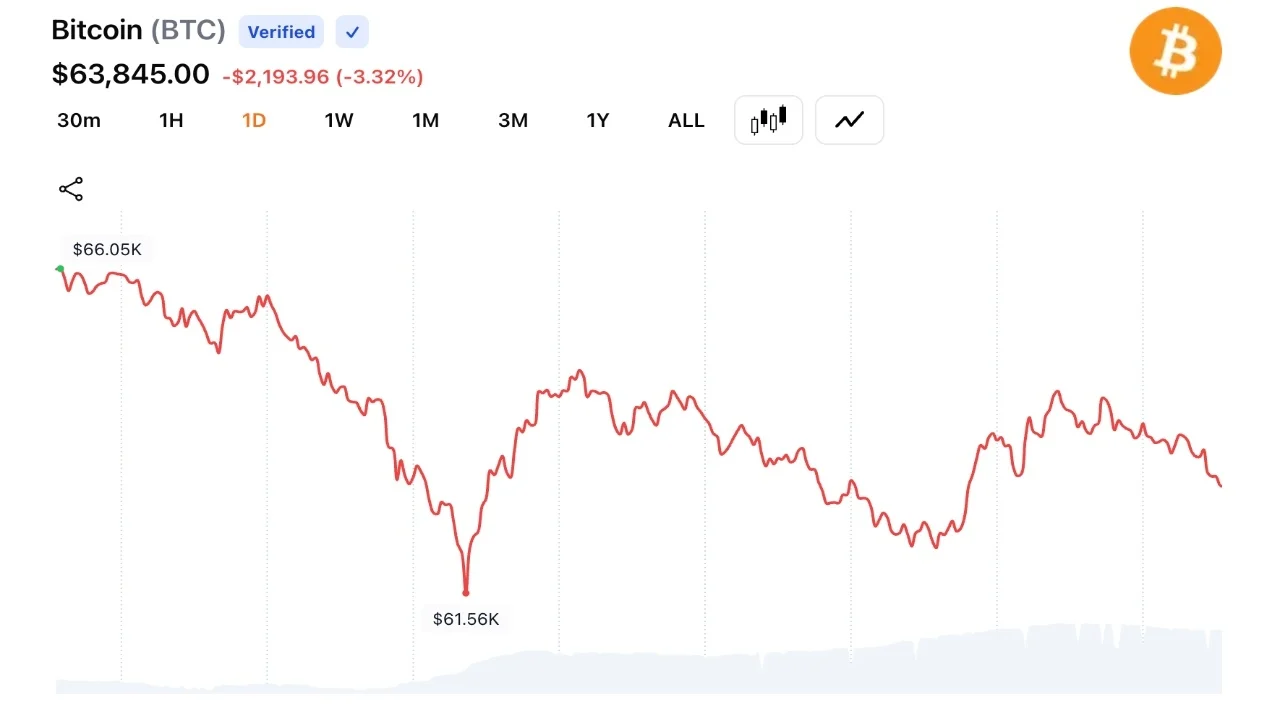
Bitcoin is trading near $63,000, down around 2% on the day and roughly 47% below its October record, as investors retreat from risk assets.
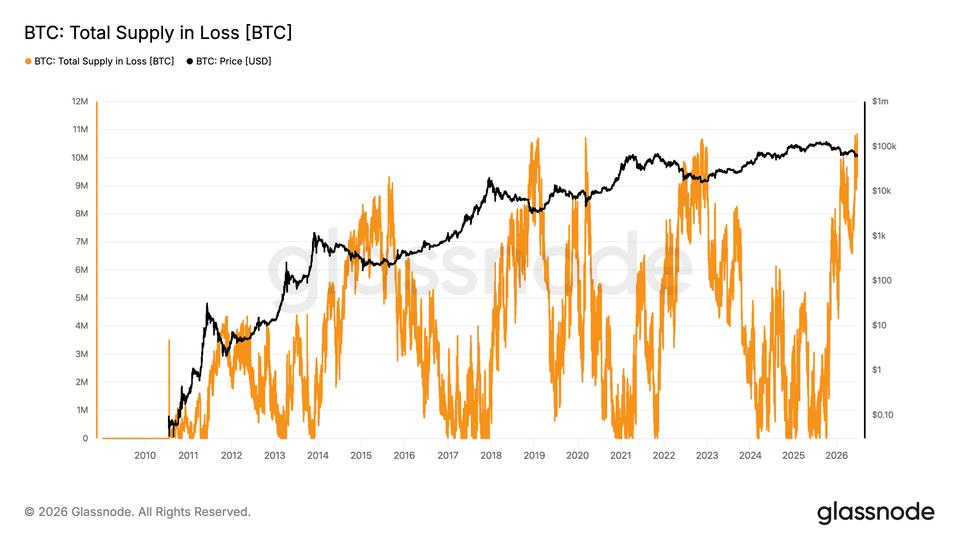
Glassnode data shows more than 65% of coins flowing into exchanges are long-term holders realizing losses—a pattern it likens to past bear-market phases.
Analysts told Decrypt the sell-off reflects cooling macro risk appetite and older holders exiting, but argued leverage isn't crowded and the downside may be limited.
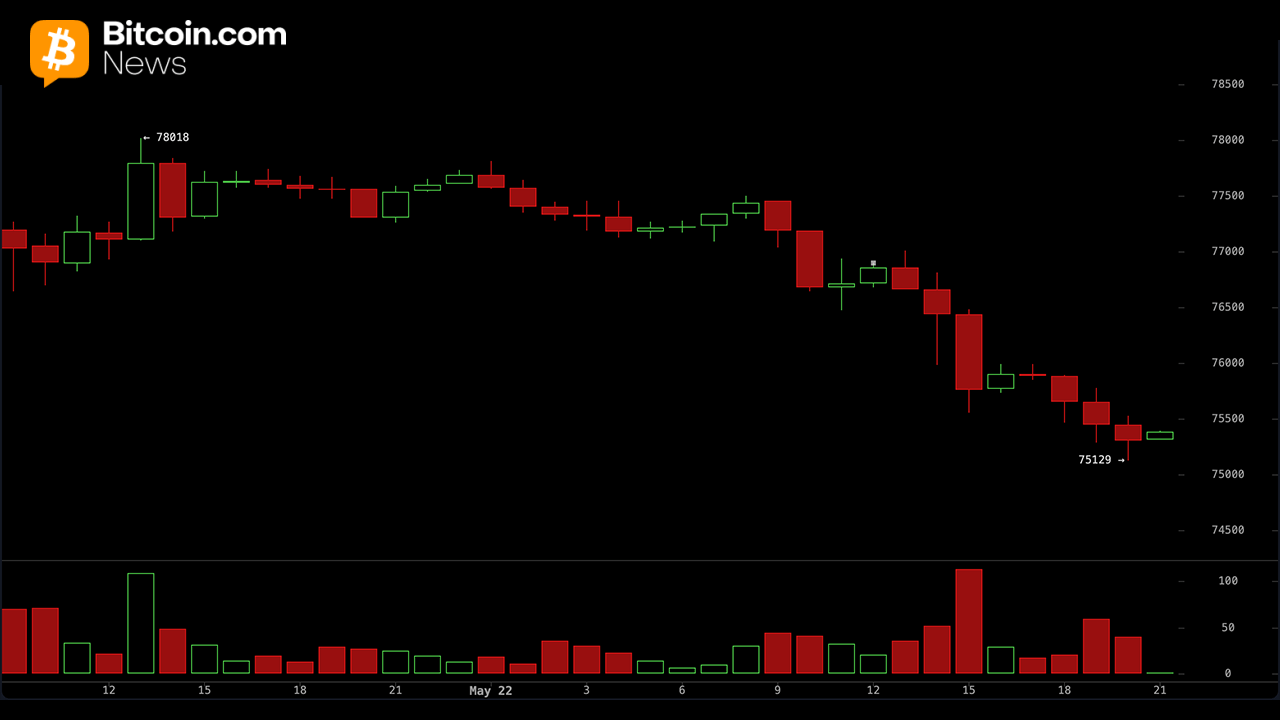
Bitcoin is testing the $63,000 level, weighed down by a broad retreat from risky assets and persistent selling from long-term holders cashing out at a loss.Bitcoin was changing hands at around $63,020 on Friday, down 1.7% on the day and 50% below the record $126,080 it set in October, per CoinGecko data.The token failed to hold $65,000 on Wednesday and dropped to an intraday low of $62,640. That broke below a "$64,500 Put Wall" tied to this week's options expiry—a heavy cluster of put open interest that had been "short-term support," Tim Sun, senior researcher at Hashkey, told Decrypt.A macro squeezeRisk appetite across the broader markets has "cooled down significantly," Sun said, with global stocks correcting and a deleveraging in semiconductor and AI-related assets speeding up. That pressure isn't only denting crypto sentiment, he added—it is also trimming institutional exposure to Bitcoin. Even so, the derivatives market shows "no leverage-related crowding," with the selling concentrated in spot.Daniela Hathorn, senior market analyst at Capital.com, read the drop in similar terms, calling it "a broader bout of risk aversion rather than a deterioration in crypto-specific fundamentals." Bitcoin has grown "increasingly sensitive to the macro environment," she told Decrypt, with rate expectations, geopolitical uncertainty and shifting sentiment steering short-term moves. The price and the flows beneath it are sending "slightly conflicting signals," she added—the overnight move looks negative, but the wider backdrop is less bearish than the headline suggests.Old coins hit the sell sideThe most persistent pressure is coming from long-time owners. More than 65% of the coins flowing into exchanges are long-term holders realizing losses, according to Glassnode—a reading it said matches earlier bear-market phases, when that cohort "dominated the sell side before eventually exhausting." Until that share compresses, "the structural sell pressure from cycle-top buyers remains the dominant force in exchange flow."Sun sees the same on-chain. Investors who have held for one to two years are "gradually accepting losses and exiting," he said—a wave that has capped the recovery, especially with Bitcoin's bounce staying weak even after an encouraging U.S. inflation report.