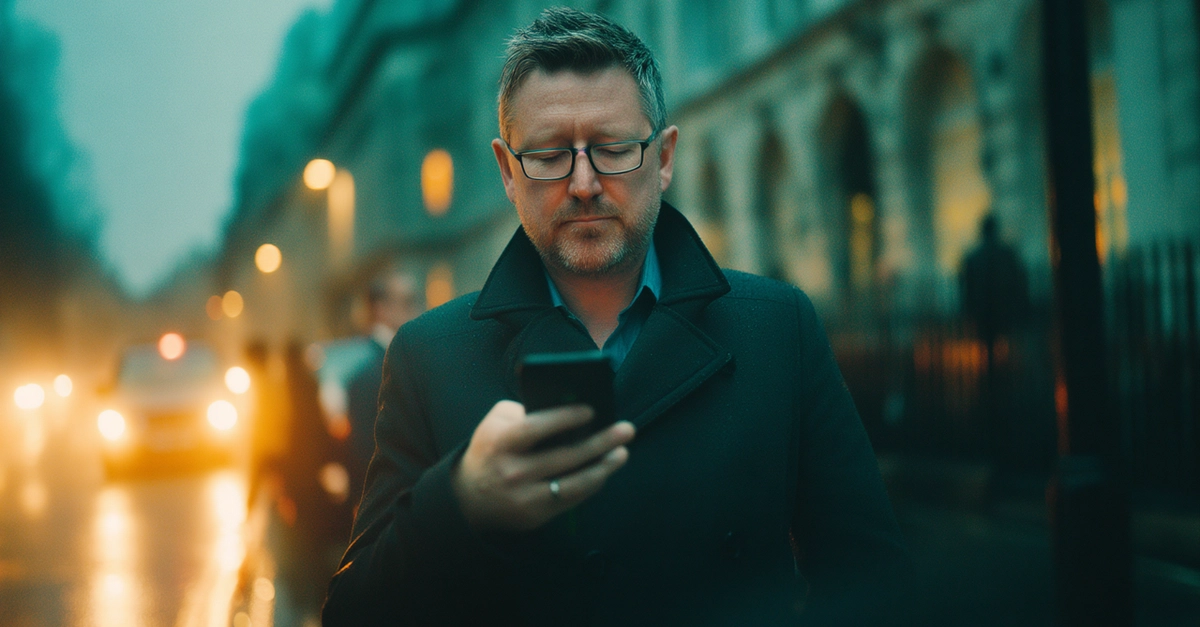
There is a particular species of modern embarrassment that did not exist twenty years ago. You are standing in a kitchen you have cooked in a hundred times, and you cannot remember the phone number of the person you married. You are walking down a street two blocks from your flat, and without the soft blue dot pulsing on your phone, you are not entirely sure which way is north. You are mid-sentence in a meeting, reaching for a word that used to arrive unbidden, and instead you feel the tiny silent reflex of your thumb wanting to tap a text box and ask a machine to finish the thought for you.
None of these moments feels like decline. Each feels like efficiency. Each is, in isolation, trivial. And that is precisely the argument advanced by a framework circulated on arXiv in early 2026, which gives this drift a name: gradual cognitive externalisation. The authors describe the phenomenon as the incremental migration of navigational, mnemonic, and reasoning tasks from human minds to ambient artificial intelligence systems, not through any single dramatic capitulation but through thousands of small, convenient substitutions distributed across the waking hours of ordinary life.
The framing matters because the public debate about AI and cognition has been stuck, for the better part of three years, in a classroom. It has been a debate about students, about essays, about whether a sixteen-year-old who asks a chatbot to summarise a novel has learned anything. That is a real argument, and worth having. But it has obscured a larger and stranger one. The people whose cognitive habits are being rewritten most thoroughly are not children. They are adults, in the middle of their working lives, who have quietly accepted ambient AI into the most intimate operations of memory, orientation, judgement, and speech. They did not sign up for an experiment. They pressed a button that said yes.