The article details the increasingly challenging path Chinese students now face in obtaining U.S. student visas, drawing from the experiences of several applicants and recent policy changes. Lei Fu, a civil engineering graduate admitted to Montana Technological University, endured a stressful 12-day wait for his U.S. visa approval, ultimately missing classes and losing part of his stipend due to administrative delays that included deep scrutiny of his social media accounts. This case exemplifies broader difficulties for Chinese students seeking to study in America as the U.S. government enacts more restrictive visa policies, leading to stricter reviews, longer wait times, and a higher risk of visa denial [para. 1][para. 2][para. 3][para. 4][para. 5].From September 2, 2024, the U.S. State Department reinstated the requirement for most non-immigrant visa applicants, including students, to attend in-person interviews—ending Covid-era waivers that benefited children, the elderly, and renewing visa holders. Additionally, a Department of Homeland Security proposal would replace the current “duration of status” policy for student visas with a fixed four-year stay limit. This change disproportionately affects students enrolled in lengthy programs and cuts the post-graduation grace period from 60 to 30 days. These changes have resulted in 2024’s F-1 student visa refusal rate reaching 41%, a ten-year high, with Chinese F-1 visa issuance dropping 11.8% in the first five months of 2024 compared to the previous year. The total number of Chinese students in the U.S. has plummeted by nearly 100,000 from its 2020 peak, and experts project a 30–40% decline in new international student enrollment for the upcoming academic year [para. 6][para. 7][para. 8][para. 9][para. 10][para. 11].While the U.S. authorities argue that these policies address concerns of individuals abusing student visa loopholes, legitimate students are often caught in the fallout. According to education consultant Liu Zhou, many genuine students will either be discouraged from applying or ultimately choose other destinations due to uncertainty and the perception of being unwelcome [para. 12][para. 13]. The situation is especially dire for those in sensitive scientific and technical fields. U.S. authorities now closely scrutinize applications for ties to Chinese military-affiliated universities under a presidential proclamation from 2020, further complicating the prospects for STEM students. The article highlights the story of Li Hua who, despite a solid academic record, faced administrative processing and visa denial over national security sensitivities. Similarly, Lin Xue was summarily rejected for her computer science Ph.D. application, leaving her disillusioned and depressed. In contrast, some applicants like Lu Yu have succeeded after lengthy reviews, but even they express no intention to remain in the U.S. after their studies, citing concerns over safety and quality of life [para. 14][para. 15][para. 16][para. 17][para. 18][para. 19][para. 20][para. 21][para. 22].The unpredictable and often opaque visa process affects applicants across disciplines, not just STEM. For example, Zhang Le, a 33-year-old Tsinghua University graduate, faced repeated denials for an MBA visa, likely due to factors such as her age, marital status, and history of Chinese government-funded education, which raised “immigrant intent” concerns. These developments pose a policy dilemma for the White House, which must reconcile national security with the substantial economic contribution of international students—who added an estimated $43.8 billion to the U.S. economy and supported over 370,000 jobs in 2023–24. Despite President Trump’s recent remark welcoming up to 600,000 Chinese students, uncertainty and a sense of being unwelcome are driving many to seek educational opportunities elsewhere, redefining aspirations and international student flows [para. 23][para. 24][para. 25][para. 26][para. 27][para. 28][para. 29][para. 30][para. 31][para. 32][para. 33][para. 34][para. 35][para. 36][para. 37][para. 38][para. 39].AI generated, for reference only
Tighter Visa Scrutiny Drives Chinese STEM Students to Give Up on a U.S. Education
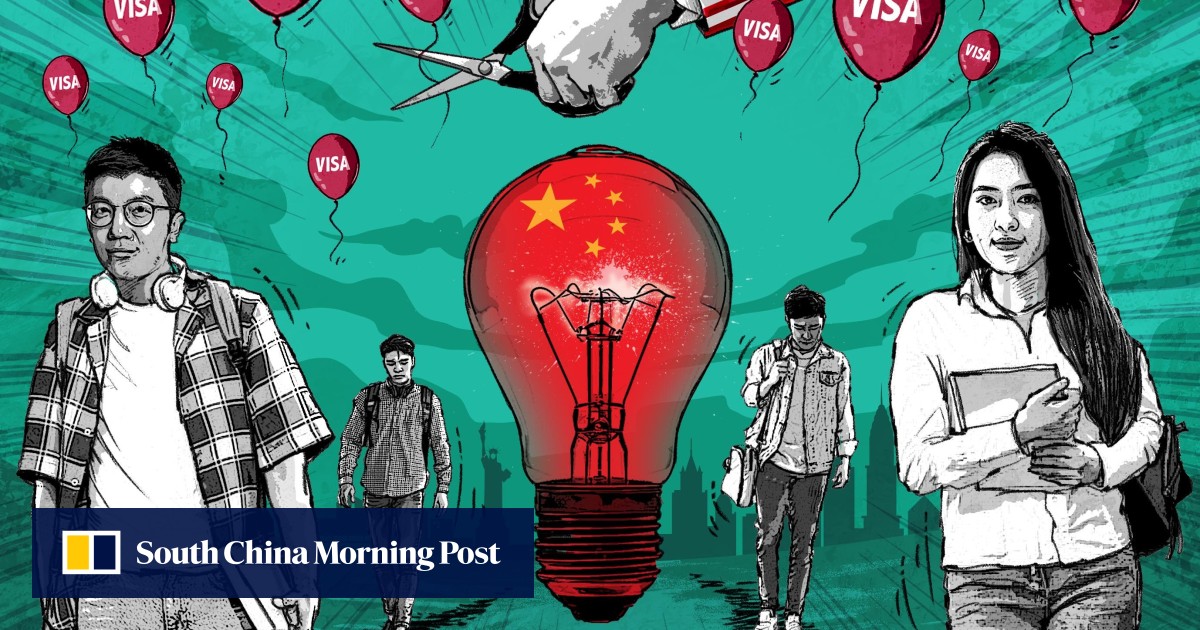
Tougher interviews, stricter reviews and a surge in denials are forcing many students from China to abandon hopes of going to an American university
585 words~3 min read