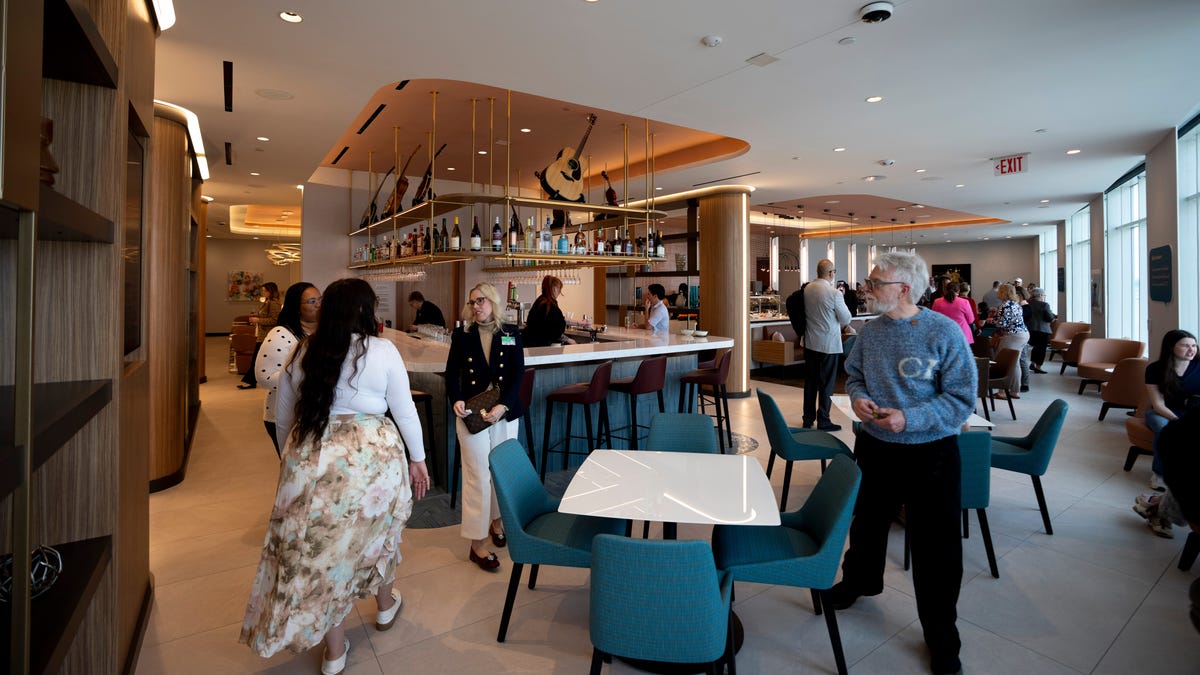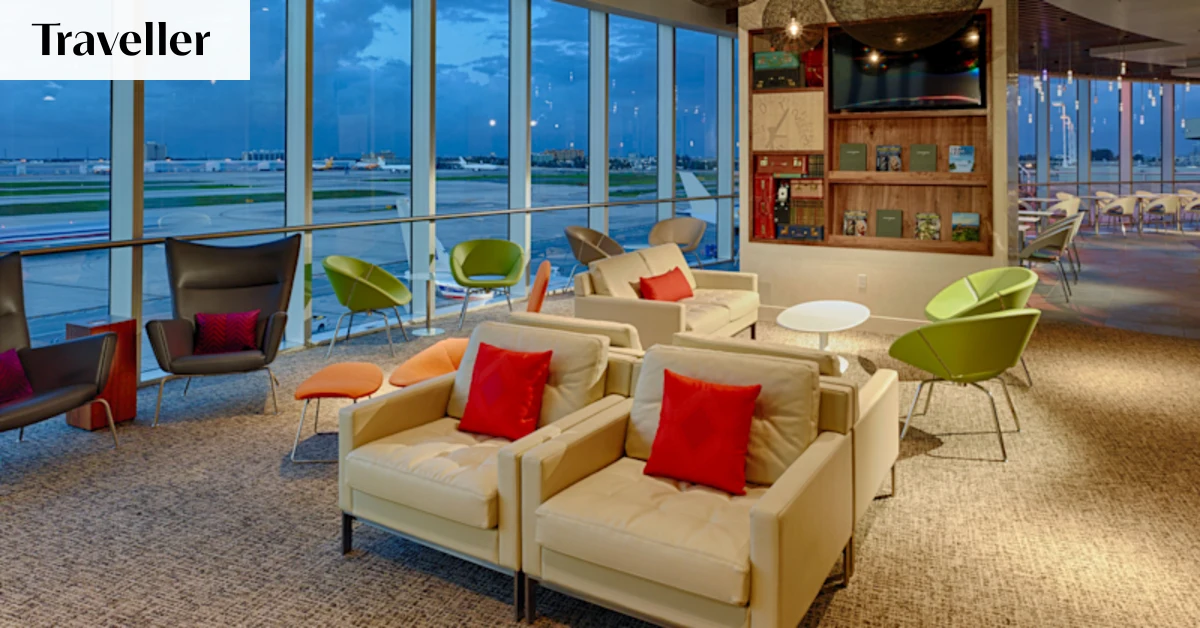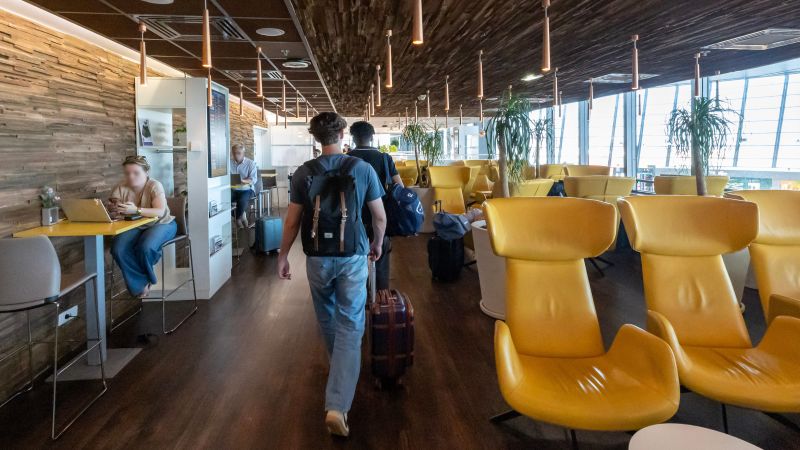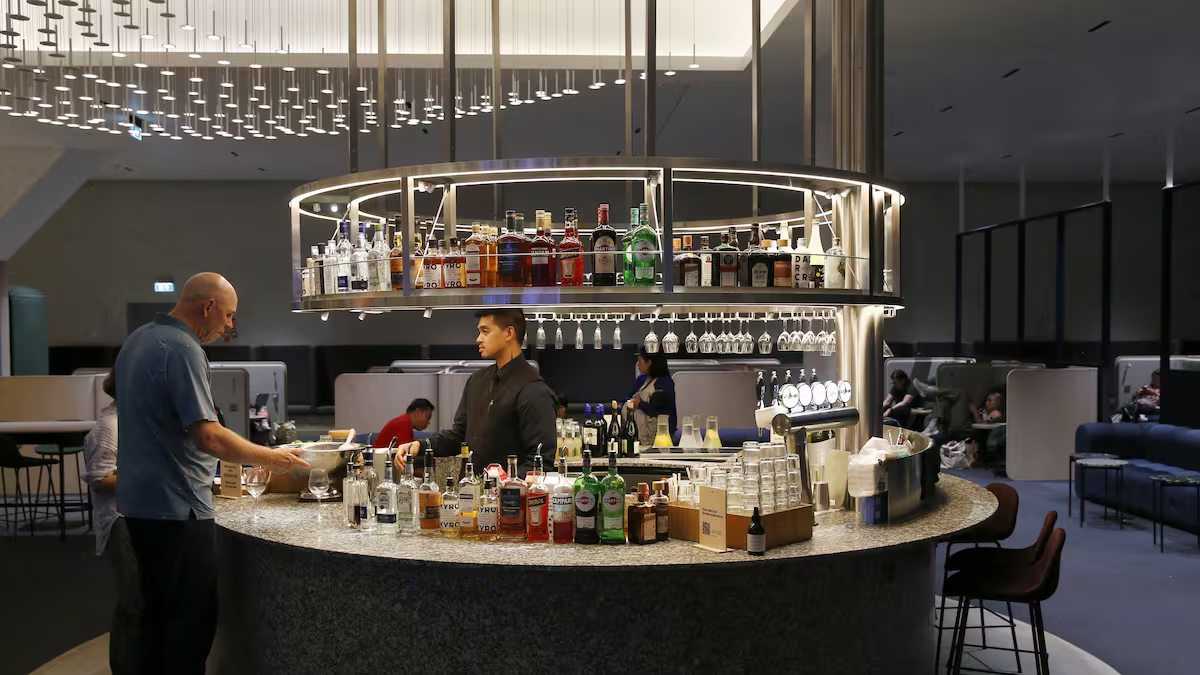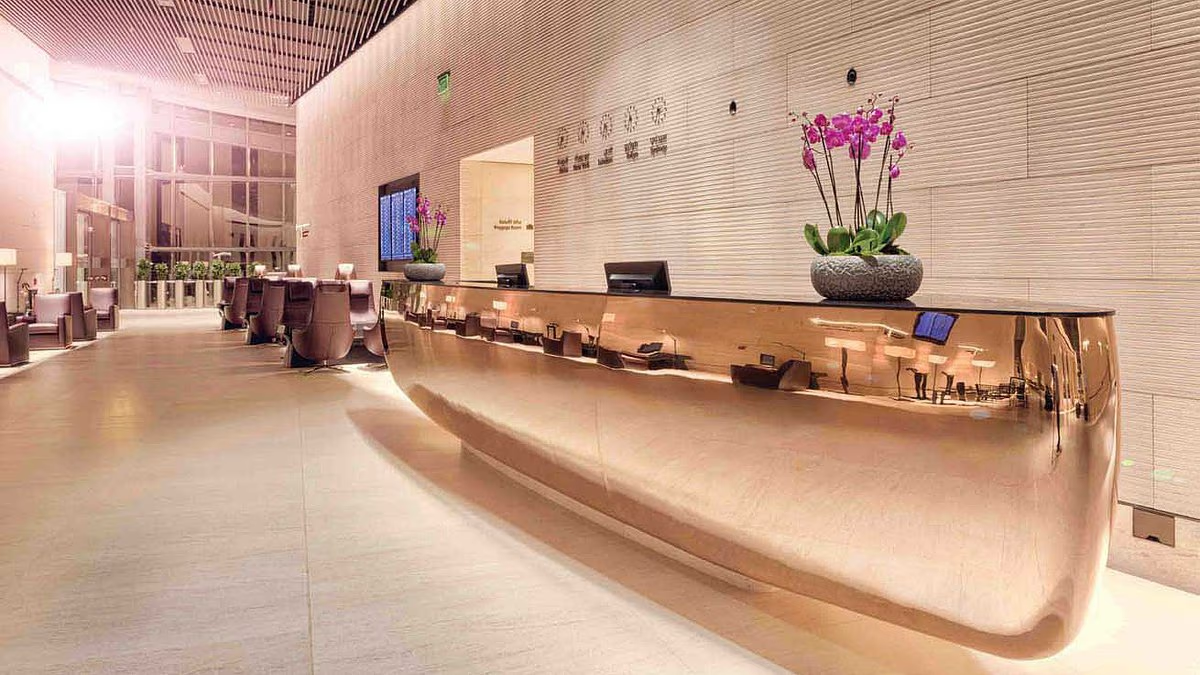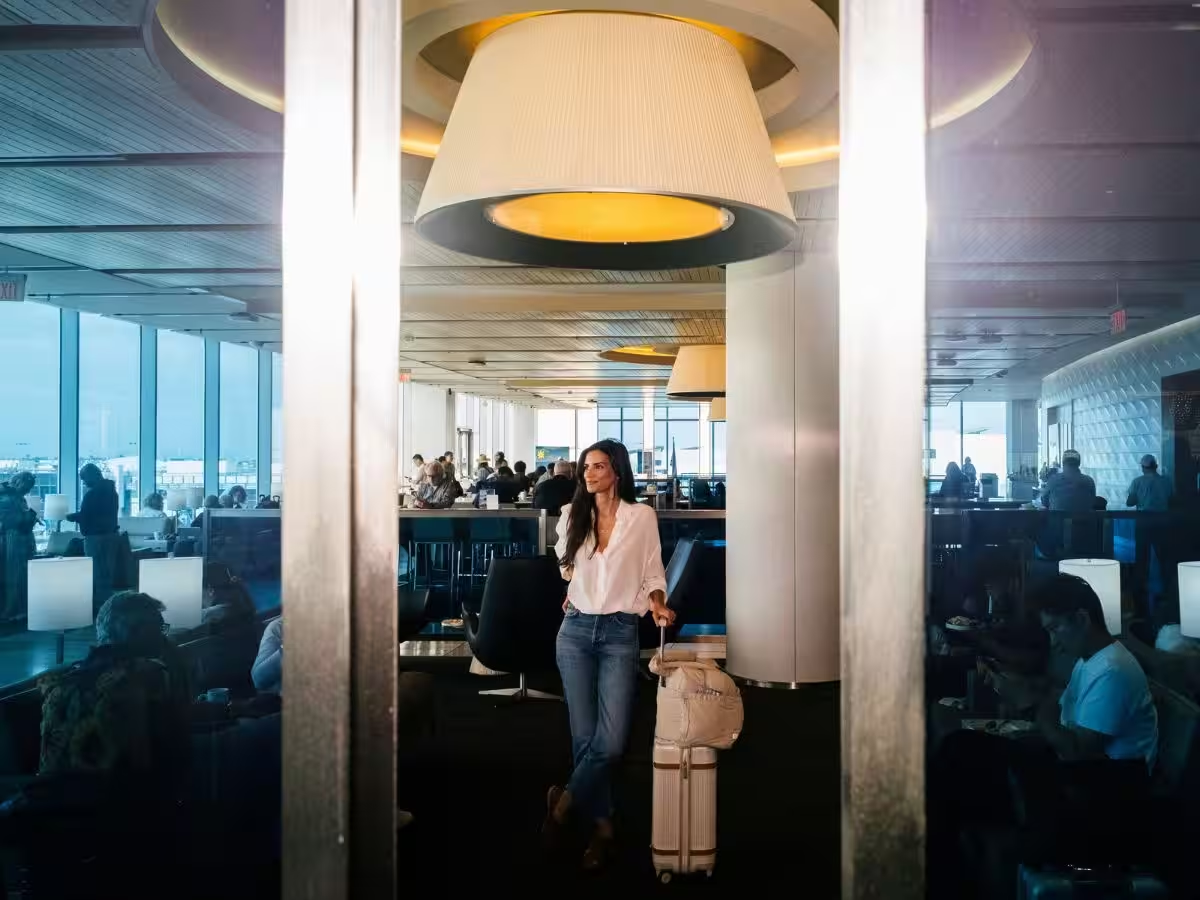
Getting into an airline lounge these days is complicated: Some sell day passes. Others don’t. Some allow guests. Others charge extra. Certain elite-status members qualify automatically for entry while others need a combination of specific credit cards, fare classes or spending levels.The post-pandemic travel boom, combined with rising demand for premium credit cards and luxury experiences, has been hugely profitable for airlines but also hugely frustrating for many of their highest-frequency customers. These travelers complain that lounge access — once the preserve of business or first-class flyers — has become both more expensive and more confusing, with once-straightforward perks carved up by card type, cabin, status level and a growing list of exceptions.Dave Knode, 54, has been a member of Delta Air Lines Inc.’s frequent-flyer program since 1989. For at least the last decade he’s been traveling almost weekly for work, taking about 110 flights each year and spending around $17,000 annually on tickets. His fierce loyalty to the airline helped him earn coveted Diamond Medallion status, which comes with perks like unlimited upgrades and the option to redeem rewards for a lounge membership.He maintained the status for almost nine years until, he said, changes to the program pulled many of those benefits out of reach.“They moved the goalpost,” Knode said. “It was going to be extremely difficult for me to hit Diamond. Then they moved it a second time and made it impossible,” he said.Access to lounges has become so difficult to navigate that entire corners of the internet are devoted to deciphering lounge eligibility. Reddit forums feature lengthy debates over whether a particular credit card, route or ticket type qualifies for access, while travel influencers post video tutorials explaining how to unlock lounges.The push into premium travel has coincided with a widening divide on Wall Street: Delta and United Airlines Holdings Inc. have delivered industry-leading profits and strong stock performances, while those who have failed to get in on the trend have floundered — American Airlines Group Inc. has lagged competitors and ultra-low-cost carrier Spirit Airlines started to wind down operations in May.But even for those who make it past the front desk of the lounges, finding an unoccupied seat can be a game of luck.The airlines are taking varying approaches to manage demand. Some are building massive new lounges at major hubs, aiming to solve overcrowding with hospitality spaces the size of football fields that will remain fairly accessible. Others are hiking prices and carving up lounge space, reserving the most luxurious experiences for those carrying premium tickets to long-haul destinations.As of now, a United Club membership grants entry to regular United lounges, but not the more exclusive Polaris lounges, which have secluded rain-shower suites stocked with skincare from Sunday Riley, and hair-styling tools on request. For that, you need a business-class ticket on an international United route, or a first-class ticket on certain partner airlines — though the latter will only get you into the departure lounge, not the clubs on layovers or arrival. United also has four credit cards, including one with a $695 annual fee, that offer different lounge benefits.Meanwhile, a traveler carrying an American Express Platinum card can access a Delta Sky Club up to 10 times per year, but generally only when flying Delta that day and not on a basic-economy fare. If they spend $75,000 or more in a year, lounge access is unlimited. A page on Delta’s website explaining policies around access to its lounges runs to thousands of words.“To utilize lounges on a regular basis, it is pretty complicated,” said Dylan Favazza, an avid traveler who spent a year globetrotting with his wife in 2023.Favazza, 31, said he recently flew home from a ski trip with a buddy and was looking forward to unwinding at a Delta lounge in Salt Lake City International Airport. But when they showed up at the entrance, they were denied: the credit card his friend said he had signed up for specifically to get into the lounge didn’t give them access with their basic-economy tickets.Delta has spent the past two years overhauling Sky Club access after backlash over long lines and overcrowding, imposing annual visit limits, restricting fare-based entry and raising spending requirements for unlimited access. “The whole reason of the club is to spend your layover in an upgraded place,” said Knode, the long-time Delta customer. Instead, “you’re standing on the hard tile outside of the club watching the Diamond members going past you.”Airport lounges are just one way that US carriers are monetizing journeys, as they rethink a business model that was for years built around rock-bottom fares. Flyers can customize almost every aspect of their trip from the moment they book a flight to when their plane lands at its destination.Delta’s most recent shake-up came this month, when it rolled out a cheaper way to fly in the front of the plane. Basic Business gives passengers the same lie-flat seats and onboard dining but, as of early next year, won’t qualify customers for access to Delta One lounges or check-in through the ticket alone. United has a similar structure for its premium cabins, and this week gave economy passengers the option to pay more to ditch the middle seat and instead have access to a shared table and extra elbow room.Delta insists most customers are responding positively to the changes.“We’re giving customers choice to what they value,” said Dwight James, Delta’s senior vice president of customer engagement & loyalty. “It’s easy to assume that an organization or a company or brand could be excluding a large aspect of the population, but in reality, we’re catering to all members of our SkyMiles space with products and services that they value.”For years, airlines have encouraged consumers to pursue lounge access in part because the economics proved extraordinarily lucrative. Delta said its partnership with American Express generated more than $8 billion in revenue in 2025, with lounge access serving as one of the primary incentives pushing customers toward high-fee cards.Across the industry, airlines increasingly rely on loyalty ecosystems to generate stable, high-margin revenue streams that can be more predictable than selling tickets. United reported that its premium and loyalty revenues were up 16% and 11% in the second quarter compared to the same time last year, helping offset a spike in fuel costs caused by the conflict in Iran.At the same time, social media has transformed lounges from hidden industry perks into highly visible and aspirational destinations.On TikTok and Instagram, influencers post cinematic walkthroughs of cocktail bars, shower suites that resemble boutique hotels and dining rooms floating above the crowded terminals below. Michelle González, 38, has been posting travel content on TikTok and Instagram since 2019 and became a full-time luxury travel influencer four years ago. She initially reached out to United about creating pandemic-related content for them, to show other travelers what they could expect on a flight. Now, United pays González to promote specific campaigns, with sponsored posts that are approved by the airline and disclosed to her followers, she said.“The feedback I get most often,” González said, “is ‘I never knew that luxury travel could be so accessible.’”United is leaning into that idea, planning massive new clubs in San Francisco, at Washington Dulles and in Houston, where the lounge will cover 54,000 square feet — about the same size as the White House. Aaron McMillan, managing director of hospitality programs for United, said it will be the airline’s biggest ever.“Scott has dared me to build a club that’s too large,” McMillan said, referring to Chief Executive Officer Scott Kirby. “He’ll jokingly tell me he doesn’t think it’s possible.”And even budget-friendly airlines are getting in on the business. Southwest Airlines Co., which has long avoided the premium perks embraced by larger rivals, has leased lounge space in airports including Denver, Houston, Nashville and Honolulu. Even in the early stages of planning, Chief Executive Officer Bob Jordan is aware of the pitfalls he wants to avoid.“We know that nothing makes you much angrier than when you go to the lounge, you got the card and you can’t get in,” Jordan said. “If we do lounges, we’ll do ‘em right.”For some frequent travelers, though, access to a lounge is no longer the status symbol it used to be.One jetsetter who splits their time between private jets and commercial flights described lounges as having evolved into aspirational wealth products that are increasingly crowded with tourists who can access them through premium credit cards rather than premium travel.The person, who asked not to be named for privacy, said they had already taken 46 flights through 31 airports this year. Before one recent flight from San Francisco to London, they couldn’t find a single open seat in United’s Polaris lounge — the airline’s business-class only space.For wealthy clients and senior corporate travelers, the person said, the real luxury today is no longer a crowded lounge with buffet spreads and cocktail bars. Instead, they want speed, privacy and frictionless movement through airports.That kind of service often comes via even more exclusive programs, like Delta 360° — an invitation-only membership with no published qualification criteria. Along with access to Delta One lounges, which are separate from the standard Sky Club network and offer juice bars and zero-gravity massage chairs, there are other, hidden perks. Among them: an elevator straight from the lounge down into a basement, where a row of Delta-branded Porsches wait to transfer members across the tarmac during a tight connection. United and American have similar programs.
Why airport lounge access keeps getting more expensive and confusing - The Economic Times
Airport lounges in the US have become a major profit driver for airlines, but gaining access has grown increasingly expensive and confusing as carriers tie entry to a mix of elite status, premium credit cards, ticket types and spending thresholds.
1,580 words~7 min read