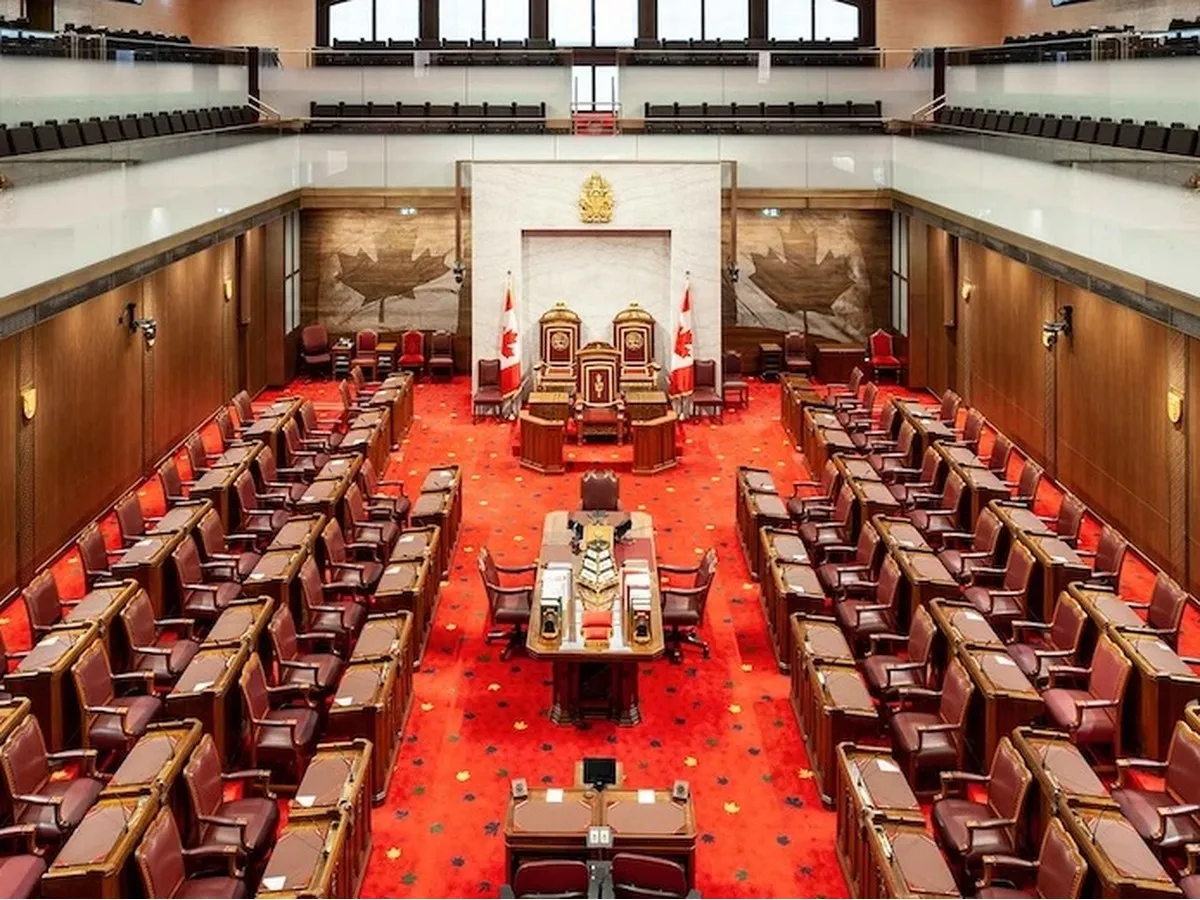
Skip to Content Subscribe Our Offers My Account Manage My Subscriptions FAQ Newsletters Canada Canadian True Crime Canadian Politics Health World Israel & Middle East Financial Post NP Comment Longreads Puzzmo Diversions Comics NP News Quiz New York Times Crossword Horoscopes Life Eating & Drinking Style Sponsored Play for Ontario Travel Travel Canada Travel USA Travel International Cruises Travel Essentials Culture Books Celebrity Movies Music Theatre Television Business Essentials Advice Lives Told Tails Told Shopping Buy Canadian Home Living Outdoor Living Kitchen & Dining Tech Style & Beauty Personal Care Entertainment & Hobbies Gift Guide Travel Guide Amazon Prime Day Deals Savings National Post Store More Sports Hockey Baseball Basketball Football Soccer Golf Tennis Driving Vehicle Research Reviews News Gear Guide Obituaries Place an Obituary Place an In Memoriam Classifieds Place an Ad Celebrations Working Business Ads Archives Healthing Epaper Manage Print Subscription Profile Settings My Subscriptions Saved Articles My Offers Newsletters Customer Service FAQ Newsletters Canada World Financial Post NP Comment Longreads Puzzmo Diversions Life Shopping Epaper Manage Print Subscription HomeNP CommentPatrice Dutil: Mark Carney has to finish the job on Senate reformCanada does not need a Senate of experts. It needs a Senate that finally reflects the people it claims to serveLast updated 3 days ago You can save this article by registering for free here. Or sign-in if you have an account.Photo by Winnipeg SunMark Carney’s recent announcement on Senate appointments marks the most significant shift in Canada’s upper chamber since Justin Trudeau declared it “independent” nearly a decade ago. By eliminating the requirement that Senate appointees be non-partisan and openly seeking candidates with political experience, Carney has quietly acknowledged that the Trudeau experiment did not solve the Senate’s legitimacy problem. It merely disguised it.Enjoy the latest local, national and international news.Exclusive articles by Conrad Black, Barbara Kay and others. Plus, special edition NP Platformed and First Reading newsletters and virtual events.Unlimited online access to National Post.National Post ePaper, an electronic replica of the print edition to view on any device, share and comment on.Daily puzzles including the New York Times Crossword.Support local journalism.Enjoy the latest local, national and international news.Exclusive articles by Conrad Black, Barbara Kay and others. Plus, special edition NP Platformed and First Reading newsletters and virtual events.Unlimited online access to National Post.National Post ePaper, an electronic replica of the print edition to view on any device, share and comment on.Daily puzzles including the New York Times Crossword.Support local journalism.Create an account or sign in to continue with your reading experience.Access articles from across Canada with one account.Share your thoughts and join the conversation in the comments.Enjoy additional articles per month.Get email updates from your favourite authors.Create an account or sign in to continue with your reading experience.Access articles from across Canada with one accountShare your thoughts and join the conversation in the commentsEnjoy additional articles per monthGet email updates from your favourite authorsSign In or Create an AccountorAnd yet Carney has announced that he would again appoint candidates to the “advisory board” who would select Senators. The idea is odious. Who are they to select individuals who would serve in our democratic institutions?The National Post newsletter that doesn’t hold back, giving readers the unvarnished truth on media, politics and culture.By signing up, you consent to receive the above newsletter from Postmedia Network Inc.A welcome email is on its way. If you don't see it, please check your junk folder.The next issue of Right? will soon be in your inbox.We encountered an issue signing you up. Please try againThe Senate remains one of Canada’s most peculiar democratic institutions. Its members exercise real legislative power, yet Canadians never vote for them. Since 2017, the Trudeau government attempted to bolster the chamber’s credibility through an “independent” advisory process that emphasized expertise and non-partisanship. The result, however, was not a democratic Senate but an appointed elite selected through a process ultimately controlled by the prime minister. As I argued recently in a paper prepared for the Fraser Institute, the new model became “an insult to democracy” because it replaced open political accountability with the illusion of neutrality.Carney’s announcement effectively concedes this point. Political experience, his government now argues, is not a disqualification but an asset. The appointment of former Conservative MP Richard Martel, alongside Liberal strategist Tom Pitfield, illustrates that philosophy in practice. Expertise still matters, but so does political judgment.Yet changing who gets appointed does nothing to answer the larger democratic question: who should decide?The problem has never been whether senators are partisan or independent. The problem is that Canadians themselves have no meaningful voice in choosing them.Fortunately, there is a practical solution that avoids the constitutional dead end which has frustrated Senate reform for generations. Rather than elect senators directly or reopen constitutional negotiations — which the Supreme Court has made extraordinarily difficult — the prime minister could voluntarily allocate Senate appointments according to the popular vote in federal elections.The principle is straightforward.Following each federal election, each province’s Senate vacancies would be distributed proportionally among parties based on their share of the popular vote in that province. A party winning 20 per cent of the vote would receive roughly 20 per cent of available appointments. Party leaders — not the prime minister — would nominate qualified candidates, while the Governor General would continue making appointments on the advice of the prime minister. The Constitution would remain untouched. Only the political convention governing appointments would change.Such a reform would accomplish several objectives simultaneously.First, it would finally give meaning to millions of votes that currently disappear under Canada’s first-past-the-post electoral system. Liberal voters in rural Alberta, Conservative voters in downtown Toronto, New Democrats in Atlantic Canada, and Greens across the country would all know that their ballots contribute to representation somewhere in Parliament.Second, a proportionally composed Senate would encourage moderation rather than polarization. No single party would routinely dominate the upper chamber. Governments would have to negotiate with opposition parties to improve legislation without threatening the supremacy of the elected House of Commons. Far from creating legislative paralysis, such an arrangement could revive Parliament’s deliberative function while preserving responsible government.Third, proportional appointments would reduce one of the defining weaknesses of Canadian politics: excessive prime ministerial power. Every prime minister inherits the temptation to reward allies and strengthen partisan influence through Senate appointments. Carney’s reforms may broaden the pool of candidates, but they still leave ultimate discretion in the Prime Minister’s Office. A proportional convention would replace personal patronage with democratic obligation.Critics will argue that this remains an appointed Senate and therefore lacks full democratic legitimacy. They are correct. But perfection has become the enemy of improvement. Constitutional amendment requiring unanimous provincial consent is simply not politically attainable. Canadians should not abandon meaningful institutional reform because ideal solutions remain impossible.Indeed, Carney himself appears to recognize that constitutional reality. His government has modified appointment criteria without reopening constitutional negotiations. If conventions can evolve to allow partisan appointments once again, they can also evolve to require appointments that better reflect how Canadians actually vote.This is the real opportunity presented by Carney’s announcement. Canada does not need a Senate of experts. It needs a Senate that finally reflects the people it claims to serve.National PostPatrice Dutil’s Prime Ministers and Other “Big Men”: The Recollections of John Lambert Payne will be published in September. He is Professor of Politics and Public Administration at Toronto Metropolitan University. Join the Conversation This website uses cookies to personalize your content (including ads), and allows us to analyze our traffic. Read more about cookies here. By continuing to use our site, you agree to our Terms of Use and Privacy Policy.
Patrice Dutil: Mark Carney has to finish the job on Senate reform
Canada does not need a Senate of experts. It needs a Senate that finally reflects the people it claims to serve
1,265 words~6 min read