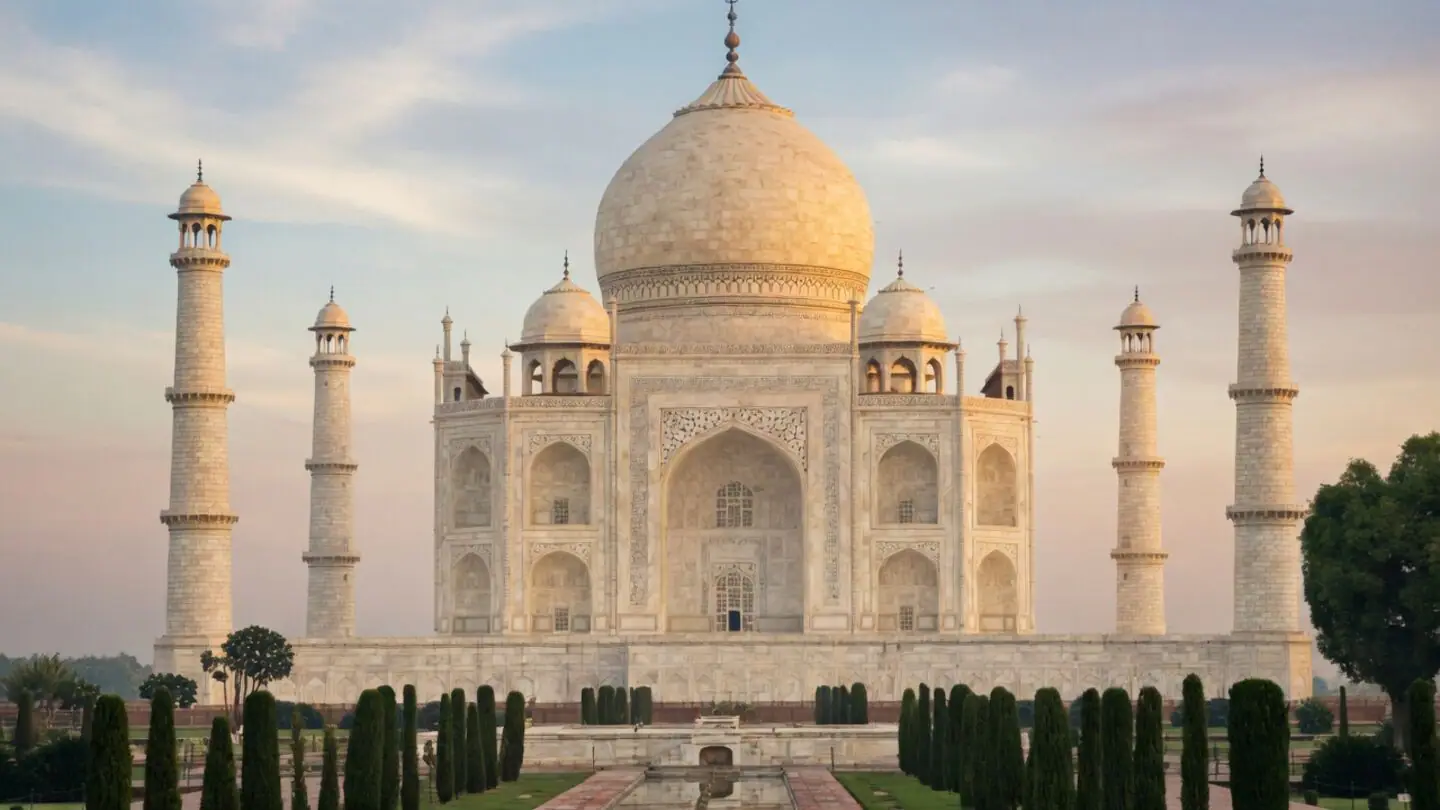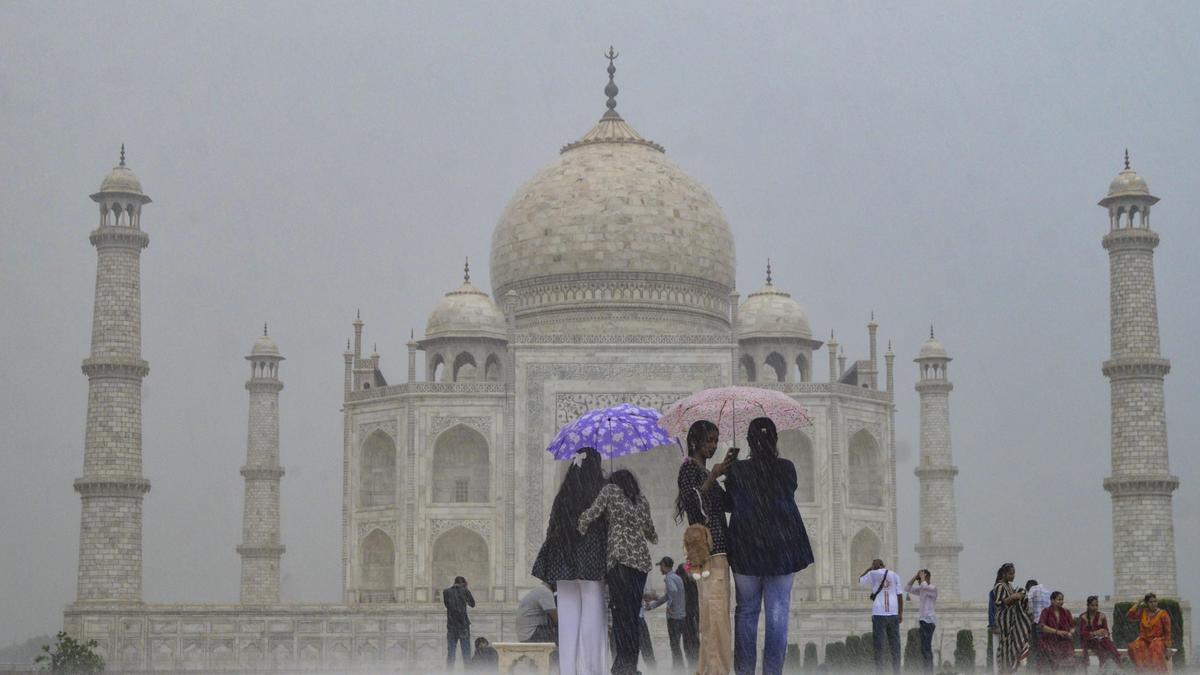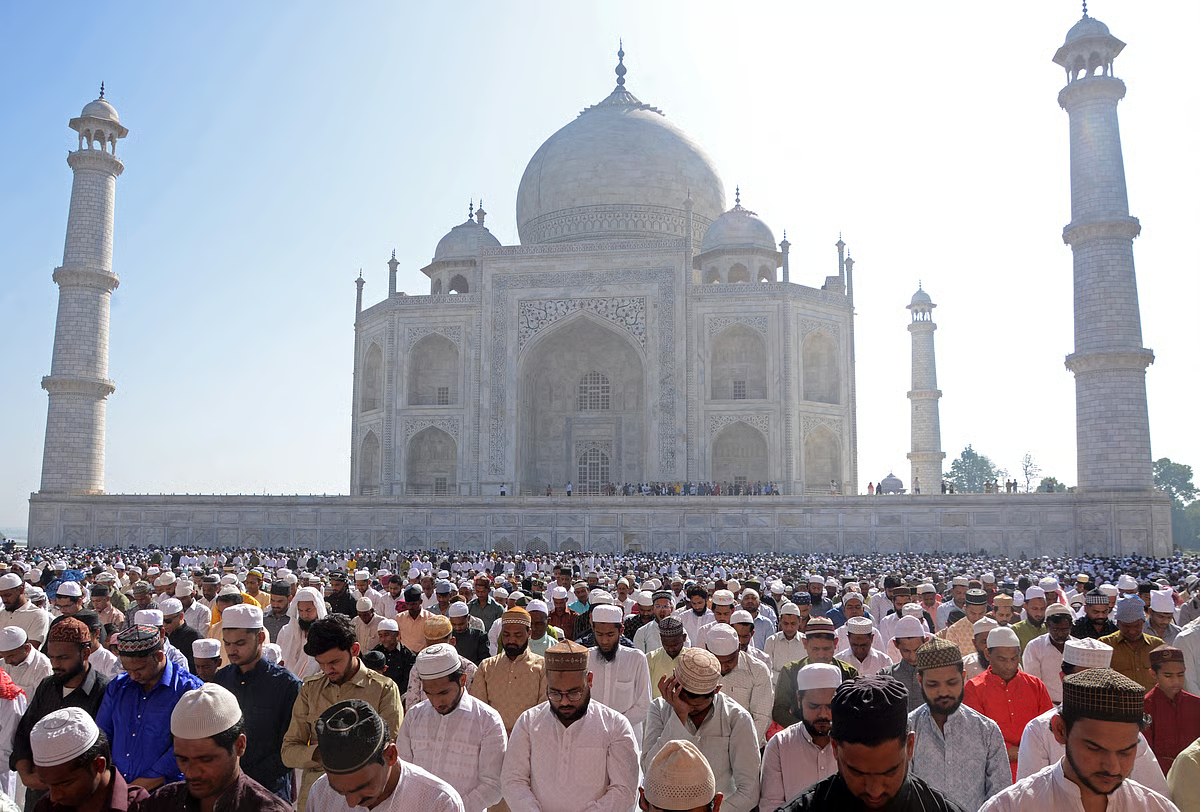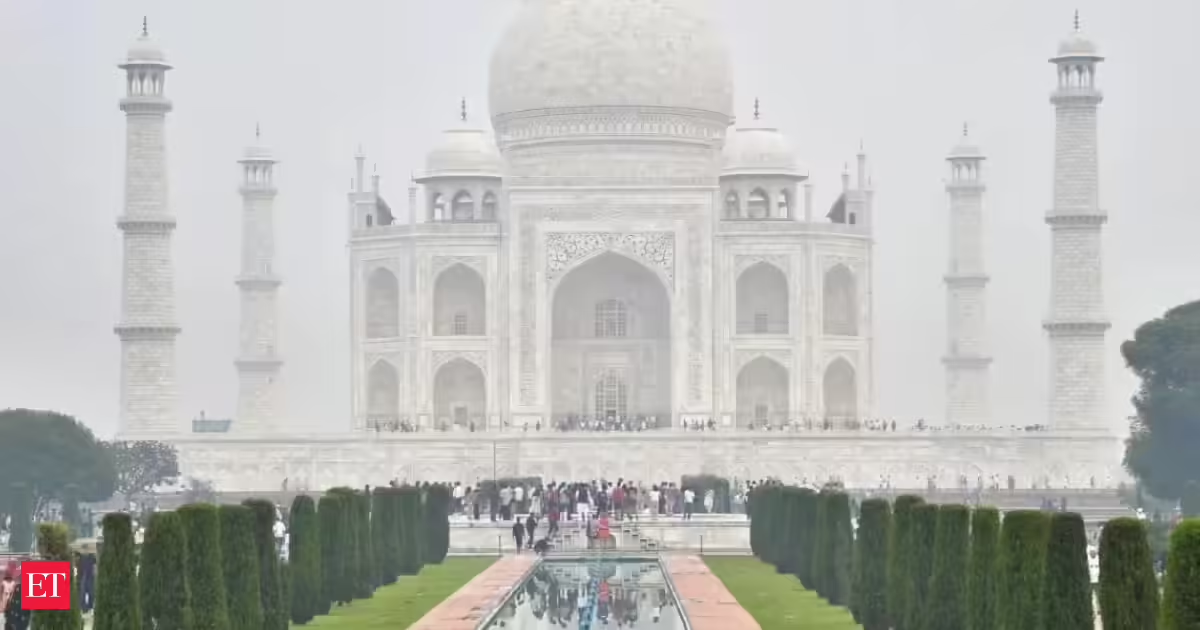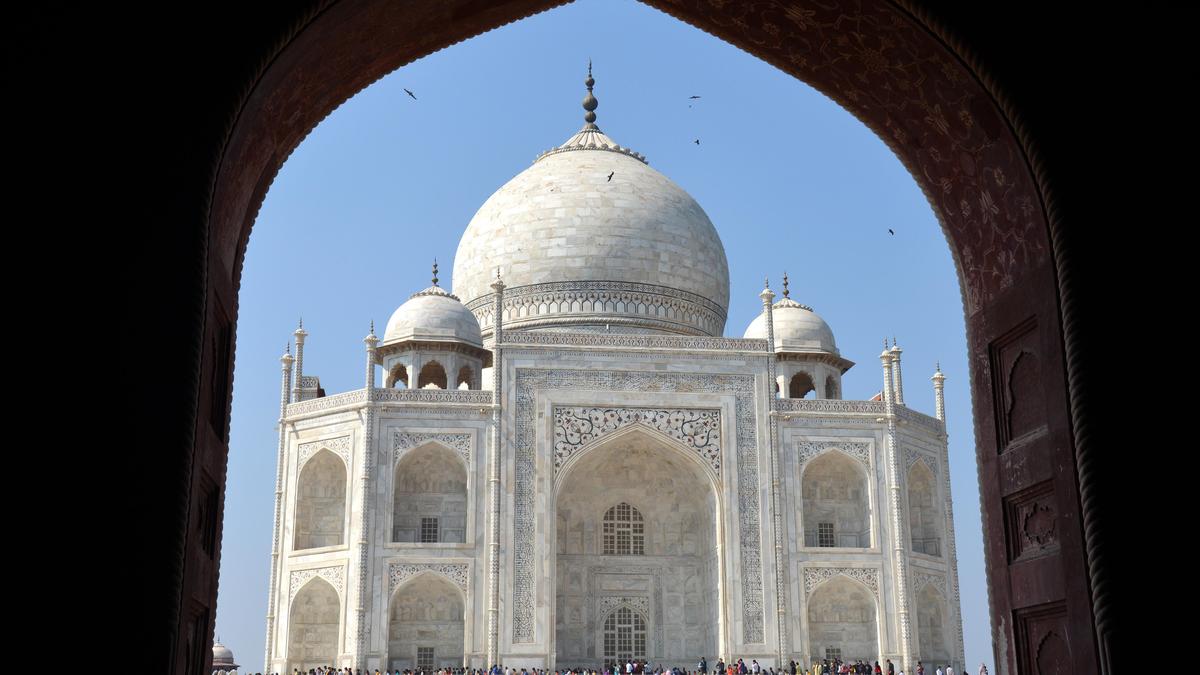
A view of the Taj Mahal at Agra in Uttar Pradesh.
| Photo Credit: R.V. Moorthy
The story so farTaj Mahal, the seventeenth-century tomb, is once again in the news. Earlier this month, the Allahabad High Court issued notices to the Centre and the Archaeological Survey of India, asking for their response to a plea challenging an Agra trial court order refusing a survey of the Taj Mahal. Following a petition filed by advocate Harishankar Jain contending that the Taj, a UNESCO World Heritage monument, is actually a Tejo Mahalaya, a Bench of Justice Rohit Ranjan Agarwal passed the order.Also Read | Plea before HC claims Taj Mahal built on Raja Man Singh’s mansionMr. Jain pleaded for a declaration that the Taj Mahal is a Hindu temple and sought permission for Hindus to offer prayers there. The petitioners also sought the appointment of an Advocate Commissioner to inspect the monument and carry out photography and videography.First contentionBuilt by Mughal emperor Shah Jahan as a tomb for his favourite wife Arjumand Bano, the Taj Mahal took 22 years to be completed. The land for it was procured from Mirza Raja Jai Singh of Amber who was compensated by Shah Jahan through four havelis from the imperial property. Constructed under chief architect Ustad Ahmed Lahori, the first time it faced a controversy was when it was claimed by many in the West that the architect of the Taj was Venetian Geronimo Veroneo, a jeweller by profession. That was in the 17th Century. Then came the claim by Mughal Beg in Tarikh-e-Taj Mahal that the Taj was designed by Muhammad Effendi, an architect supposedly sent by the Sultan of Turkey. Effendi, however, was not an architect as subsequent revelations proved.Editorial | Deceptive dispute: On the Taj MahalThen in the mid-19th Century, it was claimed that the monument was the result of the genius of Frenchman Austin de Bordeaux, a jeweller by profession. However, Austin died in 1632, the year the work on the Taj began.Oak’s claimNo historian of medieval India has contested the fact of the Taj being a tomb of the Mughal emperor Shah Jahan’s wife. This includes the illustrious historians Irfan Habib and Athar Ali, besides noted names like Satish Chopra and Syed Ali Nadeem Rezavi. The first person to cast aspersions on the tomb’s authenticity was a non-historian, P.N. Oak, a teacher-turned-lawyer-turned-journalist, who, through his book Taj Mahal is a Temple Palace, claimed in 1965 that the Taj was originally a Rajput palace built in the 4th century. Some 24 years later, in 1989, Oak revised his opinion and claimed it was originally a Hindu temple built in the early 12th Century. Again, he penned a book, Taj Mahal: The True Story, to buttress his contention. It was the first time anybody associated the monument with a Hindu deity. The historians rejected his claims as lacking credibility in the absence of any evidence.Oak’s claim, however, was heard in the Supreme Court, which rejected it outright in 2000, calling his allegations “a bee in his bonnet”.More legal casesIn 2005, Amarnath Mishra, now a member of Ayodhya Sadbhavna Samiti, went to Allahabad High Court claiming the Taj was a temple built by the Chandela rulers in 1189. The court dismissed his contention too.The opponents didn’t give up. In 2015, a civil suit filed at Agra trial court sought to declare the Taj Mahal a Hindu temple. The court, however, didn’t agree with the claim. After it refused to order a survey of the Taj premises, like the one ordered in Gyanvapi and Bhojshala, the petitioners went to Allahabad High Court. The court then sought response from the Union Government and the Archaeological Survey of India.ASI standIn 2017, the Archaeological Survey of India stated unambiguously that the Taj was a 17th-century tomb. The technology used in its construction and design, including pietra dura, did not exist in pre-medieval days. It should have ended any vestiges of controversy. However, a PIL was filed by a Bharatiya Janata Party leader in the Supreme Court in 2022. It was dismissed too. Two years later, some activists tried to offer Gangajal at the Taj. That attempt, too, was foiled. Briefly, the monument disappeared from the state government’s tourist brochure in 2017. Now, following the Allahabad High Court ruling, the ball is in the Centre’s court, besides the ASI yet again. Justice Agarwal issued notices on the plea, filed in the name of the deity Lord Sri Agreshwar Mahadev Nagnatheswar Virajman through a “next friend”, advocate Jain, along with other devotee. Published - July 17, 2026 03:17 pm IST