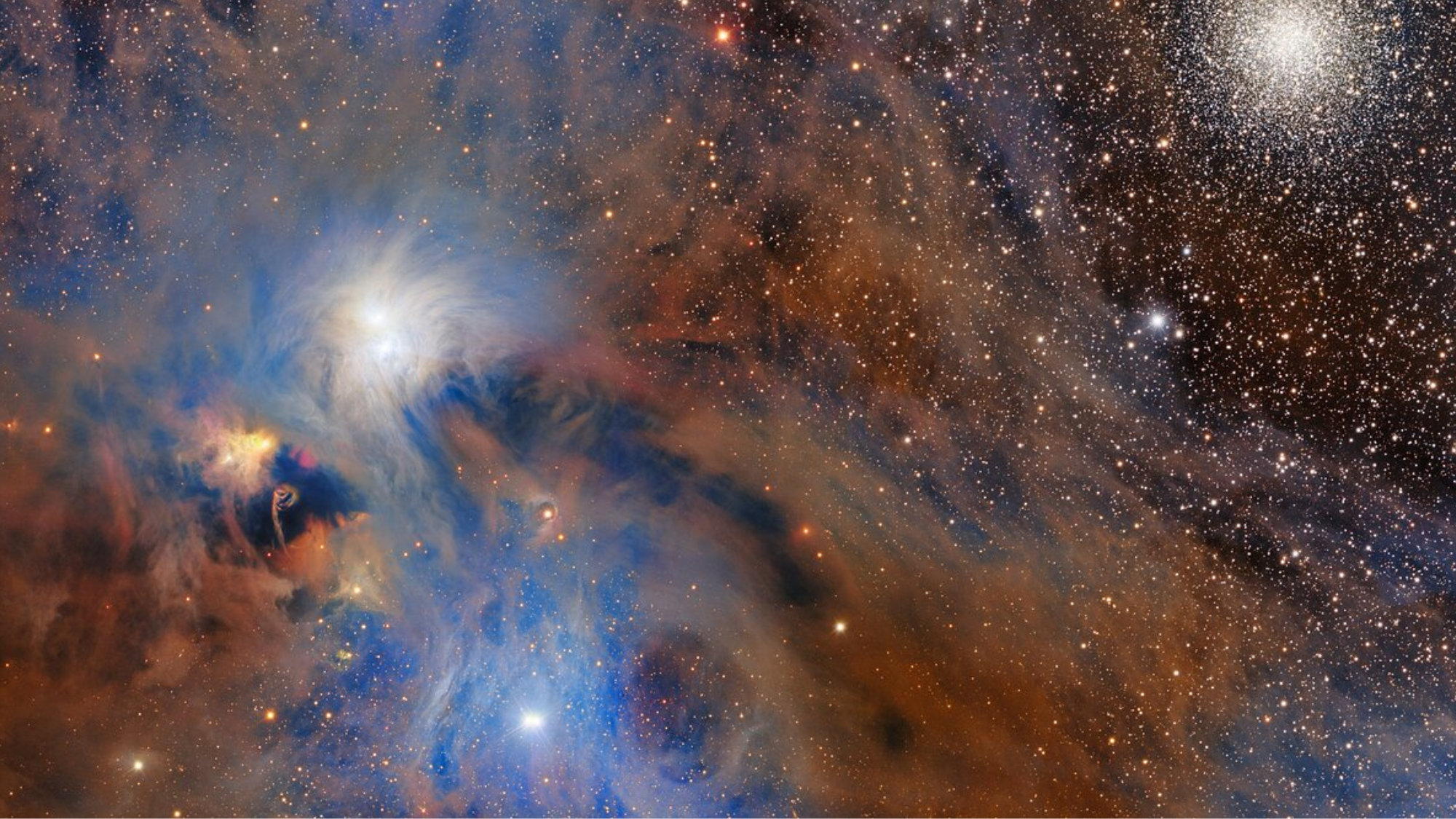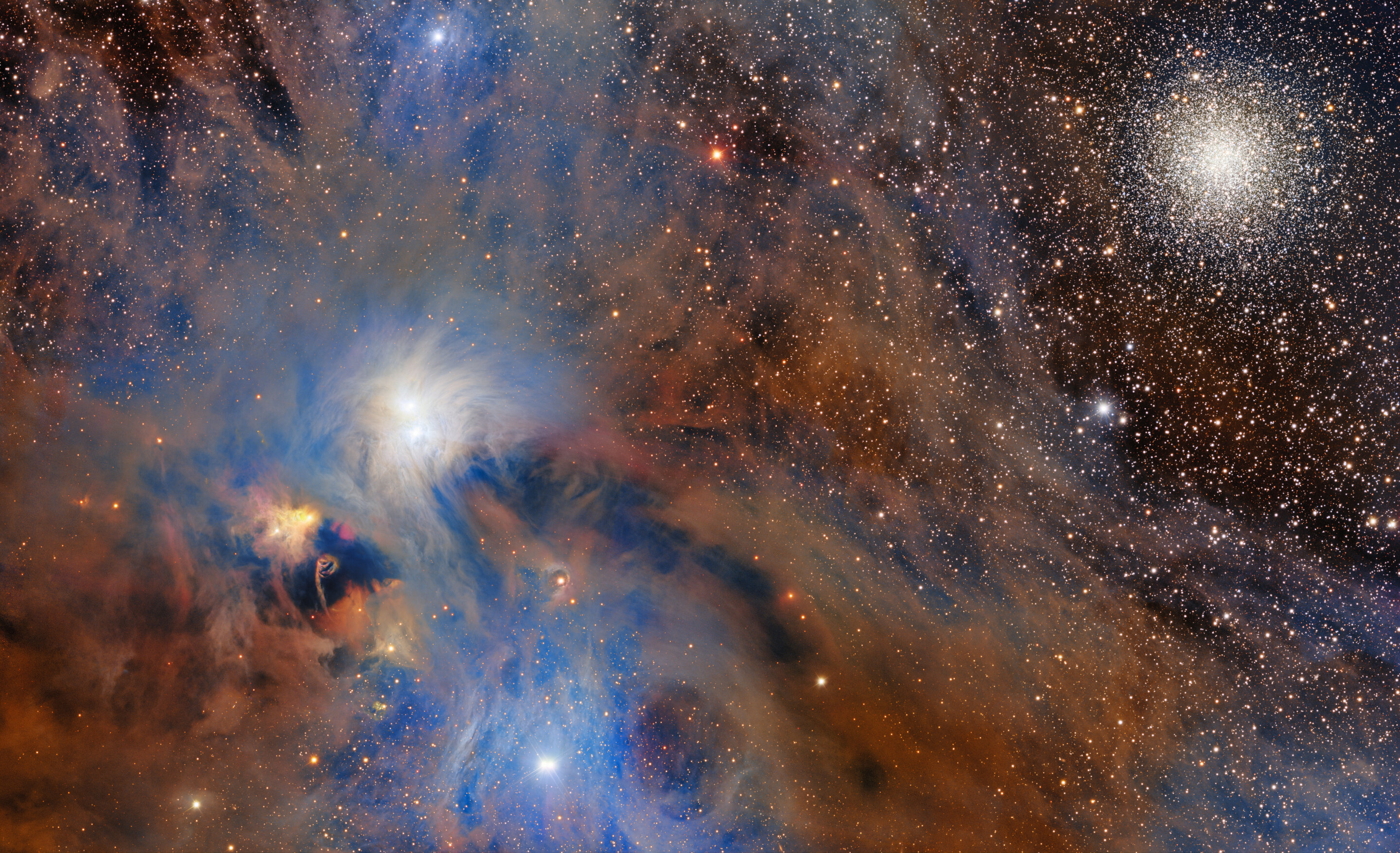
Corona Australis Molecular Cloud. Credit: Dark Energy Survey/DOE/FNAL/DECam/CTIO/NOIRLab/NSF/AURA
The 570-megapixel Department of Energy-fabricated Dark Energy Camera (DECam) captures a vibrant scene filled with swirls and stars reminiscent of Van Gogh's The Starry Night. This new cosmic masterpiece features the glowing nebula NGC 6729 on the left and the globular star cluster NGC 6723 on the right. DECam is mounted on the U.S. National Science Foundation Víctor M. Blanco 4-meter Telescope at Cerro Tololo Inter-American Observatory in Chile, a program of NSF NOIRLab.
Deep inside the constellation Corona Australis, Latin for "Southern Crown," lies a treasure trove of star formation known as the Corona Australis Molecular Cloud. This molecular cloud, which spans the left half of the image, is one of the closest star-forming regions to the solar system, sitting about 430 light-years from Earth. Together, they create a field of view reminiscent of Vincent Van Gogh's painting The Starry Night, full of bold eddies of celestial color and movement.
Mosaic (globular cluster, emission nebula, reflection nebula, R Coronae Australis). Credit: Dark Energy Survey/DOE/FNAL/DECam/CTIO/NOIRLab/NSF/AURA