RBI’s overseas deposit scheme closes on September 30.
| Photo Credit:
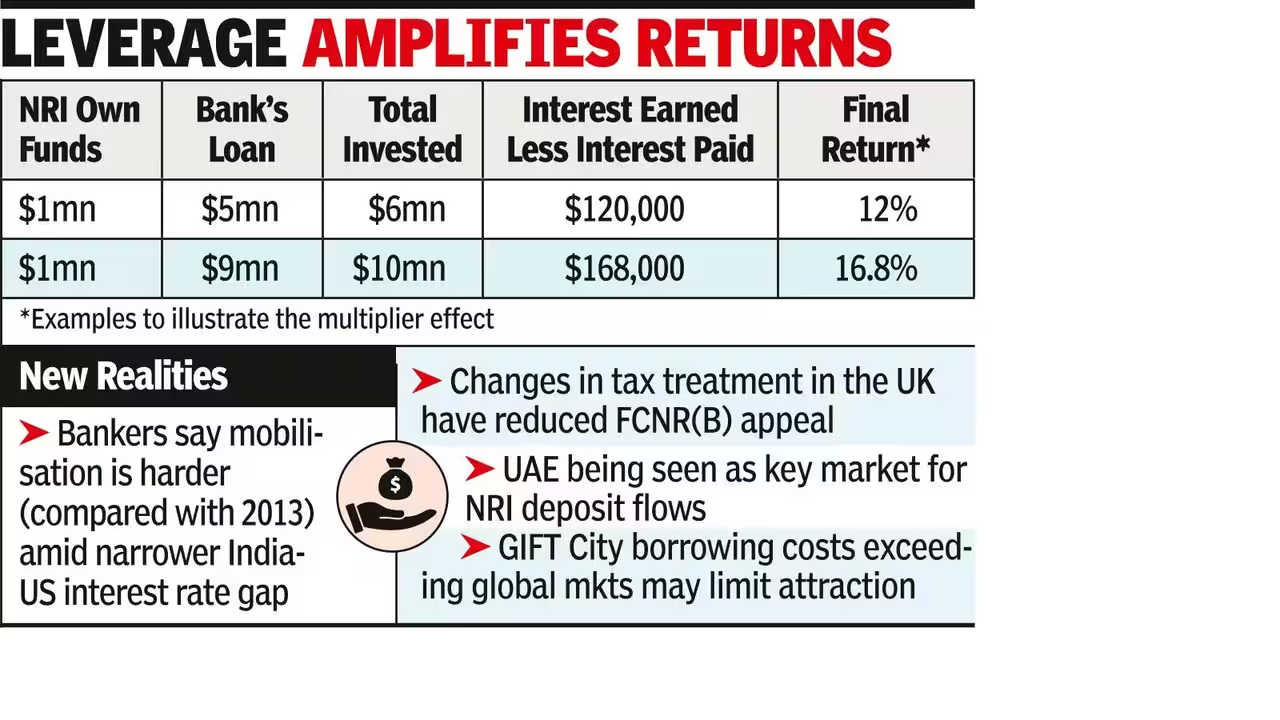
Public sector banks (PSB) have told senior government officials they expect to raise nearly $30 billion through Reserve Bank of India’s (RBI) subsidised dollar deposit window, five bankers familiar with the matter told Reuters.The estimate was shared by the heads of state-run banks at a meeting with Finance Minister Nirmala Sitharaman and other finance ministry officials earlier this week, two of the sources said.“The state-run banks have given estimates about the quantum of dollars each of them will be able to garner through the tenor of this scheme,” one of the bankers directly aware of the matter said.“The larger ones have estimated inflows of around $4-$5 billion, while the smaller banks will try and target $1-$2 billion.”The bankers requested anonymity as the matters were discussed privately. The Finance Ministry did not reply to a Reuters email seeking comment.On June 5, the RBI had announced a zero-cost foreign-exchange swap facility for deposits raised from non-resident Indians, allowing banks to offer higher returns on such deposits. The scheme closes on September 30.Earlier this week, Reuters reported citing sources familiar with the matter that India has attracted roughly $10 billion in inflows through the central bank’s special deposit programme.The funds raised so far represent only a fraction of the total inflows that were estimated between $40 billion to $70 billion by analysts.“The start has been slow, but we are confident of garnering $2 billion under this scheme till September, with major flows coming from the gulf and Singapore,” said Binod Kumar, managing director and CEO at Indian Bank, that has raised about $150 million so far.On June 23, the central bank clarified that banks would be allowed to lend against these deposits and place a lien against them, permitting the use of leverage that can make the programme more attractive.Inflows have picked up since then, but officials are expecting a majority of the flows to be back-ended, imitating what was seen in 2013, three of the five bankers said.Published on July 17, 2026