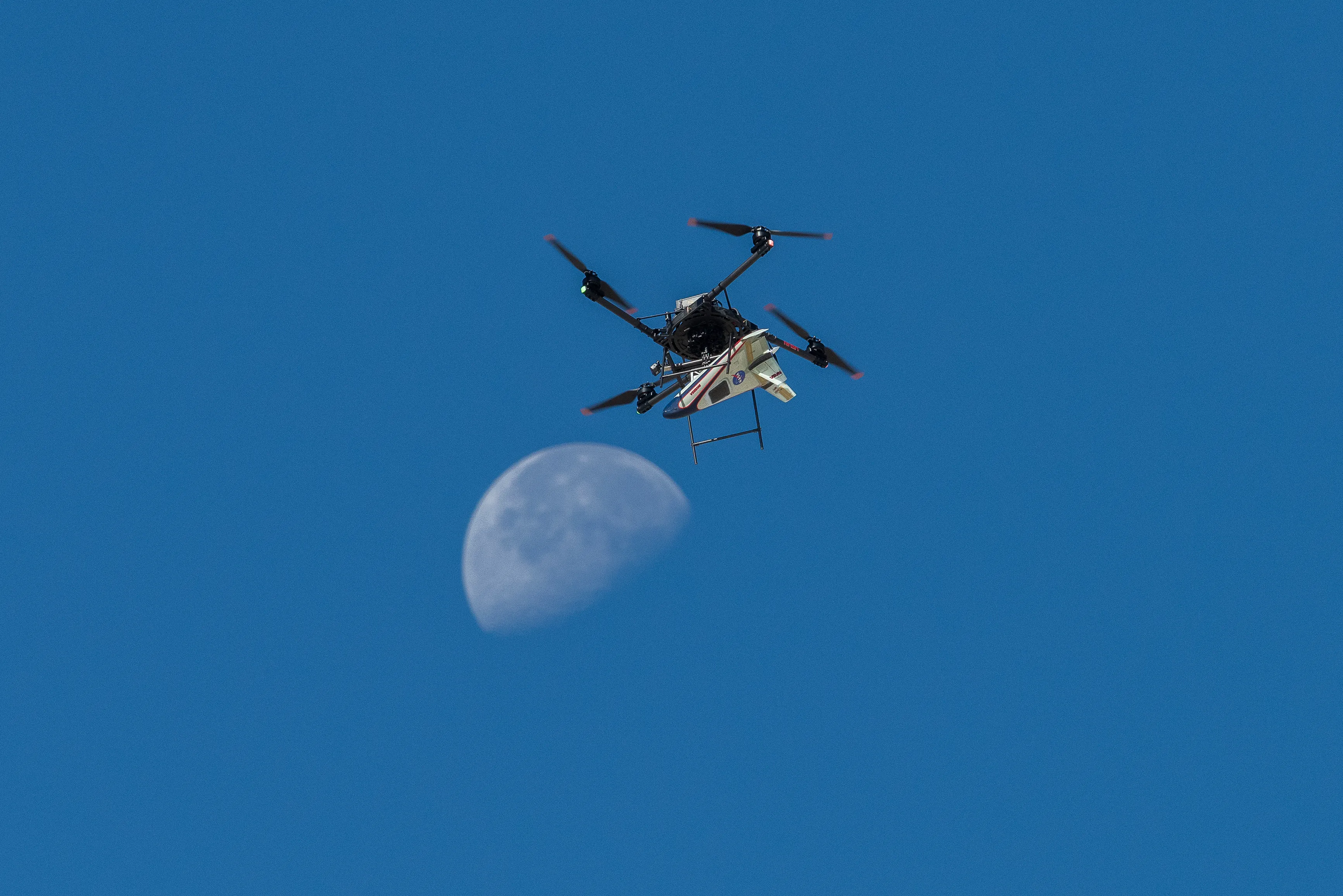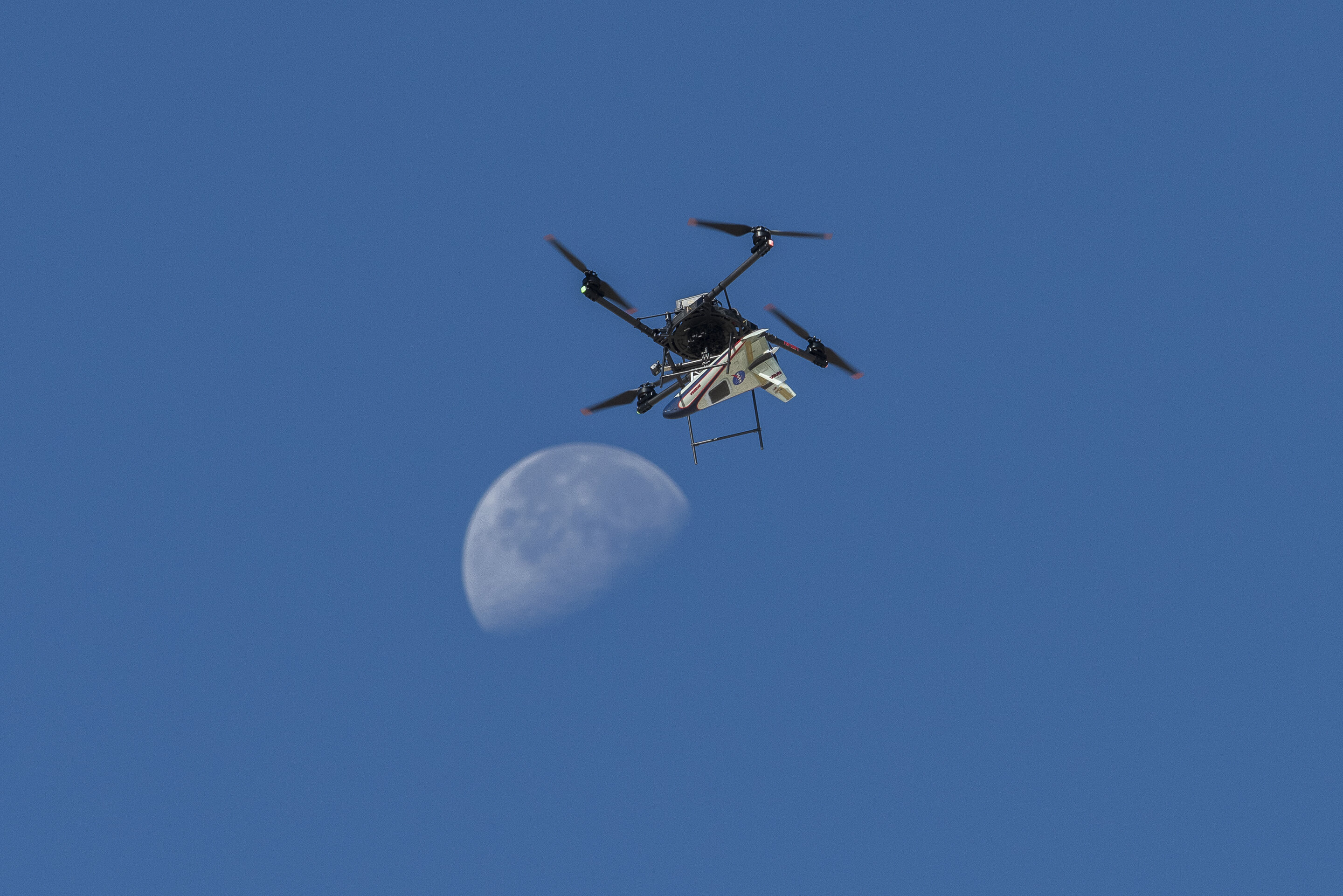
An atmospheric probe model attached upside down to a quad rotor remotely piloted aircraft ascends with the Moon visible on Oct. 22, 2024. The quad rotor aircraft released the probe above Rogers Dry Lake, a flight area adjacent NASA’s Armstrong Flight Research Center in Edwards, California. The probe was designed and built at the center. Credits: NASA/Steve Freeman
Testing new aerospace concepts in flight remains one of NASA's most effective ways to advance knowledge and reduce risk.
The Dale Reed Subscale Flight Research Laboratory at NASA's Armstrong Flight Research Center in Edwards, California, supports this mission by using small, remotely piloted and autonomous aircraft as cost-effective platforms to mature innovative ideas, accelerate learning and enable smoother transitions to full-scale flight.
When experiments require a flight platform, several NASA remotely piloted aircraft are available: the Alta-X quadrotor; the Dryden Remotely Operated Integrated Drone (DROID), with its 10-foot (3-meter) wingspan; and the Multi-Use Cub, a 14-foot (4-meter)-span fixed-wing aircraft with an expandable payload capacity for flight experiments. For electric vertical takeoff and landing testing, the HQ-90 quadrotor provides an additional option.