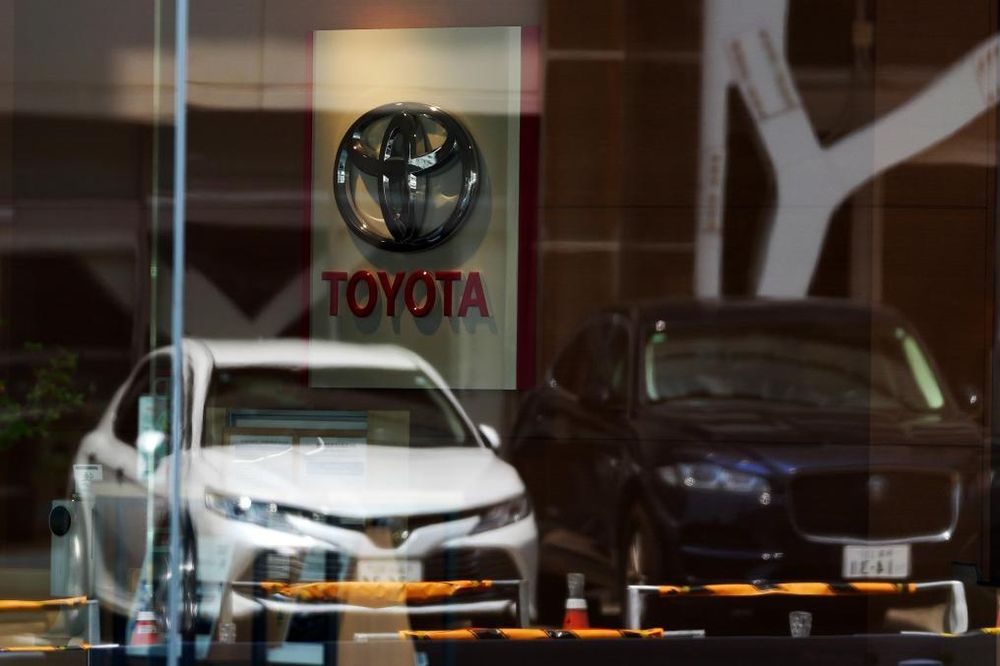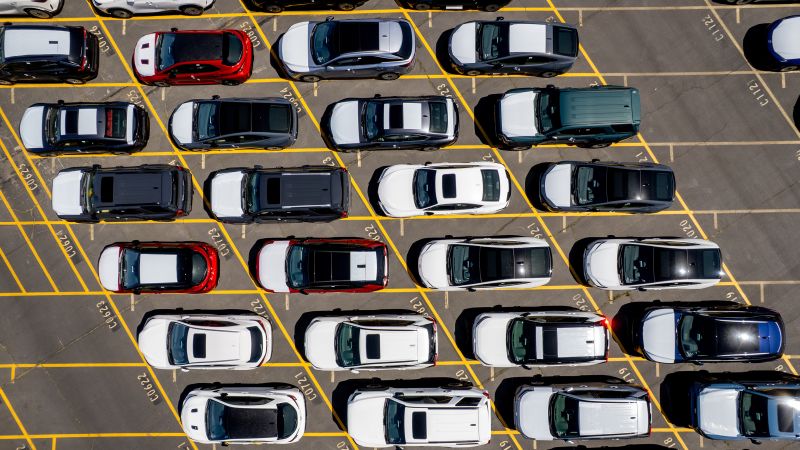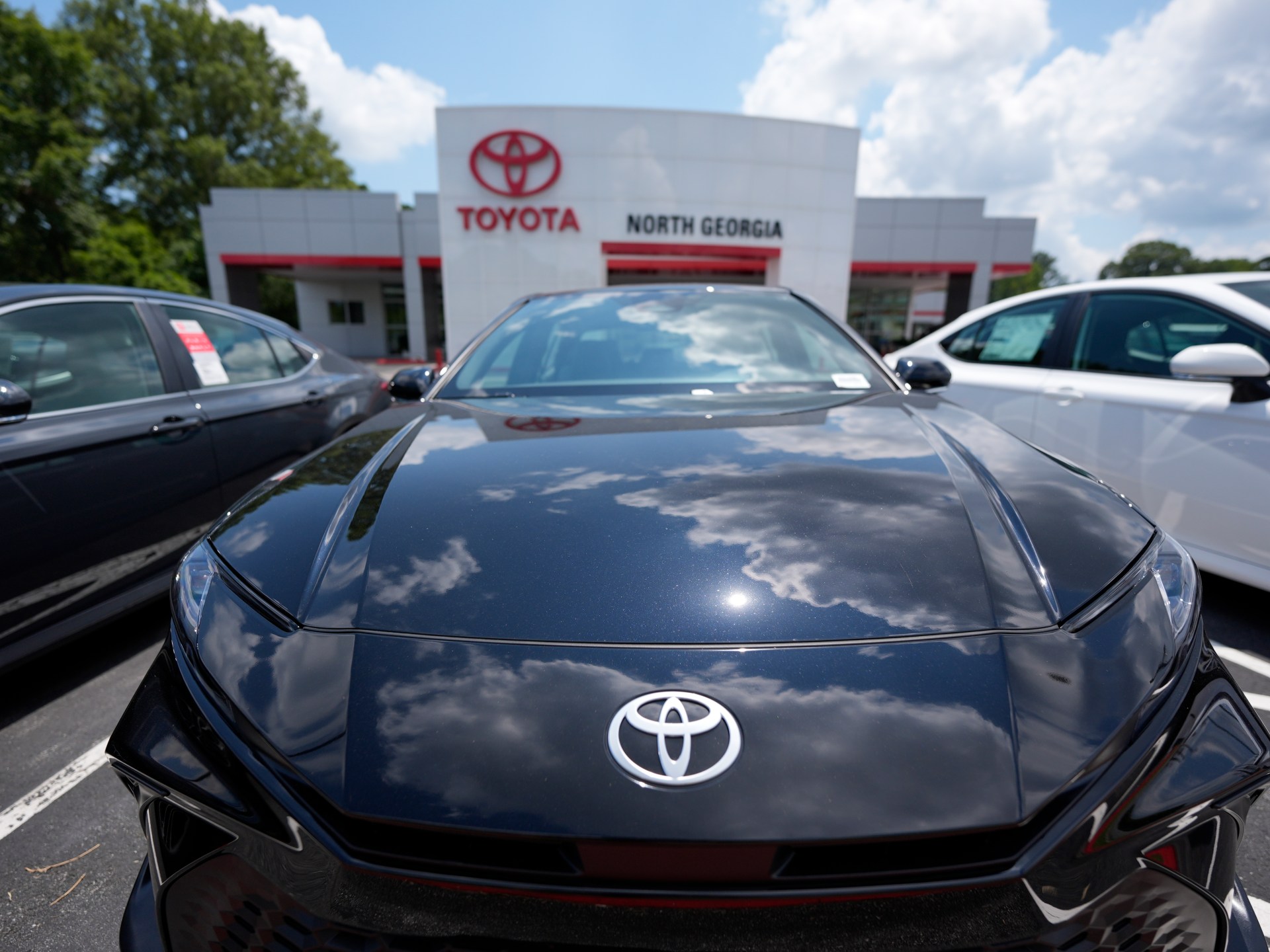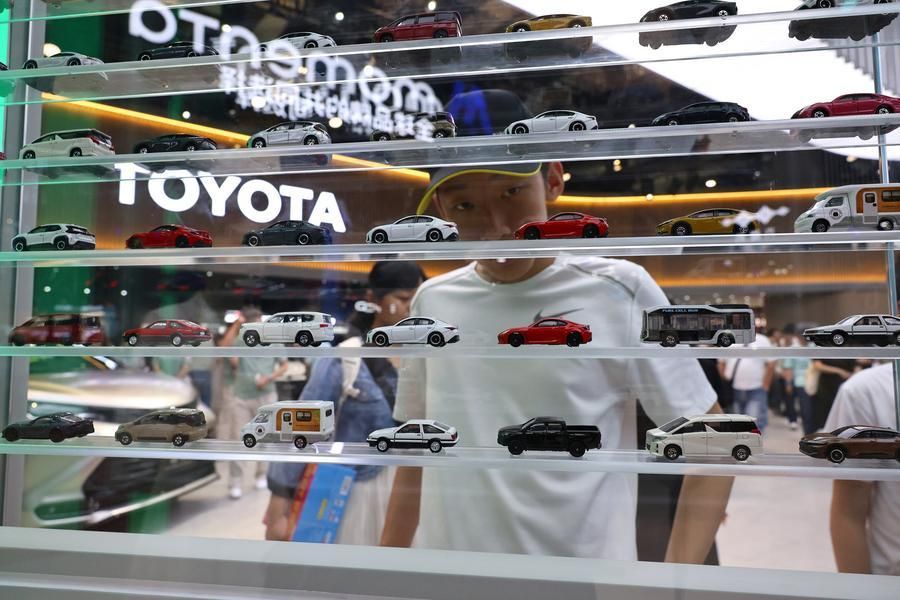
A visitor looks at Toyota model cars at the 21st Shanghai International Automobile Industry Exhibition in east China's Shanghai.
There's a number worth sitting with: automakers have absorbed more than $35 billion in US tariff costs since 2025, and Japan's six largest carmakers alone are on track for a combined $40 billion hit by March 2027. Toyota's share of that bill runs to roughly $9.1 billion for its current fiscal year, the single largest tariff exposure of any manufacturer, from a company that built its entire postwar identity on lean, cost-disciplined manufacturing. When the most efficient carmaker on the planet is eating a nine-figure-a-month tariff bill, it's a sign the industry has hit a cost problem no amount of internal efficiency can absorb.
What makes this moment different from prior trade disputes is that the pain isn't concentrated in one place. Detroit's Big Three took a collective $6.5 billion hit in 2025. BMW, Honda, Hyundai-Kia, Mazda, Mercedes-Benz, Nissan, Subaru and Volkswagen are each separately looking at bills north of $1 billion. Nissan alone expects $3.1 billion in tariff expense this year, which is part of why it retooled its Mississippi plant away from EV production and back toward trucks, a decision that's as much an admission about tariff economics as it is about slowing EV demand. When essentially every major global manufacturer is bleeding from the same wound, "just build more locally" stops being a simple fix, because local supply chains for batteries, chips, and specialty components don't relocate on a tariff's timeline.