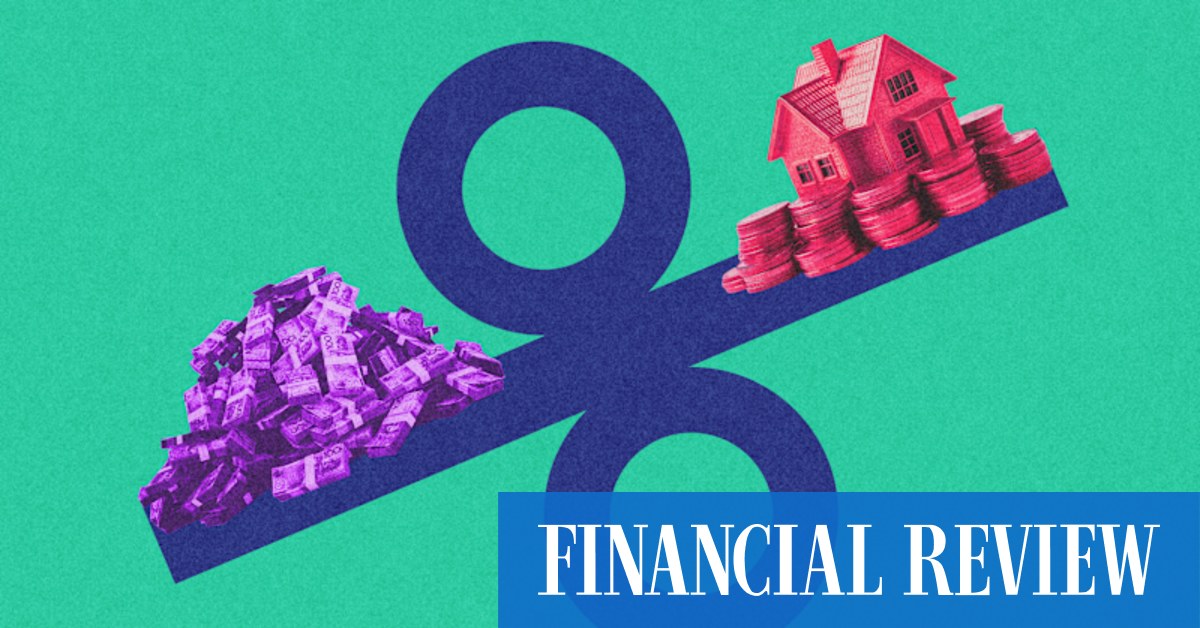
Capital gains tax has an extraordinary ability to freeze rational investors. A portfolio may no longer suit their objectives, risk tolerance or stage of life, yet the moment someone suggests making a change, the conversation shifts away from investments and towards tax.“I don’t want to trigger capital gains tax.”It is an understandable reaction as nobody enjoys paying tax, yet it raises an interesting question. What if the tax you’re trying so hard to avoid was never really yours in the first place?As an investment grows, a deferred tax liability grows alongside it. While the gain belongs to you economically, part of its value will ultimately be payable to the South African Revenue Service (Sars) if you dispose of the investment. Seen this way, capital gains tax is not an unexpected penalty ― it is simply part of the economics of investing.That subtle shift in perspective matters because many investors end up making investment decisions that are driven more by tax than by what is actually in their long-term interests.The real question is not whether capital gains tax should be paid; it is whether paying it today leaves you in a better position tomorrow.That requires a simple cost-benefit analysis. What benefit will the new investment strategy provide? What is the cost of making the change, including tax? Most importantly, what is the cost of doing nothing?It is the final question that often receives the least attention.Holding onto a portfolio simply because selling it would trigger tax is still a decision, and it comes with its own costs. A portfolio may no longer be appropriately diversified, it may expose an investor to risks they no longer wish to take, or it may simply no longer be the most suitable solution for where they are in life. Those costs are less visible than a tax bill, but they are real, nonetheless.Imagine an investor whose portfolio has performed well over the past decade but whose underlying managers or investment strategy are no longer appropriate. A revised portfolio might reasonably improve long-term returns by even a modest amount, reduce unnecessary risk or better align with future income needs. Over many years, the value created by making that change can outweigh the one-off tax cost of implementing it.The challenge is that our brains are wired to focus on immediate loss rather than the future benefit.Behavioural finance refers to this as loss aversion. We experience the pain of giving something up more intensely than the satisfaction of gaining something of equal value. Writing a cheque to Sars feels like losing money, even if that payment allows the remaining capital to be invested in a strategy that is better suited to the future.It is also an example of mental accounting ― investors often treat the tax bill as a standalone event instead of considering the entire investment decision. Tax becomes the headline, while the long-term opportunity cost quietly fades into the background.This does not mean tax should be ignored; good planning still matters. There may be opportunities to spread disposals across tax years, offset gains against losses or delay transactions where there is a genuine reason to do so. Tax efficiency remains an important part of sound financial planning.What it should not become is the sole reason for standing still.Too often, investors believe they are making a tax decision when they are making an investment decision disguised as one. Avoiding capital gains tax can feel satisfying in the short term, but if it leaves capital trapped in a portfolio that no longer serves its purpose, the hidden cost may be far greater than the tax itself.The purpose of investing is not to minimise tax at all costs. It is to maximise the probability of achieving your long-term objectives. Sometimes that means accepting that paying capital gains tax is simply the cost of putting your capital to better work.• Marrian is director at independent wealth management firm InvestSense.Business Day
MATTHEW MARRIAN | Don’t let capital gains tax dictate investment decisions
Avoiding the tax can leave capital in a portfolio that no longer serves its purpose
650 words~3 min read