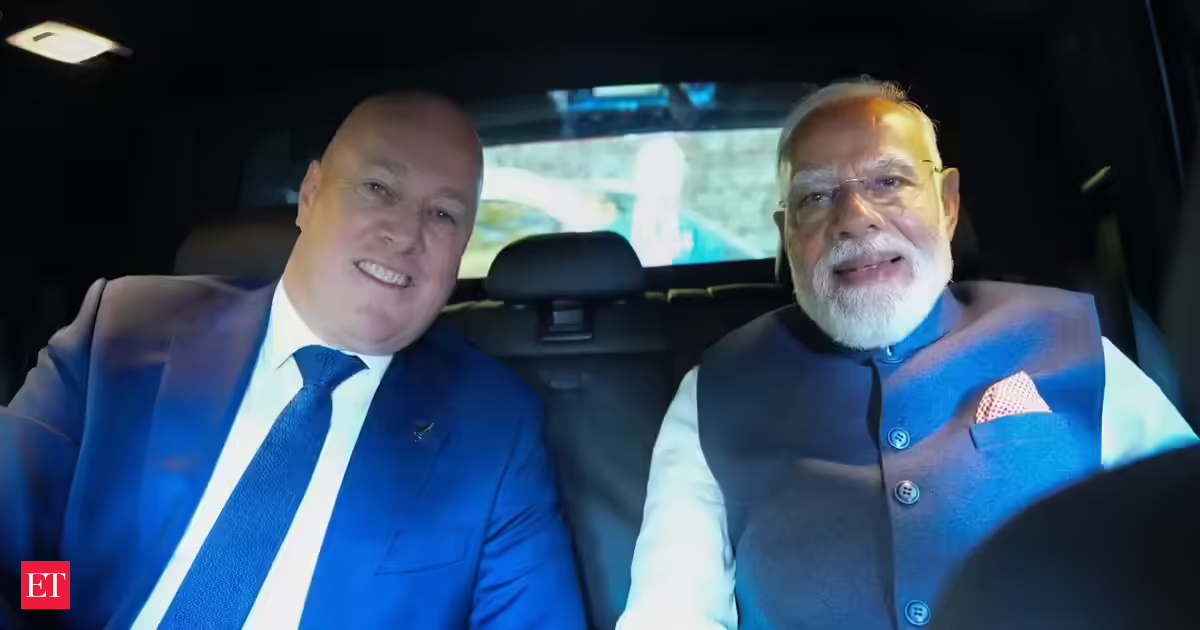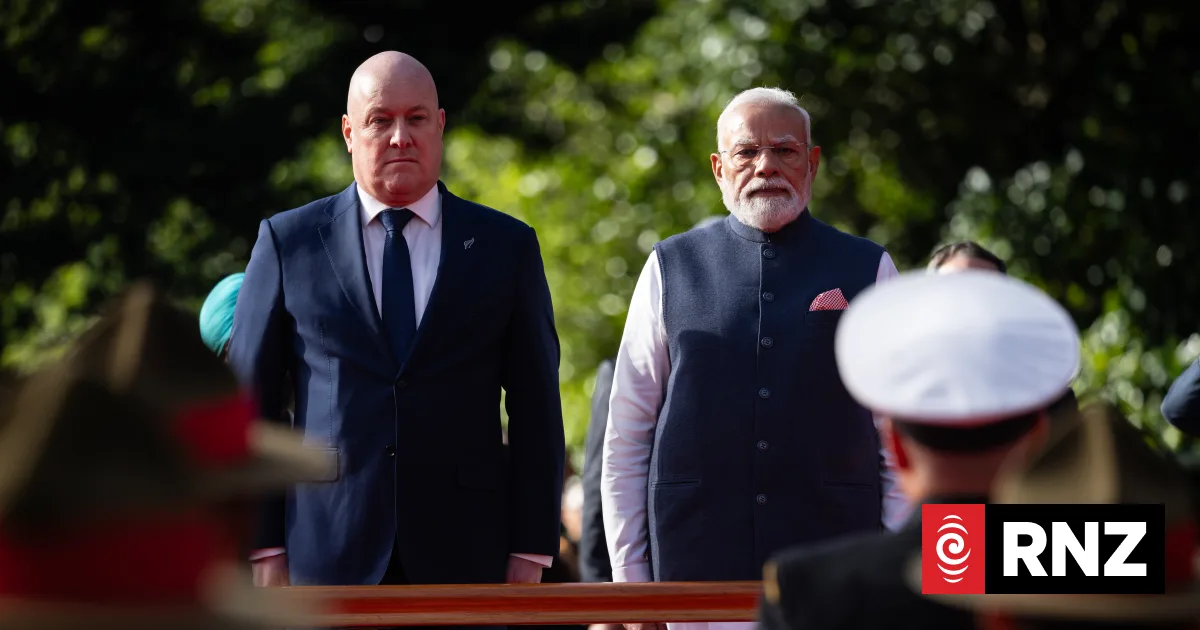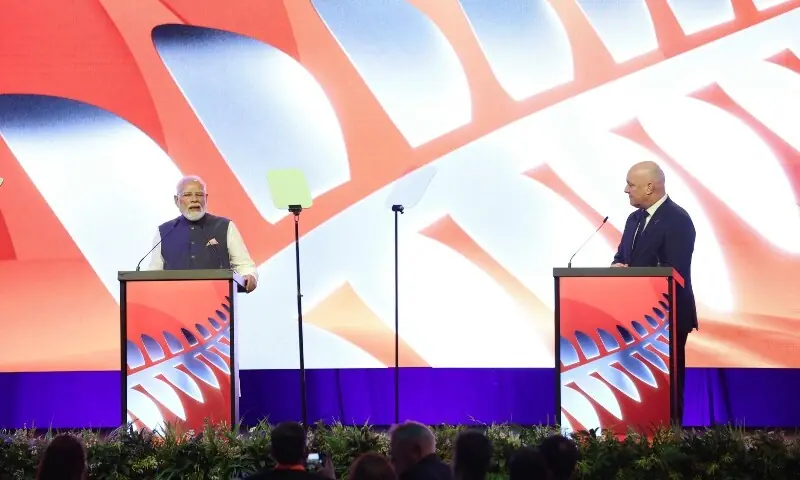
For the past several decades New Zealand has looked to China and Australia, and to a lesser extent the United States, United Kingdom, and European Union, as its major economic partners, while relying on Australia and other Western states as its major security partners. The July 11 visit by Indian Prime Minister Narendra Modi to New Zealand on the heels of the bilateral Free Trade Agreement (FTA) signed in April suggests a new effort by New Zealand to expand and balance its economic and security relationships to resist growing militarization and politicization in the Pacific.
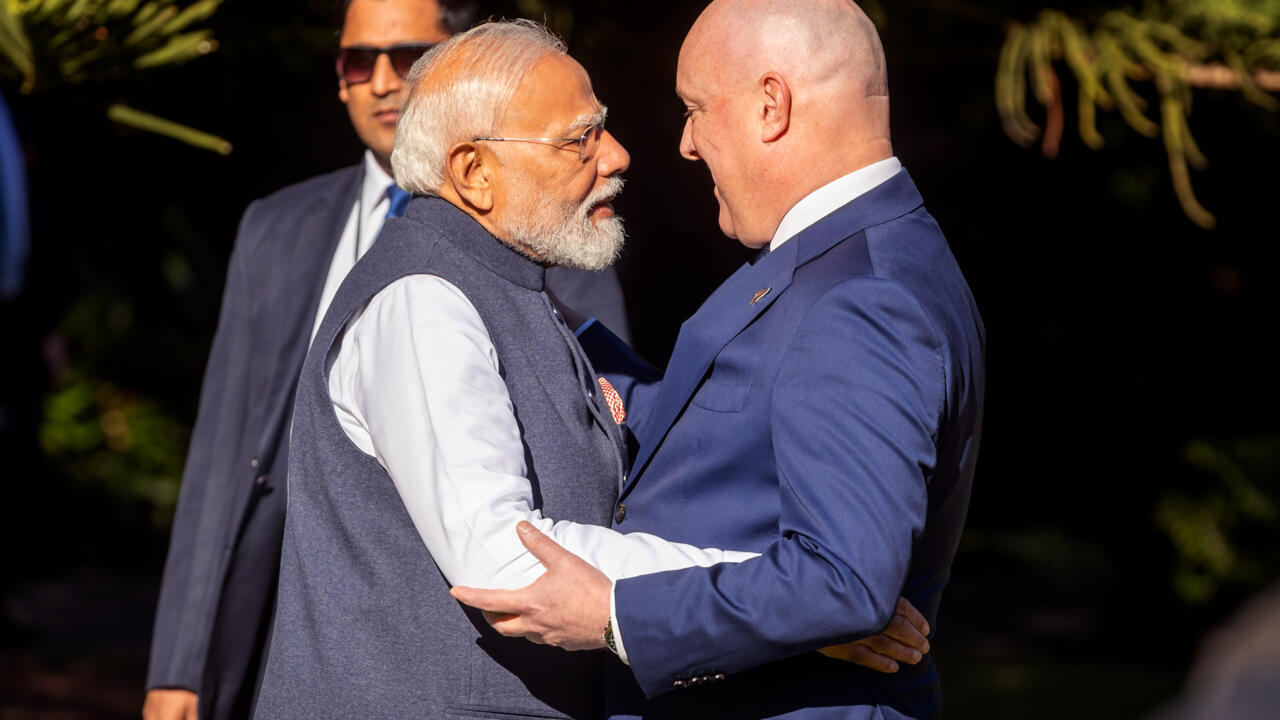
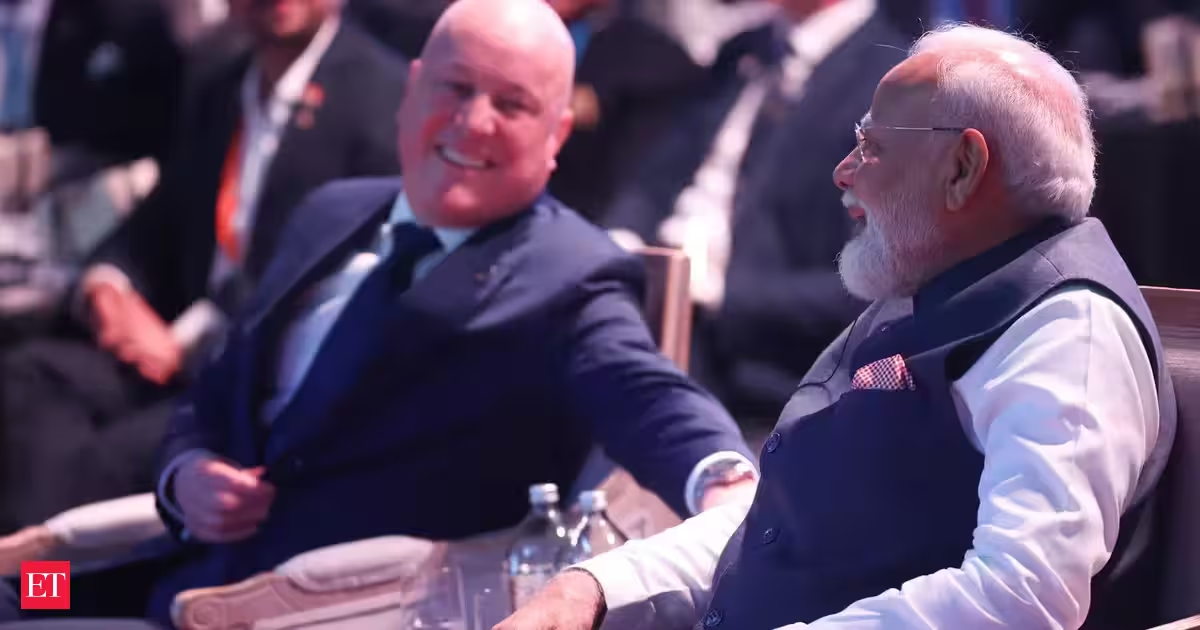
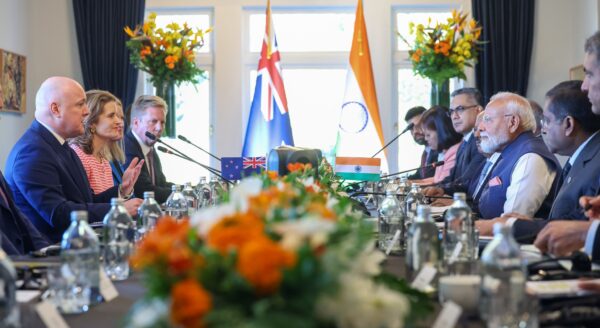
Modi’s one-day trip was the first visit by an Indian prime minister since Rajiv Gandhi visited New Zealand in 1986. The visit celebrated the signing of the New Zealand-India Free Trade Agreement and signified the deepening relationship between the two states. Currently two-way annual trade between the countries is approximately $3.1 billion, with New Zealand exports (primarily in wool, logs, and apples) making up about $718 million of that total.
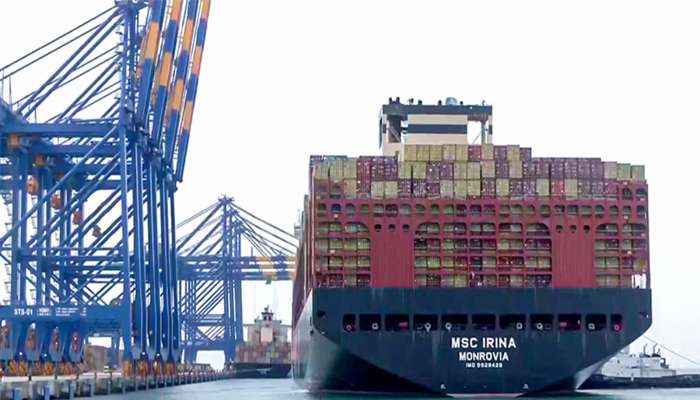
The Indian government has said that the FTA is a “forward-looking partnership” that promises to give its labor-intensive sectors, such as textiles and leather, additional economic opportunities. The New Zealand government stated that the FTA provides new and expanded business opportunities. Trade Minister Todd McClay stated that the new agreement would eliminate or reduce tariffs on 95 percent of exports, such as kiwifruit, apples, meat, wool, coal, and forestry. “It puts New Zealand exporters on an equal or better footing to our competitors across a range of sectors and opens the door to India’s rapidly expanding middle class,” McClay said.