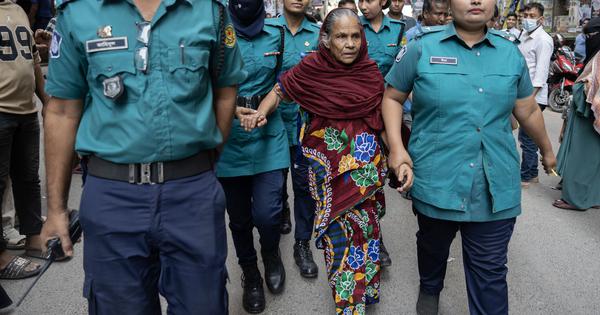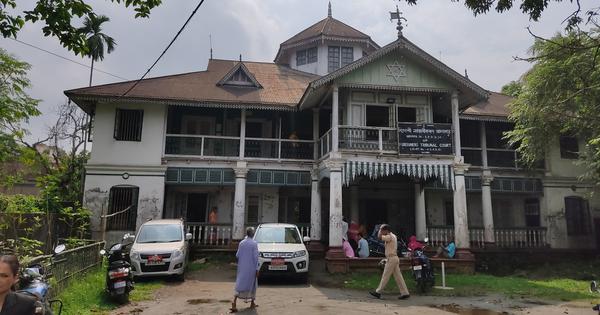
In April, Mumtaz Begum’s husband got a call from her lawyer.She had good news. The Gauhati High Court had referred the case of the 44-year-old Bengal-origin Muslim woman back to the foreigners tribunal in Assam’s Nagaon district.Foreigners tribunals are quasi-judicial bodies unique to Assam that decide on matters of nationality on the basis of documentary evidence.The Nagaon tribunal had declared Begum a foreigner in 2019, saying she could not prove that she was her father’s daughter.But the High Court set aside the tribunal order and asked it for a fresh decision, as it had failed to consider all the evidence that Begum had submitted.On May 30, Begum woman appeared before the tribunal and her lawyer submitted her petition to the court.Within minutes, however, the tribunal member called the police and ordered Begum’s arrest, without passing any order, her lawyer alleged. She was taken to the Juria police station, and later to the office of the Nagaon superintendent of police and from there to the Matia detention centre in Goalpara district.A week later, when her husband went to meet her, Begum was no longer at the camp, India’s largest detention centre.Begum had been pushed into Bangladesh – as the family eventually found out when it filed a habeas corpus petition at the Gauhati High Court.HRA Choudhury, the senior advocate who represented Begum in the High Court, told Scroll that the tribunal had “exceeded its power” by sending her to jail as its duty is limited to give an opinion on her nationality.“It is not the job of the tribunal member to hand her over to the police,” he said. “That is the job of the executive. The tribunal does not have the power to do so. I am not going into the merits of the case but this conduct is objectionable and illegal.”Senior advocate Sanjay Hegde pointed out that when the High Court had remanded the matter back to the tribunal, “the question of her citizenship had still not been decided”. “The tribunal could not have ordered her arrest and detention when the matter was pending before it,” he said.In the last four decades, Assam’s tribunals have stripped about 1,30,000 people of Indian citizenship through a process that has been criticised by courts, legal experts and human right groups as arbitrary and loaded against the poor and marginalised.Mumtaz Begum’s family members with members of civil society and village elders at their home. Credit: Special Arrangement ‘Vanished from police custody’On May 30, Mumrej Ali accompanied his parents to the Nagaon tribunal from their home in Dhinggaon village.“We were happy and hopeful when we went to the court,” the 26-year-old said.Ten minutes after their lawyer approached the tribunal member, as adjudicating officers of the foreigners tribunals are called, all hell broke loose. “The lawyer came to me and said that my mother would be arrested,” Ali said. “My mother started to weep.”Advocate Hasina Ahmed, who was present at the tribunal, said: “She was arrested within 30 minutes from the tribunal premises without even providing us a copy of the order.”The next day, Begum’s fingerprints and biometrics were recorded at the office of the Nagaon superintendent of police and she was sent to the detention centre in Goalpara.When Ali went to the transit camp on June 8, he was “informed that she had been taken away by the police to Nagaon”. “Since then, her whereabouts are not known,” he said. “My mother vanished from police custody.”Ali said while the High Court had not given Begum “direct relief”, it did not direct her arrest. “It only asked the tribunal to examine the documents,” he said. “How could she be taken away?”Begum’s lawyer Choudhury claimed that when Begum’s husband approached the tribunal member, he said “he will pass the order the way he wishes”. “The tribunal member was angry that his order was cancelled and the High Court had asked for fresh consideration,” Choudhury said.On June 16, Begum’s husband filed a habeas corpus petition with the Gauhati High Court.On June 24, the Assam government informed the High Court that 10 days earlier Begum had been taken to Kalainchera in Cachar district, which shares a boundary with Bangladesh, and pushed into the neighbouring country.The #Assam Government's parameter of deciding a Foreigners Tribunal member's performance is whether he or she declares more people foreigners or not. The system is rigged to strip people of their #citizenship. The system is #DesignedToExclude.https://t.co/aikyVAK4cg— Amnesty India (@AIIndia) March 13, 2020
HC sends Assam woman to foreigners tribunal for relief. She is arrested and pushed into Bangladesh
Her family got to know that she had been ‘deported’ only when they filed a habeas corpus petition.
1,483 words~7 min read