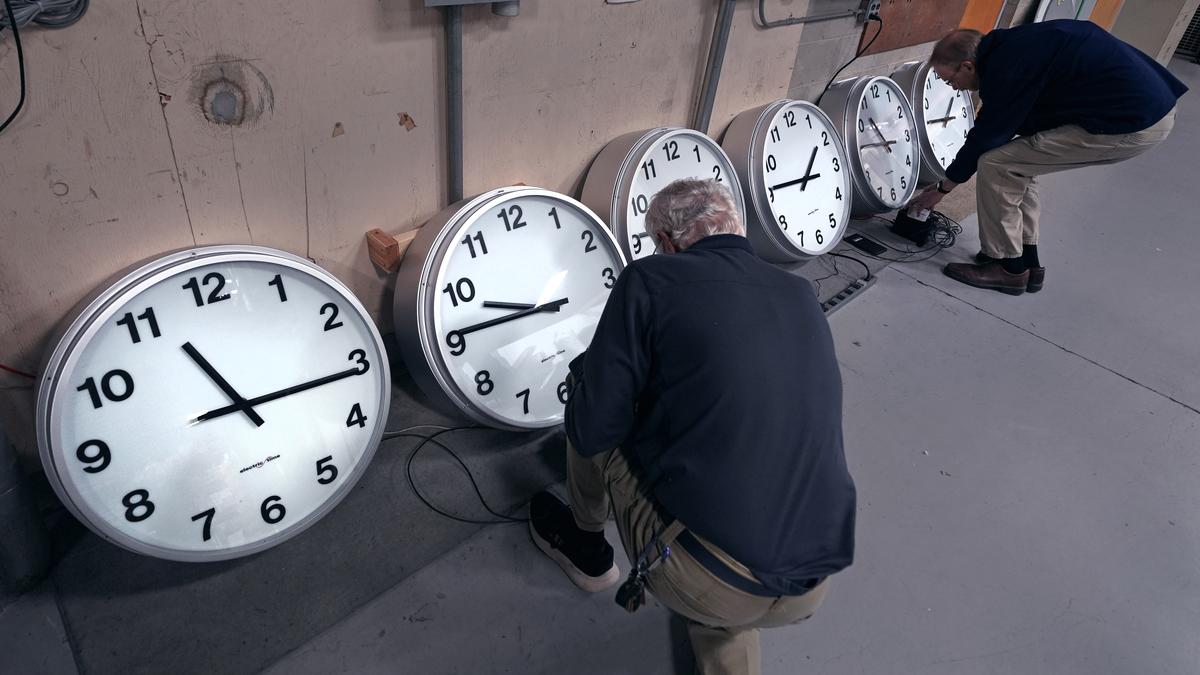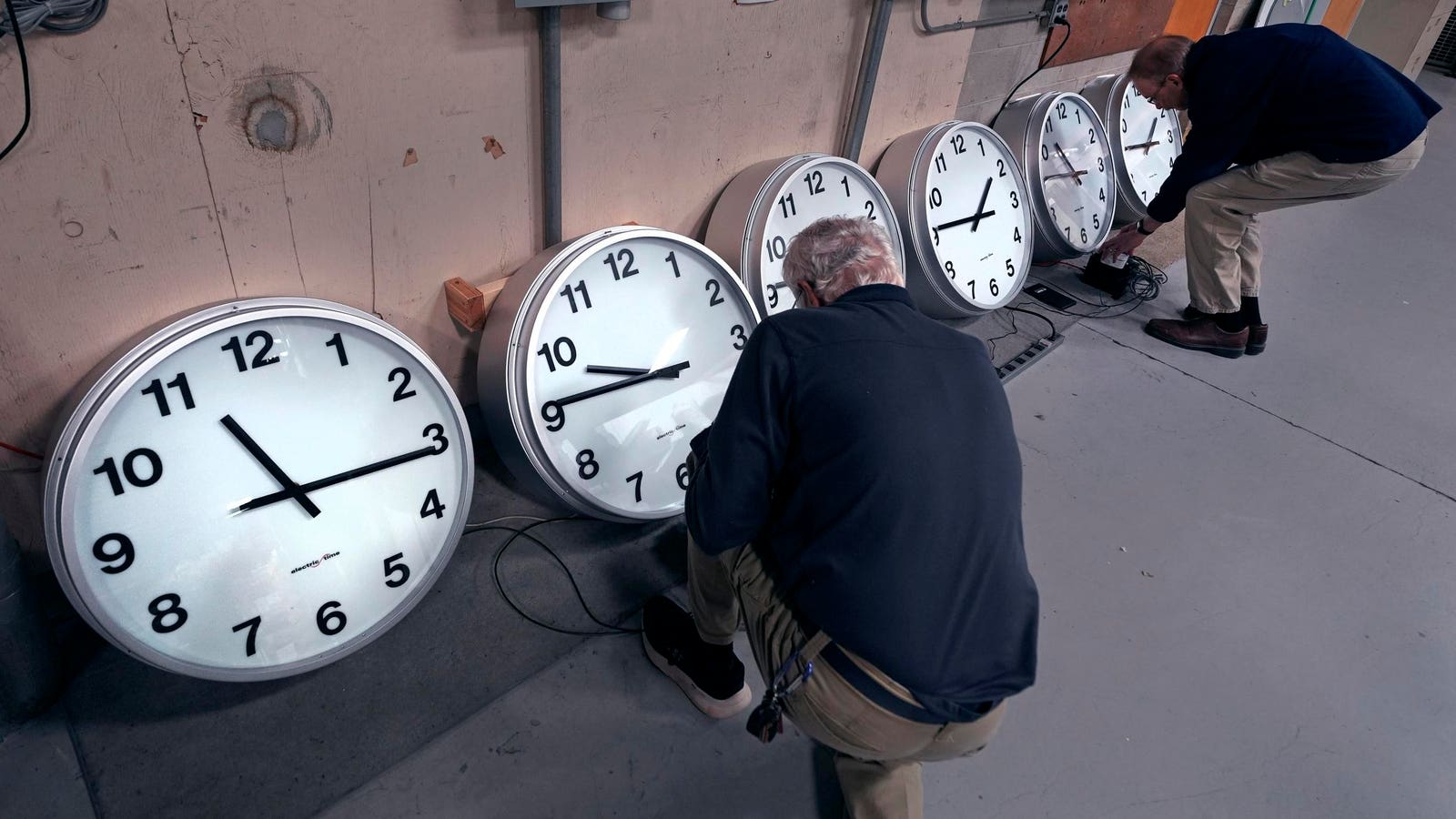
Clockmakers Rich Finn, left, and Tom Erb adjust the time zone controllers on a series of clocks that'll be installed at Paine Field in Everett, Wash., at the Electric Time Company, Wednesday, Oct. 30, 2024, in Medfield, Mass. (AP Photo/Charles Krupa)
The U.S. House of Representatives recently passed a bill that would make daylight saving time permanent. Dubbed the The Sunshine Protection Act, if this bill becomes law, it would mean that most of the country would not have to adjust their clocks two times a year. This issue has spurred debate, and it is not clear if this bill will see the light of day in Senate discussions. However, I am not here to debate its “pros” and “cons.” I am far more concerned about the large science literacy gap that has been exposed as people debate the issue.
What Are People Getting Wrong?
The first thing that people are getting wrong is the actual name itself. It is “saving." There is no “s” in this particular use of the term. However, that’s the least of my concerns. I have literally seen or heard debates or arguments that seem to suggest that adjusting the clock affects the actual amount of light delivered to Earth from the Sun. It’s as if “falling back” or “springing forward” by an hour is connected to a giant timer connected to the Sun.