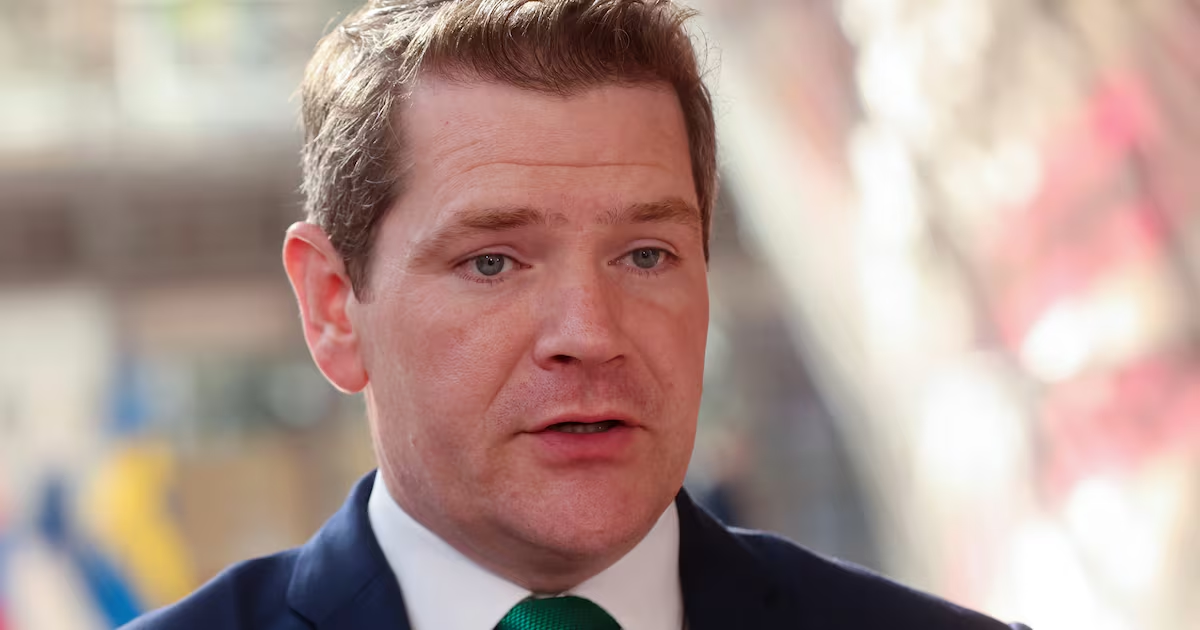
An increase of 79 cent per hour to the national minimum wage (NMW) has been recommended to the Minister for Enterprise by the Low Pay Commission.If accepted by Peter Burke and agreed by the Cabinet it would take the NMW from €14.15 per hour to €14.94 from January 1st next year. Burke is not obliged to accept the recommended increase but such recommendations by the commission have always previously been approved.The 79 cent figure equates to an increase of 5.6 per cent on the current rate, somewhat ahead of the 3.5 per cent rate of inflation recently forecast by the Central Bank for this year and also ahead of many recent private-sector pay deals.If implemented, the new rate would take the weekly wage for a person working a standard 39-hour week to €582.66 and to €30,298.32 per annum, breaking the €30,000 mark for the first time.About 200,000 people earn the minimum wage in Ireland, a group disproportionately made up of women, younger workers and people with disabilities. Many of them are employed in the retail, hospitality and service sectors.[ Public sector unions preparing for possible industrial action ballots over pay talksOpens in new window ]However, the rate impacts on thousands more whose pay is linked, often informally, to the NMW, including thousands of young people whose pay is based on a proportion of it. The full NMW rate applies to adult workers aged 20 or over, with sub-minimum rates for younger employees set at between 70 per cent and 90 per cent of the full rate. The 5.6 per cent increase proposed for next year would set a new minimum rate for 17-year-olds of €10.46 per hour, for 18-year-olds of €11.95 and for 19-year-olds of €13.45.The Low Pay Commission, which includes representatives of both employers’ groups and trade unions has previously recommended the abolition of these sub-minimum rates but this was rejected by the Government amid stiff opposition from the SME sector.A 79 cent increase would further narrow the gap between the NMW and the living wage, a figure generally set at 60 per cent of the median salary in Ireland, a process that is now scheduled to be completed by 2029. St Vincent de Paul recently cited €15.40 as the projected living wage for 2027.The NMW increased by 65 cent at the start of this year, by 80 cent in 2025 and by €1.40 at the start of 2023, an increase at the time of 12.4 per cent.The Economic and Social Research Institute, which carries out ongoing studies on the impact of the minimum wage, has previously said data suggests that increases to the rate have resulted in some cuts to the total number of hours being worked by those in receipt of it. This is disputed by trade unions which have campaigned for the adoption of the living wage rate.
Increase of 79c per hour to minimum wage recommended to Minister by pay commission
Peter Burke not obliged to proceed with increase but such recommendations have always previously been approved
472 words~2 min read