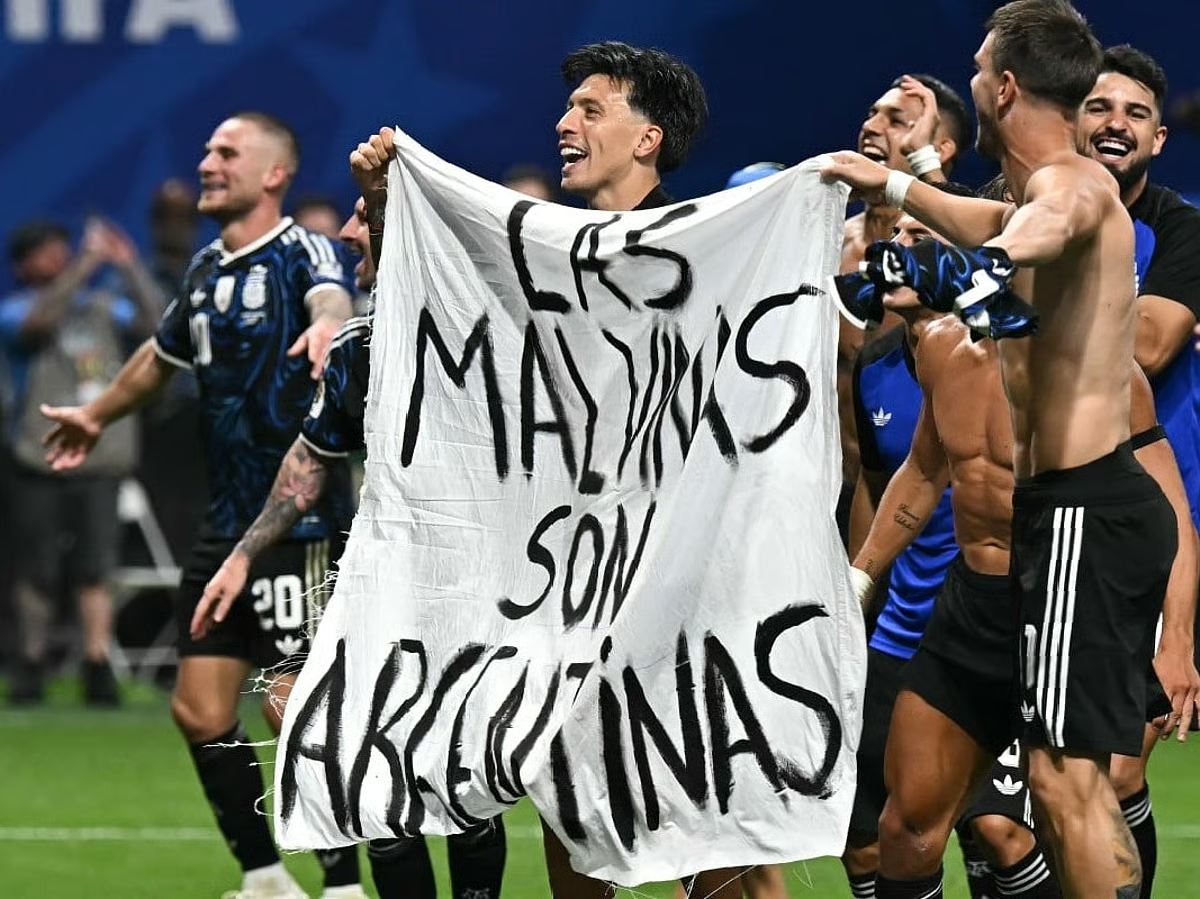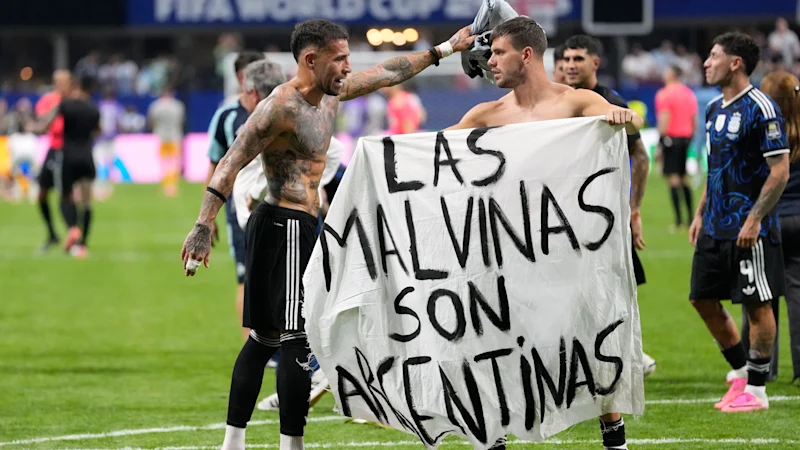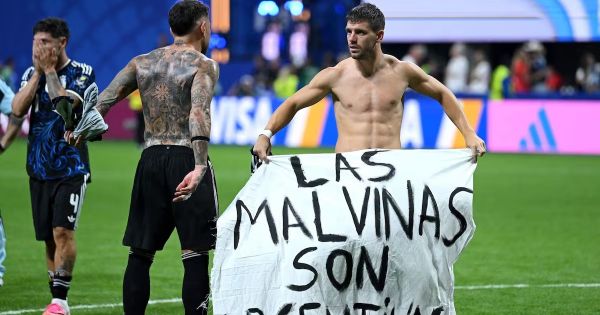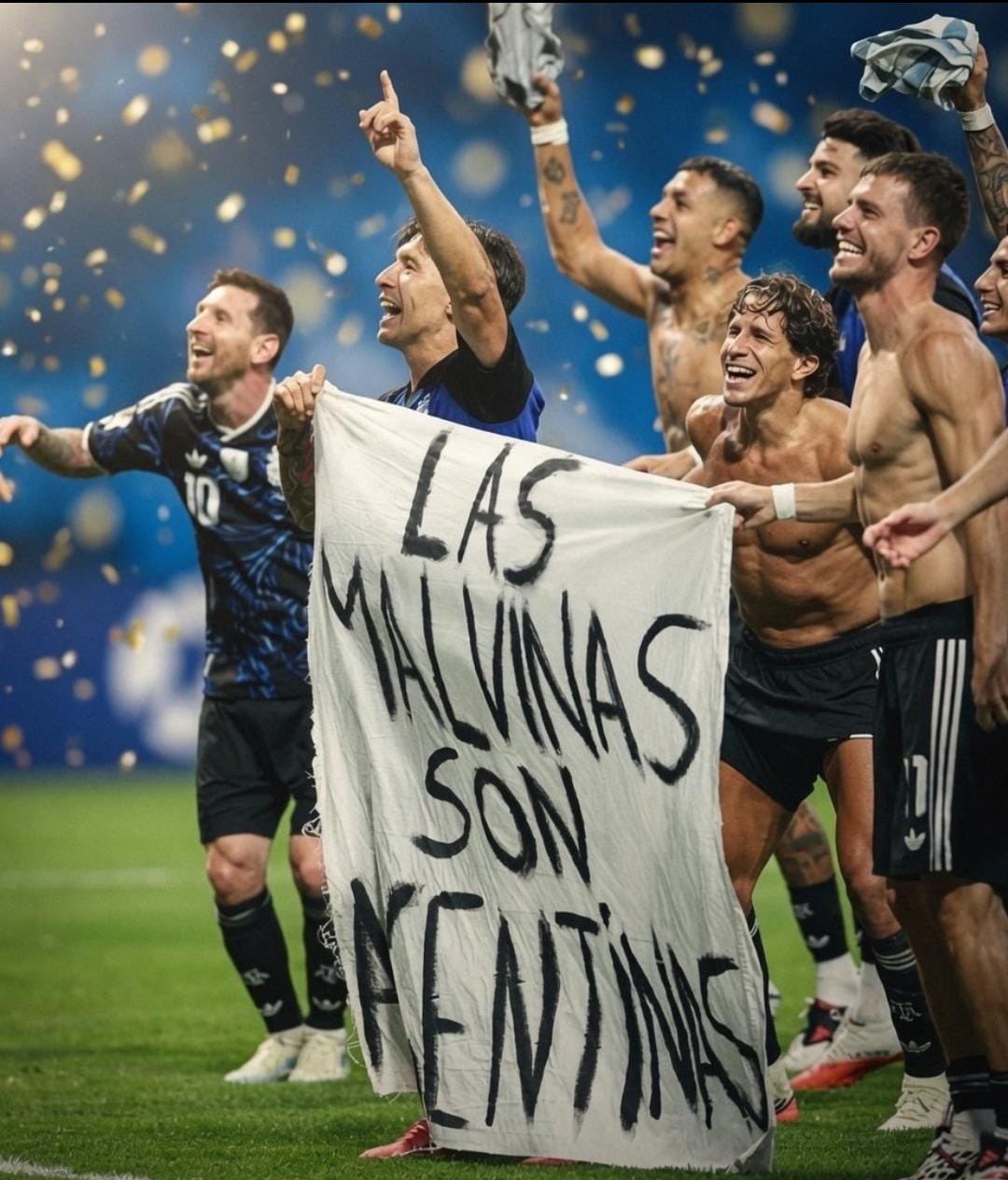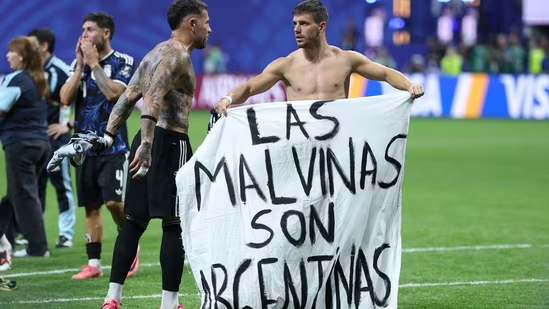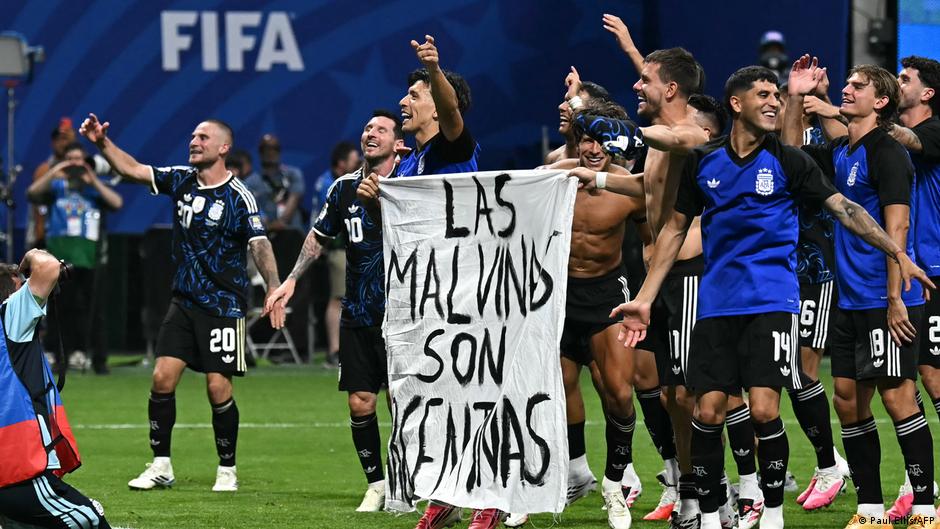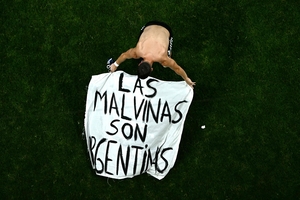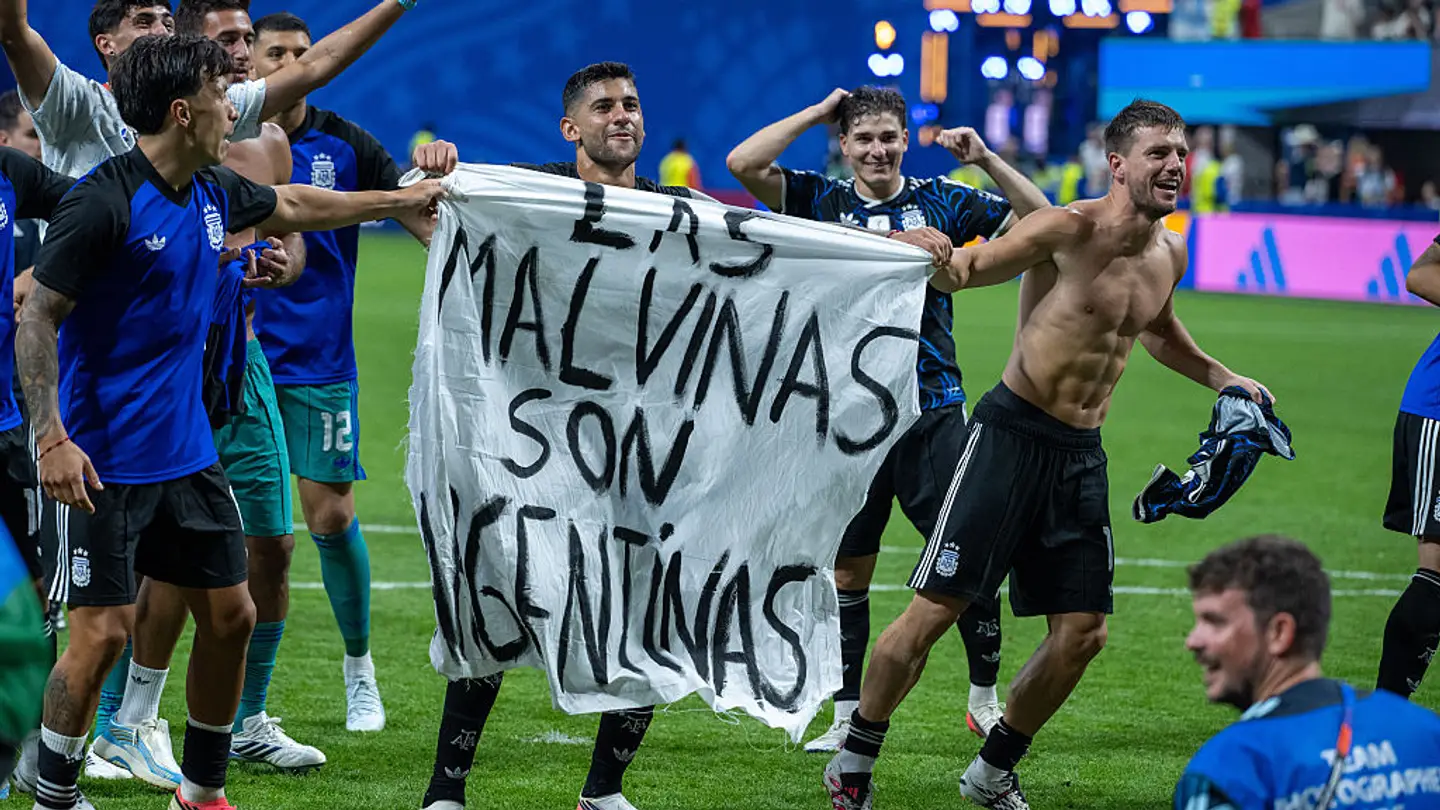
The incident which saw several Argentina players celebrate the 2026 World Cup semifinal victory over England by holding up a banner with the words “Las Malvinas son Argentinas” (The Falklands are Argentine) has unsurprisingly caught the attention of FIFA and the wider world.The Argentine Football Association (AFA) could face sanctions, with FIFA’s rules unequivocal about political messaging.After the final whistle was blown on Argentina’s dramatic 2–1 win in Atlanta, former Tottenham Hotspur midfielder Giovani Lo Celso was seen taking a banner from fans in the crowd, before holding it aloft with teammates including Lisandro Martínez, Cristiano Romero and Nicolás Otamendi, with several more celebrating near the banner, which was then laid on the turf.The banner relates to the Falkland Islands (known as Las Islas Malvinas in Argentina), a group of South Atlantic islands around 300 miles east of the Patagonian coast, which operate as a British Overseas Territory. Their sovereignty is disputed by Argentina, while a ten-week war in 1982 ended in the deaths of 649 Argentinian and 255 British troops. Reacting to the banner incident, outgoing UK prime minister Sir Keir Starmer said: “The World Cup might not be ours, but the Falkland Islands definitely are. Our position is unchanged. Self-determination rests with the islanders and our commitment to the Falklands will never waver.“More broadly, potential action is a matter for Fifa, but it’s been a fantastic World Cup and we’ve said throughout that politics should stay out of football.”UK business secretary Peter Kyle insisted the matter represented “an egregious violation of the rules of not having political activity as part of the football.”Paredes Defends Actions of PlayersLeandro Paredes defended the banner. | Harry Langer/DeFodi Images/DeFodi via Getty ImagesPrior to the match, Argentina manager Lionel Scaloni insisted his team was focussed on a soccer match and nothing more, a sentiment undermined by the actions of his players. Discussing the incident, midfielder Leandro Paredes defended his teammates’s actions, saying: “It was a sad part of our history for everyone involved in it, and it hurts.“We knew that we were playing for all the people, our entire nation. I believe we did it in the best possible way. We wanted to convey that for us it was not just a soccer match. It was very important for the entire country and I think we feel immense joy.”Speaking to media on the pitch after the game, Paredes repeated that “the Malvinas will always be Argentine.”What Are FIFA’s Rules on Political Messaging?FIFA’s rules on political messaging are clear. | Michael Buholzer/AFP/Getty ImagesThe actions of the players leave Argentina open to punishment from FIFA, ahead of the final, with an investigation reportedly open as of Thursday.As per FIFA’s Disciplinary Code: “All member associations and clubs are liable for inappropriate behavior on the part of one or more of their supporters as stated below and may be subject to disciplinary measures and directives even if they can prove the absence of any negligence in relation to the organization of the match:“... The use of gestures, words, objects or any other means to transmit a message that is not appropriate for a sports event, particularly messages that are of a political, ideological, religious or offensive nature.”FIFA also has rules on Prohibited Items inside stadiums during the 2026 World Cup, where the sport’s organizing body is particularly sensitive to any controversy during a period of increased global visibility.What Punishment Could Argentina Get?The home-made banner was left on the field during the celebrations | Charlotte Wilson/Offside/Offside via Getty ImagesTwo types of sanctions are possible in the circumstances, if Argentina is found guilty of breaching FIFA’s rules: a fine or player suspensions.Back in 2014, the AFA was handed a fine of 30,000 CHF ($37,000) after its players held up a banner with an identical slogan ahead of a 2–0 friendly win over Slovenia. A similar sanction could be handed out once again. However, there is precedent for FIFA handing out a more severe punishment, targeting the players involved.AS cites the example of South Korean player Park Jong-woo who was slapped with a two-match ban by FIFA after displaying a banner with a slogan justifying the Korean occupation of the Liancourt Rocks during the 2012 Olympic Games in London.Could Any Players Miss the Final?Argentina is expected to have a full roster to pick from this Sunday. | Liu Lu/VCG via Getty ImagesCrucially, however, Jong-woo ban’s came as a result of a lengthy investigation, with his two-match sanction only handed out in December of 2012—several months after the incident occurred during the bronze medal match of the Olympic Games. There is almost zero chance that FIFA would be able to hand out such immediate punishments in this case, even if it wanted to. Instead, the governing body is more likely to be more cautious about causing any disruption ahead of its showpiece event.In short, the likes of Lo Celso, Paredes and more will almost certainly be available for Sunday’s final at MetLife Stadium. With no players for Argentina and Spain receiving red cards in the semifinals, both sides are expected to have full rosters to pick from for the match.READ THE LATEST WORLD CUP NEWS, ANALYSIS AND INSIGHT FROM SI FCAdd us as a preferred source on GoogleFollow
Argentina’s Falklands Banner: The Likely Punishments As FIFA Prepare Investigation
Argentina’s players celebrated the 2–1 win over England in the World Cup semifinal with a strong political message.
867 words~4 min read