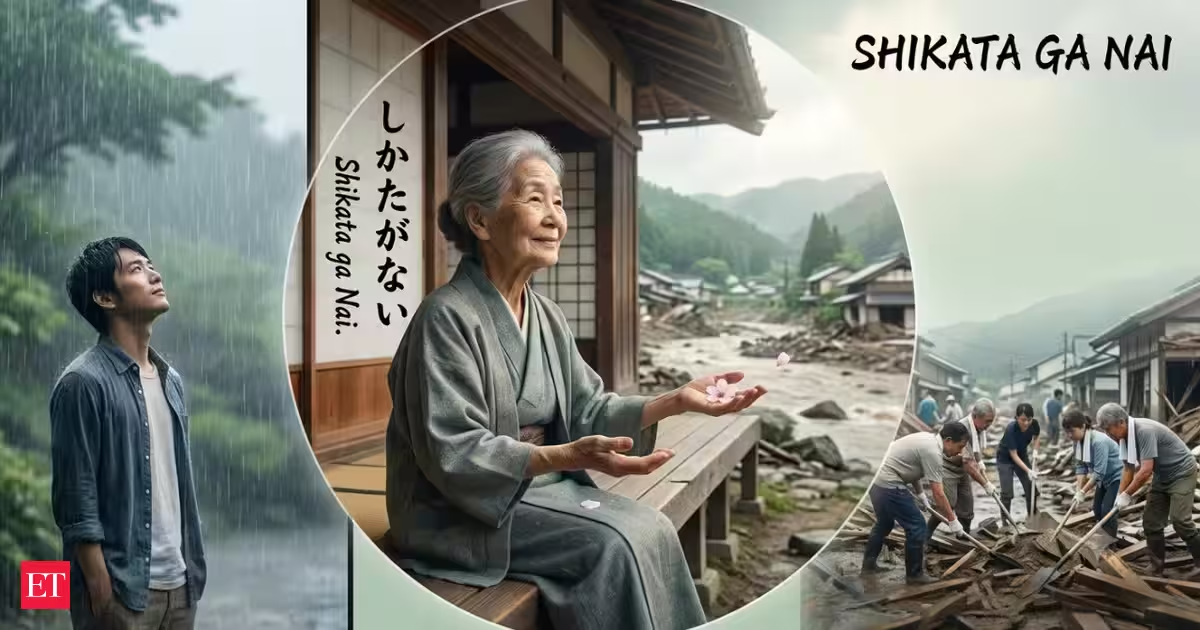
Japanese mindset that brings peace in difficult times: Life doesn't always go according to plan. Flights get delayed, opportunities disappear, relationships change, and unexpected challenges arrive without warning. Our first instinct is often to resist, complain, or wonder why things happened the way they did.But in Japan, there's a timeless mindset that offers a calmer response to life's uncertainties: Shikata ga Nai (仕方がない).Japanese mindset: The Life-Changing Meaning of Shikata ga NaiOften translated as "it cannot be helped," this simple phrase is far more than a common expression. It reflects a way of thinking that encourages people to accept what they cannot control, stop wasting energy on frustration, and focus instead on what they can still change. In a world filled with uncertainty, it remains one of Japan's most practical lessons for building resilience, as per Japanese Rituals.What Does Shikata ga Nai Mean?The phrase Shikata ga Nai literally means "there is no way of doing" or "there is no way around it." In everyday English, it is commonly understood as "it can't be helped."You Might Also Like:The expression is made up of three parts.Shikata (仕方) means "way" or "method." The kanji 仕 relates to doing or serving, while 方 means direction or way.The particle ga (が) marks the subject in Japanese grammar.Finally, nai (ない) is the negative form, meaning something does not exist.You Might Also Like:Together, the phrase communicates a simple but profound truth: some situations simply cannot be changed.A Daily Part of Japanese LifeUnlike many philosophical ideas that remain confined to books, Shikata ga Nai is woven into everyday life across Japan. People use it when trains are delayed, bad weather disrupts plans, or unexpected setbacks occur. Rather than dwelling on events beyond their control, the phrase serves as a gentle reminder to acknowledge reality and move forward.It isn't about pretending disappointment doesn't exist. Instead, it encourages accepting circumstances without prolonged complaint, allowing energy to be redirected toward finding solutions where solutions are still possible.You Might Also Like:Acceptance Isn't the Same as Giving UpOne of the biggest misconceptions about Shikata ga Nai is that it promotes passivity. In reality, it teaches the opposite. The mindset doesn't encourage people to stop trying. It encourages them to stop fighting battles they can never win. Once a situation is truly beyond your control, continuing to resist it only creates more stress and frustration.Instead, Shikata ga Nai asks an important question: What can I do next? That shift in perspective transforms helplessness into action. Rather than becoming trapped by circumstances, you focus on the choices that still belong to you.Why This Japanese Mindset Matters TodayModern life constantly pushes us to control every outcome. We plan every detail, expect instant results, and become frustrated when reality doesn't cooperate. Yet many of life's biggest challenges are completely outside our control.A delayed opportunity. A sudden setback. Unexpected changes.Shikata ga Nai reminds us that peace begins when we stop exhausting ourselves over what cannot be changed. Acceptance creates mental space for clearer thinking, better decisions, and emotional resilience. It doesn't erase disappointment. It simply prevents disappointment from controlling us.The Lasting Lesson of Shikata ga NaiThe beauty of Shikata ga Nai lies in its quiet wisdom. It teaches us that life will always include uncertainty, setbacks, and moments we never planned for. While we cannot control every circumstance, we can always choose our response.You Might Also Like:Some things truly cannot be helped. But how we move forward always can. Perhaps that's why this centuries-old Japanese mindset continues to resonate today. It reminds us that strength isn't found in controlling everything. Sometimes, true strength begins with accepting reality, letting go of what cannot be changed, and taking the very next step with calm determination.
Japanese Mindset: 'Shikata ga Nai'-This timeless Japanese philosophy teaches the art of letting go and accepting what you can't control
Japanese Mindset: The ancient Japanese philosophy of Shikata ga nai emphasizes the importance of accepting things beyond our control. By embracing this mindset, individuals can shift their focus from frustration to creating practical solutions. Acknowledging reality fosters resilience and cultivates a sense of inner calm amid life's uncertainties, leading to clearer decision-making and improved mental clarity during challenging times.
614 words~3 min read