Last Tuesday I was deep in a session with an AI assistant, rewriting a caching layer that had been quietly leaking memory in production. We tried Redis first. It worked. Then I looked at the actual data volume (about 50MB, tops) and killed the idea, because spinning up a whole service to cache 50MB felt absurd. We landed on sqlite instead. Good call, I still think.
Two days later a teammate opened the branch, saw cache_sqlite.py sitting next to a deleted cache_memory.py, and asked why we weren't just using Redis like the rest of our stack. I didn't have a good answer ready. The reasoning had lived entirely inside a chat session that was long gone by then. I remembered making the decision. I could not reconstruct it convincingly, and "trust me, we talked about it" is not a great answer to give a teammate, or future me, three months from now.
If you've ever lost the reasoning behind your own code, Alpheon is free and open source (MIT). If it resonates, a star on GitHub genuinely helps me know it's worth building further: https://github.com/BravoAlphaSix/alpheon
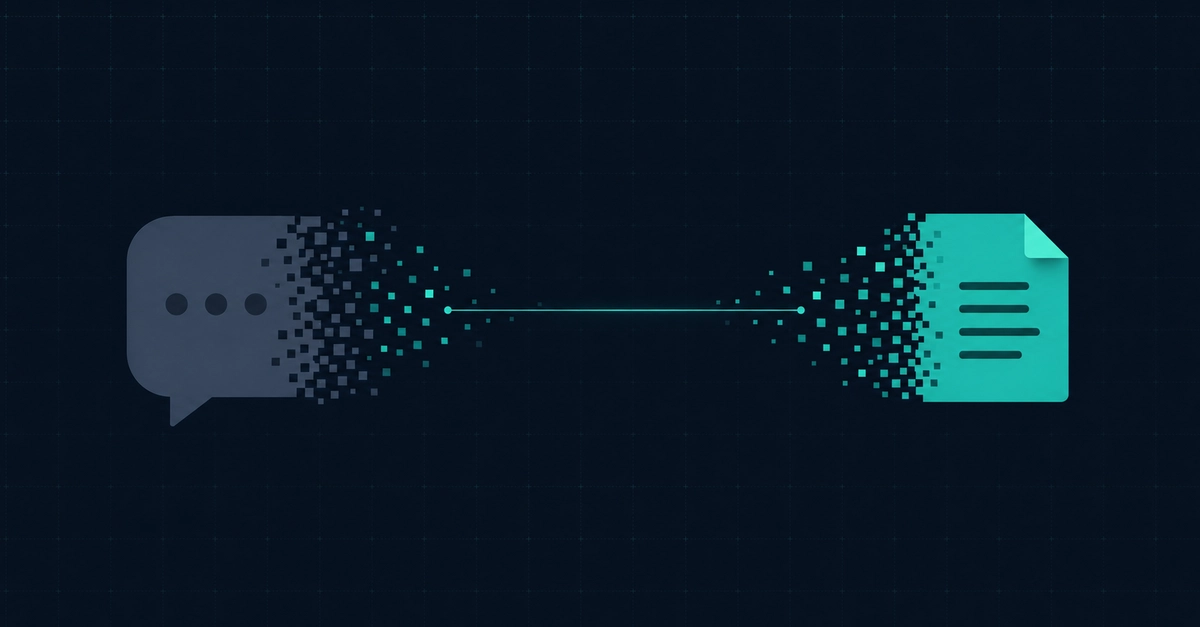
That's the part most tooling misses with AI-assisted coding. The code survives. The diff survives. A wave of AI memory tools is racing to store more of what the code does, and a few (Selvedge, presence) are starting to chase the why too, which tells me the pain is real. But almost all of them are MCP servers you have to wire into a specific agent, with a database sitting beside your repo. What I wanted was dumber and more portable: the reasoning, and the approaches I tried and threw out, written in plain text I can read, next to the code, no matter which editor or agent produced it. Because that reasoning lives in a chat window, and chat windows end. You switch from Claude Code to Cursor, or you just close the laptop, and it's gone. The facts stay. The judgment behind them evaporates.