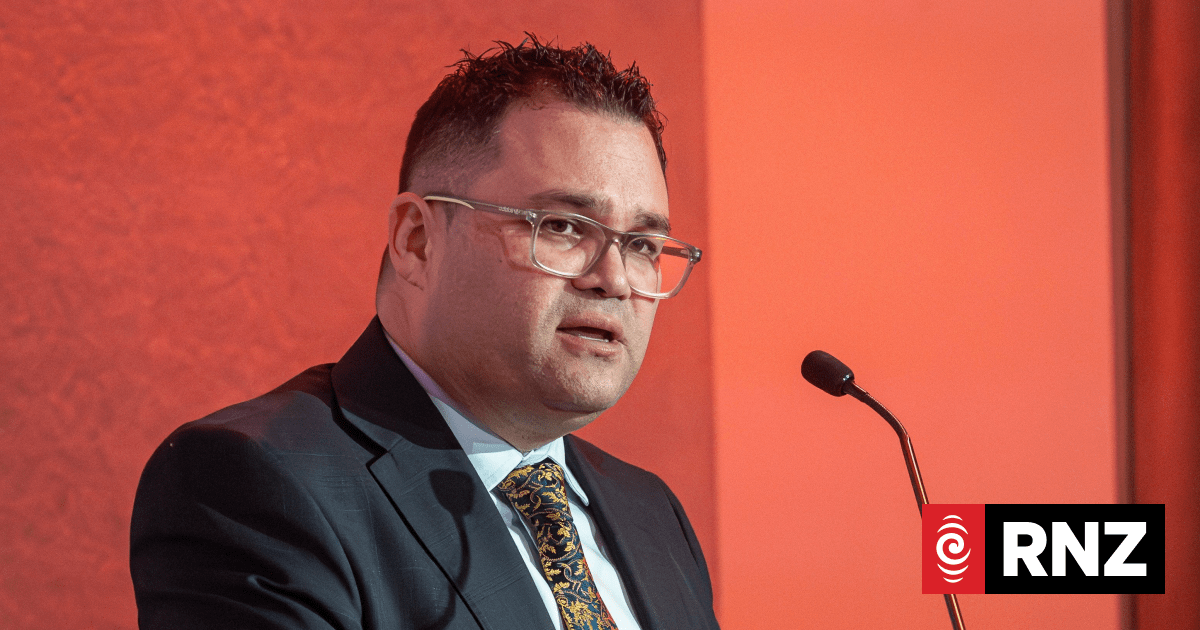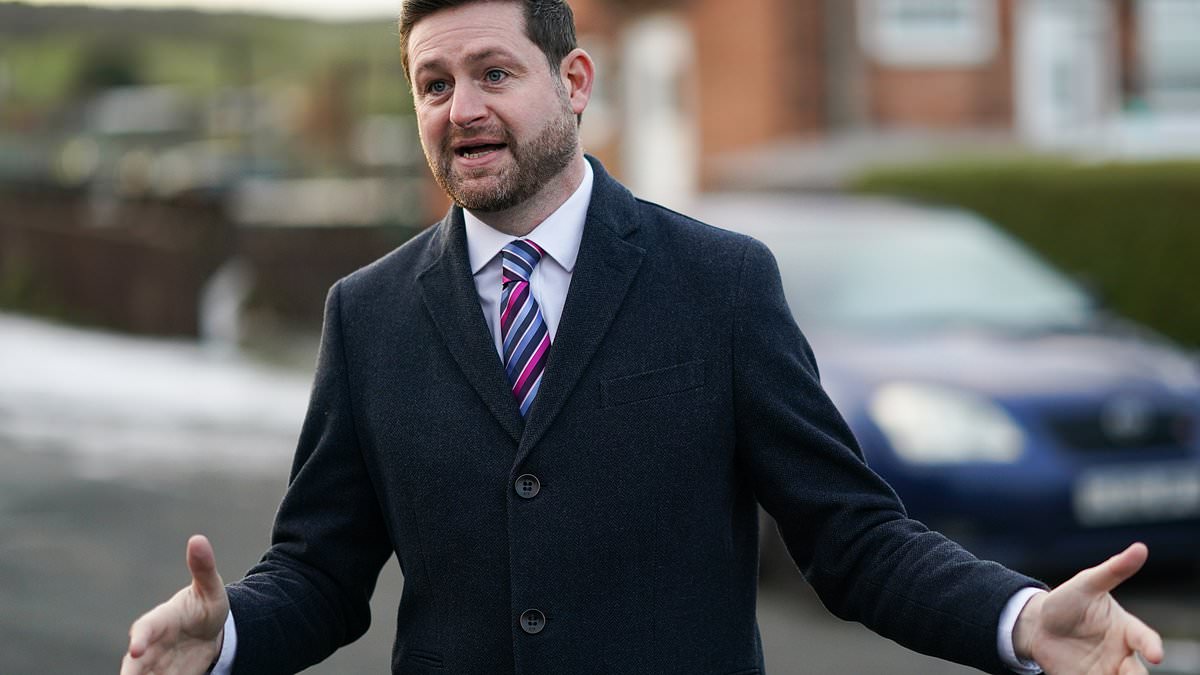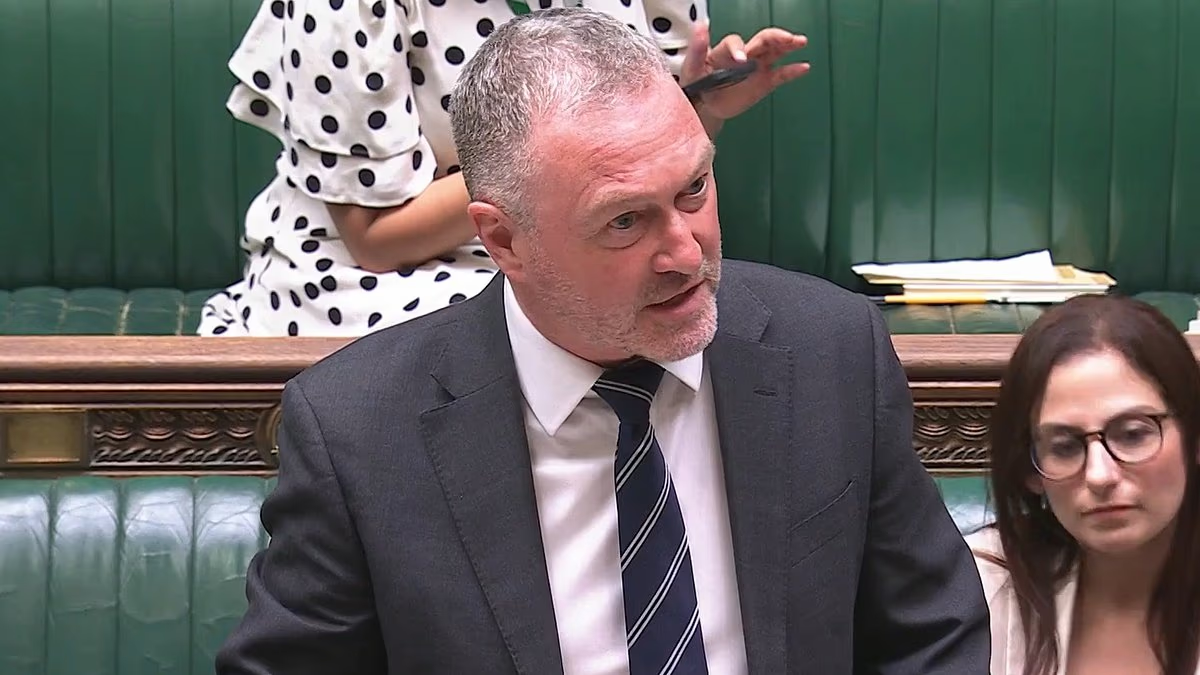
Labour was today accused of 'jerrymandering' local councils as ministers pushed ahead with plans to slash the number of authorities in England.Steve Reed, the Local Government Secretary, announced a shake-up that will see 134 councils streamlined into 38 unitary authorities across 14 areas.It is the latest round of local government reorganisation as Labour bids to abolish the two-tier system of county and district councils in favour of new unitary authorities.Mr Reed said the changes, which will affect 15 million people, would make savings through 250 fewer senior posts and 3,000 fewer councillors.But both Labour and Conservative MPs rubbished the plans as they expressed their anger at the Government's action in the House of Commons.MPs also labelled it a 'disgrace' that the announcement was made on the last sitting day in the Commons before Keir Starmer quits as Prime Minister.Mr Reed said, once all decisions are taken, the Government will have cut the total number of councils in England from 317 to a maximum of 173.But shadow local government secretary James Cleverly said new council boundaries were 'clearly jerrymandered' as he accused Labour of redrawing the electoral map in its own favour.Derbyshire, Devon, East Sussex, Gloucestershire, Hertfordshire, Kent and Medway, Leicestershire, Rutland, Lincolnshire, Nottinghamshire, Oxfordshire, Staffordshire, Warwickshire, and Worcestershire are all affected by the shake-up.Meanwhile, decisions will be delayed on Cambridgeshire, Peterborough and West Sussex. Steve Reed, the Local Government Secretary, announced a shake-up that will see 134 councils streamlined into 38 unitary authorities across 14 areas. James Cleverly, the shadow local government secretary, said new council boundaries were 'clearly jerrymandered' as he accused Labour of redrawing the electoral map in its own favour Labour's latest shake-up to English councils Gloucestershire: 7 councils being reorganised into 1 unitary.Derby and Derbyshire: 10 councils being reorganised into 2 unitaries.Warwickshire: 6 councils being reorganised into 2 unitaries.Worcestershire: 7 councils being reorganised into 2 unitaries.Oxfordshire: 6 councils being reorganised into 3 unitaries. Hertfordshire: 11 councils being reorganised into 4 unitaries.Leicester, Leicestershire and Rutland: 10 councils being reorganised into 2 unitaries.Nottingham and Nottinghamshire: 9 councils being reorganised into 2 unitaries.East Sussex and Brighton and Hove: 7 councils being reorganised into 2 unitaries with boundary modifications.Staffordshire and Stoke-on-Trent: 10 councils being reorganised into 2 unitaries.Lancashire, Blackburn with Darwen and Blackpool: 15 councils being reorganised into 4 unitaries.Kent and Medway: 14 councils being reorganised into 4 unitaries.Devon, Plymouth and Torbay: 11 councils being reorganised into 4 unitaries.Lincolnshire, North Lincolnshire and North East Lincolnshire: 10 councils being reorganised into 4 unitaries. Mr Reed said the 'vast majority' of proposals had cross-party support, but this was heckled as 'nonsense' in response by the Conservatives.Labour backbenchers also reacted with anger to the changes, with Gedling MP Michael Payne telling Mr Reed: 'The decision to split my home community of Gedling borough in half and force communities in Gedling into an expanded new Nottingham City Council area, against their will, is bad for my constituents and bad policy making.'I have to tell the minister, this is a decision I cannot and will not support.'Will he tell me what on earth makes sense about creating two councils for Nottingham and Nottinghamshire where official figures show that from day one, one of them is £147million better off than the other?'Newcastle-under-Lyme MP Adam Jogee said: 'The announcement today and the proposals in it are completely unacceptable and I reject them in the strongest terms.'There is nothing here that reflects the views that I have consistently put to ministers, nor any acknowledgement of the concerns received by thousands of people.'Mr Jogee added: 'It is utterly unacceptable and a disgrace that this statement has been put to the House on the final day of term, four days before a new prime minister takes office.'Burnley MP Oliver Ryan said: 'Unitaries have big benefits but I am so angry with these proposals.'This new East Lancs authority with Blackburn, without the Ribble Valley, by our own statistics we have created the most deprived unitary authority in the country with a lot of debt on its books.'He added: 'Our people, our bondholders, our culture, our businesses, and our communities can't be steamrolled and forgotten in this way.'Sir James said it was 'blatant' that Mr Reed's changes had been 'driven by party politics'.The senior Tory MP told the Commons: 'Nothing in today's statement has done anything to dispel the belief that this is purely partisan.'Many communities have been left in limbo, while Labour councils have been allowed to redraw the map on which future elections that they will be engaged in will be fought.'The shadow local government secretary added: 'If he wanted accusations of gerrymandering to be put aside, why on earth did he create such a clearly gerrymandered set of boundaries? The maps speak for themselves.'Mr Reed replied: 'Unfortunately, the facts don't support the claims that he's making. 'The majority of proposals that I've just outlined today as decisions have cross-party support.'I accept that reasonable people may agree or they may disagree with the decisions, but the important thing now for residents is that we move ahead to realise the savings.'The Local Government Secretary earlier said: 'This Government is driving the most ambitious programme of local government reform in a generation, replacing the inefficient two-tier system with new unitary councils so that all parts of our country are ready for devolution.'We need to devolve power out of Whitehall so that we can rebalance wealth, power and opportunity right across this country.'This is the second-richest country in Europe and yet England has seven of the 10 poorest regions in Northern Europe, that is the case for change.'Mr Reed added that existing two-tier arrangements, where district and borough councils also serve alongside county councils, were confusing for residents, duplicated costs and blurred accountability.Sean Matthews, chair-elect of the County Councils Network, said: 'At the start of the reorganisation agenda, the Government set out the main aims of the programme, including creating councils with populations of 500,000 or more to improve local services, achieve savings, withstand any financial headwinds, and avoid the unnecessary fragmentation of care services.'Today's decisions show how far ministers have departed from the statutory criteria and programme's original aims.'Whilst larger unitary councils will be created in some areas, most will see city and urban areas carved out and the creation multiple smaller authorities in others.'With unprecedented levels of splitting services and boundary change, this approach will inevitably end up costing local taxpayers more while causing greater fragmentation and upheaval to services for the most vulnerable - with new rural councils potentially most exposed to significant additional costs and service risks.'
Labour 'jerrymandering' councils as ministers unveil latest shake-up
Steve Reed, the Local Government Secretary, announced a shake-up that will see 134 councils streamlined into 38 unitary authorities across 14 areas.
1,088 words~5 min read