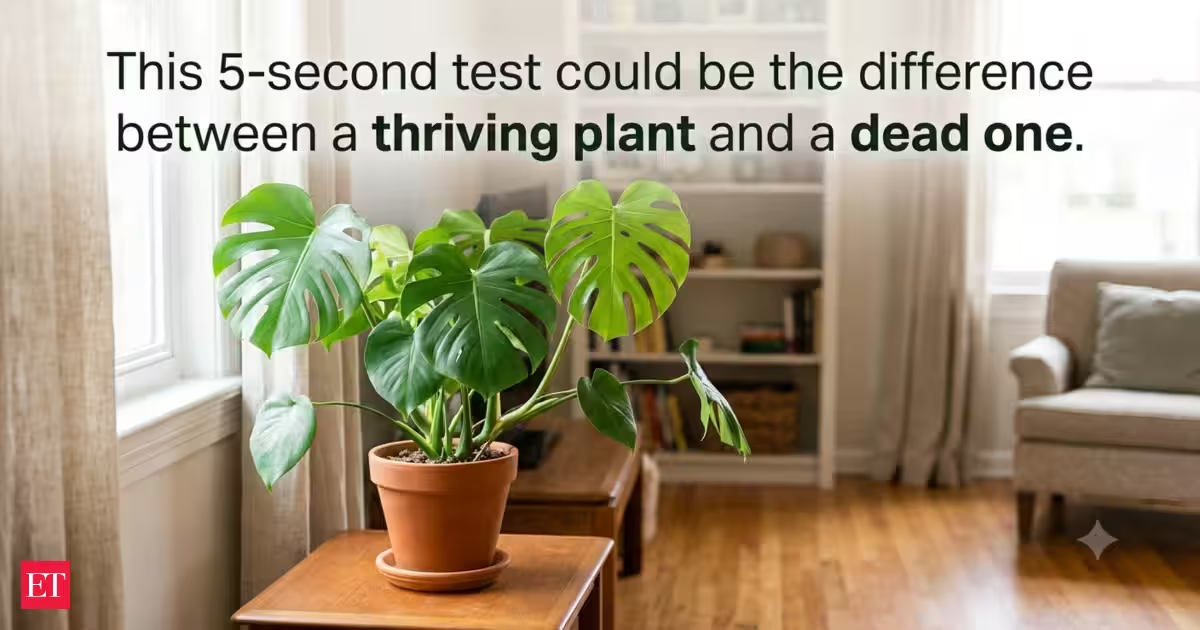
Keeping houseplants healthy isn't always about watering them more. In fact, giving them too much water is one of the biggest reasons indoor plants fail. A simple technique known as the finger test takes the guesswork out of watering by checking moisture where plant roots actually need it. According to the report by Alibaba Life Tips, this quick habit can help you decide exactly when it's time to water.Simple test that can help prevent overwatering your houseplantsWatering houseplants seems straightforward, but it's one of the easiest gardening tasks to get wrong. Many people rely on fixed watering schedules, the appearance of the soil surface, or even the weight of the pot to decide when to water. According to the report by Alibaba Life Tips, those methods can often be misleading.Instead, the recommended approach is much simpler. Insert your index finger into the soil up to the second knuckle near the base of the plant. If the soil feels cool and slightly damp, leave the plant alone. If it feels dry, crumbly, or warm, it's time to water thoroughly until water drains from the bottom of the pot.You Might Also Like:Why doesn't the soil surface tell the whole story?The report explains that the top layer of soil rarely reflects what's happening around the roots. A dry, cracked surface may still hide plenty of moisture underneath, especially in peat-based mixes or glazed pots. On the other hand, the surface may appear dark after misting or humid weather while the root zone has already dried out, according to the report by Alibaba Life Tips.As plant roots absorb water deeper in the soil, checking moisture below the surface provides a much more reliable picture than simply looking at the top of the pot.You Might Also Like:The report also notes that overwatering remains one of the most common causes of houseplant loss. Rather than following a weekly schedule, watering decisions should be based on actual soil moisture.As Dr. Lena Cho, plant physiologist & lead advisor, Urban Botanical Institute, explains, "The finger test isn’t folklore—it’s biomechanically grounded. Roots absorb water primarily between 1.5 and 3 inches down, where capillary action meets air-filled pore space. Anything shallower measures evaporation residue; anything deeper risks disturbing root architecture. Consistency in depth matters more than frequency.”How do you perform the finger test correctly?You Might Also Like:According to the report, the technique works best when done consistently. Wash and dry your hands before checking the soil. Insert your index finger beside the stem instead of directly into it to avoid disturbing the roots. Use the pad of your finger rather than the fingertip, as it's better at detecting subtle differences in moisture.Morning is considered the best time to check because daytime heat can change how quickly moisture evaporates from the soil.For larger containers, the report recommends testing two different spots, one close to the stem and another halfway toward the edge of the pot. If the soil feels cool and sticks slightly to your finger, wait before watering, even if the surface appears dry, according to the report by Alibaba Life Tips.When should you adjust the finger test?The report explains that while the finger test works for most potted houseplants, a few situations require slight adjustments. Plants growing in sandy mixes may need checking more often because the soil drains quickly. Clay-rich soil, however, stays moist for longer, so watering intervals naturally become longer.Succulents and cacti should also be checked gently, while orchids growing in bark require inserting a finger only to the first knuckle because bark dries faster than traditional potting soil.The report also points out that self-watering pots don't eliminate the need for checking moisture. The upper soil can still become overly wet or dry, making the finger test useful even when a water reservoir is present.Ultimately, the advice is straightforward: don't rely on calendars, appearances or guesswork. Checking the soil where the roots are growing provides a clearer indication of when your houseplant actually needs water, helping reduce the risk of overwatering while supporting healthier growth.FAQsHow deep should you insert your finger in the houseplant?Up to the second knuckle near the base of the plant.Should I water if the soil feels cool?No. If it feels cool and slightly damp, wait before watering.You Might Also Like:
This 5-second test could be the difference between a thriving plant and a dead one
The finger test offers a reliable method for determining when houseplants need watering. This technique involves inserting a finger into the soil to gauge moisture levels accurately. Overwatering, a common cause of plant death, can be avoided by bypassing unreliable watering cues. The finger test measures moisture directly in the root zone, ensuring proper hydration for diverse plant species.
707 words~3 min read