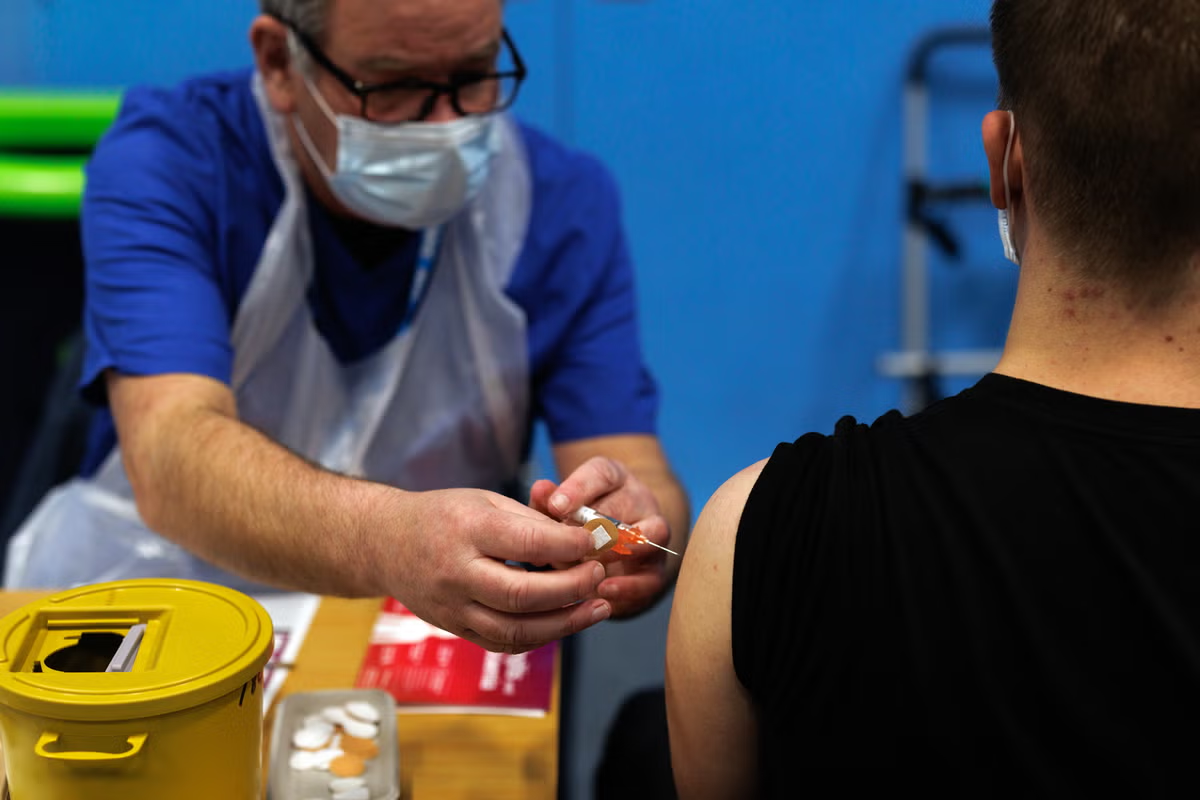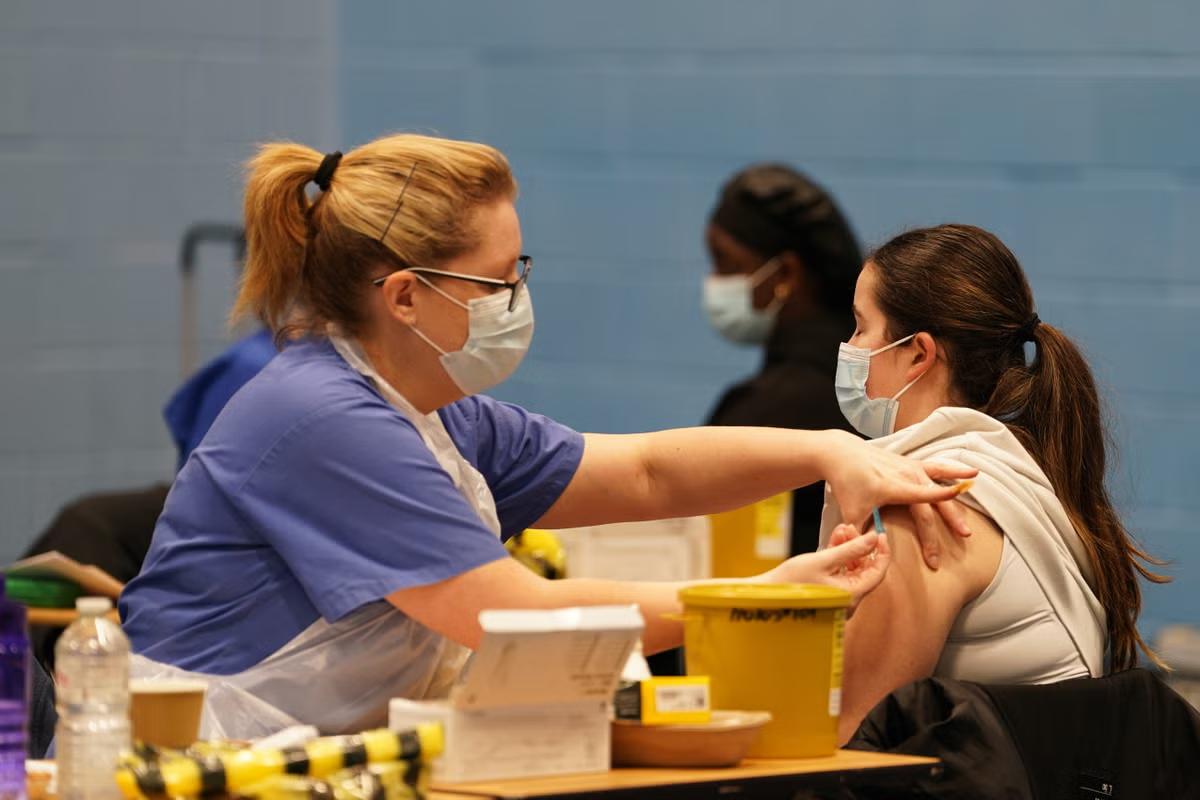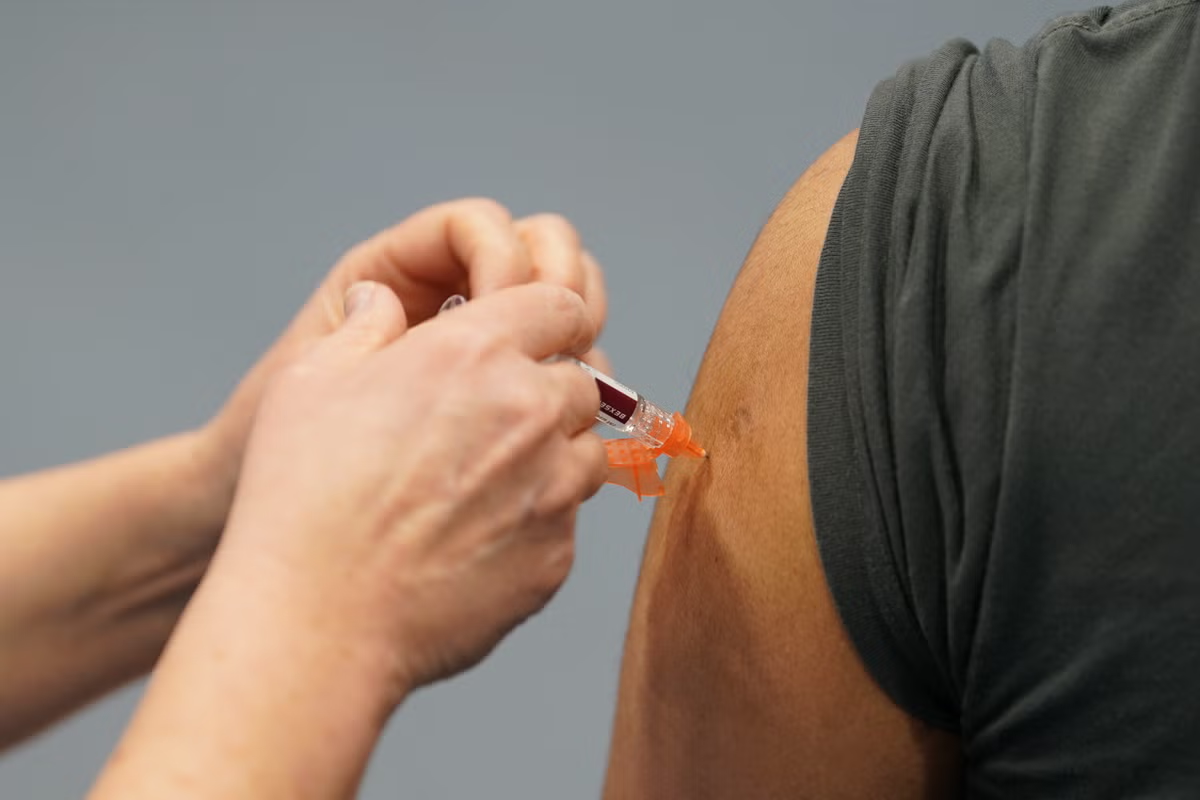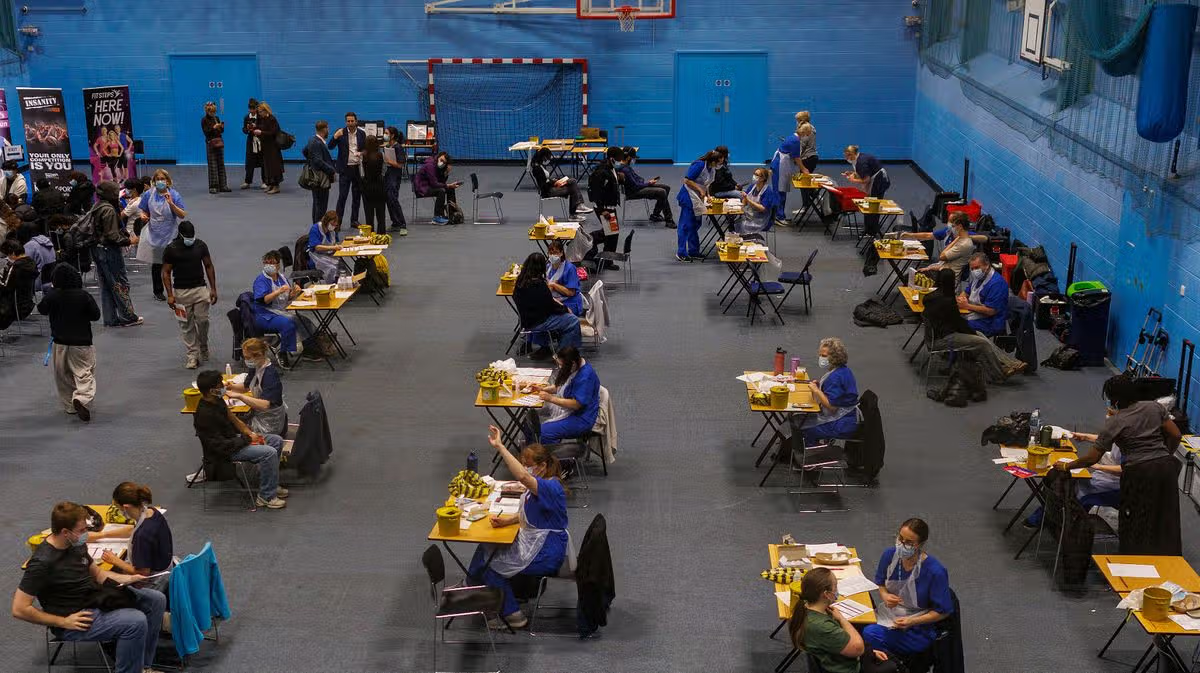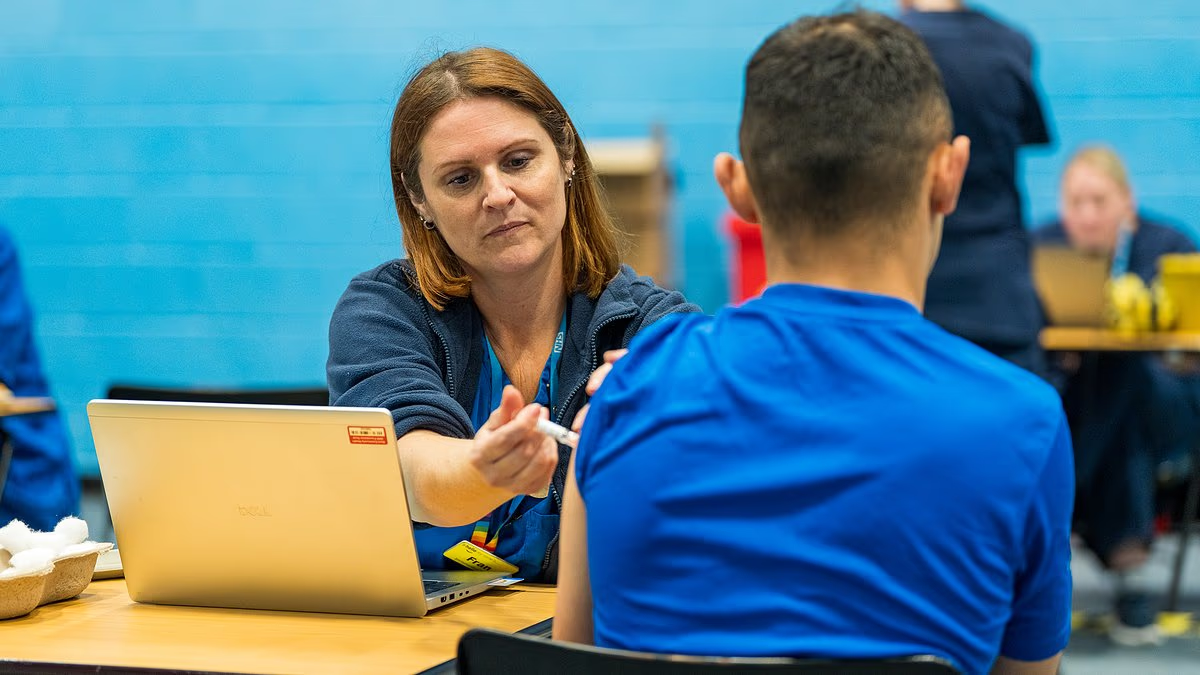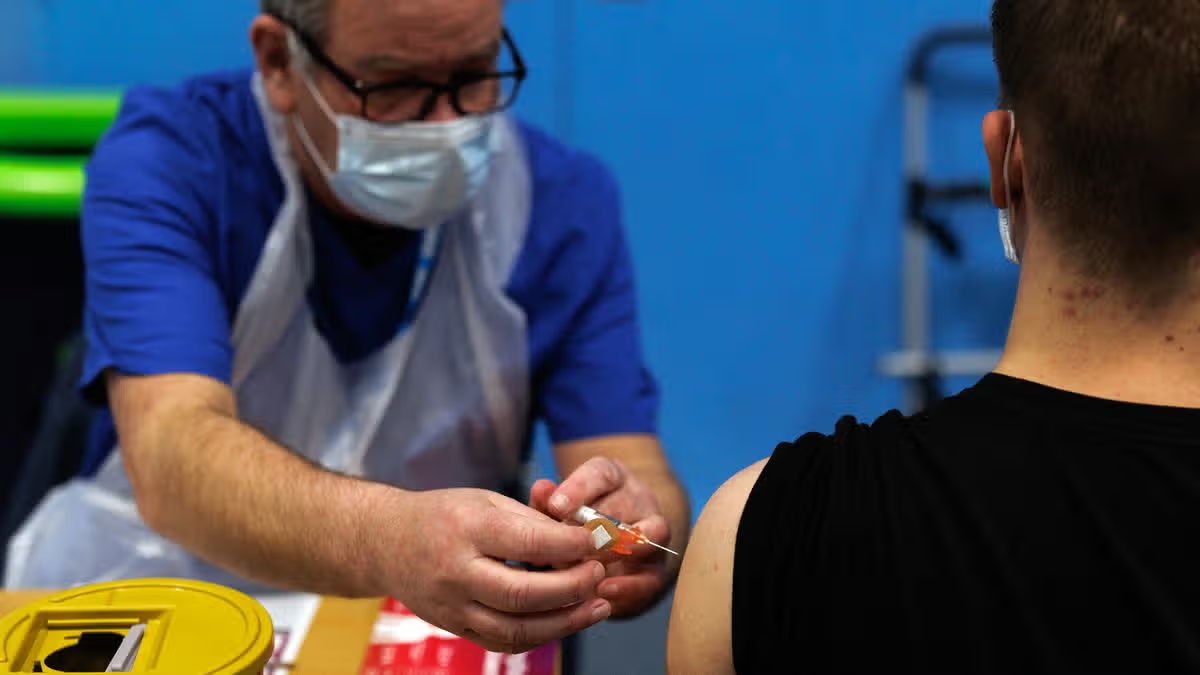
Meningitis B recommendation by the Joint Committee on Vaccination and Immunisation (JCVI) is for all 15-year-olds to be vaccinated after deadly outbreaks and two deaths15:04, 16 Jul 2026Updated 15:29, 16 Jul 2026A vaccine against deadly meningitis B could be offered to 15 year olds after a series of outbreaks.Health chiefs have advised on the catch-up programmes after one outbreak in Kent earlier this year left two teenagers dead.The Joint Committee on Vaccination and Immunisation (JCVI) is calling for an expanded programme following a one-off vaccination drive of university students earlier this year. The government will now consider its recommendation.Prof Wei Shen Lim, JCVI chair, said: “We have now provided government with a recommendation and additional considerations for a future routine MenB adolescent vaccination programme for those aged around 15 years.“Invasive meningococcal disease is a rare but very serious illness, which can have a devastating impact on lives.“JCVI has worked closely with meningitis charities and would like to thank all those who responded, including on behalf of loved ones who sadly died or had life-changing complications. Their lived experiences were carefully considered and our thoughts are with those who continue to be affected by this disease.”The JCVI is recommending:A booster jab around age 15 for those who had a menB jab as a baby - those born on or after May 1 2015. The first cohort this recommendation applies to will turn 15 in 2030. Children who missed the jab as a baby will be offered two dosesThe JCVI says it "strongly supports" giving two doses of the menB vaccine to children born on or before April 30 2015. They would get this when they are around age 15. This group were not offered the vaccine on the NHS as babies and so have missed out on protection as infants. Offering jabs when they hit their teens protects them at the point they are next most at riskThe JCVI would also like to see a catch-up programme to ensure anyone who misses a vaccine does not lose outMeningococcal B can cause serious, life-threatening problems including inflammation of the lining of the brain and sepsis. This can lead to life-changing disabilities such as amputations, hearing loss and brain damage, and in some cases can prove fatal.The bacteria that cause the disease can be spread through close contact with an infected person. This can be through kissing, sharing drinks or vapes, or living in halls of residence.Juliette Kenny, 18, died in the Kent outbreak and her family have been campaigning for teenagers and young people to be routinely given access to the menB vaccine.The Kent outbreak was the fastest growing and largest seen in the UK, and other smaller clusters of meningitis in young people since then have been bigger than expected.Olivier Picard, chair of the National Pharmacy Association, said: "There is clearly a gap in our national vaccination strategy and recent outbreaks have shown the awful impact this illness can have on those who contract it."Article continues belowCurrently one million young people in England are eligible for the one-off vaccine drive. It is open to all 17 and 18-year-olds currently in the last year of sixth form and all students under the age of 25 who are heading to residential colleges or university this autumn for the first time.Prof Shen Lim added: “Following the meningitis outbreaks in early 2026, a one-off programme for 2-doses of MenB vaccine is being offered to eligible young people this summer.“We encourage everyone who is eligible to book an appointment online to receive the vaccine at a local pharmacy, in time for the second dose to be received before heading off to university or college. For protection, 2-doses of the MenB vaccine are necessary, at least 28 days apart.”
All 15 year olds should be offered Meningitis B vaccine, say government advisers
Meningitis B recommendation by the Joint Committee on Vaccination and Immunisation (JCVI) is for all 15-year-olds to be vaccinated after deadly outbreaks and two deaths
622 words~3 min read