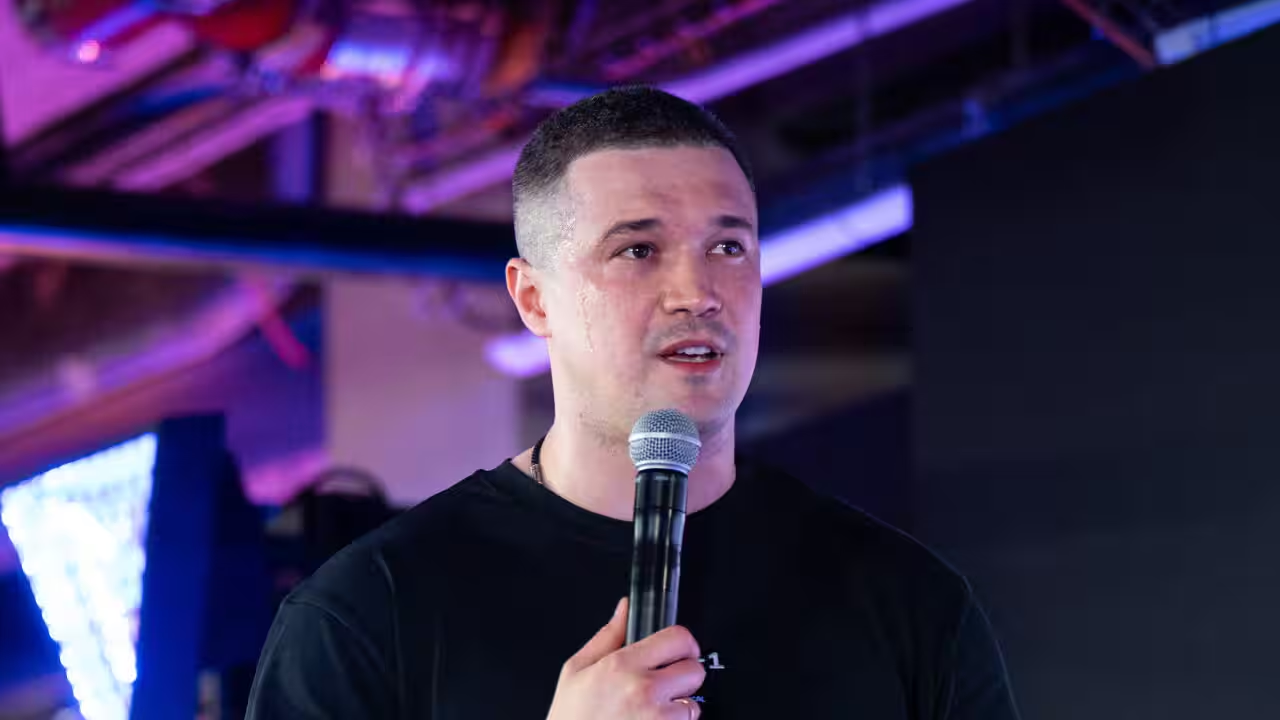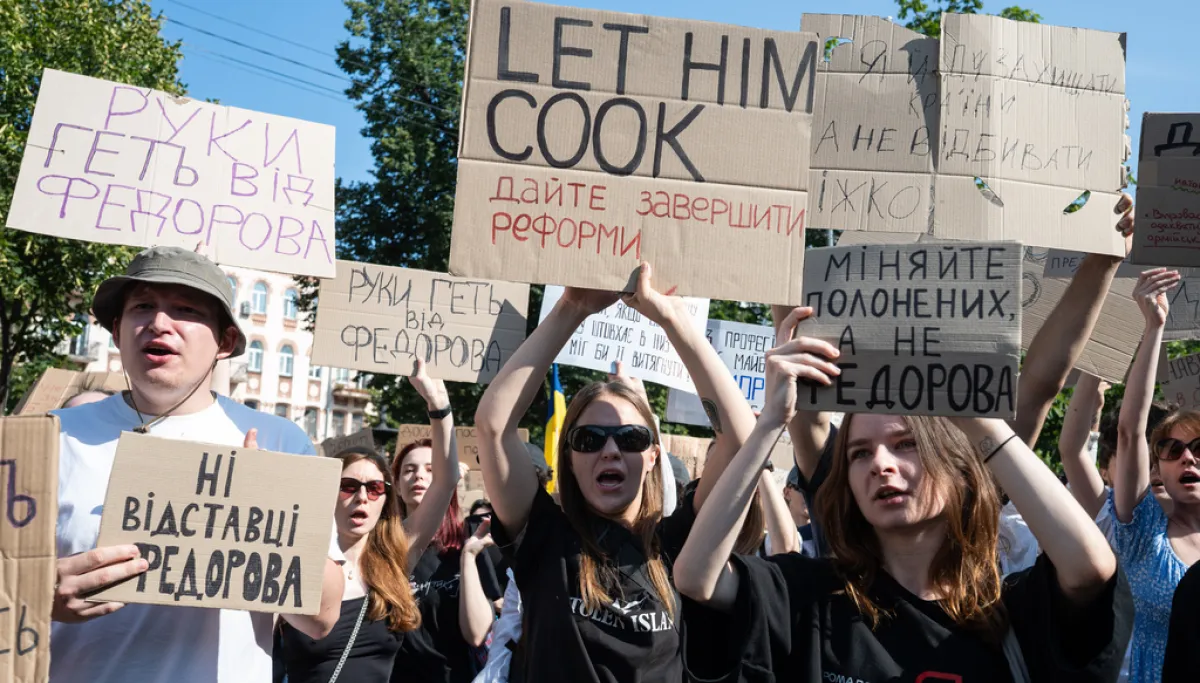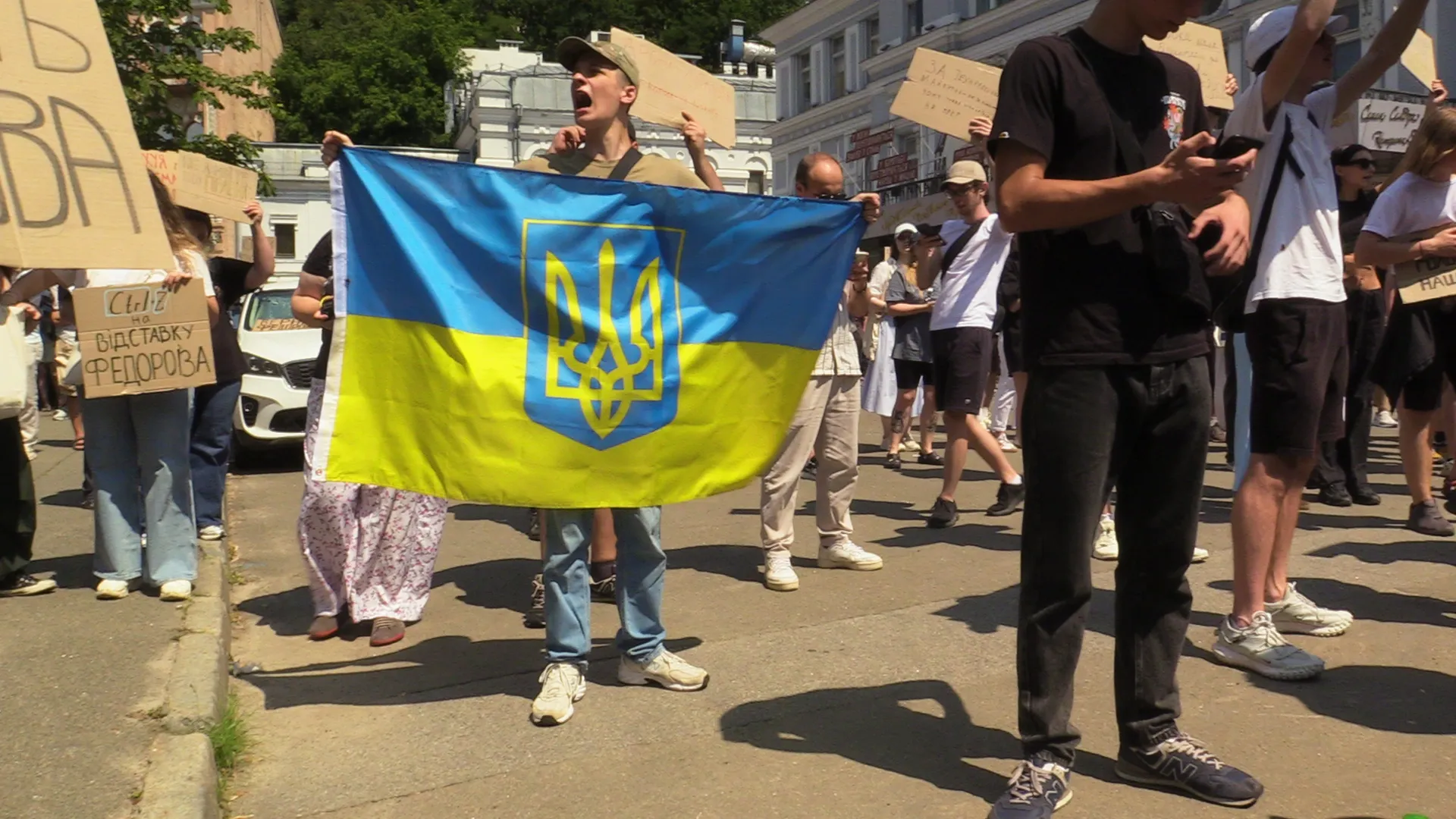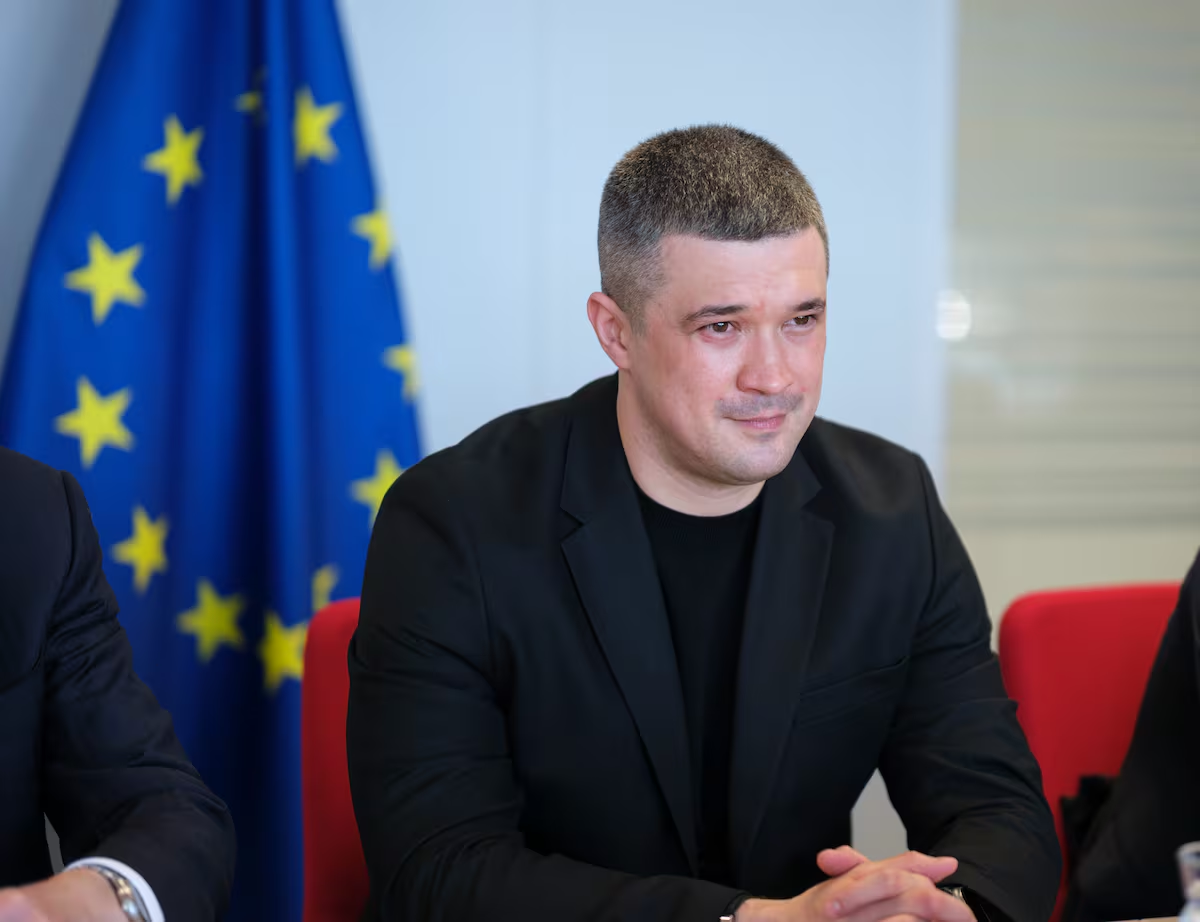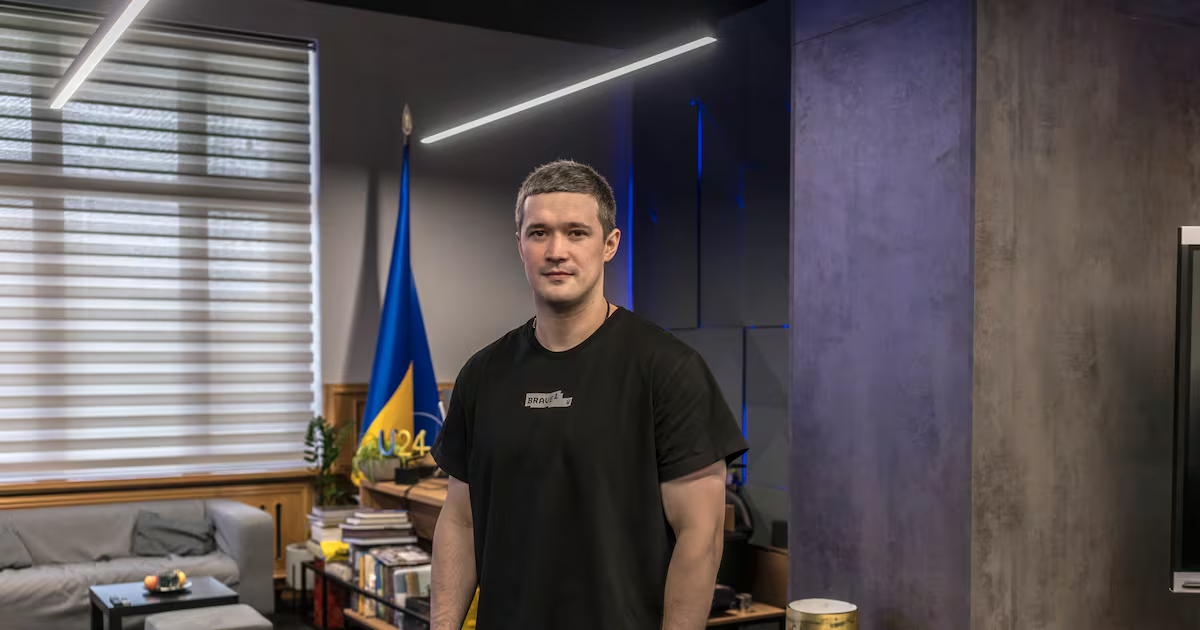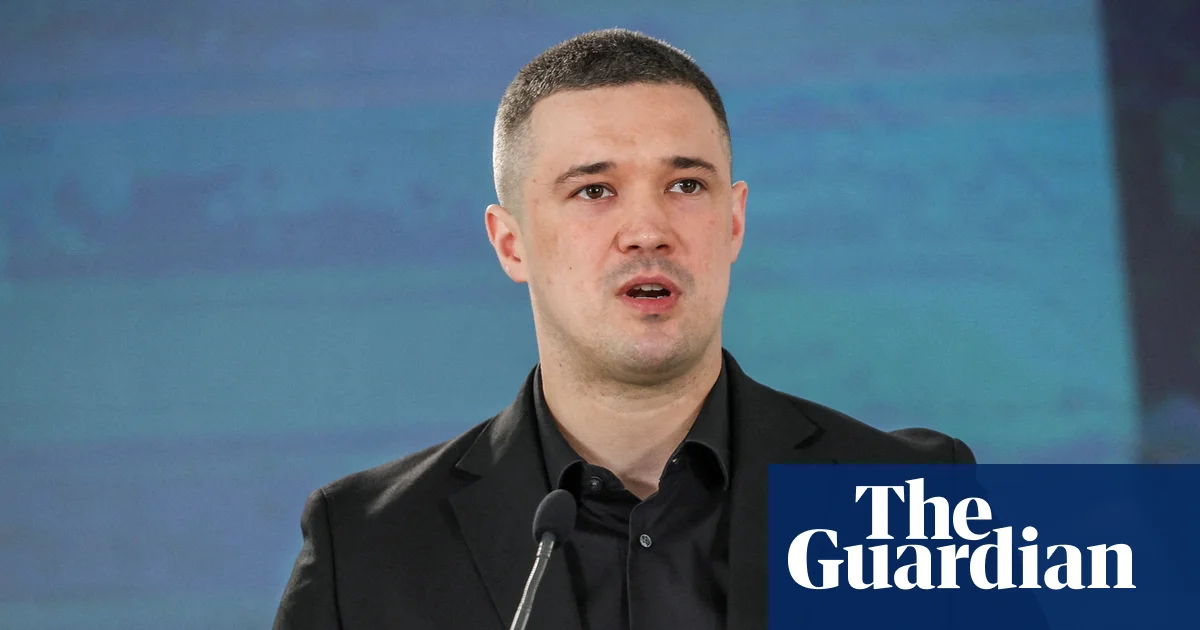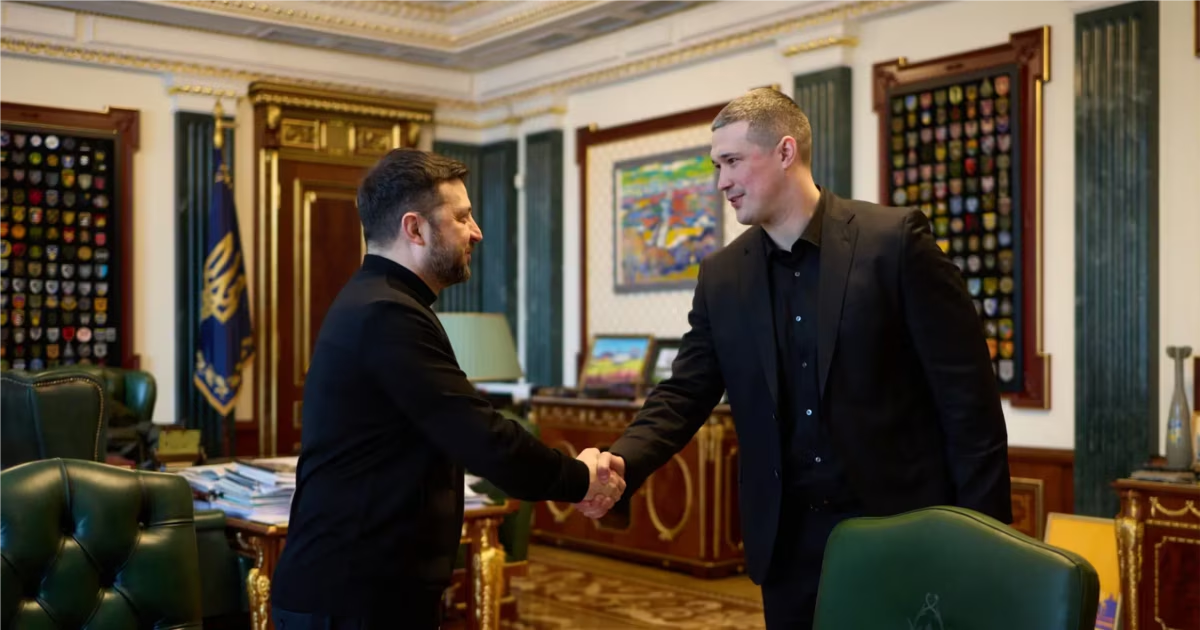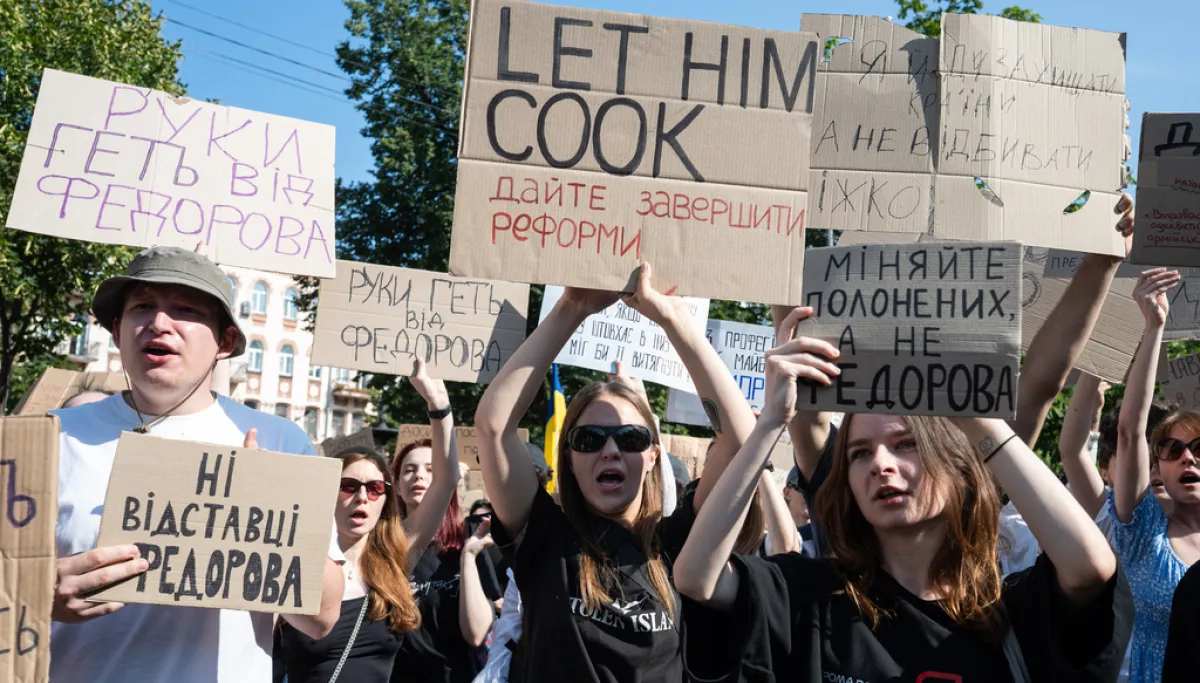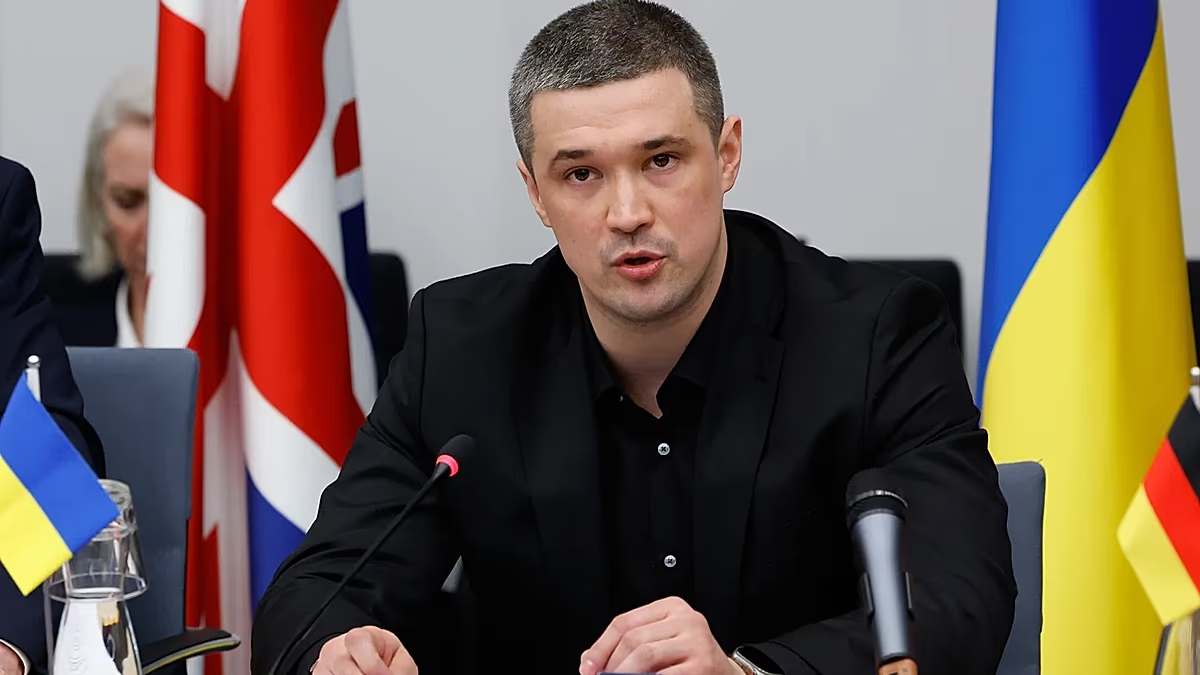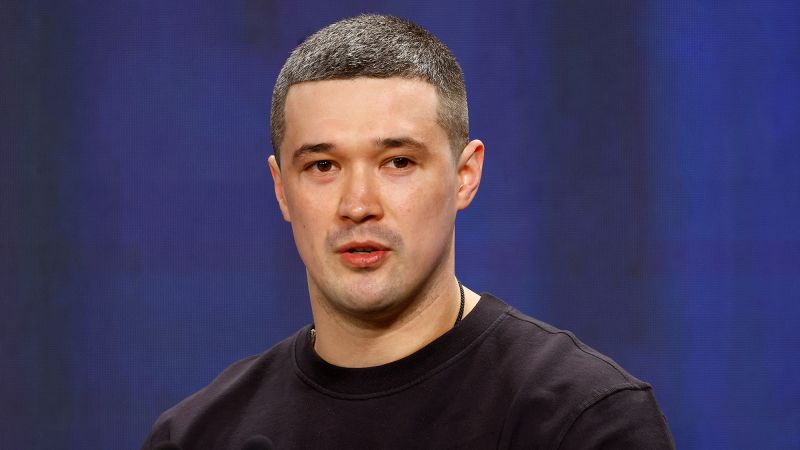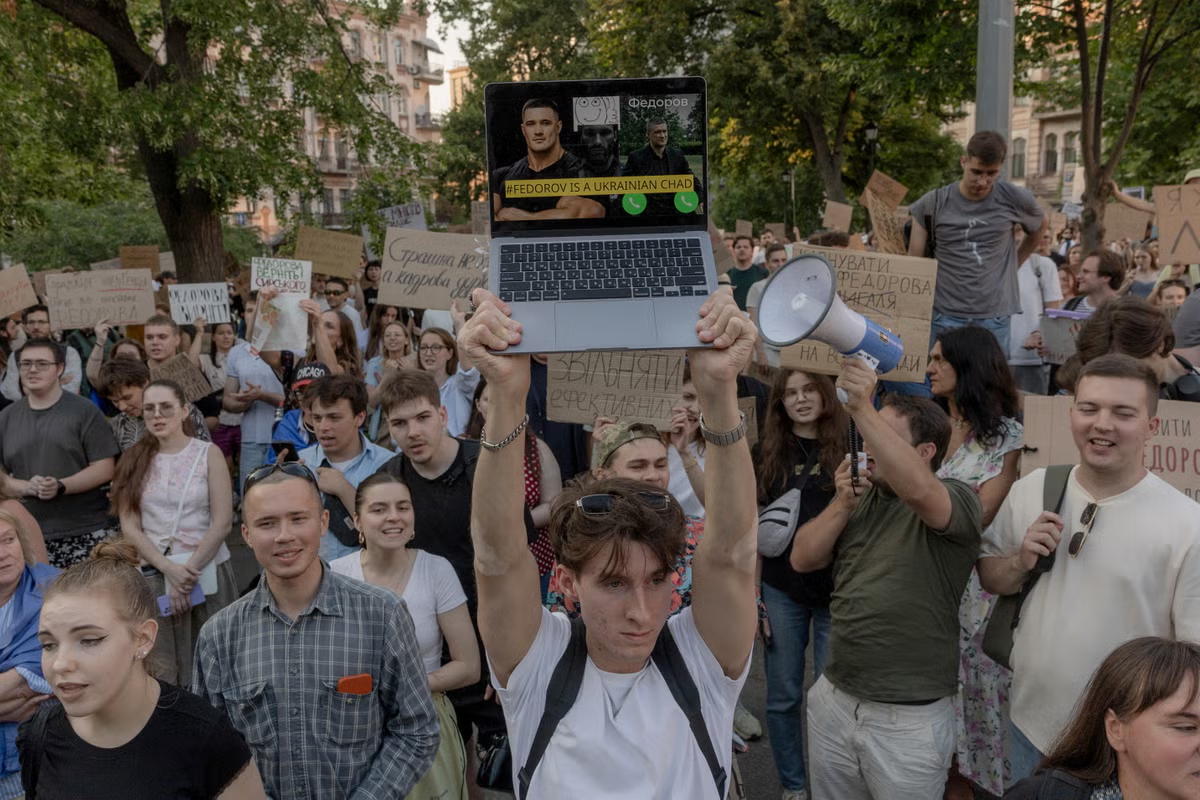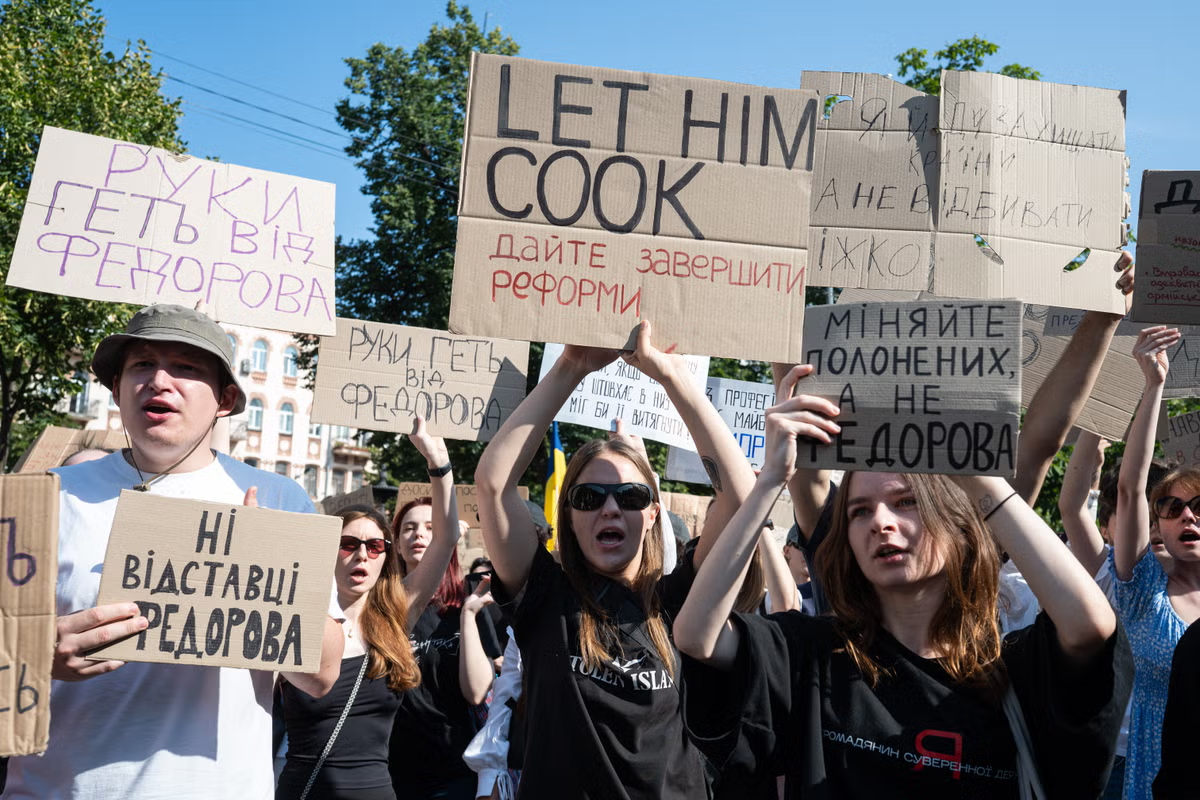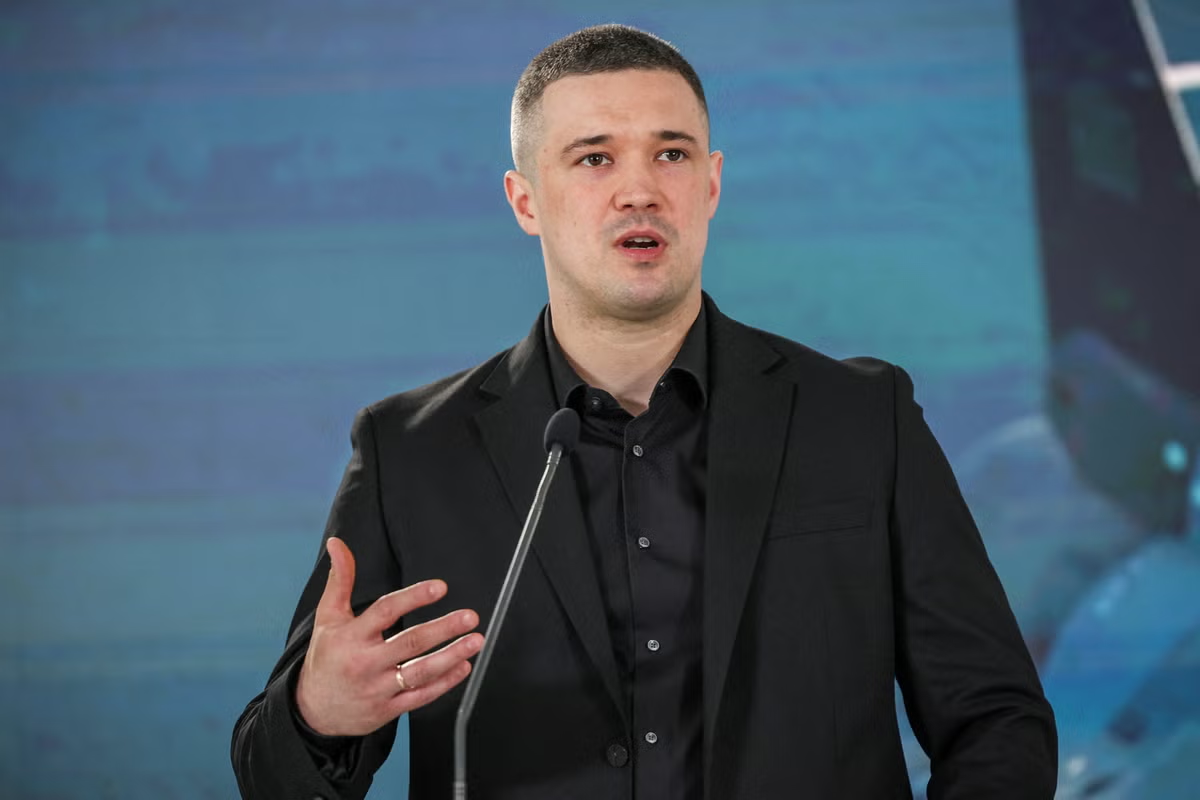
Rare wartime protests erupted in cities across Ukraine on Thursday, following the dismissal of defence minister Mykhailo Fedorov just six months after his appointment.Fedorov, 35, is the last remaining minister to have held positions in all of Zelensky’s governments, with the tech-savvy reformer remaining close to the president since his election in 2019. Parliament is now set to vote on his replacement by Interior Minister Ihor Klymenko, with it unclear as to whether Fedorov will be given another government job. His supporters pointed to his role in turning battlefield momentum in Ukraine's favour this year, through ramping up drone purchases and a crucial intervention to cut Russian units off from Starlink internet services.But his attempts to overhaul the sprawling defence ministry and armed forces created tensions with armed forces chief Oleksandr Syrskyi, and he has failed to tackle longtime problems around military conscription. Rare wartime protests erupted in cities across Ukraine on Thursday, following the dismissal of defence minister Mykhailo Fedorov (Reuters)Zelensky did not give a specific reason for his decision but told reporters he expected "greater unity" between the defence ministry and military leaders.How did he rise to power? Fedorov was born in Vasylivka, a town now occupied by Russia in southern Ukraine, and grew up in the nearby city of Zaporizhzhia, which is now pounded daily by Russian bombs and drones.As a young marketing specialist, he was brought in by Zelensky, then a well-known television host, to run the social media campaign that helped him surge to a landslide victory in April 2019.Fedorov gives Ukraine a ‘state in a smartphone’ Fedorov, then aged 28, was appointed to Zelensky’s first cabinet as minister for digital transformation, a new post that allowed him to push through technology-driven reforms.Targeting the legacy of Soviet bureaucracy, his new department rolled out an app called Diia, which means "action" in Ukrainian. Billed as "the state in a smartphone", it allows Ukrainians to conduct a range of government functions, from registering cars to marriages and divorces.What was his role in starlink and drones?When Russia launched its full-scale invasion of Ukraine in 2022, Fedorov made a public appeal to SpaceX owner Elon Musk to switch on the Starlink satellite internet service over Ukraine – which Musk promptly did. Zelensky did not give a specific reason for his decision but told reporters he expected "greater unity" between the defence ministry and military leaders (Reuters)Ukraine's military now uses tens of thousands of Starlinks, with commanders describing it as the lifeblood of their battlefield communications. In February this year, Fedorov worked with Starlink to block its unauthorised use by Russia.Early in the war, he also advocated building an "army of drones" – becoming an early advocate of a technology that eventually came to dominate the battlefield.His digital ministry set up a system under which Ukrainian soldiers who could video-verify strikes on Russian soldiers and vehicles were given points to buy weapons such as drones. His ministry thereby gained a large pool of battlefield data, which he portrayed as a "card" Ukraine could wield in its negotiations with allies for more military support.What did Fedorov do as defence minister? Promoted to the post of defence minister in January 2026, Fedorov vowed a data-driven overhaul of the vast ministry, which had been beset by corruption and mismanagement scandals throughout the war.Promoted to the post of defence minister in January 2026, Fedorov vowed a data-driven overhaul of the vast ministry (Reuters)He set out a vision of a path to victory that involved inflicting 50,000 monthly casualties on Russia, neutering its aerial attacks and crippling its economy.But he did not deliver promised proposals on how to reform Ukraine's process for conscripting troops and make it fairer.He did announce a reform of service contracts in the roughly million-person armed forces and promised to increase wages, particularly in the infantry, but serving soldiers complained the proposals favoured fresh joiners.People who volunteered to join the army earlier in the war still have few ways to go home other than if they suffer serious injuries.
Who is Ukraine’s sacked defence minister Mykhailo Fedorov?
Fedorov, 35, is the last remaining minister to have held positions in all of Zelensky’s governments
668 words~3 min read