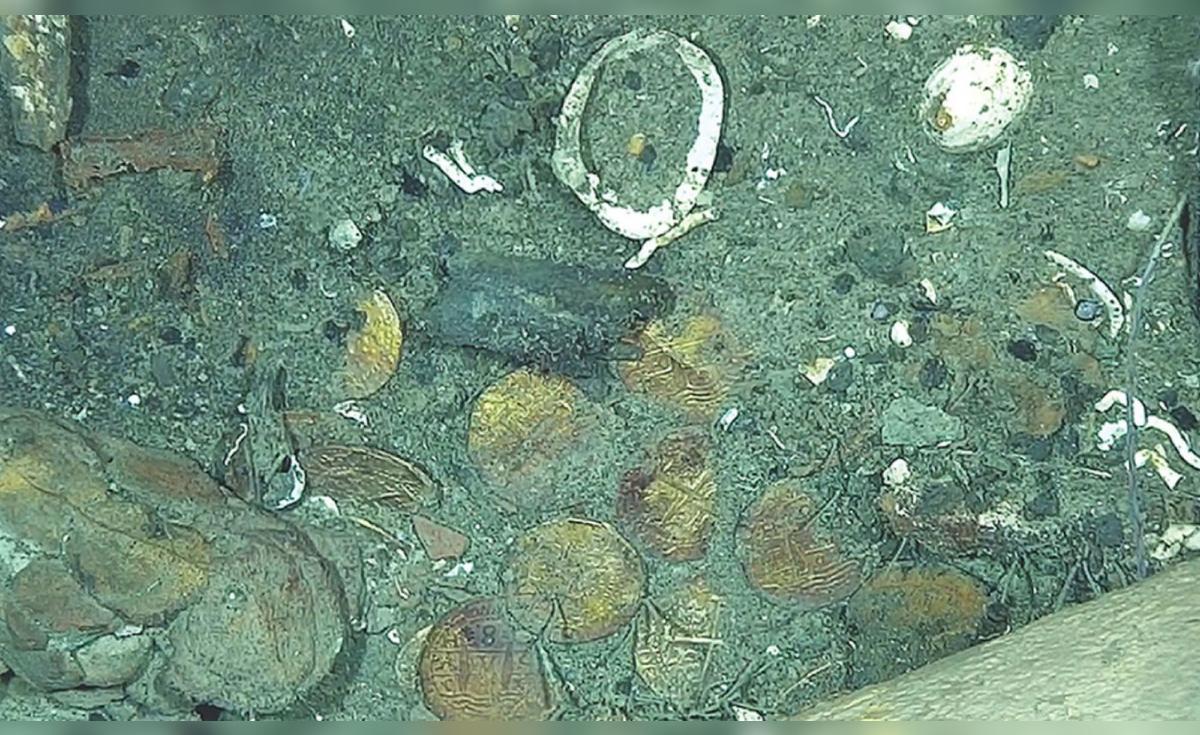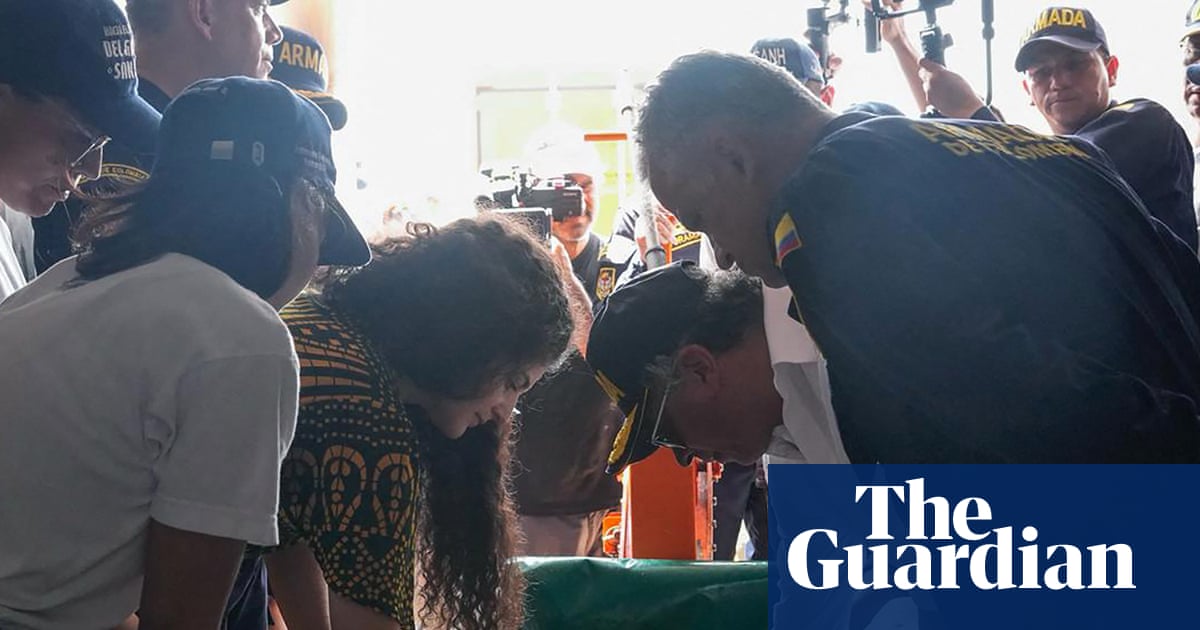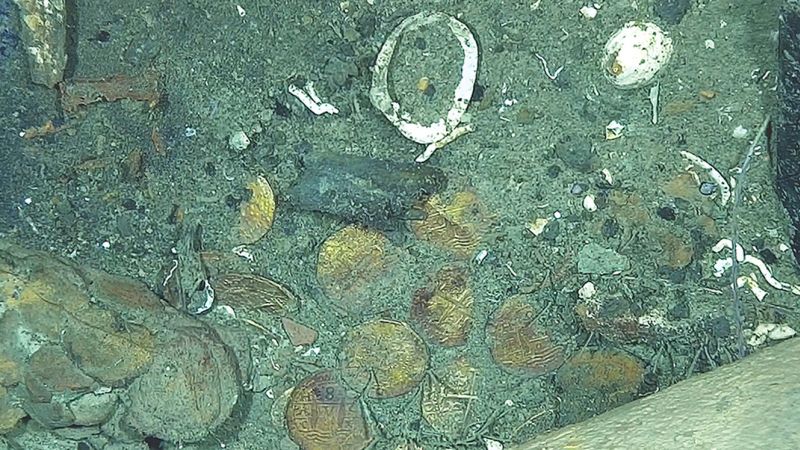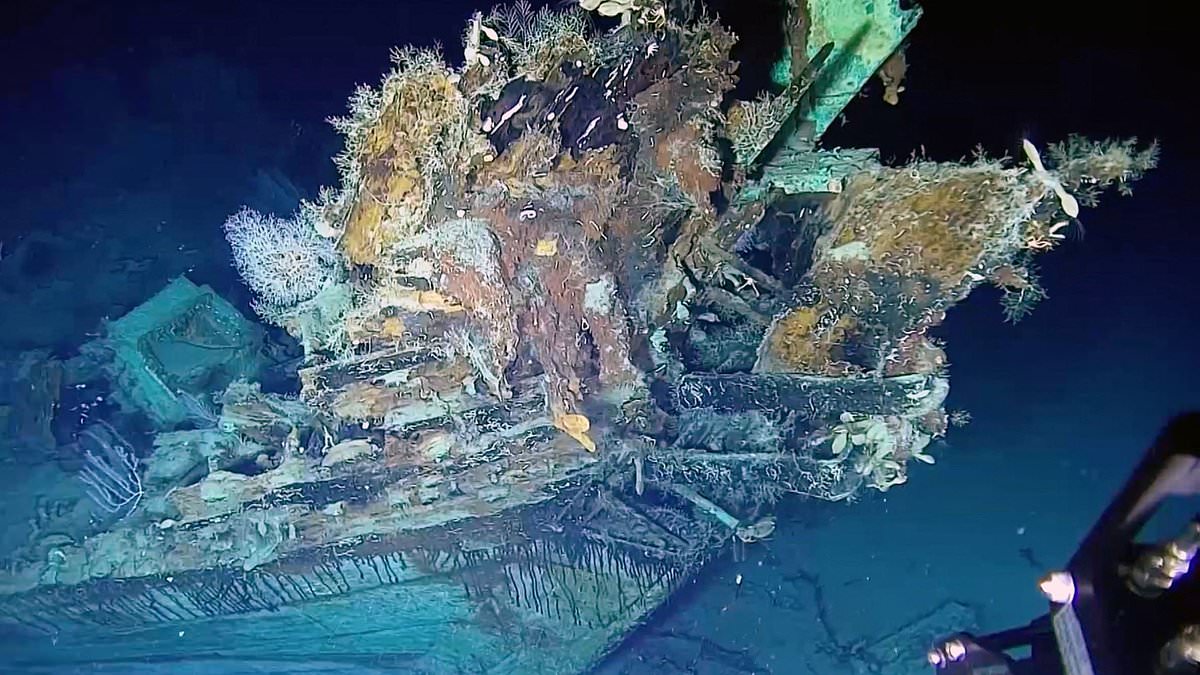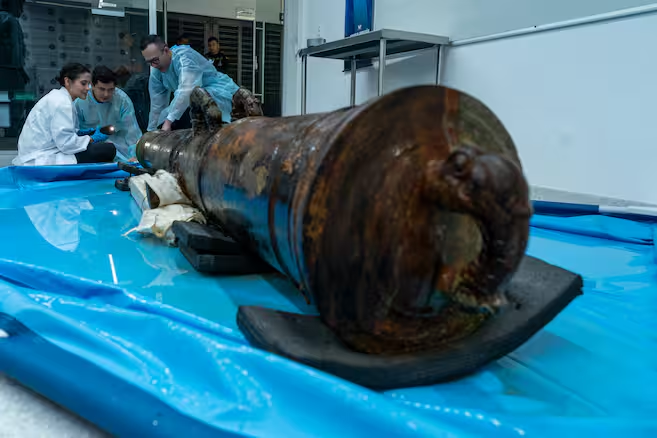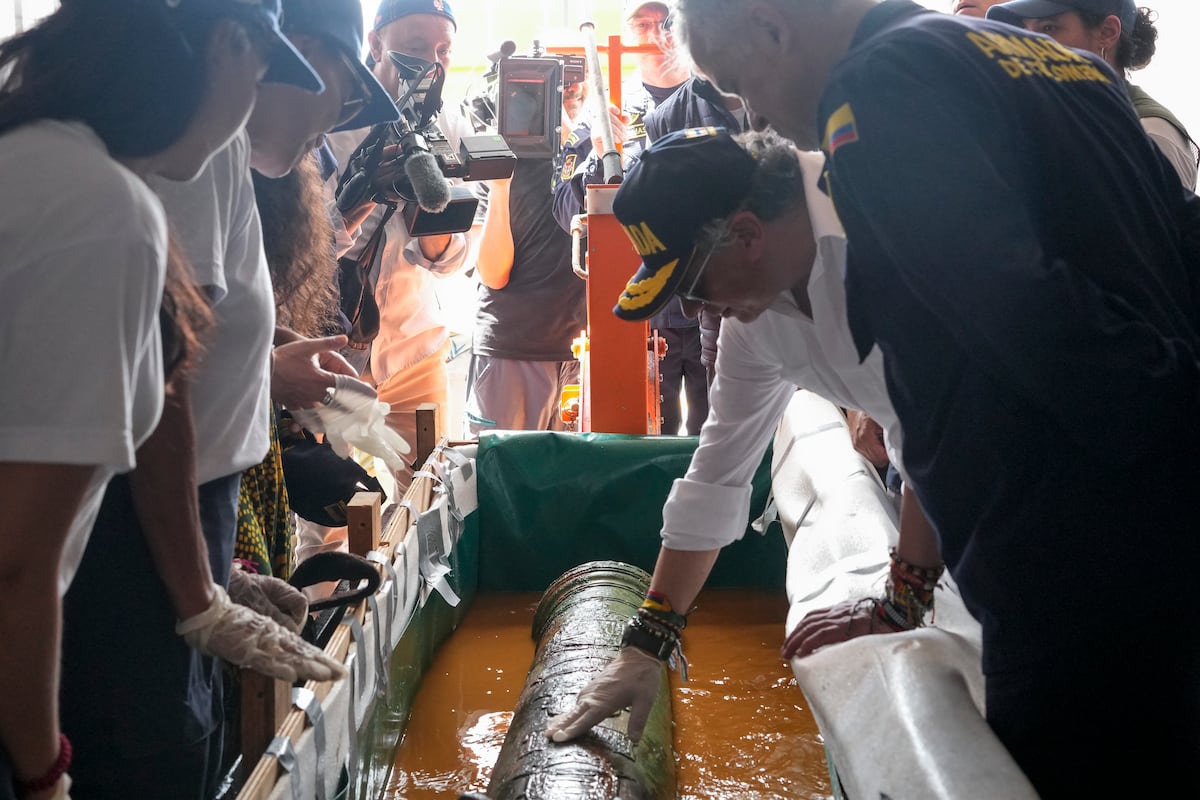
More than three centuries after it sank off the coast of Cartagena, the Spanish galleon San Jose has finally given up its first physical treasures. In November 2025, a Colombian-led expedition recovered five objects from the wreck: a bronze cannon inscribed with the word Sevilla, a porcelain cup, three hand-struck gold coins known as macuquinas, and fragments of additional porcelain, using underwater robotic vehicles to reach the site nearly 2,000 feet below the surface. Long called the holy grail of shipwrecks, the San Jose is believed to be the most valuable shipwreck ever found, carrying cargo now estimated at around 20 billion dollars in today's money. This first recovery reignites a legal and diplomatic battle over who actually has a right to that treasure.How the San Jose ended up at the bottom of the CaribbeanThe San Jose was a 62-gun Spanish warship that set sail as part of the Flota de Tierra Firme, a fleet responsible for carrying royal treasure from Spain's colonies in the Americas back to Europe. In June 1708, during the War of the Spanish Succession, British warships intercepted the fleet near Cartagena. The San Jose caught fire and sank quickly, taking most of its roughly 600 crew members down with it, along with an estimated 11 million gold and silver coins, plus chests of emeralds bound for King Philip V of Spain.How Colombia finally located the wreckThe exact location of the San Jose remained a mystery for more than 300 years until the Colombian Navy, working with the Woods Hole Oceanographic Institution, located the wreck in November 2015. Colombia's president announced the discovery the following month, though the site's precise coordinates have been kept a closely guarded state secret ever since. In 2018, Woods Hole confirmed that an autonomous underwater vehicle had verified the wreck's identity by matching distinctive features, including the design of its cannons, to historical records of the ship.Confirming the wreck's identity through its coinsBefore any physical recovery took place, researchers wanted rock-solid proof they had actually found the San Jose. In a study published in the journal Antiquity, lead researcher Daniela Vargas Ariza and her team used photogrammetry to build detailed three-dimensional models of coins photographed directly on the seafloor. The imagery revealed a Jerusalem cross, heraldic symbols from the crowns of Castile and Leon, and mint marks confirming the coins had been struck in Lima, Peru, in 1707, evidence that confirmed both the ship's identity and that it could not have sunk before that year.What was actually recovered from the wreckThe recovery operation itself ran from November 16 to 18, 2025, and was carried out jointly by the Colombian Navy, the Ministry of Culture, the Colombian Institute of Anthropology and History, known as ICANH, and the country's Maritime Directorate. According to CNN, Culture Minister Yannai Kadamani Fonrodona described the recovery as a historic event that demonstrated Colombia's growing capacity to protect its underwater cultural heritage, while ICANH director Alhena Caicedo Fernandez said the artefacts give ordinary citizens a way to connect with the galleon's history through physical evidence rather than just photographs.Why Colombia insists this is research, not treasure huntingColombian officials under President Gustavo Petro have been careful to frame this entire project as scientific research rather than a treasure hunt. The recovered objects are currently undergoing conservation work at Colombia's Underwater Cultural Heritage Laboratory in Cartagena, with researchers hoping to learn more about the ship's construction, trade routes and the exact cause of its sinking, since historical accounts differ on whether the San Jose exploded during battle or sank for other reasons.A billion-dollar legal fight that is still not settledEven as Colombia celebrates this milestone, an unresolved legal dispute continues to hang over the entire project. A US-based salvage company called Sea Search Armada claims it originally located the wreck back in 1982 and is seeking around 10 billion dollars, roughly half the treasure's estimated value, through a case still pending at the Permanent Court of Arbitration in The Hague. Colombia firmly rejects this claim, arguing the wreck sits within its own territorial waters and forms part of its national underwater cultural heritage rather than being available for a commercial payout.Why this recovery matters beyond its price tagWhatever the courts eventually decide, this first physical recovery marks a genuine turning point for a wreck that has spent decades tangled in legal battles, diplomatic disputes and competing claims from Colombia, Spain and Indigenous groups who argue the treasure was originally extracted from their ancestral lands. Colombia has said it plans to eventually display these artefacts in a dedicated shipwreck museum in Cartagena. For now, the small collection of coins, porcelain and a single bronze cannon stands as the first tangible proof that one of history's most famous shipwrecks is finally willing to give up some of its secrets.
Colombia recovers the first treasures from the 300-year-old San Jose shipwreck, believed to hold $20 billion in riches
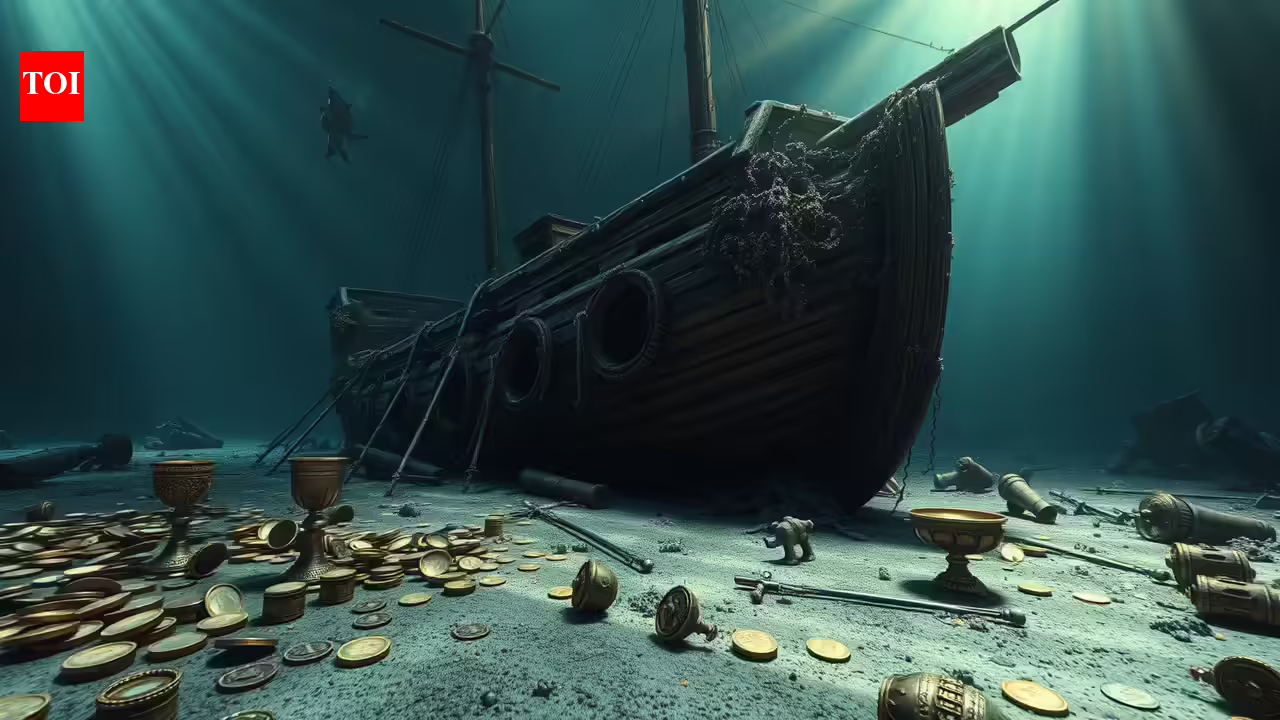
More than three centuries after it sank off the coast of Cartagena, the Spanish galleon San Jose has finally given up its first physical treasures. In November 2025, a Colombian-led expedition recovered five objects from the wreck: a bronze cannon inscribed with the word Sevilla, a porcelain cup, three hand-struck gold coins known as macuquinas, and fragments of additional porcelain, using underwater robotic vehicles to reach the site nearly 2,000 feet below the surface.
797 words~4 min read