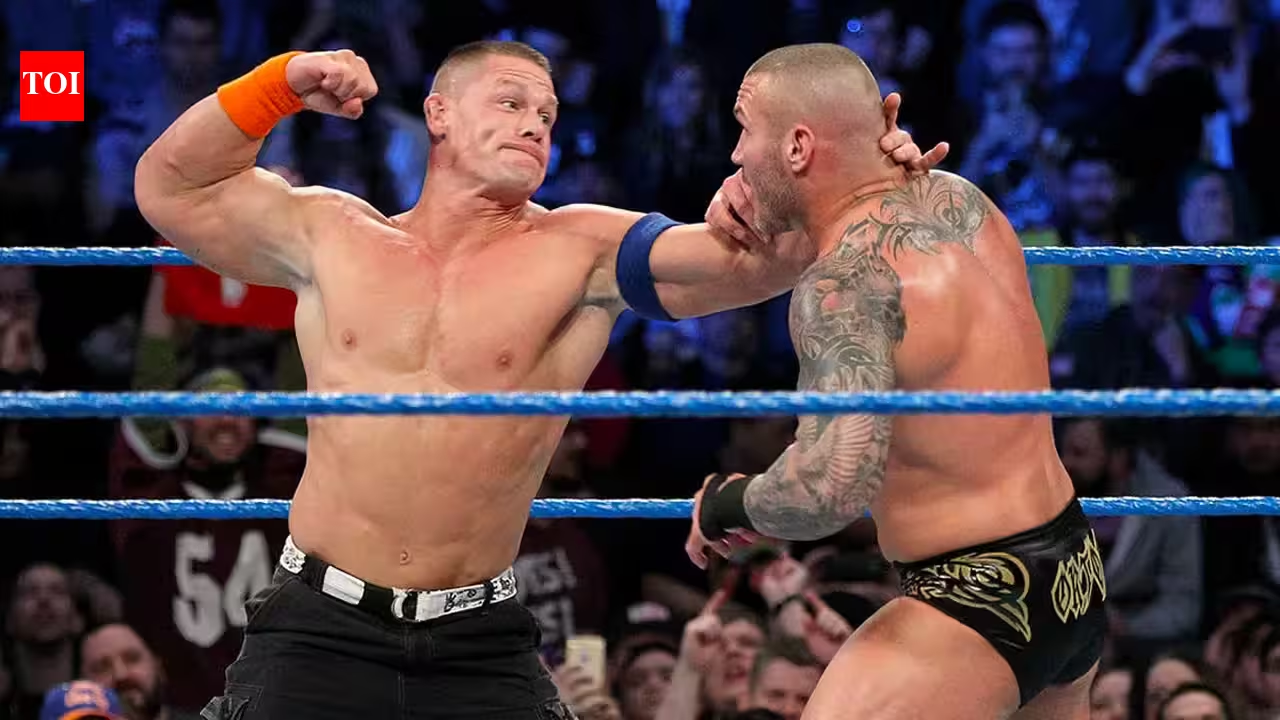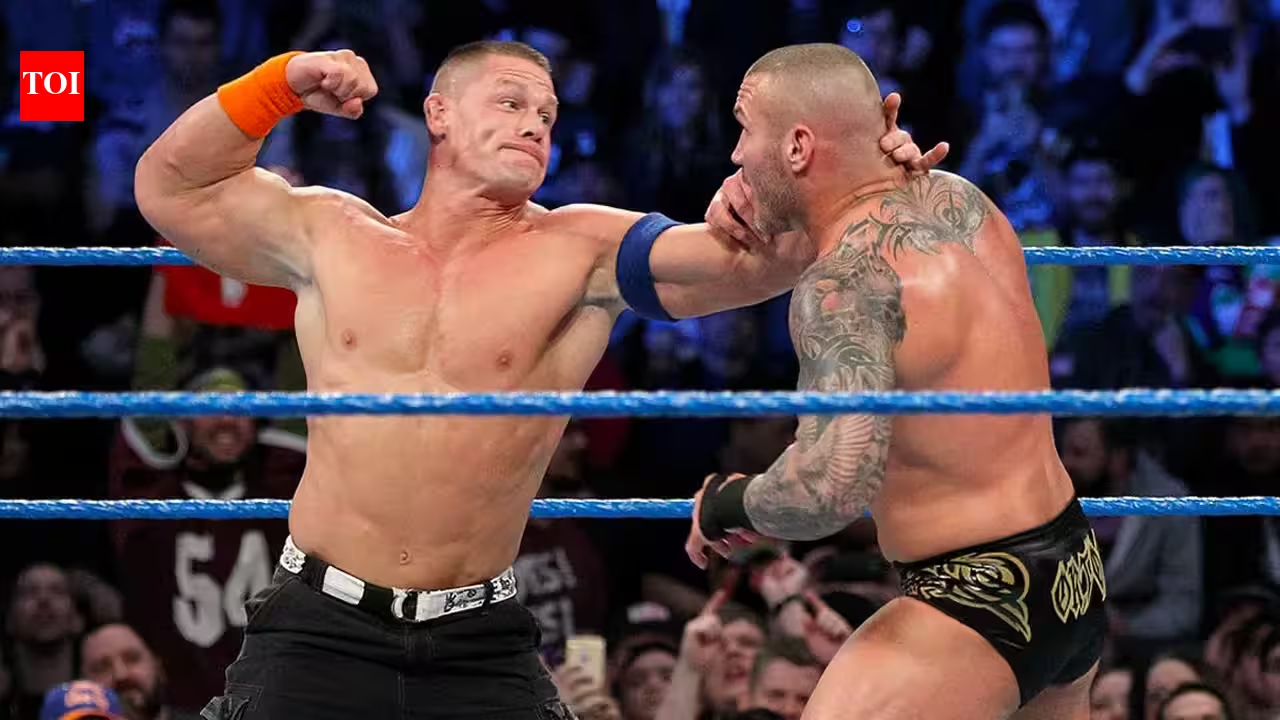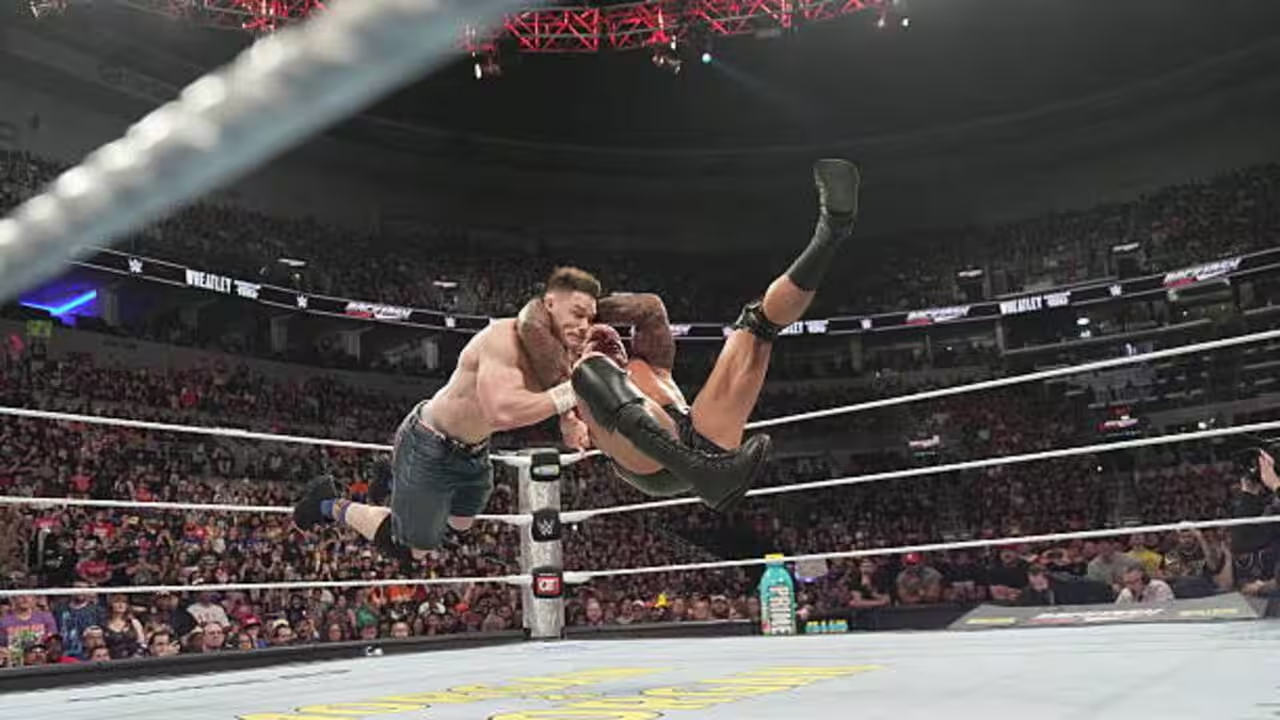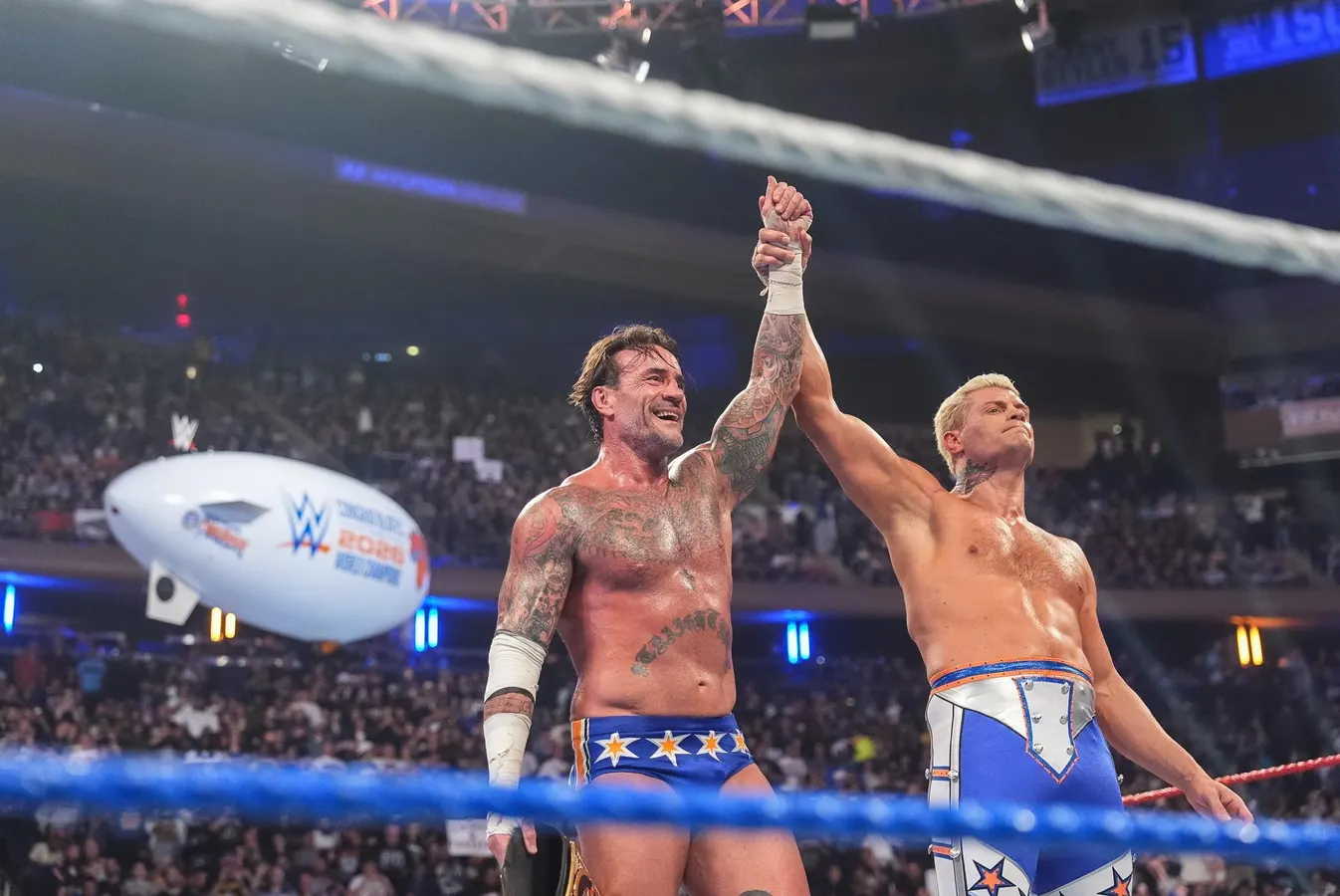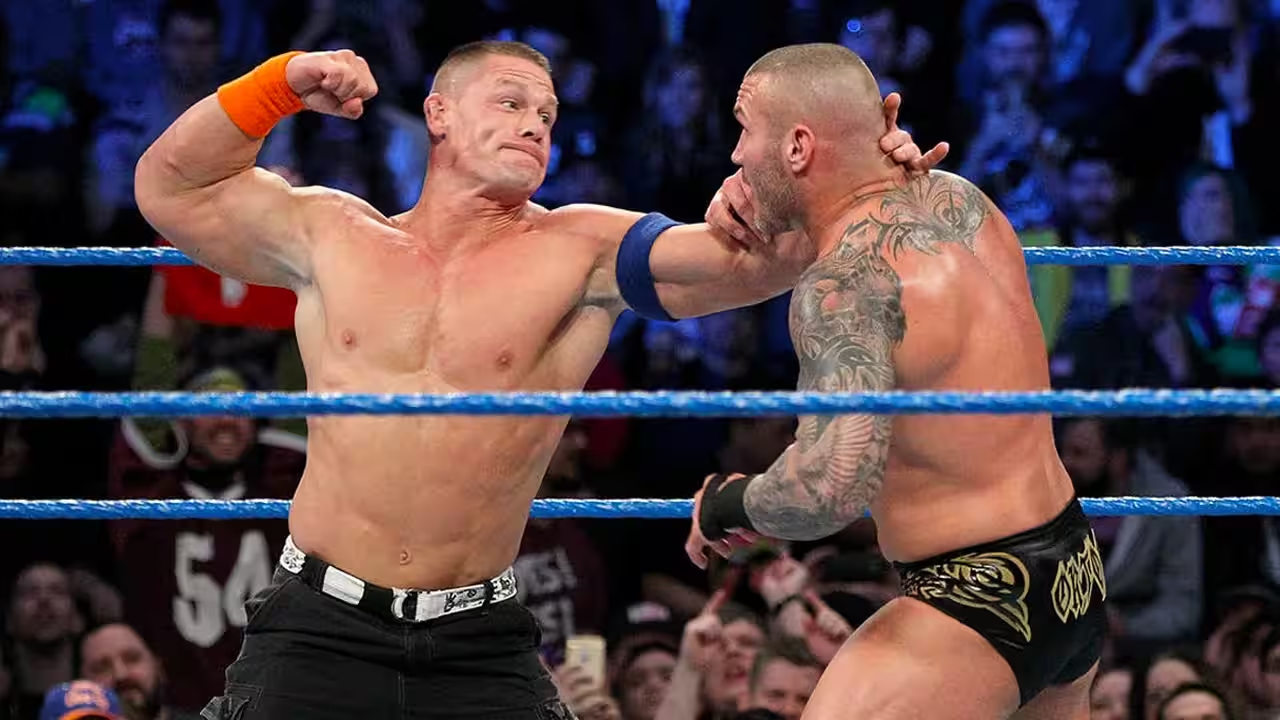
John Cena and Randy Orton transformed a 2007 championship feud into a rivalry that followed them through three different WWE eras. (Image via Getty)Some WWE rivalries dominate one summer. John Cena and Randy Orton spent nearly two decades finding reasons to fight again.Cena became WWE’s franchise player. Orton became the opponent who could make his position feel vulnerable. Their feud survived injuries, title changes, shifting audiences and long gaps because the central conflict never needed an explanation. Cena represented certainty. Orton represented the threat that could end it with one RKO.John Cena vs. Randy Orton rivalry timeline2001-2006: Two future WWE champions emerge from the same systemCena and Orton developed in Ohio Valley Wrestling before joining WWE’s main roster in 2002. They arrived during the same talent wave, but WWE sent them in different directions.Cena found his voice through his rapper character before becoming a fan favorite and winning his first WWE Championship in 2005. Orton joined Evolution, became the “Legend Killer” and captured his first world championship in 2004.Their paths established the contrast before the feud began. Cena fought through punishment and turned every setback into a comeback. Orton waited for one mistake, then struck. Once both men became regulars in the championship picture, their collision felt inevitable.Aug. 26, 2007: SummerSlam turns the comparison into a rivalryOrton challenged WWE Champion Cena at SummerSlam 2007 after attacking him with multiple RKOs during the build.The match gave WWE its first major look at a rivalry that would soon dominate Raw. Orton landed an RKO and appeared to have the title won, but Cena kicked out. Cena then hit the Attitude Adjustment and retained the championship.The crowd added another dimension. Cena attracted loud support and equally loud rejection. Orton gave fans who opposed WWE’s chosen hero a credible alternative. The rivalry became an argument over who should represent the company.Sept.-Oct. 2007: Randy Orton makes it personal before an injury changes everythingOrton escalated the feud by attacking John Cena Sr. Cena entered their Unforgiven match seeking revenge and was disqualified for refusing to stop his attack. Orton won the match, but Cena retained the WWE Championship.WWE scheduled a Last Man Standing rematch for No Mercy. It never happened.Cena suffered a torn pectoral muscle and had to vacate the championship, ending a reign that had lasted more than a year. Mr. McMahon awarded the vacant title to Orton at No Mercy. Triple H defeated Orton for it that night, only for Orton to regain it before the event ended.The injury denied their first feud a planned conclusion. It also allowed Orton to leave No Mercy with the championship Cena had never lost in the ring.Jan.-March 2008: Cena returns early, but Orton keeps the championshipCena returned months ahead of schedule as the final entrant in the 2008 Royal Rumble and won the match. Instead of saving his guaranteed championship opportunity for WrestleMania, he challenged Orton at No Way Out.Orton deliberately struck the referee and accepted a disqualification. Cena won the match, but Orton retained the WWE Championship. It was the perfect Orton escape. He lost the fight without losing the prize.Triple H then joined the title picture at WrestleMania 24. Orton retained in the Triple Threat Match by pinning Cena after Triple H connected with a Pedigree. The victory established Orton as more than Cena’s recurring challenger. He had beaten the company’s two leading stars on its biggest stage.Sept. 13, 2009: The ‘I quit’ match attacks Cena’s entire identityThe rivalry reached its most intense stretch in 2009. WWE placed Cena and Orton in several championship matches, each featuring a stipulation intended to eliminate another escape route.At Breaking Point, Cena challenged Orton for the WWE Championship in an “I Quit” Match. Orton handcuffed Cena and attacked him with steel steps, a monitor and a Singapore cane. The goal went beyond retaining the title. Orton wanted the “Never Give Up” star to admit defeat.Cena survived the punishment, handcuffed himself to Orton and applied the STF with pressure from the chain. Orton quit, giving Cena the WWE Championship.The result protected the core of Cena’s character. Orton could injure him, humiliate him and control most of the match. He could not make Cena surrender.Oct. 4, 2009: Orton takes the championship back inside hell in a cellThree weeks later, Cena and Orton entered Hell in a Cell. The structure removed Orton’s easiest exits. A disqualification could not save him, and the cage prevented an easy retreat.Orton still found a way to win. He trapped Cena in the ropes, attacked him and connected with an RKO to regain the WWE Championship.The outcome kept the feud balanced. Cena had broken Orton at Breaking Point. Orton responded by defeating Cena inside a structure designed to force a decisive result. Neither victory settled the rivalry, which made one final match unavoidable.Oct. 25, 2009: The iron man match ends their most punishing chapterBragging Rights gave Cena and Orton 60 minutes, an Anything Goes stipulation and a major consequence. Cena would have to leave Raw if he lost.The match included weapons, interference and 11 falls. Cody Rhodes and Ted DiBiase Jr. assisted Orton, while Kofi Kingston came to Cena’s aid. Neither man held control for long.With seconds remaining and the score tied, Cena locked Orton in the STF. Orton submitted with five seconds left, giving Cena a 6-5 victory and the WWE Championship.The match ended the most concentrated period of their feud. WWE had already tested them in an “I Quit” Match and Hell in a Cell. The Iron Man format demanded an hour of escalation while maintaining the possibility that either man could win.Cena survived the rivalry’s longest fight. Orton remained dangerous enough that it took the final seconds to beat him.Dec. 15, 2013: Randy Orton beats Cena to unify WWE’s world titlesThe rivalry returned with different stakes in late 2013. Cena held the World Heavyweight Championship. Orton held the WWE Championship and served as The Authority’s selected face of the company.WWE suspended both titles above the ring at TLC. The winner would leave as the unified WWE World Heavyweight Champion.Orton handcuffed Cena to the bottom rope during the Tables, Ladders and Chairs Match. Cena managed to free the rope from the turnbuckle and attempted to climb, but Orton pulled him down. Cena crashed face-first through a table, allowing Orton to retrieve both championships.This was Orton’s largest victory over Cena. He did not simply retain a title. He defeated his greatest rival to become WWE’s only world champion.Oct. 26, 2014: Cena wins their second hell in a cell matchCena and Orton returned to Hell in a Cell in 2014. This time, the winner would receive a future WWE World Heavyweight Championship match against Brock Lesnar.Orton delivered one of the match’s defining moments by countering Cena in midair with an RKO. Cena eventually recovered and hit an Attitude Adjustment from the ropes through a table to win.The stakes revealed how their positions had changed. They were no longer young stars fighting to control WWE’s future. Both were established veterans competing for another opportunity while the company began building around a new generation.February 2017: Their rivalry quietly stops without a farewellCena defeated Orton on an episode of SmackDown in 2017. The match did not begin another long feud, even though both men remained connected to the WWE Championship picture.Cena increasingly divided his time between WWE and acting. Orton remained a regular presence. Their careers separated, and the rivalry entered its longest pause.WWE later identified that SmackDown match as their final singles meeting before Backlash 2025. Cena had won their last four encounters entering the event.May 10, 2025: ‘One last time’ reverses their roles at backlashWWE revived the rivalry during Cena’s retirement tour. Cena entered Backlash as the Undisputed WWE Champion after winning his record-setting 17th world title. Orton challenged him in his hometown of St. Louis.The roles had reversed. Cena was now the villain. Orton, once the remorseless “Apex Predator,” had the crowd behind him.Cena poked Orton in the eye, attempted Orton’s Punt and repeatedly searched for an illegal advantage. After two referees went down, Orton hit several officials with RKOs. R-Truth then entered the ring and stopped Orton from delivering the Punt.Orton hit R-Truth with an RKO. Cena responded with a low blow, struck Orton with the championship and pinned him to retain.The finish denied St. Louis its hometown victory, but it gave the rivalry a final twist. Orton spent years trying to expose the anger beneath Cena’s heroic image. In their last major match, Cena no longer hid it.WWE billed the encounter as their final battle. Cena won through the tactics Orton once used against him, closing the rivalry with both men standing on the opposite side of where they began.Why John Cena and Randy Orton’s rivalry lasted so longCena had feuds with sharper individual peaks. Edge brought greater personal hatred. CM Punk directly challenged what Cena represented. The Rock created a larger mainstream event.Orton offered something different. He rose alongside Cena and remained close enough to the championship picture for WWE to restart their conflict at any point. One RKO could restore years of history without another explanation.Their matches also tracked WWE’s evolution. In 2007, they were young stars fighting for control of Raw. In 2009, they were established headliners testing every stipulation WWE could give them. In 2013, they unified the world championships. In 2014, they competed as veterans. In 2025, they switched moral roles and used their shared history to support Cena’s final run.The rivalry suffered from overexposure at times. WWE returned to it so often that some matches felt less urgent than the ones before them. That repetition also proved its value. Cena vs. Orton became the matchup WWE trusted when a title needed instant history.Entering Backlash 2025, WWE’s official count gave Cena the stronger overall singles record. Orton held a narrow advantage in their championship meetings. That balance suited the rivalry. Cena usually won the wider war. Orton claimed enough defining victories to ensure the next RKO always mattered.Their story never required one permanent winner. Cena and Orton arrived as prospects, became champions and survived multiple versions of WWE. One Attitude Adjustment could restart the argument. One RKO could change the answer.
John Cena and Randy Orton rivalry timeline: Every title fight, betrayal and RKO that defined an era
Some WWE rivalries dominate one summer. John Cena and Randy Orton spent nearly two decades finding reasons to fight again.
1,691 words~8 min read