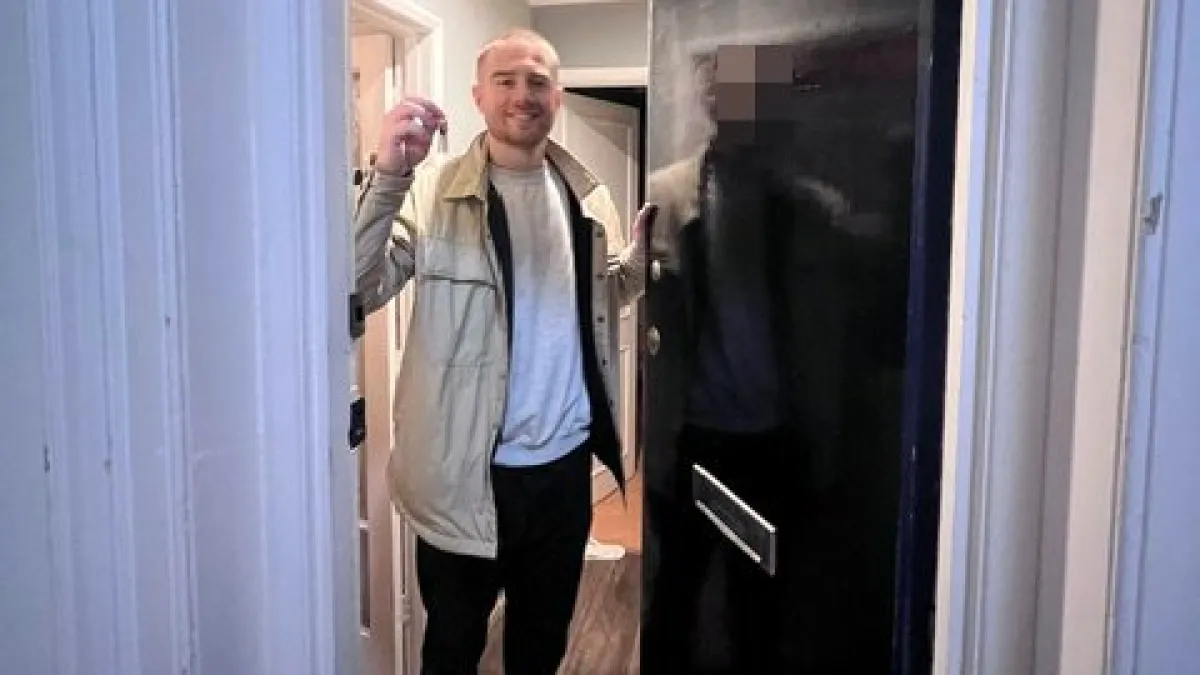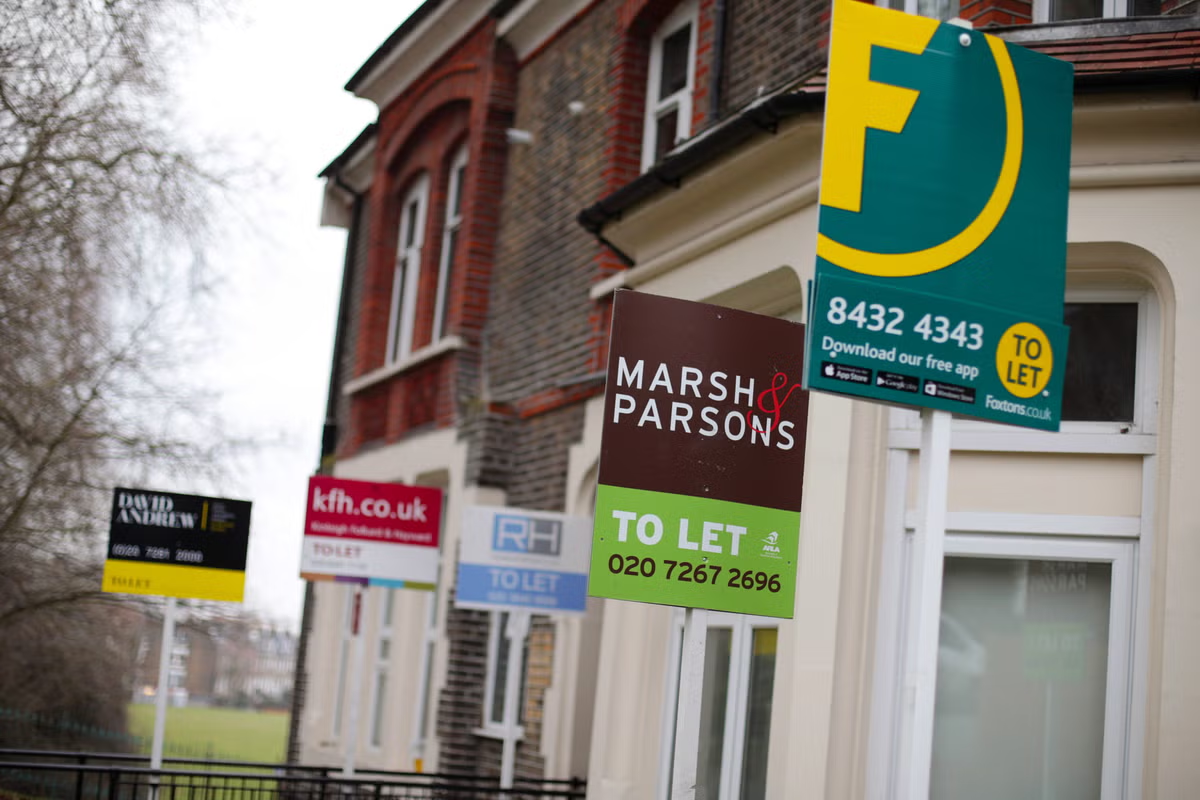
Almost all leaseholders regret buying their home, a survey has found. When polled by estate agent membership body Propertymark, 90 per cent of the 1,200 leaseholders surveyed said they regretted buying their home. On top of that, 93 per cent said they would not buy a leasehold home again. Of the minority who said they might buy leasehold again, many said they would only do so if there was no alternative.Leasehold homes have been plagued with a number of issues in recent years, from unsafe cladding to escalating service charge costs.It means that some homeowners now find their properties difficult to sell, especially in areas where the market for flats is limited. There are 4.9 million leasehold properties in England, according to the latest Government figures, representing 20 per cent of all homes. Miserable: A staggering 93% of leaseholders surveyed would not buy a leasehold againSurging service chargesPropertymark's report found that 86 per cent of leaseholders saw an increase in service charges in the past two years. Of those, 62 per cent said it increased by more than 21 per cent. Worryingly, 70 per cent of leaseholders said they never received information on why their service charge increased and almost nine in 10 said they did not consider the increase in service charge accurately reflected the increase in costs.The average leaseholder's service charge bill now ranges from £1,525 a year for the cheapest 10 per cent of buildings to £8,680 for the top 10 per cent, according to separate research by the Property Institute. This is based on its analysis of 117,052 homes across England and Wales. Nearly six in 10 leaseholders said the service charge had a large impact on their ability to sell their property. As many as 89 per cent of those surveyed said it is difficult to challenge unfair service charges. Propertymark also surveyed its estate agent members, of which 76 per cent said it was getting more difficult to sell leasehold homes.Over the past two years, more than 78 per cent said they had taken at least one leasehold property off the market as it did not sell. The main three challenges to sell flats reported by estate agents were onerous service charges, escalating ground rents and challenges in selling short leases.Leasehold reform on the way There is hope on the horizon for leaseholders as Government reform is under way, although they won't see many of the changes for some time. The draft Commonhold and Leasehold Reform Bill is undergoing pre-legislative scrutiny and is set to be introduced to Parliament in Autumn 2026. If passed, the changes could be enacted in 2027 or 2028. If passed, it will make it easier for existing leaseholders to convert their ownership structure to commonhold. This means homeowners would receive a stake in the ownership of their buildings and be given a stronger say in the issues that affect them, with greater control over how the building is managed and the bills they pay.The bill is also set to abolish the threat of forfeiture, which is where a freeholder can effectively take back a leaseholder's home and claim all their equity in doing so. This can currently be forced upon leaseholders who fail or refuse to pay their service charges or ground rent. Powerless: Leaseholders often feel they're not be able to effectively challenge unreasonable service charges and other costsIt also contains a proposal to cap ground rents at £250 a year and promised to eventually scrap them altogether in 40 years. Separately, the Leasehold and Freehold Reform Act 2024 was passed under the former Conservative Government, but has not been fully implemented yet. This could eventually make it cheaper and easier for people to extend leases in the future, though freeholders continue to challenge it. It also bans leasehold houses. Nathan Emerson, chief executive at Propertymark says the current reforms planned by the Government may not go far enough to help existing leaseholders.'Not only is 40 years [to scrap ground rents] double the amount of time promised by the previous government, but leaseholders are also still waiting for legislation that will help to regulate unreasonable service charges, which Propertymark evidence suggests is a greater barrier to sales,' he said. Nathan Emerson, chief executive at Propertymark 'It is not realistic or proportionate to expect a fast transition [from leasehold to commonhold], so hundreds of thousands of leasehold homes may still be left without meaningful change for decades.'The report also notes the effects that the problems with leasehold are having on the wider market.Flats make up the majority of leasehold homes. These were once a staple for first-time buyers - but if those in flats cannot sell they won't be able to move up the ladder to houses. This could mean people in houses may also find it harder to sell and move themselves.Emerson says: 'If the majority of people who bought a product would not do so again, people start to avoid the product.'Our estate agent members have seen this play out in practice when they are instructed to sell a leasehold property, with many avoiding dealing with flats altogether. 'As flats continue to take far longer to sell, at lower prices than they were purchased for, they have been effectively taken out of the market and their use as a stepping stone no longer applies.'Best mortgage rates and how to find them Mortgage rates have shot up again due to inflation triggered by the conflict with Iran reversing hopes that the Bank of England would cut rates. This means those remortgaging or buying a home face higher costs.That makes it even more important to search out the best possible rate for you and get good mortgage advice, whether you are a first-time buyer, home owner or buy-to-let landlord.This is Money's partner L&C can help you with its fee-free mortgage service.> Compare mortgage rates> Find the right mortgage for you To help our readers find the best mortgage, This is Money has partnered with the UK's leading fee-free broker L&C.This is Money and L&C's mortgage calculator can let you compare deals to see which ones suit your home's value and level of deposit.You can compare fixed rate lengths, from two-year fixes, to five-year fixes and ten-year fixes.If you’re ready to find your next mortgage, why not use This is Money and L&C’s online Mortgage Finder. It will search 1,000’s of deals from more than 90 different lenders to discover the best deal for you.> Find your best mortgage deal with This is Money and L&C Mortgage service provided by London & Country Mortgages (L&C), which is authorised and regulated by the Financial Conduct Authority (registered number: 143002). The FCA does not regulate most Buy to Let mortgages. Your home or property may be repossessed if you do not keep up repayments on your mortgage.
Nine in ten leaseholders regret buying their home, report finds
Leasehold homes have been plagued with a number of issues in recent years, from unsafe cladding to escalating service charge costs.
1,135 words~5 min read