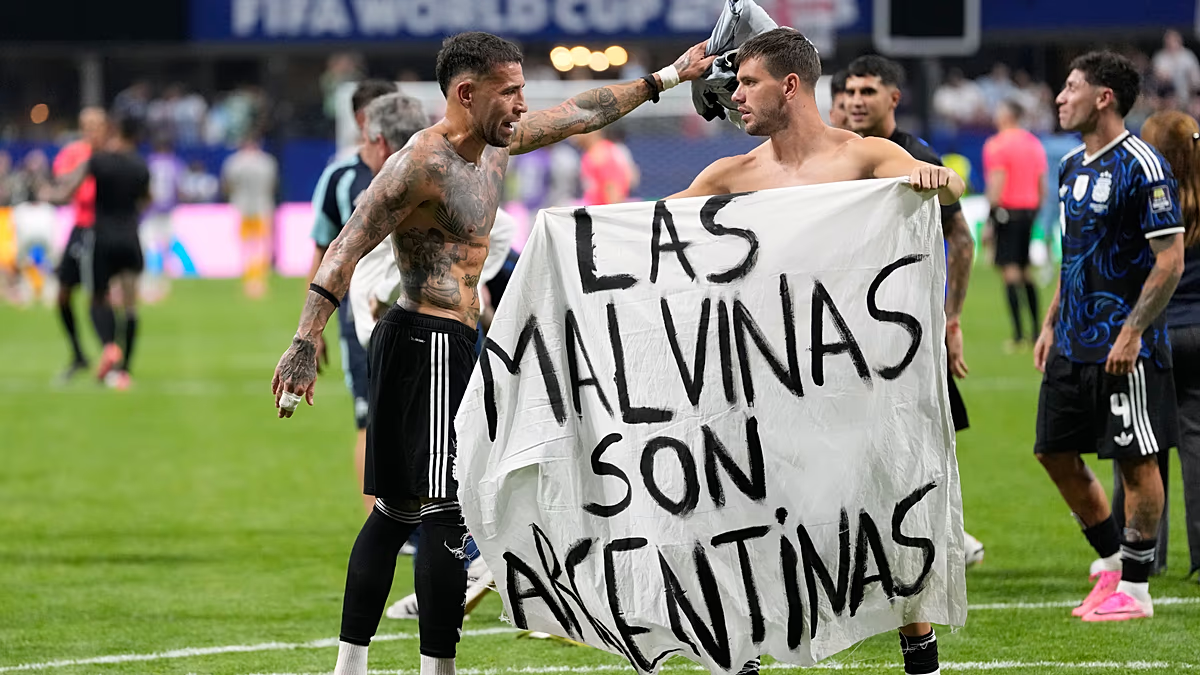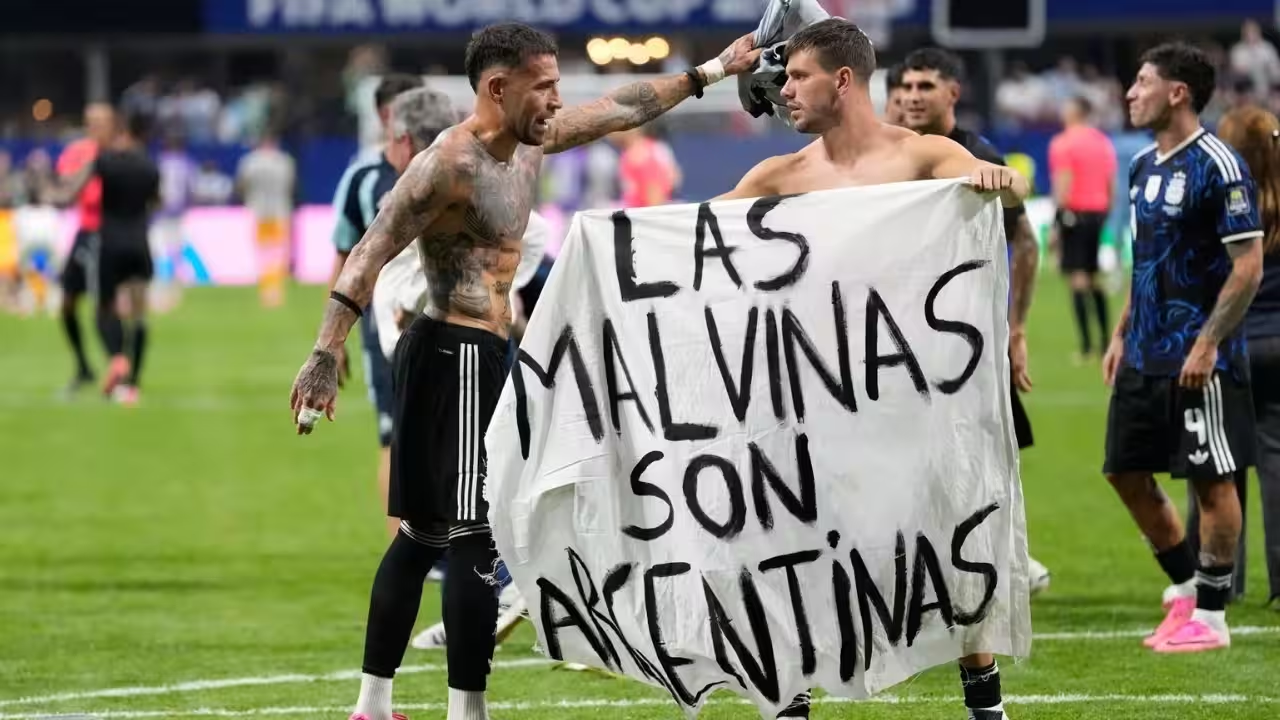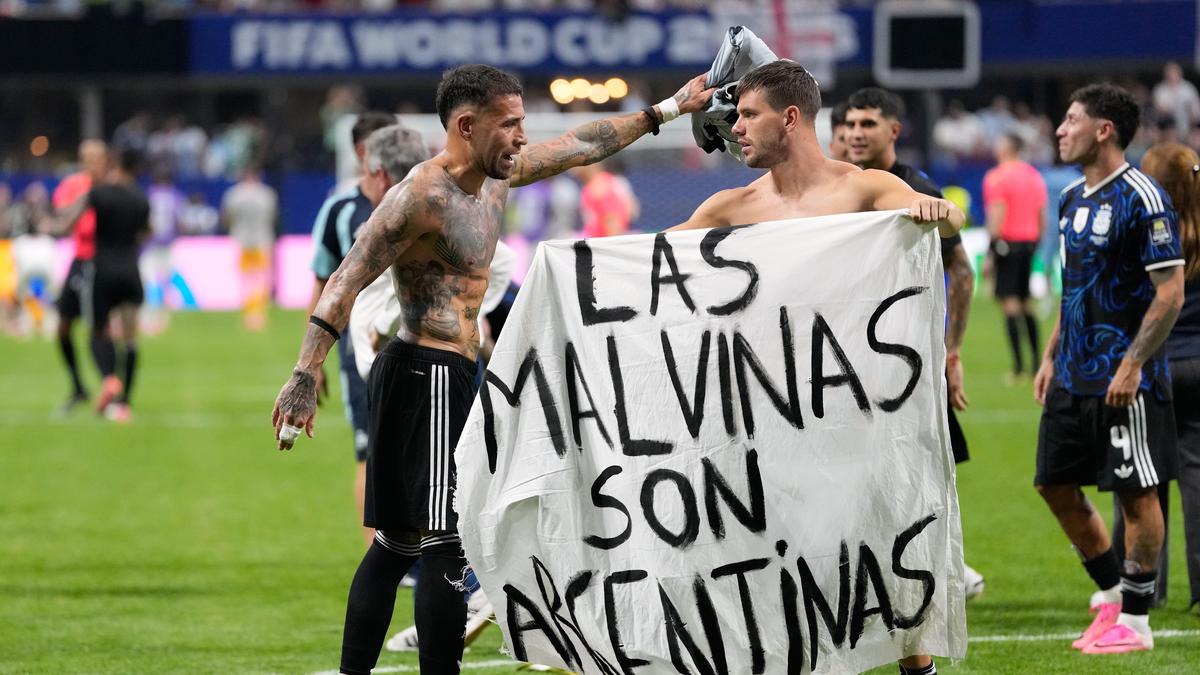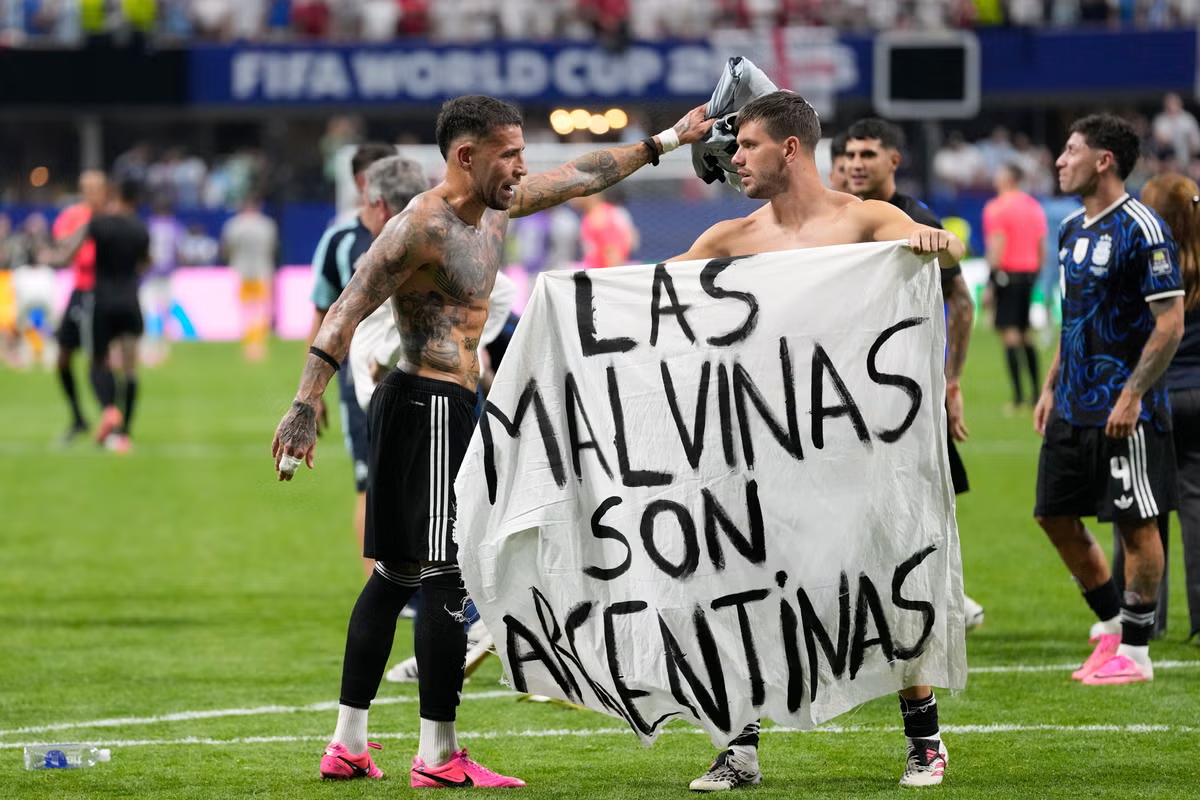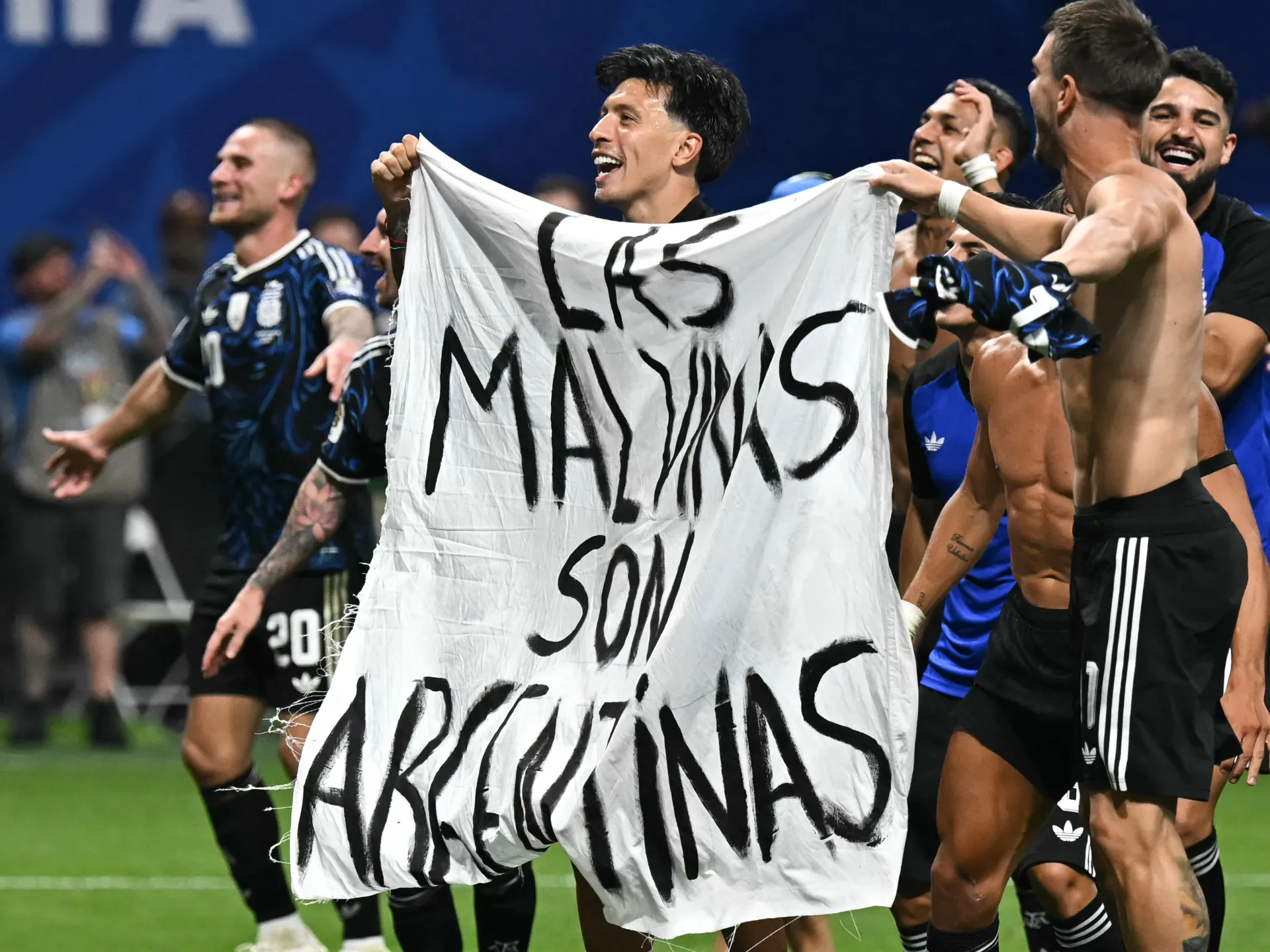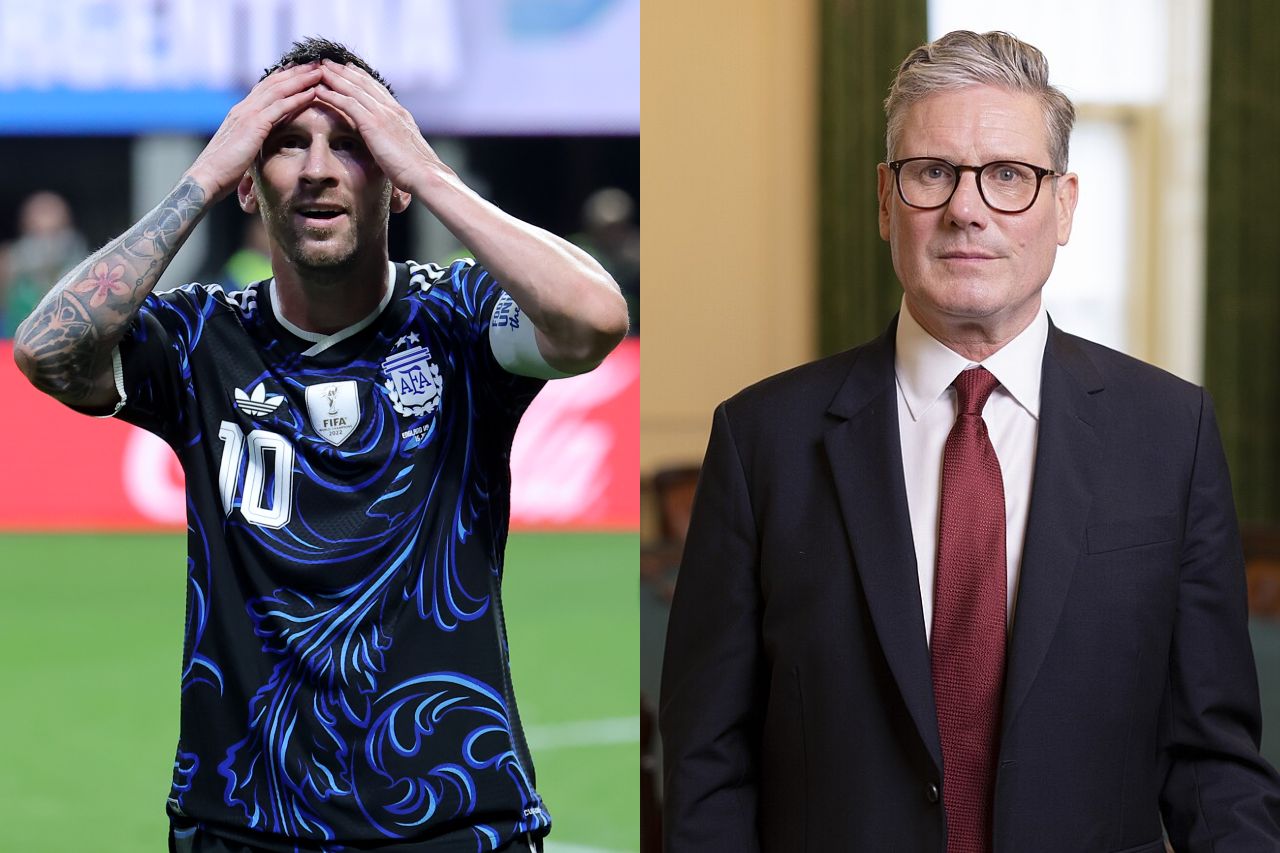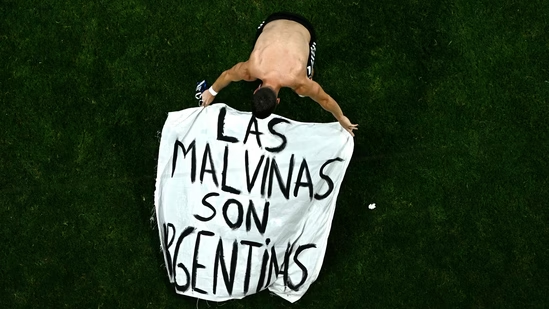
Argentina's dramatic World Cup semi-final victory over England was meant to be remembered for football. Instead, the celebrations that followed have triggered a fresh diplomatic row, with the United Kingdom urging FIFA to investigate Argentina after its players displayed a banner asserting the country's claim over the disputed Falkland Islands.Argentina's midfielder #11 Giovani Lo Celso adjusts a banner reading "The Malvinas (Falkland Islands) belong to Argentina," after winning the 2026 World Cup football tournament semi-final match between England and Argentina at the Atlanta Stadium in Atlanta on July 15. (AFP)The controversy erupted moments after Argentina's 2-1 comeback win over England in Atlanta on Wednesday. As players celebrated reaching the World Cup final, they posed with a banner handed to them by fans that read, "Las Malvinas son Argentinas" (The Malvinas are Argentine).The tensions escalated further, when Argentina accused a British Royal Navy warship of making an "illegal journey" into its waters, The Independent reported.According to the publication, foreign minister Pablo Quirno alleged that HMS Medway had entered Argentine waters earlier this month without formally notifying the government, describing it as a "military incursion". He said Argentina had lodged a formal note of protest with the British embassy, expressing its "strongest objection" to the alleged breach.The slogan "Las Malvinas son Argentinas" refers to the Falkland Islands, a British Overseas Territory that Argentina calls the Islas Malvinas. The islands have been at the centre of a sovereignty dispute between the two countries for decades, making the banner far more than a celebratory message.Also Read: Argentina players display Falkland banner after World Cup win over England; in danger of facing FIFA sanctionsWhy the banner sparked a rowOn Thursday, the British government called on FIFA to investigate the incident. UK Business Secretary Peter Kyle criticised the display, saying 'politics needs to be separate from football' and urging FIFA to investigate."Under FIFA's disciplinary code, political, ideological or offensive messages displayed during official matches or celebrations can attract sanctions. Previous cases have resulted in fines and even player suspensions for displaying banners linked to territorial disputes.The display came despite restrictions on Falklands-related flags and banners at the stadium. According to the news agency Associated Press, Argentine fans had been barred from bringing such material into the venue.Manchester United defender Lisandro Martínez, who plays for Argentina, defended the display after the match."I can picture a Malvinas veteran seeing that and weeping," he said, adding that the players wanted to affirm their belief that the islands belong to Argentina.The Falklands disputeThe Argentina-England football rivalry has long carried political and historical baggage.In 1982, Argentina's military government invaded the Falkland Islands, triggering a 10-week war with Britain. The conflict claimed the lives of 649 Argentine soldiers, 255 British military personnel and three islanders before Britain regained control of the territory. Argentina, however, continues to claim sovereignty over the islands.The dispute has frequently spilled into football. During the 2014 World Cup, Argentina's players displayed the same "Las Malvinas son Argentinas" slogan before the tournament, prompting FIFA to fine the Argentine Football Association after the competition.Also Read: Doubt Lionel Messi at your own risk; The GOAT and Argentina's mentality monsters never surrenderThe issue has resurfaced during this World Cup as well. According to The Guardian, Argentina's players were heard chanting, "For the Malvinas, for Diego Maradona and for Messi's last one," after their quarter-final victory over Switzerland.Now, FIFA could once again find itself balancing football and politics. While the governing body has not yet commented on whether disciplinary proceedings will be opened, its rulebook prohibits political messaging at tournament venues.(With inputs from AP)
'Illegal journey into our waters': Argentina-UK Falklands Islands dispute escalates after World Cup clash
UK Business Secretary Peter Kyle criticised the display, saying 'politics needs to be separate from football' and urging FIFA to investigate." | World News
591 words~3 min read