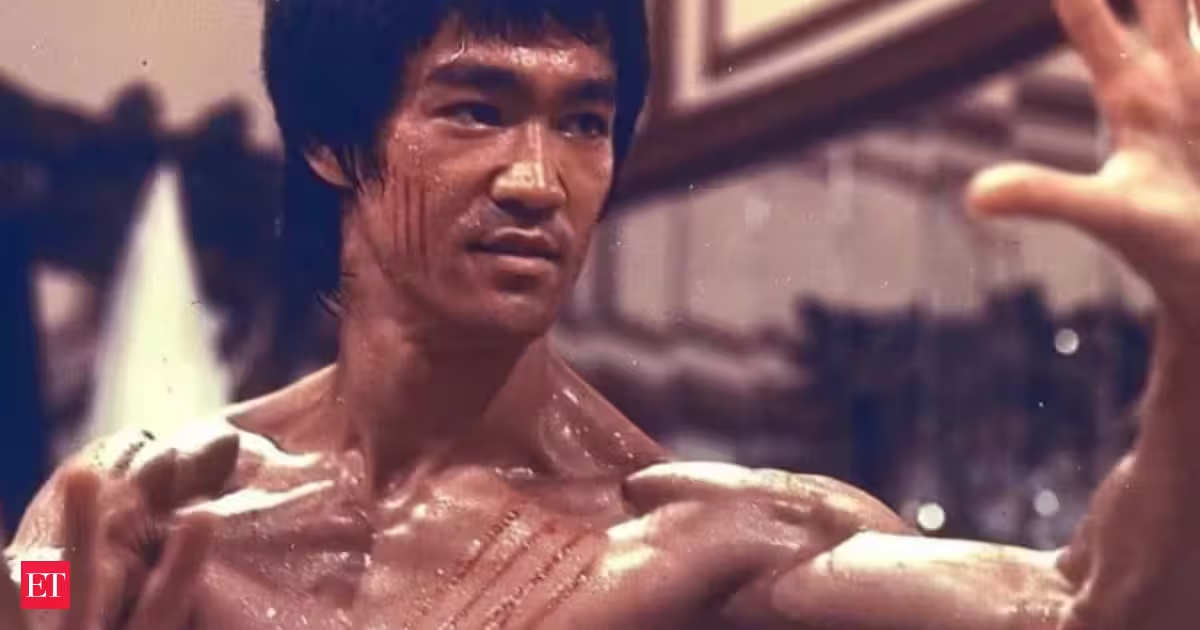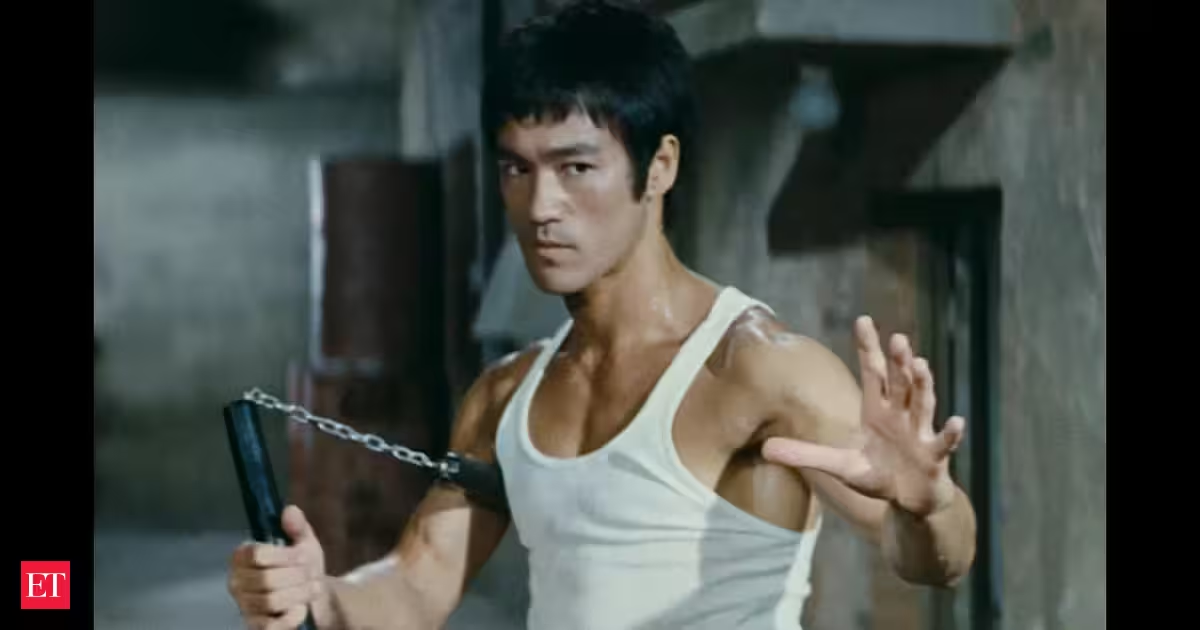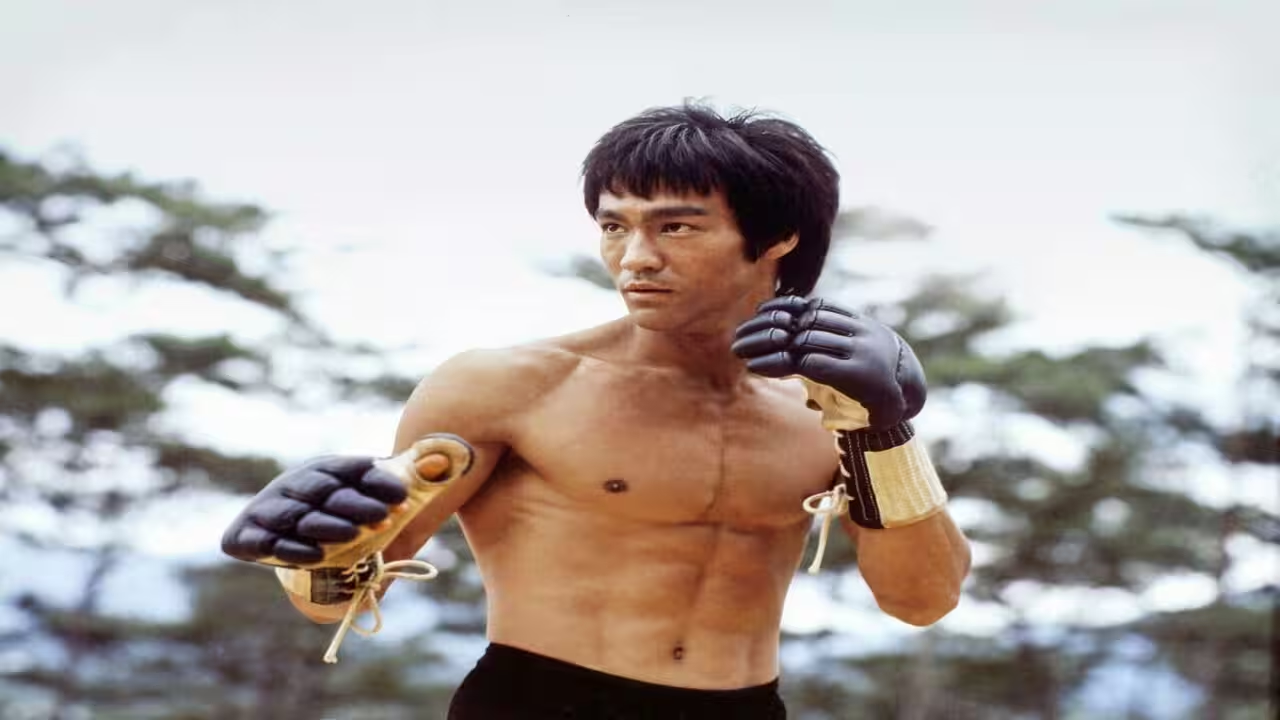
Bruce LeeLearning has always involved looking beyond oneself. Students learn from teachers, artists study masters, athletes follow champions and professionals build on the work of those who came before them. However, true growth does not come from simply copying what already exists. It comes from understanding, questioning and adapting.Bruce Lee captured this approach to learning with his famous words: “Absorb what is useful, discard what is useless and add what is specifically your own.”The quote reflects his belief that knowledge should be treated as a foundation rather than a set of rules to be followed blindly. Learning requires an open mind to accept new ideas, the wisdom to recognise what does not apply and the confidence to create something unique from experience.What did Bruce Lee mean?Bruce Lee's philosophy was built around flexibility. He believed that techniques, traditions and teachings had value, but their usefulness depended on the person applying them and the situation in which they were used.For Lee, learning was an active process. A person should observe, experiment and make decisions rather than becoming a mere imitation of someone else. Absorbing knowledge creates possibilities, but judgment determines what remains valuable.The second part of the quote — discarding what is useless — does not mean rejecting tradition or ignoring the wisdom of others. It means recognising that every method has limitations. An approach that works for one person, one era or one circumstance may not work everywhere.The final part, adding what is specifically your own, is where learning becomes creativity. It is the stage where borrowed knowledge becomes personal understanding. A musician develops their own sound after studying others. A writer finds their voice after reading countless books. An athlete creates a style after learning different techniques.According to Lee's philosophy, mastery comes when knowledge becomes part of who you are rather than something you simply reproduce.How Bruce Lee turned learning into a philosophyBruce Lee became famous around the world as a martial artist, actor and teacher, but his influence extended beyond physical combat. He challenged traditional ideas about how martial arts should be practised and taught.During his training, Lee studied different fighting systems, including Chinese martial arts, Western boxing and fencing. Instead of accepting one system as complete, he examined their strengths and limitations. This approach led him to develop Jeet Kune Do, a martial arts philosophy that focused on efficiency, adaptability and individual expression.Lee argued against rigid movements performed simply because they belonged to a particular tradition. He believed a martial artist should understand the purpose behind a technique rather than follow it mechanically.His approach was revolutionary because it valued thinking as much as training. The best practitioner, in Lee's view, was not the person who memorised the most moves but the person who understood when and how to use them.Why imitation can limit real learningImitation is often the first step in learning. A child learns language by copying sounds, a young athlete learns by observing experienced players and an apprentice learns by following a skilled craftsperson. Copying provides a starting point. The problem begins when imitation becomes the final destination.A person who only repeats existing ideas may gain knowledge without developing understanding. They know what to do but may not know why it works or when it should change. This can prevent innovation because progress often comes from questioning accepted methods.History is filled with examples of people who learned from others while refusing to remain limited by them. Scientists build on previous discoveries but challenge old assumptions. Entrepreneurs study successful businesses but create different solutions. Artists borrow influences but develop their own expressions.The difference between a follower and a creator often lies in judgment: the ability to separate valuable lessons from habits that no longer serve a purpose.Why the quote still matters todayIn the digital age, information is available everywhere. People can access thousands of books, courses, opinions and examples within seconds. The challenge is no longer finding knowledge; it is deciding what knowledge deserves attention.Bruce Lee's advice has become even more relevant because modern learning requires filtering. Whether someone is building a career, developing a skill or improving themselves, they must decide which advice fits their goals and which does not.Following every trend can create confusion. Rejecting every new idea can prevent growth. Progress lies between the two: remaining curious while maintaining the ability to think independently. The greatest learners are rarely those who copy the most. They are the ones who observe carefully, question honestly and transform what they learn into something meaningful of their own.Bruce Lee's words endure because they describe a universal truth about growth. Knowledge gives people the tools to improve, but judgment determines how those tools are used. Real learning begins when we stop asking only, "What can I copy?" and start asking, "What can I adapt and make my own?"
Quote of the Day by Bruce Lee: ‘Absorb what is useful, discard what is useless and add what is specifically your own’ and why real learning depends on judgment, not imitation
Learning has always involved looking beyond oneself. Students learn from teachers, artists study masters, athletes follow champions and professionals build on the work of those who came before them.
799 words~4 min read