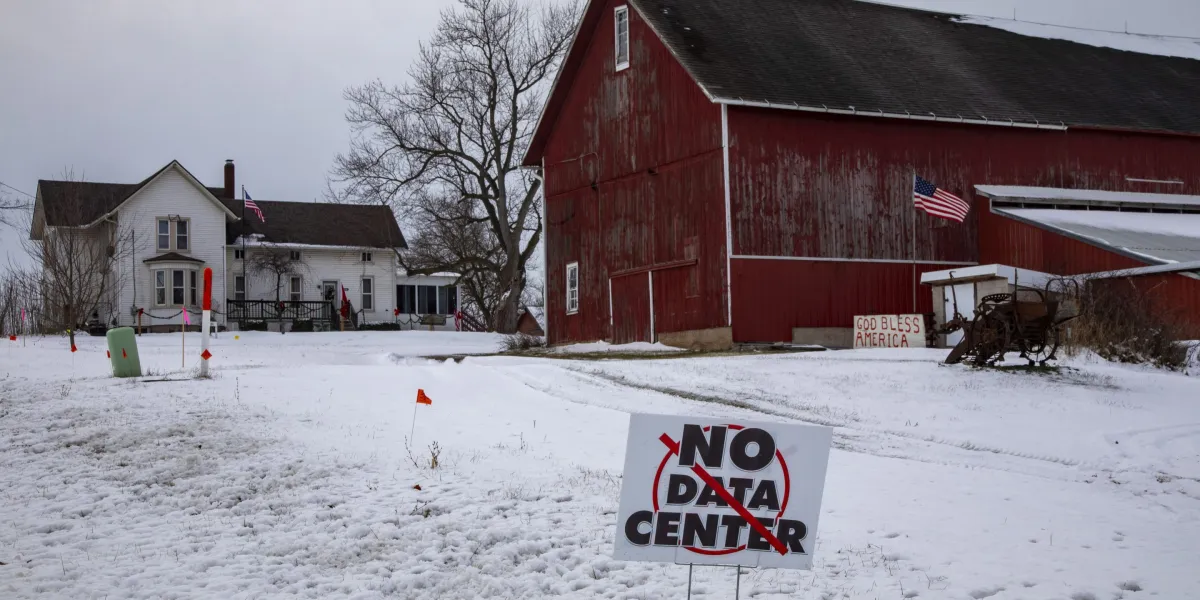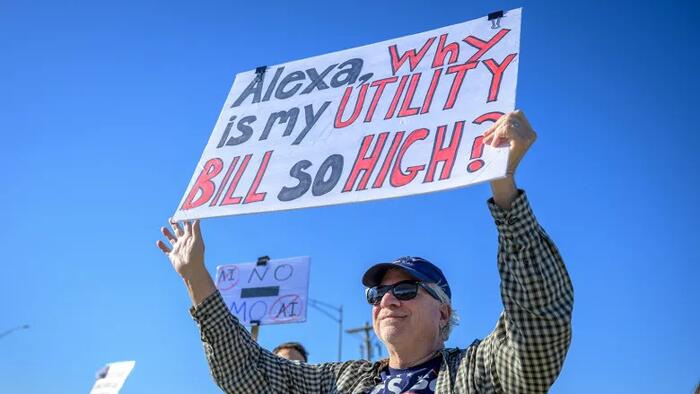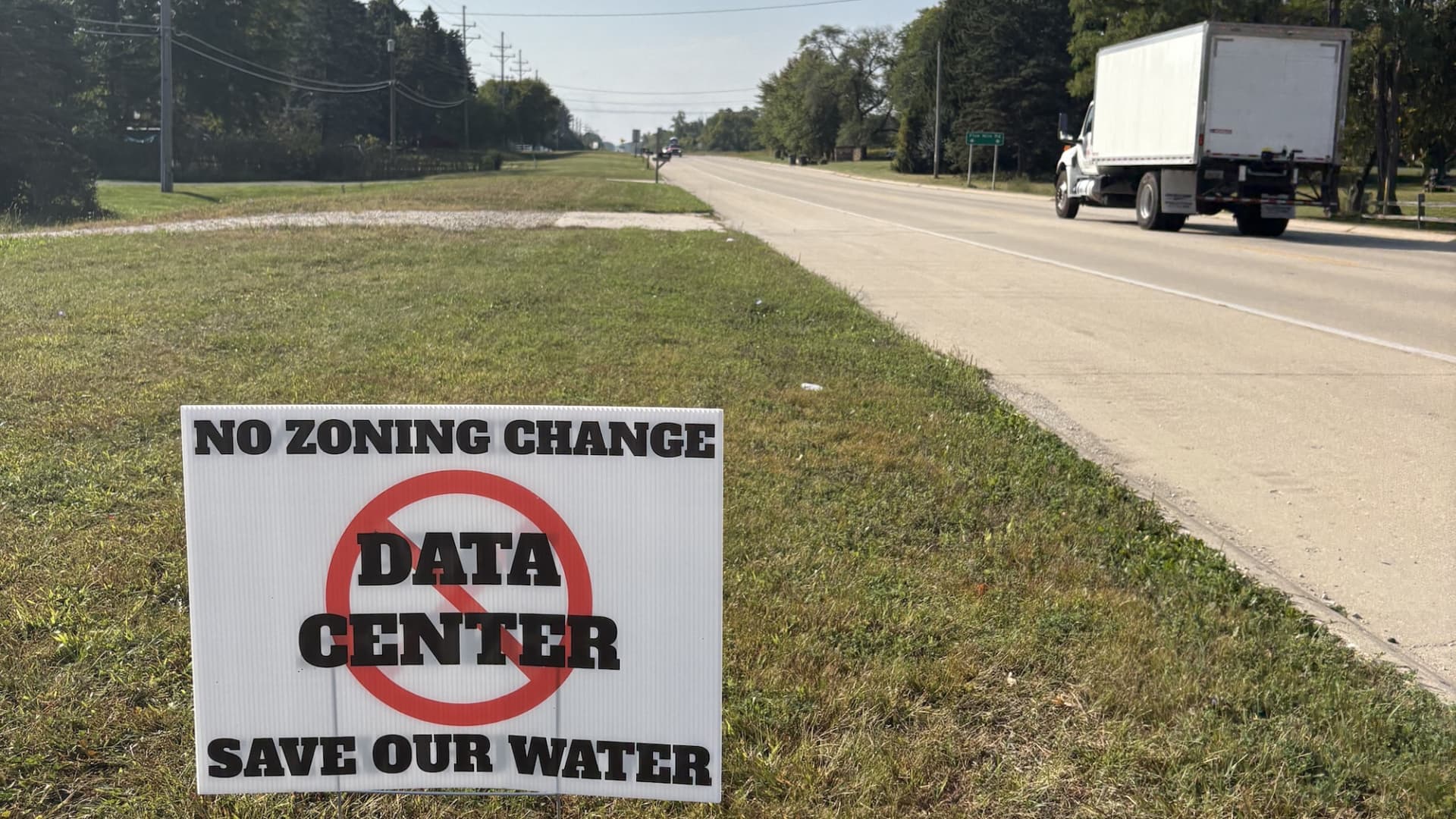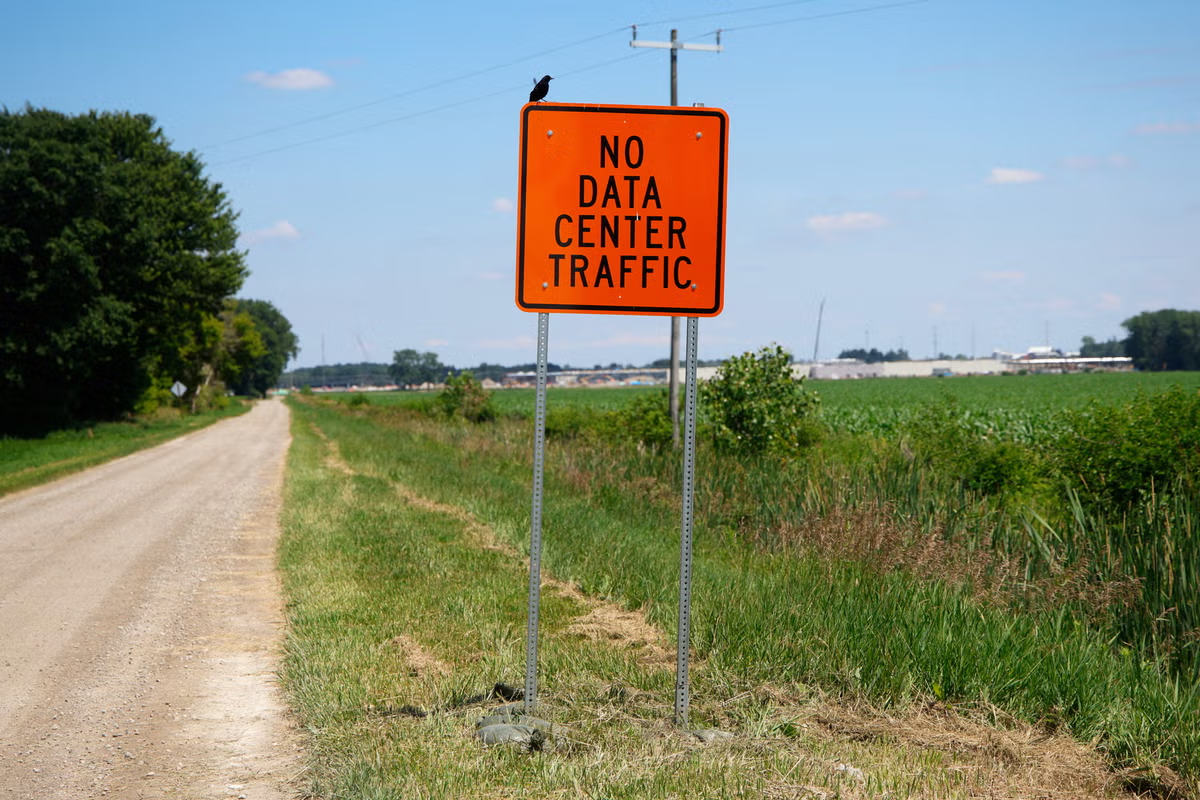
What was once a quiet stretch of Michigan farmland is becoming ground zero in America's AI boom — and many of the people who live there want no part of it.Cornfields and grain silos in Saline Township are giving way to towering cranes as construction begins on a $16 billion AI data center backed by OpenAI, Oracle, Blackstone, Related Digital and Walbridge.The massive project, known as "The Barn" and part of the Stargate initiative, will cover more than 250 acres. Supporters say it will bring thousands of jobs and billions in investment. Opponents see something very different — a giant tech complex threatening their water, power grid and rural way of life.A bird perches on a "No Data Center Traffic" sign in Saline Township, Michigan (Reuters)"Most people aren't interested in some massive development here," local activist Tammie Bruneau said. "They're interested in protecting the farmland."The fight unfolding in this community of about 2,400 people reflects a growing national backlash against the rapid expansion of AI infrastructure.A Reuters/Ipsos poll in June found only about one-third of Americans approve of the current pace of data center construction, while just 14% said they would support one being built in their own community.Protesters in Indianapolis, Indiana gather to demonstrate against a data center planned for the Martindale-Brightwood neighborhood on October 13, 2025 (WTHR)Michigan has become one of the biggest battlegrounds, with at least 13 data centers planned or under development. Residents have already succeeded in stopping one project in Washington Township, while another proposal in Augusta has been delayed after local opposition forced a public rezoning vote.The issue has become so politically charged that it is now spilling into Michigan's U.S. Senate race, where candidates are weighing the economic promise of AI against growing concerns over corporate power and the impact on local communities."It seems like the big tech companies are kind of steamrolling the citizens," said Jeff Samoray, a Democrat from suburban Detroit.A view of the "Saline Barn" Data Center under construction in Saline Township (Reuters)Democratic Rep. Haley Stevens has promoted AI as a major economic opportunity, saying data centers could create jobs and help position Michigan at the forefront of advanced manufacturing, while arguing companies should pay the costs of their utility use.Her rival, Abdul El-Sayed, has called for tougher oversight of AI companies and said local governments may need to temporarily halt new data center projects until stronger protections are in place.The debate has also reached Washington. Although the Trump administration has championed rapid AI expansion to compete with China, Reuters recently reported the White House is working with utilities and developers on a voluntary agreement intended to prevent taxpayers from footing the bill for AI's growing energy demands.The battle in Saline has been especially bitter.Facing expensive litigation, local officials agreed to a settlement allowing construction to proceed in exchange for roughly $14 million in community benefits, including farmland preservation, fire services, and limits on water use and noise (Reuters)After months of heated meetings, township officials voted against rezoning land for the project last September. Two days later, developers sued.Facing expensive litigation, local officials agreed to a settlement allowing construction to proceed in exchange for roughly $14 million in community benefits, including farmland preservation, fire services, and limits on water use and noise. Opponents are now challenging that agreement in court.Construction officially began June 1, with Michigan Gov. Gretchen Whitmer and OpenAI CEO Sam Altman attending the groundbreaking.Builders broke ground on June 1 with Democratic Governor Gretchen Whitmer and OpenAI Chief Executive Sam Altman in attendance (AFP/Getty)Developers say the project will create more than 2,500 union construction jobs, around 1,500 additional countywide jobs, more than 450 permanent positions and billions of dollars in tax revenue.But many residents remain unconvinced."We really just didn't think it was fair that our board got forced into this position," Bruneau said, adding that concerns range from groundwater contamination to rising electricity costs.Opposition has united people across the political spectrum."We've met people from extreme right and left, and all the way in the middle," she said.Nearby resident Beverly Kincaid, a Republican, said the issue will shape her vote this fall."In Saline," she said, "big money pushed their way around."Developers reject those concerns.Related Digital said it is committed to responsible development, including closed-loop air cooling to protect water resources and the preservation of 750 acres of farmland, wetlands and woodlands. Oracle said it will pay for all required energy and infrastructure upgrades, adding there will be no impact on local electricity rates or grid reliability.For residents like Laura Dennison, whose son has a rare medical condition that could one day benefit from AI research, the debate is deeply personal."There are so many unknowns," she said.
The $16 billion AI project that has one town worried about its water supply
Mounting voter concerns over land use and resources have made data centers a national issue
777 words~4 min read